
22 min 36 sec
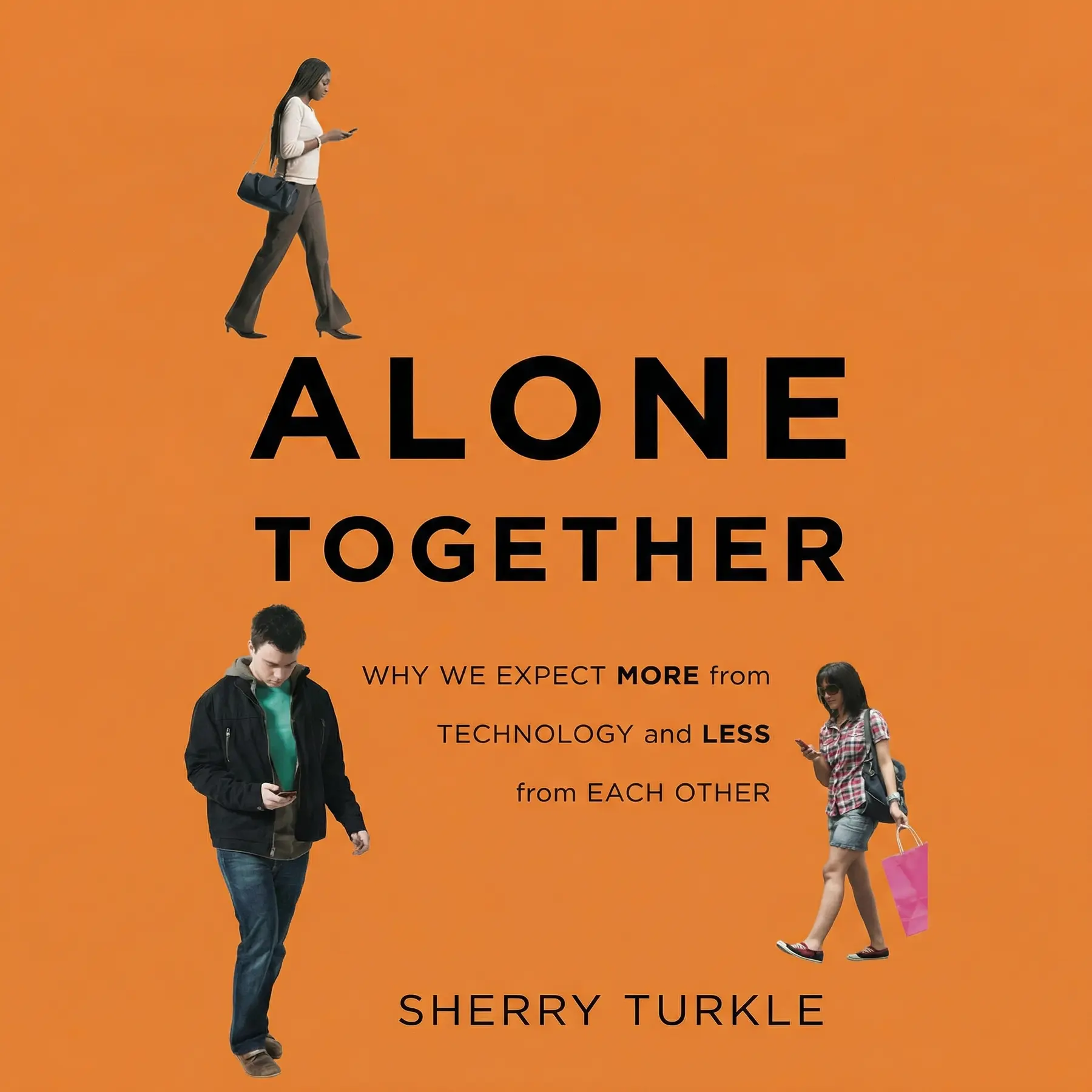
Alone Together: Why We Expect More From Technology and Less From Each Other
Sherry Turkle examines the paradox of our digital age, where constant connectivity leads to isolation. This work explores how robotics and social media reshape our intimacy, our identities, and our human relationships.
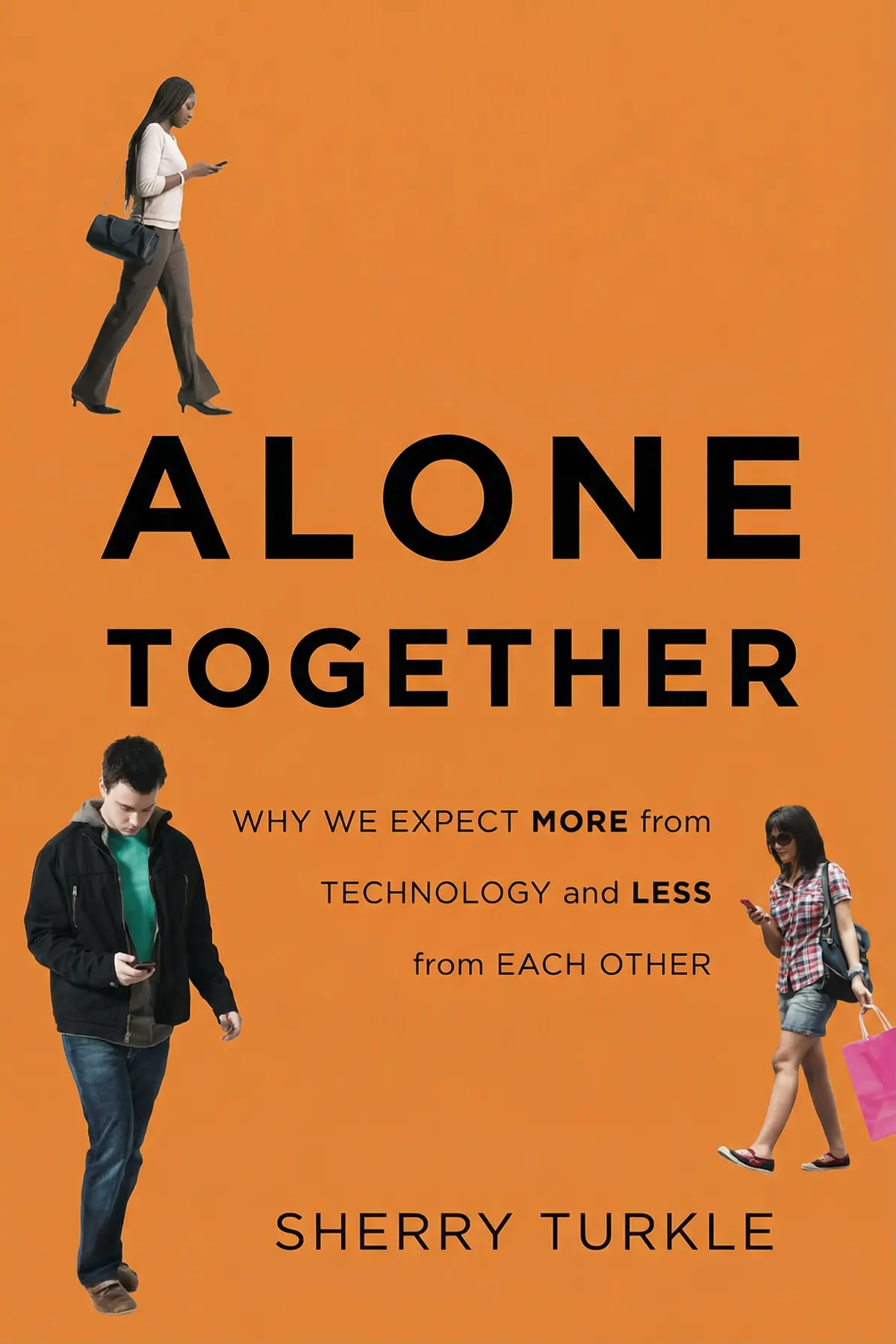
Table of Content
1. Introduction
1 min 51 sec
We live in an age where the promise of technology is a world of infinite connection. We carry in our pockets the ability to reach anyone, anywhere, at any time. Yet, beneath the surface of this hyper-connected reality, a strange and quiet shift is taking place. As we become more attached to our devices and more enchanted by the prospect of robotic companions, we are simultaneously moving further away from the raw, unmediated experience of being with another human being. This is the central paradox of our time: we are more networked than ever, yet we feel increasingly isolated.
In this exploration, we will dive into the work of Sherry Turkle, who has spent decades observing how our relationship with technology is changing our very sense of self. We will look at two primary paths this transformation is taking. First, we’ll see the rise of sociable robots designed to care for the elderly and play with our children—machines that are starting to blur the line between the living and the inanimate. Second, we’ll examine our tethered lives on social media and smartphones, where the pressure to curate a perfect online identity is making us anxious and afraid of real-time interaction.
Through various stories, from the nursing homes of Japan to the high-stakes social circles of modern teenagers, we’ll uncover why we are expecting more from our gadgets and less from each other. What happens when we begin to treat machines as friends and friends as data? By the end of this journey, we’ll see how we can begin to reclaim our humanity and find a way back to true, deep connection in a world that often settles for the shallow. This is not just a critique of our tools, but a deep look into the human heart in the digital age.
2. Outsourcing Empathy to Machines
1 min 49 sec
As the demand for care outpaces the number of available humans, we are turning to robotic companions to fill the gap in our nursing homes.
3. The Blurring Line of Inanimate Life
1 min 49 sec
Modern toys and robots are designed to trigger our biological nurturing instincts, making it harder to distinguish between a machine and a living being.
4. The Allure of Low-Stakes Companionship
1 min 50 sec
Robots offer a tempting alternative to human relationships because they provide connection without the messy responsibilities and emotional risks.
5. The Emotional Risk of Technical Glitches
1 min 39 sec
When we bond with machines, we open ourselves up to unique forms of psychological distress when those machines inevitably fail.
6. The Displacement of Human Connection
1 min 47 sec
Our involvement with technology can lead us to ignore the real people standing right in front of us.
7. The Burden of the Curated Self
1 min 45 sec
Social media has turned identity into a performance, forcing teenagers to spend hours crafting a perfect image for public consumption.
8. The Death of Spontaneous Conversation
1 min 40 sec
We are increasingly avoiding phone calls in favor of texting because we fear the vulnerability and unpredictability of a real-time voice.
9. The Tethered Life and the Loss of Solitude
1 min 42 sec
Being constantly connected to our devices means we are never truly alone, which robs us of the chance to develop a strong internal self.
10. Escapism and the Avatar Trap
1 min 37 sec
The internet allows us to live out alternative lives, but while this can be healing for some, it can also lead to a complete withdrawal from reality.
11. The Anxiety of the Digital Panopticon
1 min 42 sec
The permanence and public nature of the internet have turned our social lives into a form of mutual surveillance.
12. Reclaiming the Human Presence
1 min 40 sec
As the pressure of the digital world grows, many people are beginning to push back, seeking to reconnect through media fasts and face-to-face time.
13. Conclusion
1 min 45 sec
Ultimately, the digital landscape we have built offers us a seductive trade-off: the convenience of connection without the messiness of intimacy. We have embraced robots that perform care and screens that filter our personalities, all in an effort to manage the complexities of human relationship. But as we have seen, this trade-off comes with a steep price. We are losing the capacity for solitude, the ability to be alone with our own thoughts without the constant validation of a notification. We are also losing the depth of face-to-face conversation, replacing it with edited, hollowed-out versions of ourselves.
The journey through these shifts isn’t a call to abandon technology, but a reminder to use it with more intention. We must recognize when our devices are serving us and when we are serving them. Reclaiming our human connections starts with small, deliberate choices—the choice to leave the phone behind on a walk, the choice to have a difficult conversation in person rather than over text, and the choice to value presence over performance.
If you’re feeling overwhelmed, start by leaving your phone at home for just an hour. You don’t have to carry your phone with you all the time. Knowing that it could ring at any moment is a subtle form of stress that prevents you from truly relaxing. Give yourself permission to be unreachable. You deserve some personal time to yourself. By understanding the psychological undercurrents of our networked world, we can move from being alone together to being truly present with one another. Remember that you are more than your avatar, and your most meaningful moments often happen in the quiet, unedited pauses of real life.
About this book
What is this book about?
Alone Together investigates the dual frontiers of modern technology: sociable robotics and networked communication. It examines how we are increasingly turning to machines for companionship and using digital platforms to curate our identities, often at the cost of genuine human connection. The book explores the shift from authentic interaction to performance and the way we now prefer the safety of a screen to the vulnerability of a face-to-face conversation. By analyzing our interactions with everything from nursing-home robots to social media profiles, the narrative reveals a disturbing trend: we are expecting more from technology and less from each other. The promise of this exploration is a clearer understanding of our digital anxieties and a roadmap for reclaiming our humanity in an age of silicon-based intimacy. It challenges the reader to reconsider the tethered life and find a path back to true solitude and meaningful presence in a world that never sleeps.
Book Information
About the Author
Sherry Turkle
Sherry Turkle is a distinguished professor at the Massachusetts Institute of Technology (MIT). She is the founder and director of the MIT Initiative on Technology and Self, and has authored several influential books focusing on the complex intersection of human psychology and technological advancement.
Ratings & Reviews
Ratings at a glance
What people think
Listeners find the book refreshing and intellectually stimulating, offering worthwhile anecdotes and perspectives throughout. Regarding the writing style, reactions are varied; some admire its beauty, yet others describe it as rambling. Listeners also value the work's pertinence, with one person noting its helpfulness for thesis research and another highlighting the exploration of technology's impact on intimacy. However, the tempo draws mixed reviews, as some find it stirring while others mention it tends to jump around too frequently.
Top reviews
Palm
After hearing about Sherry Turkle’s work for years, I finally dove into this 'stone-cold chilling' exploration of our digital souls and I wasn't disappointed. The way she describes us as being 'tethered' to our devices resonated with me on a visceral level, especially her notes on how we use technology to avoid the risks of real-time conversation. Many people dismiss her as a Luddite, but I think she is just being a realist about the things we’ve lost in our rush to be 'always on.' The stories from the teenagers she interviewed are heartbreaking, showing a generation that feels neglected by parents who are constantly checking BlackBerries at the park. Not gonna lie, the Thoreau references and the call to live more intentionally gave me a lot to think about. This is essential reading for anyone trying to understand how our environment molds our very capacity for empathy.
Show moreRatchada
To be fair, I went in skeptical, but Turkle manages to articulate a weird hollowness I’ve felt in my own digital life for years. This isn't just a book about gadgets; it’s a deep dive into the fundamental psychological changes occurring in a generation that has never known a world without a screen. Her writing is engaging and fun to read, even when the subject matter is 'stone-cold chilling' and a bit depressing. I found the stories of elderly people finding companionship in robots to be particularly moving and complex, rather than just being a simple 'technology is bad' argument. She captures the nuances of how we trade bits of our identity for bytes of connection. It’s a brilliant, refreshing look at the slippery slope we are all currently sliding down. I’ll be recommending this to everyone in my circle.
Show moreSara
This book left me staring at my phone for a long time after I closed the back cover. Turkle manages to capture that strange, modern hollowness where we are constantly connected yet feel increasingly isolated from genuine human contact. I found the section on 'sociable robots' like the Furby and Paro particularly unsettling, as it highlights how easily we project emotions onto mindless circuitry. While her writing style is occasionally rambling, the core message about our 'fearful symmetries' is deeply relevant to anyone feeling the digital burnout of the 21st century. To be fair, some of the research feels slightly dated now that social media has evolved even further, but the psychological insights remain sharp. It’s a provocative read that forces you to question if your 'weak connections' on Facebook are actually worth the trade-off. We are trading intimacy for mere simulation, and Turkle’s warning is loud and clear.
Show moreSangduan
The chapter on My Real Baby and robot nannies haunted me more than any horror novel I’ve read this year. Turkle explores the creepy frontier of human-robot interaction with a style that is both analytical and deeply emotional. She asks the hard questions about whether a simulation of love is enough if the person receiving it feels comforted. This book is a refreshing break from the usual 'tech is amazing' hype, offering a necessary critique of how our devices infiltrate our most private moments. I appreciated her observations on how we use multitasking to avoid the messiness of face-to-face interaction. The pacing is a bit slow in the middle, but the overall impact is undeniable. It’s the kind of book that makes you want to delete your apps and go for a long, silent walk in the woods.
Show moreDream
As someone who spends way too much time on social media, reading about our 'fearful symmetries' was a necessary wake-up call. Turkle’s work is deeply researched and provides a fascinating look at the way technology replaces the vulnerabilities of real-life relationships with the safety of a screen. I loved the section on how we 'multi-life'—trying to be present in our physical surroundings while simultaneously maintaining a digital persona. It’s a difficult balance that most of us are failing at, and seeing it laid out in such clear prose was eye-opening. Some parts are definitely repetitive, especially regarding the robot interviews, but the overall message is too important to ignore. We are moving toward a world where we prefer the company of machines because they are easier to control than people. That is a terrifying thought.
Show moreChokdee
Is it possible to be both fascinated and bored by the exact same text? I really wanted to love this, but the structure felt like two disconnected books stitched together with a very thin thread. The first half focuses extensively on robot nannies and toys, which, while interesting, felt incredibly repetitive after the tenth interview about a Tamagotchi. Once she gets to the second half about texting and Second Life, the pace finally picks up and the observations become more relatable to my own life. In my experience, the anecdotal nature of her research makes for a great narrative but a somewhat weak scientific argument. She skips around quite a bit and misses opportunities to dive into the actual brain chemistry of addiction. It’s a mixed bag of brilliant observations and laboured points that could have used a much tighter edit.
Show moreNoppadol
Picked this up for a sociology project, and while the insights are sharp, the execution feels uneven and frequently repetitive. Turkle’s central thesis is that we expect more from technology and less from each other, which is a powerful starting point for any discussion on modern life. However, she spends way too much time on the 'robot as friend' fantasy, which honestly doesn't feel like a widespread concern for most people I know. The footnotes are a mess, often just rambling about unrelated topics instead of citing actual sources for her more dubious claims. To be fair, her analysis of how we 'edit' our identities online is spot on and helped me articulate my own misgivings about social media. It’s a thought-provoking book that unfortunately gets bogged down in its own anecdotal weight, making it a bit of a slog to finish.
Show moreSuthee
Not what I expected given the hype, mostly because the first half focuses so heavily on toys like the Furby and Tamagotchi which feel like relics of the past. Turkle is a gifted writer, but her insistence on using these specific case studies makes the book feel a bit dated and less universal. The second half, where she discusses the 'tethered self' and the pressures of maintaining a Facebook profile, is much more relevant and thought-provoking. I wish she had spent more time on the impact of blogging or the 'weak connections' we form on sites like this one. Personally, I found her tone a bit too alarmist at times, as if every teenager with a phone is destined for a life of isolation. It’s a valuable read for the questions it raises, but don't expect a lot of concrete answers or deep scientific analysis.
Show moreAnucha
Look, the central premise is undeniable—we are definitely alone together—but the evidence presented here is often just a collection of stories. Truth is, I was expecting a more thorough treatment of the topic with more data and less focus on what specific kids said about their robotic dolls. Turkle points out fairly evident phenomena but often fails to analyze them beyond showing the frustrations of a few stereotypical teenagers. The book skips around too much between different types of technology, making the overall argument feel a bit incoherent at times. However, her insights into how we use texting to avoid 'real-time' intimacy are quite valuable for anyone studying modern communication. It’s a decent read for a thesis project, but for a casual reader, it might feel a bit too much like a lecture from a worried parent.
Show moreElias
Frankly, the 'Get off my lawn' energy in these pages was a bit much for me to handle. Turkle is clearly a brilliant academic from MIT, but her anti-technology rhetoric feels tired and heavily biased toward a nostalgic view of the past that probably never existed. She relies almost entirely on anecdotes from a very specific subset of people, like those still obsessed with Second Life, rather than providing any hard statistics or broader data. I felt she pointed out evident phenomena—like people texting more—but failed to show that technology is the actual cause of the psychological distress she describes. For instance, the story of 'Adam' the gamer seemed more like a case of general depression than something uniquely caused by the internet. The writing is beautiful in places, but the logic is often incoherent and lacks the depth I expected from such a buzzy title.
Show moreReaders also enjoyed
Acting with Power: Why We Are More Powerful Than We Believe
Deborah Gruenfeld
21 Lessons for the 21st Century
Yuval Noah Harari
Age of Propaganda: The Everyday Use and Abuse of Persuasion
Anthony Pratkanis
AUDIO SUMMARY AVAILABLE
Listen to Alone Together in 15 minutes
Get the key ideas from Alone Together by Sherry Turkle, plus 5,000+ more titles in English and Thai.
- 5,000+ titles
- Listen as much as you want
- 7-day free trial
- Cancel anytime







