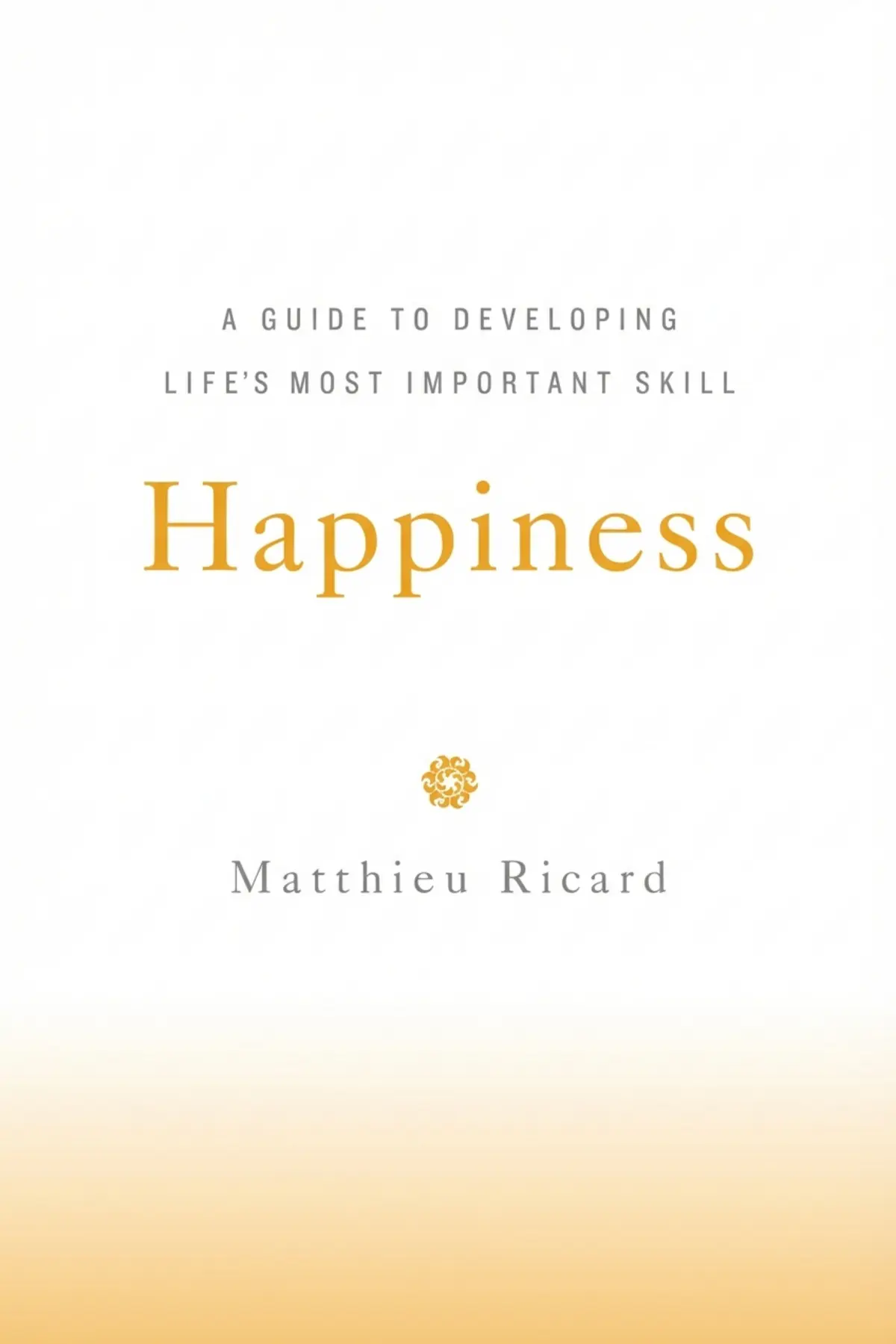
Happiness: A Guide to Developing Life’s Most Important Skill
Matthieu Ricard
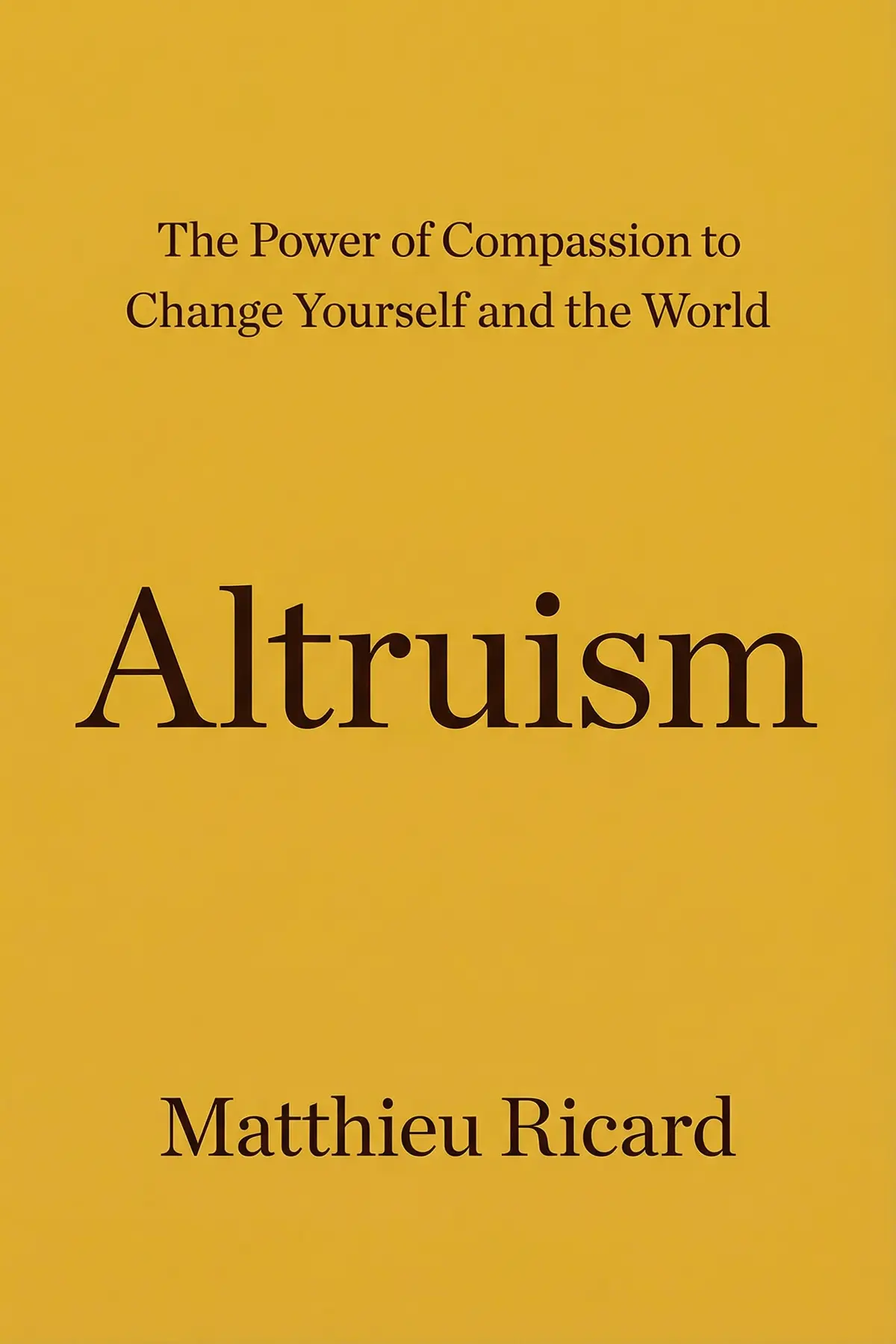
Explore the profound intersection of ancient Buddhist wisdom and modern science to discover how altruism can transform individual lives and the structures of our global society.
1 min 34 sec
When you take a moment to imagine a perfect society, what does it look like? Is it a place where every individual is locked in a fierce battle for the top spot, viewing everyone else as a rival? Or is it a community defined by mutual support, where people actively work to lift one another up? Most of us would choose the latter, yet we often feel stuck in a world that seems to reward the former. We are frequently told that selfishness is just human nature, but what if that’s a fundamental misunderstanding of who we are?
In this exploration of compassion and human potential, we dive into the profound teachings and scientific insights of Matthieu Ricard. As both a molecular biologist and a Tibetan Buddhist monk, Ricard bridges the gap between the laboratory and the monastery to argue that altruism is not just a nice idea—it is a vital necessity for our survival and our happiness. This summary will guide you through the throughline of his work: the belief that altruism is a skill we can cultivate to change ourselves and the world.
We’ll look at how simple changes in our daily routine, like meditation and a shift in perspective, can have a ripple effect that touches every part of society. From the way our brains are wired to the way our economies are structured, the following ideas will show you that a world built on compassion isn’t a pipe dream. It is a biological and spiritual possibility waiting for us to embrace it. Get ready to discover how the science of empathy can lead to a more successful, stable, and joyful existence for everyone on the planet.
2 min 00 sec
Discover the difference between the instincts we are born with and the deep, universal compassion we must intentionally build.
2 min 05 sec
Explore how the warmth of appreciation creates a positive cycle that benefits both the giver and the receiver.
2 min 12 sec
Learn how your thoughts can physically restructure your brain and even influence the expression of your genetic code.
2 min 02 sec
Understand why the idea of ‘survival of the fittest’ has been misunderstood and how cooperation is actually our greatest strength.
2 min 04 sec
Discover how a simple daily meditation practice can strengthen your focus, boost your health, and expand your heart.
1 min 49 sec
Look at why true altruists often shun the spotlight and why the most impactful acts of bravery are often the most humble.
2 min 08 sec
Examine how our economic systems and the gap between rich and poor can either stifle or support a compassionate society.
2 min 07 sec
See how humanity’s natural drive to help one another shines brightest during our most challenging and dangerous moments.
1 min 58 sec
Learn how rethinking the way we teach our children can create a future generation defined by empathy and collaboration.
1 min 45 sec
As we reach the end of this journey through the landscape of altruism, the message is clear: compassion is not a luxury or a soft sentiment. It is a fundamental force that has the power to reshape our brains, our communities, and our global systems. We’ve seen that while we all have an innate capacity for care, the real transformation happens when we treat altruism as a skill to be practiced and expanded. From the neurons in our heads to the laws in our books, every level of human existence can be touched by the power of compassion.
What this really means for you is that you have a tremendous amount of agency. You don’t have to wait for the world to change before you start living more altruistically. By dedicating even a small amount of time to mental training and meditation, you can begin to strengthen your own ‘compassion muscle.’ Interestingly, this practice even has physical benefits; some studies have shown that intense meditation can increase levels of telomerase, an enzyme associated with slowing the aging of our cells. Taking care of others is, in a very real sense, a way of taking care of yourself.
Now, as you step back into your daily life, notice the interconnectedness that surrounds you. Look for the small acts of kindness that are happening all the time, and look for opportunities to be the one who starts a positive cycle. Whether it’s through a formal meditation practice, a more empathetic approach to your work, or a commitment to supporting a fairer society, your actions matter. Altruism is a choice we make every day, and by choosing it, we move one step closer to a world that works for everyone. The potential for a more compassionate world is already within you; all that’s left is to let it grow.
What if the secret to a better world—and a more fulfilled life—wasn't found in competition, but in radical compassion? This guide investigates the mechanics of altruism through the dual lenses of Tibetan Buddhist philosophy and rigorous scientific research. It challenges the common misconception that humans are inherently selfish and reveals that we are actually biologically and psychologically wired for cooperation. By following this journey, listeners will learn how the practice of altruism functions as a skill that can be developed through mental training and meditation. The summary explores the fascinating science of neuroplasticity and epigenetics, showing how our thoughts can literally reshape our brains and influence our genes. Beyond the individual, it addresses the systemic changes needed to combat inequality and foster a more empathetic economy. Ultimately, it offers a roadmap for moving from self-centeredness to a global sense of responsibility, promising a path to genuine happiness for ourselves and the wider world.
Matthieu Ricard, born in Aix-les-Bains, France, is a Buddhist monk practicing in the Tibetan tradition and is the Dalai Lama’s French translator. He originally studied molecular biology; today he is a bestselling author and spiritual leader working to integrate science and spirituality.
Matthieu Ricard
Listeners consider this title an essential listen, with one listener highlighting how it addresses a broad array of subjects through numerous references. It effectively illustrates the necessity of living more compassionately, and one listener describes it as a profound exploration of altruism. They also value the emphasis on love, the intellectual mastery displayed, and the manner in which it links various sources of selflessness. However, the length draws mixed opinions, as several listeners find the work to be too long.
Matthieu Ricard has crafted something truly monumental here. I found myself highlighting entire paragraphs on nearly every page because the wisdom felt so urgent. Frankly, the way he connects biological evolution with the necessity of kindness changed how I view my daily interactions. It isn’t just a spiritual manifesto; it is a call to arms for a more compassionate way of living. While the physical weight of the book is a bit daunting, the emotional weight is what stays with you long after you put it down. I bought three extra copies for friends because these ideas are too important to keep to myself. If you are looking for a reason to believe in humanity again, this is it.
Show moreAs someone who usually gravitates toward hard science, I was surprised by how much the neuro-psychological sections gripped me. Ricard manages to bridge the gap between ancient contemplative practices and modern laboratory findings with incredible grace. This isn’t just some fluffy "be nice" book; it is a rigorous exploration of the human capacity for goodness. I found the analysis of empathy versus compassion to be a total game-changer for my own mental health. The truth is, we need this kind of intellectual rigor to combat the cynicism of the modern world. It is a profound exploration that demands your full attention. Every chapter offers a new lens through which to view our connections to one another and the planet.
Show moreEvery human being on this planet needs to digest the core principles Ricard lays out in this masterpiece. A family member gave me this book during a particularly rough patch, and it genuinely shifted my perspective on what it means to live a good life. It beautifully illustrates why generosity and respecting the earth are intrinsically linked. I love how it isn't just about feeling good, but about the practical necessity of caring for others. Some might find it long, but I think the depth is what makes the argument so persuasive. It’s an absolute must-read for anyone who feels overwhelmed by the negativity in the news. It’s a transformative journey that goes straight to the heart.
Show moreThe sheer breadth of research cited in these chapters is staggering and shows a level of intellectual mastery rarely seen in this genre. I was fascinated by the way he connects diverse springs of altruism, from the biological instincts of a mother to the global cooperation needed for climate change. It’s aspirational yet factual, which is a difficult balance to strike. Personally, I didn’t mind the length because each section felt like it was building toward a more complete understanding of the human spirit. The book effectively conveys the need for more compassionate living without ever sounding preachy. It’s the kind of book you keep on your shelf and return to for years. Truly a profound exploration of our potential.
Show moreJust finished this, and I'm left feeling both humbled and incredibly inspired by the vision Ricard presents. Few books manage to be both deeply aspirational and grounded in the grittiness of our current reality. The integration of Buddhist philosophy with Western psychology creates a framework for kindness that feels both ancient and cutting-edge. I especially liked the integralistic context provided—showing how our smallest actions ripple out into the past, present, and future. While it is certainly a massive tome that requires a real time commitment, the payoff is immense. It isn't just a book; it's a comprehensive education in how to be a better person. Highly recommended for any serious seeker.
Show moreFinally got through this massive tome after nearly three months of chipped-away reading. It is an incredible piece of work, but I have to agree with others that it occasionally reads like a dense academic textbook. Ricard’s intellectual mastery is on full display as he weaves together Buddhist philosophy and modern neurology. I particularly appreciated the sections on how we can scale individual kindness to solve global crises like climate change. To be fair, it probably could have been trimmed by two hundred pages without losing the core message. Still, the depth of research and the sheer number of references make it an invaluable resource for anyone serious about ethics. It’s a slow burn but definitely worth the effort.
Show moreTo be fair, calling this just a self-help book feels like a massive understatement. It covers a ridiculous amount of material ranging from personal conflict to global economic structures. I was particularly drawn to the chapters discussing the future of our environment and how altruistic cooperation is the only way forward. However, the author occasionally takes on too much, making it feel like he’s trying to build a universal theory of everything. The gloomier chapters toward the end regarding the state of the world were a tough slog, even if they were necessary. It’s a 4.5-star experience that I’m rounding down slightly because the pacing can be quite uneven. Despite that, the sense of hope it provides is absolutely indispensable right now.
Show moreEver wonder if true selflessness actually exists or if we're all just chasing a 'helper's high'? Ricard dives deep into this question, echoing that famous Friends episode about whether a truly unselfish act is even possible. I picked this up with some trepidation because of the size, but the writing is surprisingly accessible. He pulls no punches when it comes to the challenges we face, yet he maintains a persistent sense of realism and hope. My only beef is that some sections on economic theory felt a bit out of his wheelhouse compared to the psychology. Nevertheless, the nuanced analysis of ethics is top-notch. It’s a powerful reminder that compassion is a skill we can actually train.
Show moreLook, the message is vital, but did it really need to be over 800 pages? I agree that altruism makes you feel better and is a fundamental part of human behavior, but the author takes a very long road to get there. At times, I felt the book lost the forest for the trees by diving into every possible minute detail of psychology. It’s a great concept that unfortunately suffers from being way wordier than necessary for the average reader. I was looking for a guide on how to be more compassionate, but I ended up with a massive scientific treatise. If you have the patience of a saint, go for it, but I would have preferred a much shorter version. Nuff said.
Show moreNot what I expected given the glowing recommendations from my meditation group. The book is undeniably thorough, but it never successfully explains how altruism would be globally effective in a society filled with sociopaths or those who worship Ayn Rand’s selfishness. It feels a bit naive in its application to the real-world political meat-grinder. Frankly, the sheer length is exhausting, and it feels like the author is repeating himself just to hit a page count. I wanted to love it, but it was just too dry and academic for me to actually enjoy. I think the central point could have been made in a long essay rather than this giant brick of a book.
Show more

Fay Bound Alberti
Richard Wiseman
Daniel Goleman

Virginia Woolf
AUDIO SUMMARY AVAILABLE
Get the key ideas from Altruism by Matthieu Ricard, plus 5,000+ more titles in English and Thai.