
A River in Darkness: One Man’s Escape from North Korea
Masaji Ishikawa
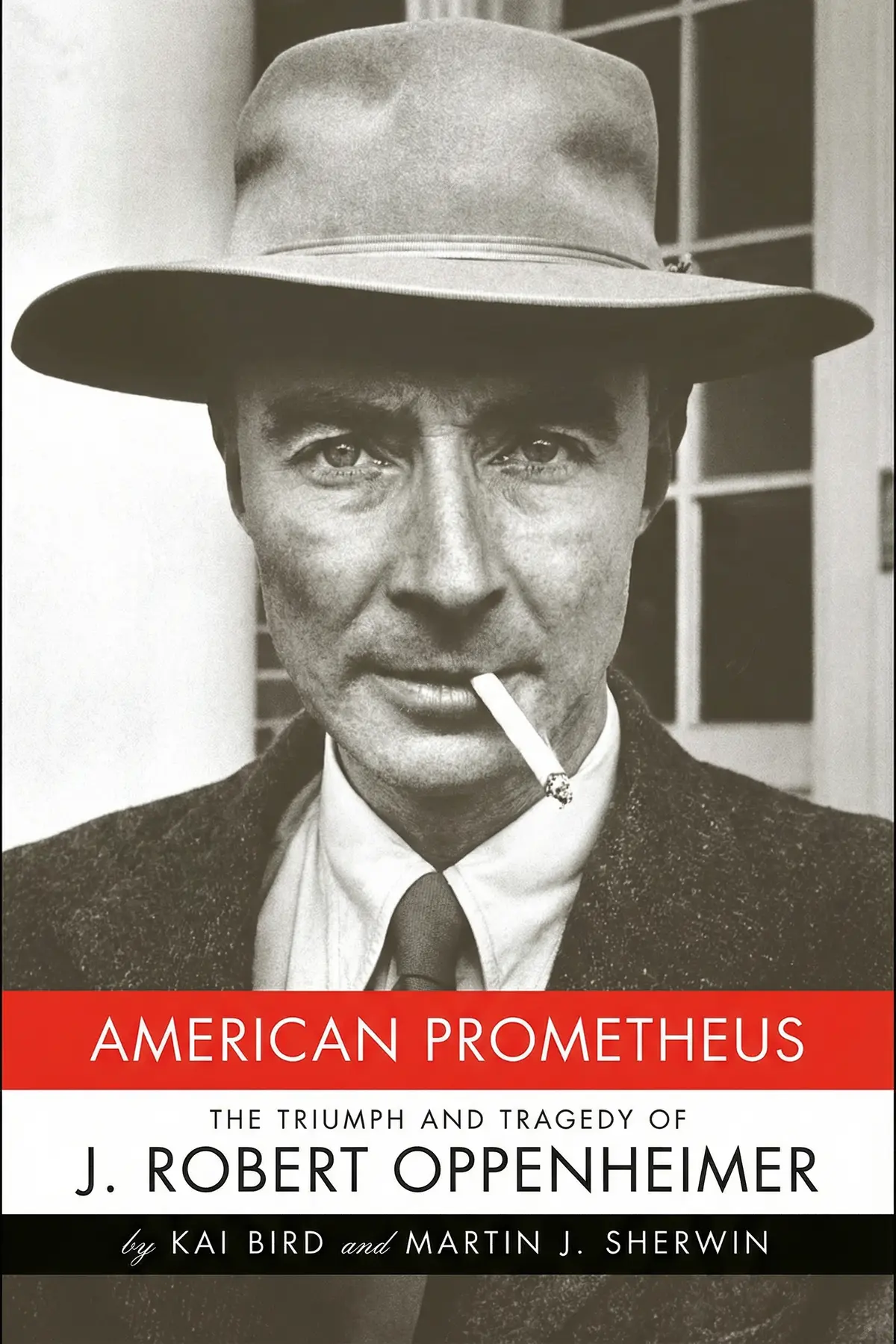
Explore the complicated life of J. Robert Oppenheimer, the physicist who led the Manhattan Project. This biography examines his scientific genius, his political struggles, and the heavy moral burden of the atomic age.
1 min 36 sec
A single spark of insight has the potential to start a chain reaction that completely shifts the direction of human civilization. The story of J. Robert Oppenheimer is perhaps the most striking example of this in the modern era. Much like the ancient figure of Prometheus, who was said to have stolen fire from the gods to give it to humanity, Oppenheimer was the man who found a way to harness the fundamental energy of the universe. In doing so, he gave us a power that could both sustain and destroy us, forever altering the landscape of war, diplomacy, and science.
In this exploration of his life and work, we are going to look beyond the simple label of the father of the atomic bomb. We will walk through the different seasons of his existence, starting with the early intellectual hunger that drove him toward the cutting edge of quantum physics. We will see how his time at prestigious universities shaped his worldview and how a secret laboratory in the New Mexico desert became the site of one of the greatest scientific achievements in history.
But this isn’t just a story of success. It is also a story of deep moral complexity and political turmoil. We will examine the aftermath of the atomic age, where Oppenheimer found himself at the center of a different kind of storm—one made of suspicion, paranoia, and shifting loyalties. As we journey through these chapters, we will uncover the legacy of a man whose brilliance was matched only by the weight of the responsibility he carried. Let’s begin by looking at how this extraordinary mind was first formed.
2 min 22 sec
Discover how a young boy’s insatiable curiosity in New York led him to the intellectual heart of Europe, where he joined the vanguard of a scientific revolution.
2 min 22 sec
Learn how an ambitious professor transformed a California university into a world-class center for physics while building the relationships that would define his future.
2 min 15 sec
Step inside the high-stakes world of the Manhattan Project, where a diverse group of geniuses raced against time to build a world-changing weapon.
2 min 00 sec
Explore the difficult transition from wartime hero to post-war advisor as the shadow of the bomb began to influence global politics and personal reputations.
2 min 27 sec
Witness the dramatic downfall of a national icon during the 1954 security hearing that put the soul of American intellectual freedom on trial.
1 min 38 sec
The life of J. Robert Oppenheimer is a grand narrative of triumph and tragedy that continues to resonate today. He was a man who achieved the nearly impossible, leading a team to unlock the power of the atom in a race against time. This achievement changed the world forever, but it also placed an unbearable burden on the man who spearheaded it.
As we reflect on his journey, we see a legacy that is impossible to simplify. He was a scientific genius who opened the door to the atomic age, but he was also a philosopher who agonized over what lay on the other side of that door. His story reminds us that progress is never free of cost. The very innovations that can save a nation can also create new, existential threats that require a different kind of courage to face.
Oppenheimer’s later years, though marked by political defeat and personal scrutiny, show the importance of standing by one’s principles even when the world is in a state of panic. He advocated for the responsible and ethical use of science until the very end, serving as a conscience for a world that was suddenly capable of its own destruction.
The lesson we can take from the ‘American Prometheus’ is that with great discovery comes an equal need for great wisdom. As we continue to push the boundaries of technology and science in our own time, his life serves as a vital case study in the intersection of brilliance, power, and the human spirit. He remains a figure who reminds us that our greatest successes are often accompanied by our most difficult challenges.
This summary dives deep into the life and legacy of J. Robert Oppenheimer, a man whose intellectual journey took him from the ivory towers of academia to the secret laboratories of the high desert. It traces his path from a curious student in New York and Europe to the pivotal figure responsible for the development of the first atomic bomb at Los Alamos. The narrative explores the immense pressure of the Second World War and the race against time to harness nuclear power before the enemy could. However, the story doesn't end with the explosion in the desert. It also covers the fallout of his creation, including the intense political scrutiny he faced during the Cold War and the Red Scare. By looking at his personal relationships, his leadership style, and his eventual fall from political grace, this account offers a look at the triumph of scientific discovery and the tragedy of its consequences. It promises to reveal the man behind the myth—a figure of profound contradictions who reshaped the modern world and then had to live with the weight of that transformation.
Kai Bird is a highly regarded historian and journalist who has received the Pulitzer Prize for his work. He is well-known for his comprehensive biographical studies and political histories, including the book The Good Spy, which chronicles the life of CIA operative Robert Ames. Martin J. Sherwin was a distinguished professor and historian recognized as a leading expert on the development of the atomic age. His other notable work includes A World Destroyed, an in-depth analysis of the bombings of Hiroshima and Nagasaki and the long-term consequences of those events.
Listeners find this biography impressive for its exceptionally thorough research and its all-encompassing look at Robert Oppenheimer’s life. It is viewed as essential reading for Americans, and one listener points out that the work offers nuanced perspectives. Listeners characterize the narrative as both captivating and skillfully composed, calling it a tragic tale of the first magnitude. The font size is criticized for being notably tiny.
This book is a monumental achievement in biography, weaving together the scientific brilliance and political naivety of J. Robert Oppenheimer with surgical precision. Bird and Sherwin spend nearly six hundred pages dissecting the man who gave humanity the tools for its own destruction, and the result is a tragic tale of the first magnitude. The depth of research is honestly staggering; the authors spent twenty-five years interviewing colleagues and scouring FBI files to reconstruct a life that felt both mythic and painfully human. I was particularly struck by the detailed account of his security clearance trial, which felt more like a Kafkaesque nightmare than a legal proceeding. While the science takes a backseat to the politics, the psychological portrait of 'Oppie' as a modern-day Prometheus is haunting. It is a must-read for anyone who wants to understand how the Cold War paranoia fundamentally reshaped American science and ethics.
Show moreEver wonder what it feels like to touch the sun and then get burned by the gods? This biography perfectly captures that arc, tracing Oppenheimer’s journey from the brilliant student to the 'Father of the Atomic Bomb' and, eventually, a hollowed-out outcast. The authors masterfully illustrate the transition from the triumph at the Trinity site—where he famously recalled the Bhagavad Gita—to the humiliation of his security hearing. You really feel the claustrophobia of the McCarthy era as Lewis Strauss and the FBI close in on him. I was especially fascinated by the contradictions in his character, specifically how he could be a sensitive polymath who read Sanskrit yet also be a cold, often distant father. It’s a tragic tale of the first magnitude that reminds us how easily a nation can turn on its own heroes. Truly an essential piece of American history.
Show moreThe sheer volume of research here is staggering, and it’s easy to see why this won the Pulitzer. Bird and Sherwin have created a definitive portrait of a man who was essentially a synthesizer of genius—someone who could direct the greatest minds of his generation toward a single, terrible purpose. I loved the early chapters about his upbringing and his time at Berkeley; they provide essential context for why he was so vulnerable to the political attacks that came later. Frankly, the way the government treated him after he’d given them the ultimate weapon is infuriating to read about. The book manages to be both an intimate character study and a sweeping history of the mid-twentieth century. It’s a long journey, but the insight into Oppenheimer’s psyche makes every page worth the effort. It’s a heartbreaking look at a man who was silenced just when the world needed his voice most.
Show moreAs someone who has always been fascinated by the Manhattan Project, this book provided the nuanced insight I didn't know I was missing. It captures the 'Triumph and Tragedy' subtitle perfectly. You see the triumph in the desert of New Mexico, followed almost immediately by the tragedy of a man realizing he’s made the world more vulnerable rather than more secure. The scene where he tells a senator that the only way to find a smuggled bomb is with a screwdriver is a chilling reminder of his foresight. This isn't just a biography of a scientist; it's a cautionary tale about the intersection of power, ego, and ideology. The prose is clear and evocative, making the complex political landscape of the 1940s and 50s accessible. It’s a heavyweight book in every sense of the word, and it left me thinking about the ethics of science for weeks after finishing.
Show moreFinally got around to this Pulitzer winner and I’m blown away by how relevant it still feels in the twenty-first century. Oppenheimer’s warnings about nuclear terrorism and the need for international candor resonate deeply today. The authors do a fantastic job of illustrating how his 'Ethical Culture' upbringing shaped his worldview, making him a man who looked for the difficult and the mystical in everything he did. It’s a massive undertaking to read, but the reward is a complete understanding of one of the most important figures in American history. From the 'Prometheus' metaphor to the heartbreaking final years in the Virgin Islands, the narrative is rich with detail and emotional weight. It is an exhaustive, beautifully written study of a man who changed the world and was never quite forgiven for it by the powers that be.
Show moreAfter seeing the Nolan film, I felt compelled to tackle the source material, and I’m glad I did, even if it took me nearly a month to finish. This is a dense, comprehensive look at a man who was as frustrating as he was brilliant. The authors don't shy away from his flaws—his arrogance, his messy personal life, and his often-questionable political judgment are all on full display. My only real gripe is that the print in the paperback edition is exceptionally small, which makes an already heavy book feel even more daunting to get through. Also, if you’re hoping for a breakdown of nuclear physics, you won't find much of that here. Instead, it’s a deep dive into the McCarthy era and the way bureaucracy can weaponize a person's past against them. It’s a nuanced, sobering look at the price of genius in a world governed by fear.
Show morePicked this up because I’m a history buff, and I found the sections on Kitty Oppenheimer and the family dynamics at Los Alamos to be the most compelling parts of the book. Most histories treat the scientists' wives as footnotes, but here, Kitty is a fully realized, albeit difficult, figure whose fierce loyalty to Robert was her one redeeming quality. The authors do a great job showing how the high-pressure environment of the secret lab affected everyone involved. Look, the book is undeniably long and the political sections can be a bit dry, but the payoff is a much deeper understanding of the ethical dilemmas that haunt the nuclear age. It’s a comprehensive, nuanced biography that makes you realize why Oppenheimer felt he had blood on his hands. Just be prepared for a very slow burn that focuses more on the man than the bomb.
Show moreFrankly, the middle section dragged a bit for me, but the final third of the book is absolutely gripping. The way the authors reconstruct the kangaroo court orchestrated by Lewis Strauss is masterful and deeply upsetting. You see Oppenheimer’s passive surrender to his enemies and wonder how a man so brilliant could be so politically tone-deaf. The book does an excellent job of showing his humanity—his flaws as a father, his arrogance with colleagues, and his genuine fear for the future of the human race. While I agree with other reviewers that the science is a bit sparse, the psychological depth more than makes up for it. It’s a portrait of a man who was used by his country until he became an inconvenience, then discarded. A very powerful, if somewhat exhausting, reading experience that everyone should experience at least once.
Show moreI’ve got mixed feelings about this one because, while the historical weight is undeniable, the narrative often gets bogged down in a laundry list of names and political affiliations. If you are looking for a deep dive into the actual science of the Manhattan Project, you might find yourself slightly disappointed. Bird and Sherwin focus almost exclusively on the 'Red Scare' and Oppenheimer’s social circles rather than the technical genius required to split the atom. Truth be told, I preferred Richard Rhodes’s work for the technical side of things. Here, the pacing can be glacial at times, especially during the endless chapters about who attended which Communist Party meeting in the 1930s. It’s a well-researched book, but the sheer volume of repetitive details regarding his security clearance made it a bit of a slog for me. A tighter edit would have made this much more readable.
Show moreTruth is, I expected more physics and less 'who-met-with-whom' at various cocktail parties in 1938. The book is incredibly thorough, but I found myself skimming through the repetitive testimony from the security hearings toward the end. The authors clearly sympathize with Oppenheimer, and while they don't hide his adultery or his brusque nature, the book sometimes feels like a 600-page defense brief. I also struggled with the tiny font size, which made the dense text even harder to digest during long reading sessions. While it provides a detailed look at the 'Red-baiting' of the 50s, I wanted more of the actual day-to-day life at Los Alamos and the engineering hurdles they faced. It’s an impressive scholarly work, but as a casual reader, I found the focus on political minutiae a bit overwhelming. It’s informative, just not always engaging.
Show moreMasaji Ishikawa
Charles C. Mann
Ben Macintyre
Andrew Ross Sorkin


Fay Bound Alberti

James Shapiro

AUDIO SUMMARY AVAILABLE
Get the key ideas from American Prometheus by Kai Bird, plus 5,000+ more titles in English and Thai.







