

A Long Way Gone: Memoirs of a Boy Soldier
Ishmael Beah
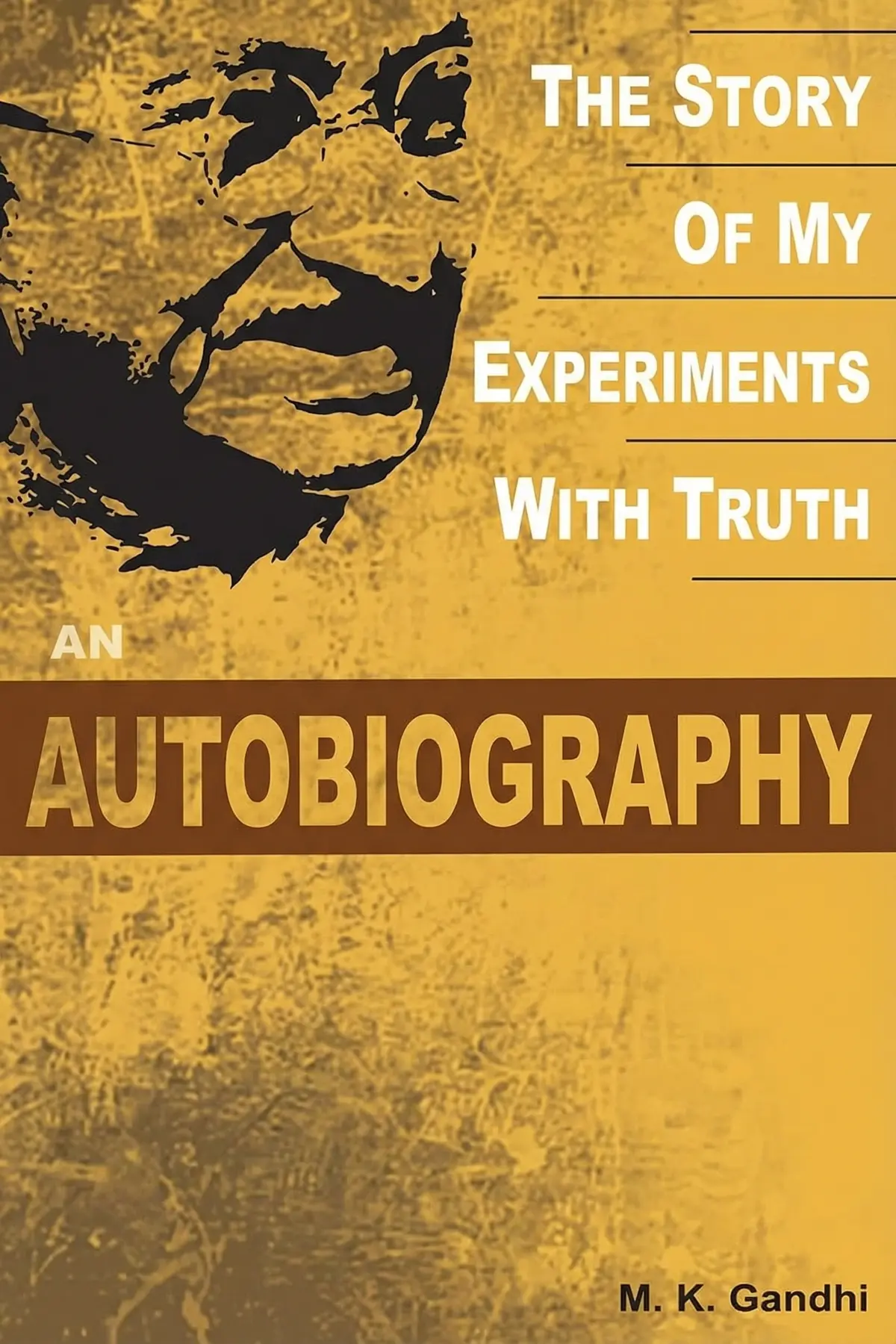
Explore the formative life of M. K. Gandhi, tracing his evolution from a shy young man to a global icon of nonviolent resistance and his relentless pursuit of spiritual truth.
2 min 24 sec
It is often the case that when we look back at the giants of history, we see them as finished monuments—figures carved in marble, distant and divine. We see Martin Luther King Jr., Albert Einstein, or Amelia Earhart and find it difficult to imagine them as stumbling teenagers, or as professionals paralyzed by the same insecurities that haunt us. But the autobiography of Mohandas Karamchand Gandhi offers a rare and intimate departure from that tendency. Through his own words, we are invited to witness the raw, often messy process of a man attempting to align his life with the highest possible ideals. He doesn’t present himself as a saint, but as a scientist of the soul, conducting what he famously called his ‘experiments with truth.’
In this journey, we follow Gandhi through the streets of Porbandar and the lecture halls of London, across the segregated landscapes of South Africa, and eventually back to the heart of the Indian independence movement. This isn’t just a political history; it’s a manual on the evolution of character. We get to see the friction between his early rebellious streaks and his burgeoning sense of morality. We see a shy lawyer who literally couldn’t find the words to speak in a courtroom, only to eventually find a voice that would resonate across continents and generations.
Throughout the narrative, there is a singular throughline: the pursuit of Truth with a capital T. Gandhi believed that Truth was not a static destination but a living force that revealed itself through action, especially through the practice of nonviolence. As we explore his story, we find that his world-changing philosophy didn’t emerge fully formed from a vacuum. It was forged in the fire of personal struggle, dietary restrictions, religious questioning, and a deep, empathetic engagement with the suffering of others. By the end of this exploration, the goal is to understand not just what Gandhi did, but how his unwavering commitment to his principles transformed a single individual into a symbol of peace that still guides modern activism today. Let’s begin by looking at the foundations of that life, starting with a childhood rooted in tradition and a sudden, early entry into adult responsibilities.
4 min 03 sec
Witness the childhood of a future world leader, where traditional values and early moral tests shaped a young boy’s developing conscience in India.
3 min 22 sec
Explore the surprising struggles of Gandhi’s teenage years, where he grappled with forbidden habits and the heavy emotional toll of his choices.
3 min 25 sec
Follow Gandhi to England as he navigates a foreign culture, stays true to his promises, and begins a lifelong study of law and religion.
3 min 25 sec
Discover the pivotal moments of discrimination that transformed a timid lawyer into a bold activist against racial injustice in a new land.
3 min 21 sec
See how Gandhi balanced his professional life with a growing commitment to community service and humanitarian aid during a time of conflict.
3 min 17 sec
Explore the profound shifts in Gandhi’s personal life and the development of a revolutionary new method of peaceful resistance.
3 min 16 sec
Follow Gandhi’s homecoming as he applies his experience from abroad to the struggles of India’s rural poor, challenging centuries-old systems of exploitation.
2 min 57 sec
Witness the expansion of nonviolent resistance to a national scale, and the hard lessons learned when the movement faced the threat of violence.
3 min 09 sec
See how Gandhi’s vision for a free India culminated in a mass movement of noncooperation, and the symbolic power of salt and homespun cloth.
2 min 03 sec
As we reach the conclusion of Mohandas Gandhi’s reflections, we are left not with a finished manifesto, but with a living example of a life in constant motion toward an ideal. Gandhi’s ‘experiments with truth’ demonstrate that greatness is not an inherent trait, but a series of choices made daily—choices to be honest when it’s inconvenient, to be nonviolent when we are provoked, and to be disciplined when we are tempted. From the rebellious teenager in Porbandar to the architect of a national independence movement, Gandhi’s trajectory shows that our past mistakes do not define us if we use them as fuel for our own moral evolution.
His legacy rests on the radical idea that the means and the ends are inseparable. You cannot achieve a peaceful world through violent means, just as you cannot find truth through deception. This is a throughline that remains profoundly relevant in our modern world. Whether we are facing systemic injustice, professional challenges, or internal conflicts, the principle of Satyagraha—clinging to the truth with firmness—offers a path that preserves our dignity and respects the humanity of others. Gandhi didn’t just tell us how to change the world; he showed us that the process begins with the transformation of the self.
The actionable takeaway from Gandhi’s life is the power of the small, consistent habit. He emphasized the importance of physical health through long walks and a simple diet, believing that a clear mind required a disciplined body. He also showed that no task was too small for a leader, whether it was spinning cloth or cleaning a communal space. To honor his legacy is to engage in our own experiments. It means questioning the truths we take for granted and looking for ways to serve our communities with the same humility he practiced. Gandhi’s story invites us to believe that truth-force is not a historical curiosity, but a latent power within each of us, waiting to be exercised.
This summary provides a deep dive into the personal and political journey of Mohandas Karamchand Gandhi, as told through his own reflections. It chronicles his upbringing in India, his education in London, and his pivotal years in South Africa, where he first encountered the systemic racism that would define his future activism. The narrative explores the development of Gandhi's core philosophies—Satyagraha, ahimsa, and self-restraint—revealing how these concepts were not just political tools but results of personal experiments with truth. From his efforts to unite the Indian community abroad to his return to lead the movement for independence at home, the book offers a promise of understanding the man behind the Mahatma and the internal struggles that shaped his external victories.
Mohandas Karamchand Gandhi (Oct 2, 1869-Jan 30, 1948) was an early twentieth-century Indian activist. After working to improve Indian immigrant rights in South Africa, Gandhi returned to India in 1915 to lead the Indian Independence Movement against British rule with his unwavering belief in nonviolent protest until he was assassinated in 1948 during his evening prayers.
Listeners find this autobiography a superb account that offers profound perspective on Gandhi’s pursuit of spiritual growth and truth. The prose is described as enchanting, and they value its historical precision, with one listener pointing out its detailed account of colonial India. Although listeners enjoy the biographical format, they mention that it doesn't cover much of Gandhi's later life. Additionally, the writing quality gets varied reactions, as several listeners pointed out mistakes in grammar within the text.
Finally got around to reading Gandhi’s own words rather than just reading about him in history textbooks. The writing is mesmerizing in its simplicity, almost like he’s sitting right across from you sharing his deepest insecurities. I was particularly struck by his detailed account of life in colonial India and South Africa, which provides a vivid backdrop for his spiritual evolution. To be fair, if you’re looking for a fast-paced political thriller, you’ll be disappointed. This is a slow burn about the 'experiments' he conducted on his own soul. His dedication to truth is frankly humbling, even when he discusses mundane things like his diet or cleaning latrines. Some might find the language a bit dated or notice the occasional grammatical quirk in translation, but it adds to the authenticity. It’s an essential read for anyone trying to understand how a single man could move a nation without lifting a finger in violence.
Show moreThis book is a masterclass in integrity. Gandhi doesn't just preach non-violence; he shows the agonizing internal work required to actually live it. I was deeply moved by his vulnerability regarding his youth and his constant battle against his own ego. Many reviewers complain that the book is 'dry,' but I found the simplicity of his prose to be its greatest strength. It reflects his philosophy: no frills, no pretension, just the raw truth. His insights into the 'culture of the spirit' are as relevant today as they were a century ago. Frankly, it’s refreshing to read a leader who is more interested in his own flaws than in his successes. The detailed accounts of his time in South Africa were especially enlightening, showing the roots of his 'Satyagraha' movement. It’s a long read, but if you approach it with patience, it will fundamentally change how you view power and service.
Show moreWow. I am struck by how a man with no ego could have such a massive impact on the world. This isn't just a book; it's a spiritual exercise. Gandhi’s 'Experiments with Truth' are a reminder that true change starts from within. His honesty about his 'brute nature' and his path to self-restraint is incredibly brave. I found the writing style to be peaceful and meditative, though I can see why some might find it slow. To be fair, you have to be in the right headspace for this. It’s about the journey of a soul, not the highlights of a career. Highly recommended for anyone seeking a deeper understanding of peace and discipline.
Show moreThe honesty here is frankly staggering. Most leaders write autobiographies to polish their legacy, but Gandhi seems intent on exposing every one of his flaws. Whether he’s talking about stealing as a child or his struggles with 'brahmacharya,' he holds nothing back. This creates a deep sense of trust between the reader and the author. His descriptions of the racial injustice in South Africa are heartbreaking and provide crucial context for his later work in India. The writing is mesmerizing because it is so unpretentious. It’s a slow, methodical look at what it means to live a life of total conviction. Yes, there are some translation issues and the pacing is leisurely, but the underlying message is timeless. It’s a must-read for anyone who believes that one person can actually make a difference.
Show moreThe chapter on vegetarianism really opened my eyes to how much Gandhi’s political philosophy was rooted in his personal habits. It’s fascinating to see how he views his life as a series of tests rather than a path to glory. I personally found his honesty about his early failures—like his struggle with lust or his mistakes as a young lawyer—to be the most relatable parts of the book. However, the scope is quite limited as it ends in the early 1920s, leaving out the most famous parts of his later life. You really need to have a search engine handy to understand the various political figures he mentions in South Africa. The prose is simple, almost naive, but there’s a quiet strength in it that sneaks up on you. It’s not a perfect book, and the grammar can be a bit clunky in places, but it’s a vital historical document.
Show morePicked this up during a trip to India and it definitely provided a deep insight into the mindset of the Mahatma. It’s a very intimate look at his development, but it’s worth noting that it stops long before independence. I had to do some extra reading on the side to fill in the gaps regarding the political climate of the 1930s and 40s. The writing is oddly humble—he almost makes his massive achievements sound like happy accidents. I appreciated his focus on 'Ahimsa' as an inner force rather than just a political tactic. Gotta say, the sections on his diet can get a bit tedious, but they are central to who he was. Despite some grammatical errors in the translation I read, the core message remains powerful. It’s a great piece of history that makes Gandhi feel like a real human being rather than a distant god.
Show moreAfter hearing so much about 'Gandhi the Saint,' it was fascinating to meet 'Gandhi the Man.' This book humanizes him in a way that statues and movies never can. You see his stubbornness, his odd obsessions, and his very human fears. The way he describes his childhood and his early days as a bumbling lawyer in South Africa is quite endearing. Look, the book is a bit lopsided—it spends a huge amount of time on his early years and diet, then ends just as things are getting globally interesting. But that’s the point, I think. He wanted to show the process, not the result. The language is simple and direct, though a bit repetitive. If you can get past the lack of 'action,' there is a wealth of wisdom here about self-discipline and the power of truth.
Show moreEver wonder how a man becomes a monument? This book shows the messy, often frustrating process of Gandhi trying to perfect himself. Truth is, I found him to be a bit of an extremist in his personal life, especially regarding his family and his rigid dietary rules. He treats his wife and children almost like test subjects for his theories on renunciation, which was hard to swallow at times. The narrative is incredibly dense with everyday trifles and 'experiments' that don't always seem to lead anywhere. While his commitment to non-violence is inspiring, the writing style is so dry that it drains the life out of his achievements. It’s a valuable read for the historical accuracy of colonial life, but be prepared for a lot of monotony. He spends more time talking about the benefits of goat's milk than the actual mechanics of the independence movement.
Show moreAs someone who admires Gandhi’s legacy, I found this autobiography surprisingly difficult to get through. The problem is that he is too modest. He downplays his own brilliance to the point where the narrative loses its momentum. It’s a bit like reading a diary that focuses more on what the author ate for breakfast than the revolution he was starting. Personally, I was looking for more about his long-term goals and less about his 'experiments' with bowel movements and raw food. There is no sense of the 'fire' that must have existed to challenge the British Empire. It’s a bland account of an extraordinary life. While the historical accuracy regarding colonial India is top-notch, the prose itself is unengaging. It’s an important book, but certainly not a page-turner.
Show moreNot what I expected at all, and frankly, it was a struggle to finish. While I admire Gandhi’s contributions to humanity, his writing lacks any sort of fire or rhetorical strength. He is far too modest, almost to a fault, which makes the narrative feel detached and cold. He recounts major life-altering events with the same flat tone he uses for his vegetarian recipes. Where is the passion? Where is the human struggle against the British Empire? Instead, we get hundreds of pages about his obsession with diet and 'brahmacharya' that feel repetitive and unengaging. Look, I get that he’s a saintly figure, but as an autobiography, this fails to connect on an emotional level. It felt more like a dry manual for self-discipline than a compelling life story. If you want to understand the man, read a biography by someone else who can actually provide the historical context he leaves out.
Show moreIshmael Beah

James Herriot

Pankaj Mishra
Barack Obama

Anthony Pratkanis


Masaji Ishikawa

Ben Macintyre
AUDIO SUMMARY AVAILABLE
Get the key ideas from An Autobiography by M. K. Gandhi, plus 5,000+ more titles in English and Thai.







