
22 min 54 sec
An Ugly Truth: Inside Facebook's Battle for Domination
An investigative deep dive into Facebook’s turbulent history, revealing how a relentless focus on expansion and user engagement frequently compromised global safety, personal privacy, and the integrity of democratic institutions around the world.
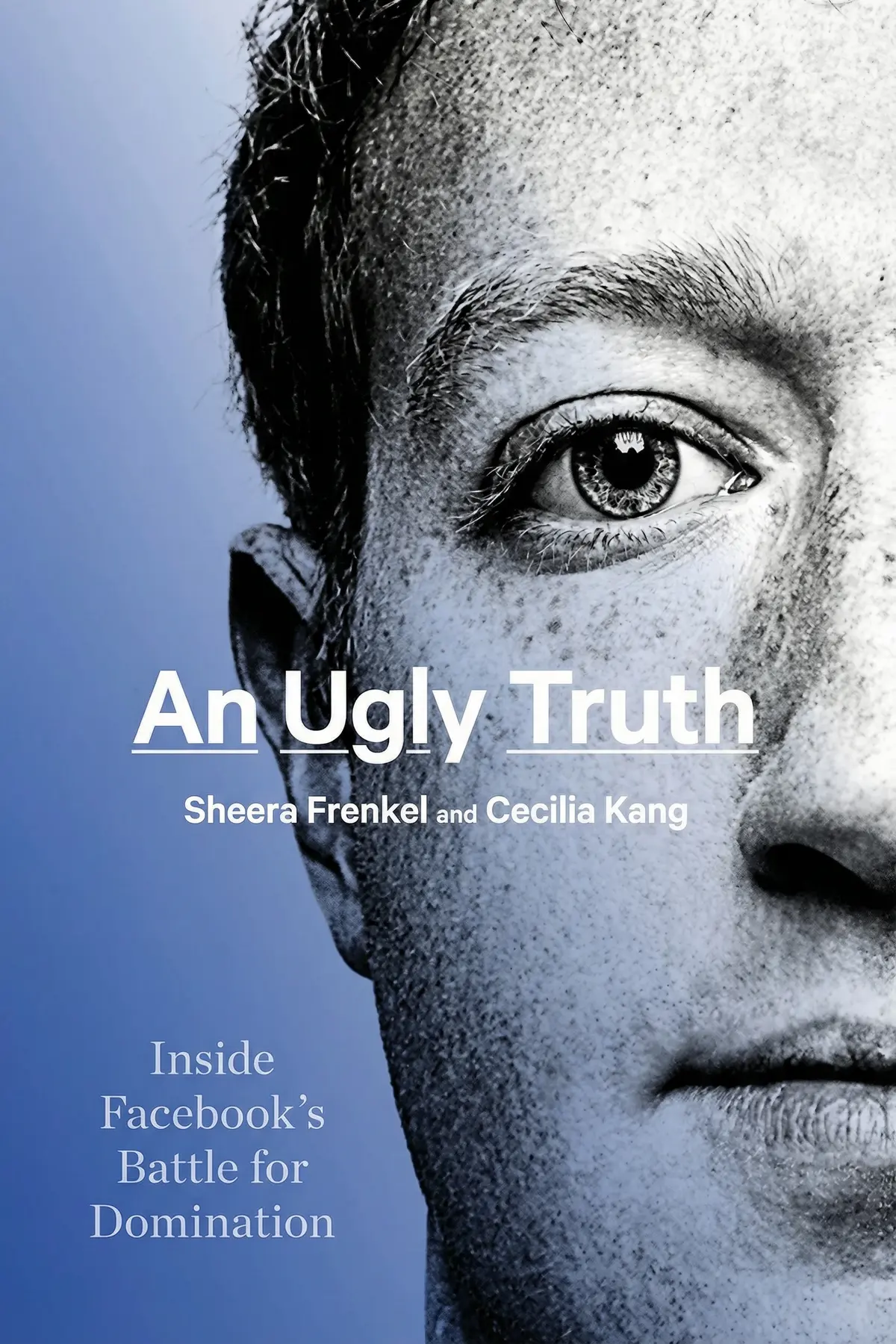
Table of Content
1. Introduction
2 min 02 sec
For years, the story of the world’s most famous social network was told as a modern fairy tale. It was the quintessential Silicon Valley legend: a brilliant, hoodie-wearing college student builds a tool to connect his classmates, and almost overnight, that tool grows to connect billions of people across the planet. For a long time, we focused on the ‘connect’ part of that mission. We marveled at the speed of the company’s rise and the incredible wealth it generated. But as the platform became more integrated into our daily lives, a different, more troubling story began to emerge. This wasn’t just a place to share photos or keep up with old friends; it was becoming a massive, unmanaged infrastructure that had the power to sway elections, incite violence, and compromise the most intimate details of our personal lives.
In this journey through the inner workings of the company, we are going to look past the carefully polished public image. We’ll examine the core philosophy that drove the company from its earliest days—a philosophy that prioritized user growth and platform engagement above almost everything else, including ethics and safety. We will see how the pursuit of dominance created a environment where warning signs were often ignored and where the desire to remain a neutral platform frequently led to dangerous inaction.
Through these segments, we will uncover how specific business decisions, like the move toward hyper-targeted advertising and the creation of the ‘Like’ button, fundamentally changed the nature of the internet. We’ll see how the platform became a playground for foreign actors and data-mining firms. This is more than just a corporate history; it is a look at the tension between the tech industry’s ‘move fast and break things’ mantra and the real-world consequences of those broken things. By the end, the ‘ugly truth’ becomes clear: the very features that made the platform successful are often the same ones that make it so difficult to control. Let’s step inside the halls of one of the world’s most scrutinized empires.
2. Growth Over Ethics
2 min 34 sec
Explore how the fundamental drive for user engagement led the company to prioritize viral content, even when that content bordered on or crossed into hate speech.
3. The Commercialization of Data
2 min 21 sec
Discover how the platform transformed from a social tool into a sophisticated advertising machine by leveraging the vast amounts of information shared by its users.
4. The Struggle for Neutrality
2 min 22 sec
Analyze the company’s difficult position as it tried to balance its role as a neutral platform with the reality of being a primary source for political news.
5. A Lack of Accountability
2 min 28 sec
Examine the internal investigations and public fallout that followed revelations of large-scale data exploitation and foreign interference.
6. The Human Cost of Global Growth
2 min 15 sec
Understand the devastating consequences of the company’s rapid expansion into international markets without adequate cultural or linguistic safeguards.
7. Maintaining the Monopoly
2 min 25 sec
Learn how the company used its immense resources to acquire or crush potential competitors, ensuring its continued dominance in the social media landscape.
8. The Free Speech Pivot
2 min 22 sec
Examine the tactical decision to rebrand the platform as a defender of absolute free speech in response to mounting criticism and regulatory threats.
9. The Breaking Point of Absolutism
2 min 32 sec
Review how a series of global crises finally forced the company to abandon its hands-off approach and implement more rigorous content controls.
10. Conclusion
1 min 33 sec
The journey through the history of this social media giant reveals a consistent theme: the enormous power of technology often outpaces the ethical frameworks of the people who create it. From its start as a campus ranking site to its role as a global political force, the platform has been driven by a singular focus on growth and engagement. We’ve seen how this focus led to the commercialization of our most private data, the amplification of divisive rhetoric, and even the facilitation of international tragedy. The company’s story is a reminder that the tools we use to connect with one another are not neutral; they are shaped by the priorities of the corporations that own them.
While the company has introduced new oversight measures and more stringent moderation policies in recent years, the core conflict remains. The business model still relies on keeping users engaged, and the most engaging content is often the most controversial. The ‘ugly truth’ is that there is no easy fix for a platform that has become so deeply embedded in the fabric of global society. As we move forward, the responsibility doesn’t just lie with the company’s executives or its engineers. It also lies with us, the users and citizens, to demand greater transparency, better privacy protections, and a more responsible approach to the technology that shapes our world. The era of blind faith in tech’s ability to fix everything is over; now begins the much harder work of holding it accountable.
About this book
What is this book about?
This exploration pulls back the curtain on one of the most powerful corporations in human history. It traces the journey of Facebook from a Harvard dorm room to a global infrastructure that shapes political discourse and social interaction. However, the narrative isn’t one of triumph, but of a persistent conflict between growth and responsibility. It details the internal decisions and corporate culture that allowed the platform to be utilized as a tool for misinformation and ethnic violence. Readers will gain insight into the leadership styles of Mark Zuckerberg and Sheryl Sandberg, understanding how their specific priorities shaped the company's trajectory. The summary examines pivotal moments, including the 2016 election interference, the Cambridge Analytica data breach, and the platform’s role in international crises. It provides a comprehensive look at the mechanisms behind the site, from its algorithms to its advertising model, highlighting the 'ugly truth' of how a platform built to connect the world often ended up tearing it apart.
Book Information
About the Author
Sheera Frenkel
Sheera Frenkel is a cybersecurity reporter for the New York Times. Previously, she’s written for a diverse range of outlets including BuzzFeed, NPR, and the Times of London. Cecilia Kang is a technology and policy reporter for the New York Times. Previously, she spent a decade writing for the Washington Post. As a team, Frenkel and Kang have won the George Polk Award for National Reporting, the Gerald Loeb Award for Investigative Reporting, and were finalists for the 2019 Pulitzer Prize for National Reporting.
Ratings & Reviews
Ratings at a glance
What people think
Listeners find the work meticulously researched and thoroughly documented, making it an outstanding source of knowledge. They also value its readability and the quality of the prose, with one listener remarking that it is relatable for a broad audience. Additionally, the storytelling earns praise, with one review describing it as a gripping narrative about scrupleless business people. However, some listeners find the book rather boring.
Top reviews
Mo
What an absolute eye-opener this was. Even if you think you follow tech news closely, the sheer volume of research Frenkel and Kang poured into this narrative is staggering. They don’t just summarize headlines; they take you inside the rooms where the decisions happened. I was particularly struck by the sections on Sheryl Sandberg. For years, she was the 'adult in the room,' but this book paints a much more complicated, almost cutthroat picture of her role in scaling the company at the expense of user safety. The details about the 16,000 privileged accounts and how engineers abused that power to snoop on people were chilling. It reads like a high-stakes thriller, but the consequences are unfortunately very real for our democracy. If you care about where your data goes, you need to read this.
Show moreIce
This reads less like a business book and more like a true crime novel where the victim is democracy itself. I was floored by the revelations regarding the newsfeed experiments. The fact that they purposely manipulated people's emotions—showing more negative content because it drove higher engagement—is absolutely sociopathic. It explains so much about the polarization we see today. The authors' access to former employees provides a perspective you just don't get from standard journalism. You really feel the internal tension between the engineers who wanted to do the right thing and a leadership team that viewed every scandal as a PR problem to be managed rather than a systemic failure to be fixed. I finished this and immediately changed all my privacy settings.
Show moreBae
Frankly, the most disturbing part wasn't the data mining, but the internal culture of 'loyalty' over truth. One former employee in the book says you don't get fired for stupidity, you get fired for being disloyal. That explains why they were so slow to admit to the Russian interference in 2016. They were more worried about protecting the brand than protecting the public. The reporting on how the platform was used to incite violence against the Rohingya is devastating and should be required reading for every tech executive. Frenkel and Kang have done a massive public service by documenting this. It’s an 'ugly truth' indeed, and it makes you realize that we are the product being sold to the highest bidder.
Show moreLincoln
After hearing a lot of buzz about this, I finally dove in. Wow. The sheer arrogance of the leadership team described here is mind-blowing. The book perfectly captures the 'Napoleonic' ambition of Zuckerberg and the cold, calculating business sense of Sandberg. I loved the specific details about the 2019 diversity stats and how the platform failed to protect marginalized groups. It’s not just a book about tech; it’s a book about power and what happens when that power is concentrated in the hands of people who believe they are 'connecting the world' while actually tearing it apart for profit. The writing is sharp, urgent, and incredibly well-supported by evidence. Highly recommend for anyone interested in the intersection of tech and politics.
Show moreNora
Picked this up after the Meta rebrand because I wanted to understand the 'before' times better. The authors do a fantastic job of illustrating how the 'move fast and break things' culture led directly to the humanitarian crises in Myanmar. It’s horrifying to realize there were only five Burmese speakers moderating content while a genocide was being fueled by their platform. The book is structured thematically, which makes it feel a bit disjointed at times, but the individual stories are gripping. I appreciated the deep dive into the 2016 Russian interference and that $100,000 ad campaign that reached millions. It makes you realize how fragile our systems are when growth is the only metric that matters. Definitely worth a read for the historical documentation.
Show moreSing
Finally got around to reading this and the level of detail is impressive. The authors managed to interview over 400 people, and it shows. The most interesting part for me was the origin of the 'Like' button and how something so simple was designed to create a dopamine loop that keeps us addicted. It’s easy to blame the users, but this book proves the 'product' is designed to exploit our worst instincts. My only complaint is that it can be a bit dry in the middle sections when they get into the weeds of DC lobbying. However, the chapters on Cambridge Analytica are the best summary of that mess I've encountered yet. It’s a heavy read, but an essential one for the digital age.
Show moreHarper
Ever wonder why your feed feels like a rage machine? This book explains the exact mechanics behind it. I was fascinated by the contrast between Zuckerberg’s libertarian 'free speech' stance and the reality of how they censored things when it suited their business interests. The authors do a great job of showing how Facebook tries to have it both ways. They want the protection of being a 'neutral platform' while acting like a massive media publisher. It’s a complex legal and ethical web, and this book untangles it as well as anyone could. It loses a star for being a bit too long, but the content is gold. It definitely made me rethink my relationship with Instagram and WhatsApp too.
Show moreKung
To be fair, I went into this expecting a bombshell, but it felt like a very long recap of things I’d already read in the New York Times. The writing is top-notch and the authors are clearly experts, but did we really need another 400 pages to tell us that Zuckerberg is an introverted guy obsessed with growth? The book frames him as this uniquely 'evil' figure, but frankly, every CEO in Silicon Valley is playing the same game. I was hoping for more analysis on how they compare to TikTok or Twitter, but the focus is very narrow. It’s a well-documented history, but if you’ve been paying attention since 2016, you might find yourself skimming a lot of the chapters. It’s a solid 3-star effort for the reporting alone, though.
Show moreTern
I've been a fan of Frenkel and Kang’s reporting for a while, but this book didn't quite hit the heights of 'Bad Blood' or 'Super Pumped' for me. Those books had a clear 'rise and fall' arc, whereas Facebook just keeps growing despite the scandals. The truth is, the book is a bit repetitive. We get it: growth was the priority, and privacy was an afterthought. How many times can you say the same thing? That said, the specific anecdotes about internal company politics—how departments fought each other and how loyalty was valued over transparency—were enlightening. It's a good reference book to have on the shelf, but it’s not exactly a page-turner if you’re already familiar with the broad strokes of the story.
Show moreDiego
Look, I’m no fan of Facebook—I actually deleted my account years ago—but this book felt incredibly one-sided. It felt more like a 'Trump basher' than a serious look at tech infrastructure. The authors seem to imply that every mistake was a calculated move of pure malice, rather than the reality of a massive company being incompetent at policing global speech. Monitoring free speech is probably the hardest job in the world, yet the book treats it like there are simple 'right' answers that Zuck just ignored for profit. Also, the portrayal of Sandberg felt almost personal at points. It’s well-written, but the bias is so thick that I found it hard to trust the narrative. Expected a more objective business analysis.
Show moreReaders also enjoyed

AI 2041: Ten Visions for Our Future
Kai-Fu Lee
Abolish Rent: How Tenants Can End the Housing Crisis
Tracy Rosenthal

Abortion: Our Bodies, Their Lies, and the Truths We Use to
Jessica Valenti

Adults in The Room: My Battle With Europe’s Deep Establishment
Yanis Varoufakis
AUDIO SUMMARY AVAILABLE
Listen to An Ugly Truth in 15 minutes
Get the key ideas from An Ugly Truth by Sheera Frenkel, plus 5,000+ more titles in English and Thai.
- 5,000+ titles
- Listen as much as you want
- 7-day free trial
- Cancel anytime







