
59 Seconds: Change Your Life in Under a Minute
Richard Wiseman
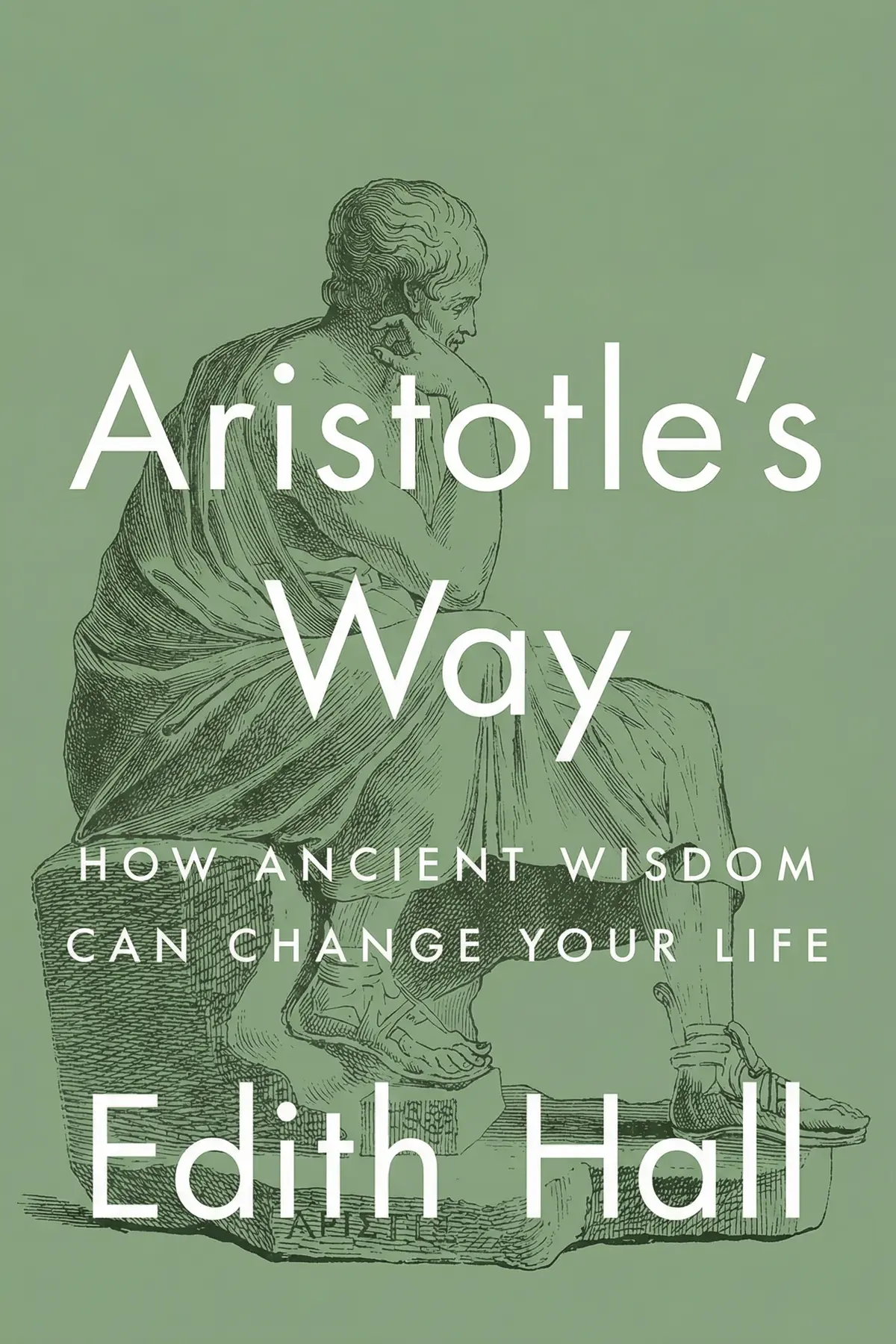
Explore how the timeless philosophy of Aristotle offers a practical roadmap for modern fulfillment, focusing on ethical decision-making, effective communication, and the pursuit of a balanced, virtuous life through reason.
1 min 50 sec
If you were to take a citizen from the ancient world and drop them into the center of a modern metropolis like New York or Tokyo, they would likely be overwhelmed by the sheer scale, speed, and complexity of our lives. On the surface, our digital, globalized society bears almost no resemblance to the city-states of Ancient Greece. Yet, beneath the surface of technology and infrastructure, the fundamental challenges of being human remain identical. We all struggle with how to make the right choices, how to manage our tempers, how to find lasting friendships, and how to define a life well-lived.
This is the core realization that Edith Hall, a renowned British classicist, brings to light in her exploration of Aristotelian thought. When she first encountered his work as a young student, it wasn’t just an academic exercise; it was a life-altering revelation. Aristotle didn’t just want to talk about the world; he wanted to provide a guide for living in it. His philosophy is remarkably practical, focused on the idea that happiness is not a stroke of luck or a passive state of mind, but a skill that can be practiced and perfected.
In this summary, we will walk through the pillars of Aristotle’s approach to existence. We’ll look at his own turbulent history to see how he became a late bloomer in the world of philosophy. We will explore his specific definition of happiness as an active pursuit of excellence and reason. You’ll discover a three-step formula for making better decisions, a method for spotting faulty logic in others’ arguments, and a strategy for effective communication that can help you in your career. Finally, we will examine his views on virtue as a middle path and his hierarchy of friendship. By the end, you’ll see how these ancient ideas provide a remarkably modern toolkit for finding meaning and fulfillment in the twenty-first century.
2 min 27 sec
Discover the surprisingly turbulent life of one of history’s greatest thinkers and why his late-life productivity offers hope to anyone still finding their way.
2 min 06 sec
What if happiness isn’t a feeling you catch, but an activity you perform? Explore the ancient concept of eudaimonia and how it redefines the goal of human life.
2 min 17 sec
Stop second-guessing yourself by applying three ancient rules to your most difficult dilemmas, ensuring your choices are based on facts rather than impulses.
2 min 16 sec
Learn to defend your mind against manipulation by understanding the structure of a bad argument and how to identify a hidden, dubious premise.
2 min 12 sec
Whether you’re writing a cover letter or making a pitch, Aristotle’s timeless rules for rhetoric ensure your message is received with clarity and respect.
2 min 08 sec
Forget extreme self-denial; discover why the secret to a good character is finding the perfect balance between two extremes of behavior.
2 min 29 sec
Not all friends are created equal. Learn to categorize your relationships so you can appreciate them for what they are without expecting the impossible.
1 min 47 sec
As we have seen, the philosophy of Aristotle is far from a collection of dry, dusty axioms. Instead, it is a vibrant, living system for navigating the complexities of the human condition. From his own example, we learn that it is never too late to find our purpose and that our most productive years may still be ahead of us. By redefining happiness as an active pursuit of reason and excellence, we gain a sense of agency over our own fulfillment. We no longer have to wait for luck to strike; we can ‘do’ happiness every day by making mindful choices and seeking to understand the world.
Aristotle’s practical tools—his formula for deliberation, his rules for clear communication, and his logical frameworks—arm us against the impulsiveness and manipulation that so often lead to regret. By seeking the ‘Golden Mean,’ we find a way to balance our emotions and actions, avoiding the destructive extremes of excess and deficiency. And by understanding the different tiers of friendship, we can build a social world that is both realistic and deeply supportive.
The ultimate lesson of Aristotle’s Way is that a good life is a conscious life. It requires us to pay attention, to check our facts, to be honest with ourselves, and to strive for a balance in all things. It is an art form that we practice until the day we die. As you move forward, try to look at your next big decision or your next difficult conversation through an Aristotelian lens. Ask yourself: am I acting on impulse or reason? Am I seeking the middle path? Am I being clear and respectful? By doing so, you aren’t just studying ancient history; you are mastering the art of living well in the modern world.
How do we find true satisfaction in a world that feels increasingly chaotic? While modern life seems lightyears away from the marble columns of Ancient Greece, the core of the human experience remains unchanged. In Aristotle’s Way, classicist Edith Hall demonstrates that the path to a meaningful existence was mapped out over two millennia ago. This summary explores Aristotle’s most influential concepts, not as dusty academic theories, but as lived practices that can transform your daily existence. You will learn how to approach major life decisions with a specific deliberative formula, how to distinguish between different levels of friendship, and why true happiness is something you do rather than something you simply feel. By looking at the Golden Mean—the idea that virtue lies in balance—you’ll see how to navigate your emotions and actions more effectively. Whether it’s mastering the art of persuasion to land a new job or understanding why some friendships fade while others endure, this guide bridges the gap between ancient philosophy and contemporary living, offering a blueprint for the art of being human.
Edith Hall stands as one of the United Kingdom’s most distinguished classicists. A professor at Durham University, she has spent her career making the ancient world accessible to modern audiences. Her academic excellence has been recognized with the Erasmus Medal of the European Academy, making her the first woman to receive the honor, and she also holds an honorary doctorate from Athens University. Beyond her scholarly work, she is the author of Introducing the Ancient Greeks, further establishing her role as a leading voice in classical studies.
Listeners view this work as exceptionally well-crafted and describe it as a fantastic listen. Beyond this, they value its educational substance, with one listener highlighting how it offers a practical grasp of the natural world. The title also provides a deep examination of Aristotle’s biography, and one listener remarks that it acts as a perfect entry point to the philosopher’s teachings.
Finally got around to reading this and I was genuinely impressed by how accessible Hall makes such a dense subject. She provides a practical understanding of the natural world and our place within it that feels both grounded and deeply inspiring. While many philosophy books stay trapped in the clouds, this one offers a thoughtful exploration of how to actually live a better life day-to-day. I particularly appreciated her breakdown of eudaimonia as something we actively pursue through habit rather than just a fleeting feeling. To be fair, she does take a few shots at Stoicism that might annoy fans of Marcus Aurelius, but her defense of Aristotelian 'doing' over Stoic 'enduring' is compelling. It’s an excellent introduction for those who find the original texts too intimidating. The prose is fluid and the structure makes it easy to digest in small sittings. I’ll be recommending this to anyone looking for a secular framework for ethics.
Show moreEdith Hall makes a compelling argument that we don't need religion to have a robust and meaningful moral framework. For someone like me who values logic but craves a sense of purpose, this book was a revelation. It bridges the gap between science and the 'good life' beautifully. She covers everything from the importance of friendship to how we face our own mortality. The prose is lively and she does a great job of explaining why Aristotle’s focus on the community is more relevant now than ever. Not gonna lie, I was surprised by how much I enjoyed her take on his lost work on comedy and the 'Name of the Rose' references. It’s a very readable interpretation that doesn't sacrifice intellectual integrity for the sake of being 'popular.' This is easily one of the best introductions to ancient wisdom I’ve come across in years.
Show moreTruth is, I wasn't expecting a book on ancient philosophy to be this much of a page-turner. Hall’s writing is the opposite of burdensome; it’s energetic, clear, and deeply human. She manages to show how Aristotle’s way of looking at the world can actually change your life for the better. The way she describes Aristotle as a 'socialist' who believed in the texture of life was fascinating and made him feel so much more relatable. I loved the focus on practical engagement and problem-solving rather than just abstract theory. Some might find her personal anecdotes insipid, but I thought they added a nice layer of authenticity to the book. It’s rare to find a scholar who can speak to the general public without sounding condescending. This is a great read for anyone looking to find a sense of direction in a world that often feels chaotic and meaningless. Highly recommended.
Show moreAs someone who has always struggled with the conflict between science and religion, I found Hall’s presentation of Aristotle incredibly refreshing. She positions his ethics as a third way that doesn't rely on divine command or cold, utilitarian calculations. The chapter on potentiality and actuality was especially illuminating, even if her application of those concepts to the abortion debate was a bit controversial. Truth is, her writing is extremely well-written and she has a knack for distilling complex ideas into something a modern reader can use. I did find some of her digs at the Christian tradition a bit unnecessary for the overall argument, but they didn't ruin the experience. It serves as a great read for anyone wanting to build a life based on character and intention. The focus on community and being a 'social animal' is a much-needed antidote to the hyper-individualism we see today. Definitely worth the time for the first few chapters alone.
Show moreEver wonder if ancient Greeks actually have the secret to modern happiness? Hall makes a convincing case that they do. This book is a thoughtful exploration of Aristotle's life and work, framed in a way that makes it feel incredibly relevant to the 21st century. I loved the emphasis on 'virtuous habits' and the idea that we are what we repeatedly do. Gotta say, the section on how to make better decisions using the 'mean' between extremes was very practical. There were a few moments where the writing felt a little too much like a self-help manual for my taste, especially the modern workplace examples. However, the scholarship is clearly there and she manages to make the 'father of philosophy' feel like a mentor rather than a statue. It’s a great read if you want to understand the foundations of Western ethics without having to learn Ancient Greek first.
Show morePicked this up after hearing it was an excellent introduction to Aristotle, and for the most part, that holds true. Hall has a wonderful way of explaining how the natural world informs our moral choices. The book offers a practical understanding of how to build character through small, daily actions. I found the chapter on happiness particularly strong because it moves away from the 'pursuit of pleasure' and toward the 'realization of potential.' There were parts where she leaned a bit too far into the self-help genre, which made some of the philosophical complexity feel a bit watered down. However, the writing is extremely well-written and kept me engaged through most of the chapters. Even when I disagreed with her modern applications—like her views on the reception of Aristotle through the Church—I still found her perspective worth considering. It's a solid 4-star read for any curious mind.
Show moreIt’s a decent enough primer on virtue ethics, but the book is more of an ode to Aristotle than a balanced critique. Hall clearly loves her subject, which is great, but it leads her to dismiss other schools of thought like Stoicism in a way that feels superficial and grim. She characterizes Stoicism as mere resignation, which is a common misconception that misses the nuance of their practical engagement with the world. The book is strong when it sticks to the core tenets of the Nicomachean Ethics, but it gets a bit fluffy when she tries to apply it to modern film and television. I found the referential nods to pop culture a little bit cringey and they didn't really add much to my understanding of the philosophy. It’s informative for a beginner, but if you’ve already read a bit of philosophy, you might find this a little bit bland. It’s okay, just not the life-changing experience the subtitle promises.
Show moreThis book is essentially an ode to a specific brand of secular humanism, using Aristotle as the mouthpiece. While it’s certainly informative, it often falls flat because Hall's personal biases are so front-and-center. Her unnecessary jabs at Christianity and her dismissal of Stoicism as 'grim' felt beneath a scholar of her caliber. To be fair, she does a reasonable job of presenting the basics of virtue ethics and the 'potential-act' distinction. But the advice itself? It’s often a bit bland. Most of the 'wisdom' boils down to 'be balanced' and 'know yourself,' which isn't exactly groundbreaking even if it does come from a Greek philosopher. I found the middle sections of the book to be quite repetitive. It’s a fine book for a plane ride, but don't expect it to provide anything especially pithy or life-altering if you're already familiar with the basics of philosophy.
Show moreLook, I really wanted to like this, but it felt like a chore from start to finish. The writing style was burdensome and at times felt like I was being lectured by a teacher who thinks they’re being 'hip' but is actually just out of touch. Hall tries to use Aristotle to justify everything from modern job hunting to specific political stances, and it often feels like a massive reach. I found her personal interjections and anecdotes to be dull and surprisingly insipid for someone of her academic standing. Instead of a deep dive into virtue ethics, we get a sort of 'pop-psychology' version of Aristotle that lacks the teeth of the original philosophy. It’s more of a self-help book with a Greek veneer than a serious work of history or philosophy. I’m sure Hall is lovely, but this particular approach just didn’t work for me at all.
Show moreThe writing style felt distinctly off-putting and the contemporary examples Hall uses were a total reach for me. For example, trying to connect Aristotle’s deep ontological theories to how one should write a cover letter felt like she was trying to stretch a thin premise way too far. It’s a shame because the historical context she provides is actually quite interesting. But then she’ll interject with a personal anecdote that feels totally insipid, and I lose interest all over again. I agree with other reviewers who said it felt like a chore to get through the later chapters. It’s basically a pop-psychology book that uses Aristotle as a mascot rather than engaging with the difficult parts of his thought. If I wanted a self-help book, I would have bought one. I was looking for a decent application of philosophy to modern times, but this felt more like a collection of bland life advice.
Show moreRichard Wiseman
William B. Irvine
Andrew D. Thompson
AUDIO SUMMARY AVAILABLE
Get the key ideas from Aristotle’s Way by Edith Hall, plus 5,000+ more titles in English and Thai.







