
19 min 32 sec
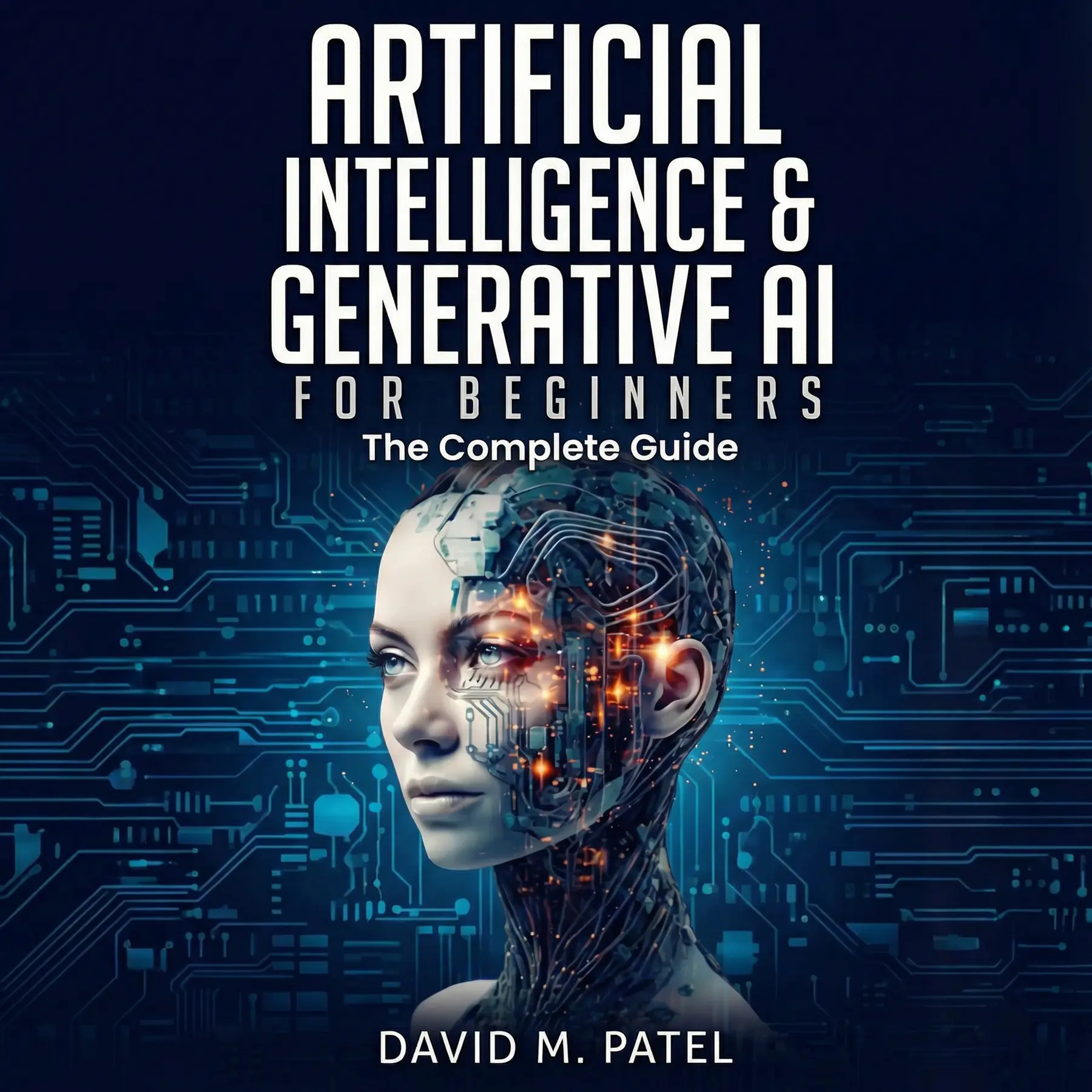
Artificial Intelligence & Generative AI for Beginners: The Complete Guide
Demystify the world of modern technology by exploring the foundations of machine learning, neural networks, and generative models, while learning the practical art of prompt engineering and ethical AI usage.
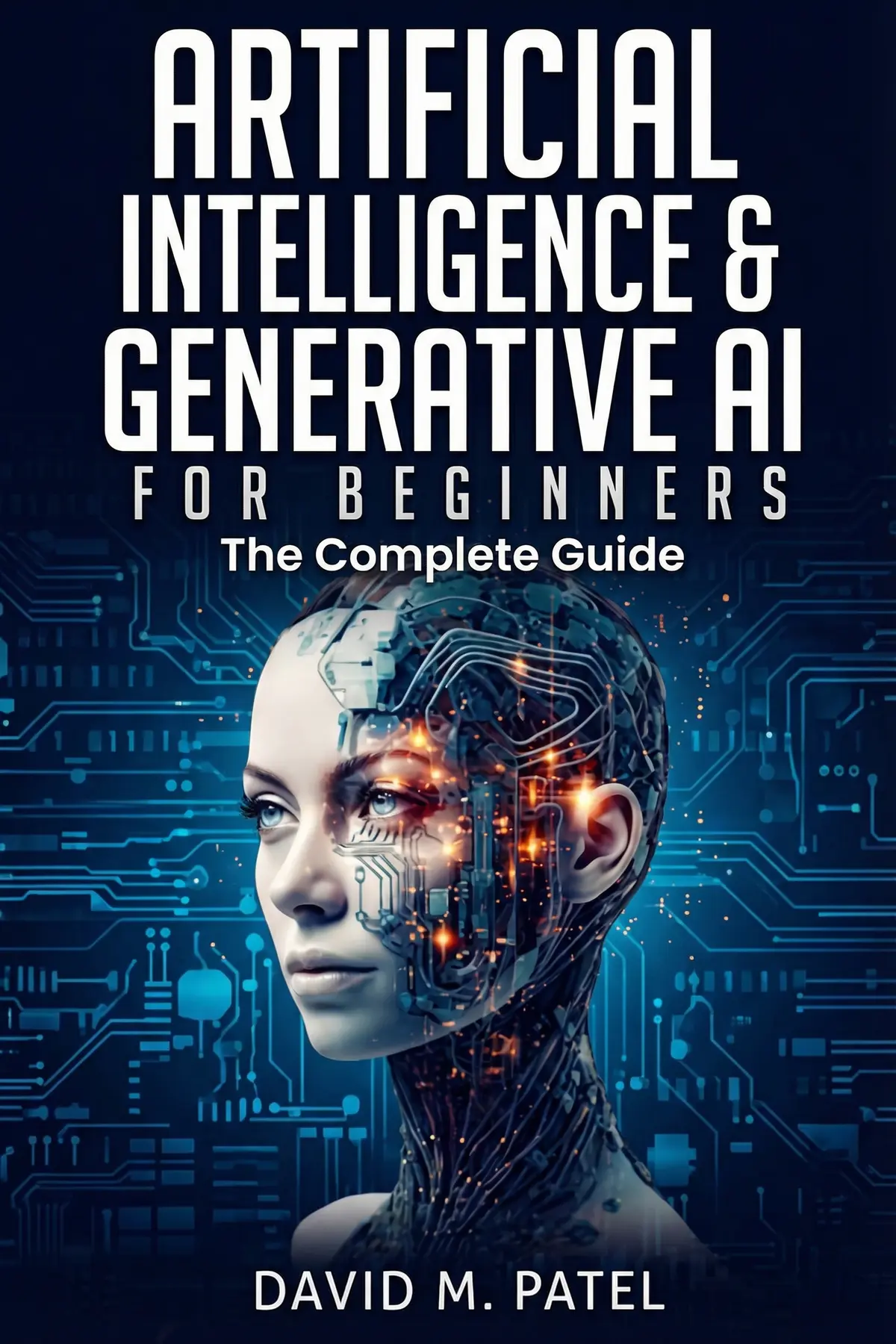
Table of Content
1. Introduction
1 min 45 sec
For decades, the concept of a machine that could think, reason, and create was the exclusive domain of science fiction. We watched movies and read stories about mechanical minds, but for the average person, these were distant fantasies. Today, that boundary has dissolved. We are living in an era where artificial intelligence isn’t just a laboratory experiment; it is the silent engine behind our streaming recommendations, the diagnostic tool helping doctors save lives, and the creative partner helping writers and artists manifest their visions. This shift represents one of the most significant technological leaps in human history, and yet, for many, the inner workings of AI remain shrouded in mystery.
In this exploration of David M. Patel’s guide, we are going to pull back the curtain on this transformative technology. We will trace the journey of AI from its theoretical beginnings in the mid-twentieth century to the sophisticated generative models that are currently reshaping our world. This isn’t just about understanding code or mathematics; it’s about understanding a new way of interacting with information. We’ll look at how machines learn from experience, how they mimic the neural pathways of the human brain, and how you can communicate with these systems more effectively.
Our goal is to move from being passive observers of the AI revolution to becoming informed participants. By the time we finish, you’ll have a clear grasp of the different types of machine learning, the power of deep learning, and the immense potential—and ethical challenges—of generative AI. Whether you are looking to future-proof your career or you are simply curious about the tools changing our daily lives, this throughline will provide the foundational knowledge you need to navigate the automated world ahead.
2. The Roots and Pillars of Artificial Intelligence
2 min 59 sec
Travel back to the 1950s to see how the dream of thinking machines evolved into the practical tools we use today.
3. The Three Methods of Machine Learning
2 min 48 sec
Discover the different ways machines acquire knowledge, from guided instruction to trial-and-error discovery.
4. Deep Learning and the Architecture of Artificial Brains
2 min 43 sec
Learn how multi-layered neural networks allow machines to recognize complex patterns like faces and human speech.
5. The Creative Revolution of Generative AI
2 min 31 sec
Explore the shift from machines that merely sort data to machines that can create entirely new content from scratch.
6. The Art of Prompt Engineering
2 min 26 sec
Master the skill of communicating with AI to unlock more accurate, creative, and professional results.
7. Navigating the Future and Ethical Landscape
2 min 32 sec
Consider the profound changes coming to global industries and the moral challenges we must solve along the way.
8. Conclusion
1 min 48 sec
As we wrap up this journey through the landscape of artificial intelligence, it’s clear that we are standing at a historic crossroads. David M. Patel’s insights remind us that AI is far more than a collection of code; it is a fundamental shift in how we solve problems, communicate, and create. From the foundational logic of the 1950s to the staggering creative power of today’s generative models, we’ve seen how these systems mimic human learning to achieve extraordinary results. We’ve explored the mechanics of machine learning, the layered complexity of neural networks, and the practical skills needed to navigate this new digital reality.
The throughline of this summary is empowerment through understanding. While the technical details of deep learning and transformers are fascinating, the real value lies in knowing how to apply these tools while remaining mindful of the ethical challenges they present. Issues like bias, privacy, and the authenticity of content are not just problems for engineers to solve—they are societal conversations that require all of us to be informed.
Looking ahead, the best way to prepare for an AI-integrated future is to remain curious and adaptable. Use the techniques of prompt engineering to experiment with these tools in your own life. Stay critical of the information you encounter, and keep an eye on how these technologies are reshaping your specific industry. AI is not a replacement for human intelligence, but a powerful extension of it. By harnessing its potential responsibly, you can position yourself to thrive in an era defined by automation and innovation. The future is no longer a distant dream—it is happening right now, and you are ready to be a part of it.
About this book
What is this book about?
This guide serves as a comprehensive entry point into the rapidly shifting landscape of artificial intelligence. It moves beyond the buzzwords to explain how machines actually learn, process visual data, and generate human-like text and art. By breaking down complex technical concepts into digestible insights, it prepares readers to navigate a world where AI is becoming an inseparable part of professional and personal life. The promise of the book is clarity and empowerment. It provides the historical context of AI’s evolution, explains the mechanics of deep learning, and offers practical strategies for interacting with generative models. From healthcare innovations to the ethical dilemmas of deepfakes, it covers the breadth of AI's impact, ensuring that even those with no technical background can participate in the ongoing digital revolution.
Book Information
About the Author
David M. Patel
David M. Patel is an AI expert with over 15 years of experience, holding an M.S. in Computer Science from Cornell University. He has worked for major tech companies like Google and Facebook and is known for making AI accessible through his writing and teaching. Passionate about knowledge-sharing, Patel actively contributes to online courses and local educational initiatives, making artificial intelligence more accessible to a wider audience.
Ratings & Reviews
Ratings at a glance
What people think
Listeners find this work a highly useful resource for newcomers, as the author distills intricate topics into straightforward, simplified explanations. They value the caliber of information, clarity, and readability, with one listener pointing out that it is understandable even for absolute novices. While the content is well-received, perspectives on accessibility vary; some feel it is overly elementary. Both the pacing and writing quality also draw mixed reactions.
Top reviews
Pannipa
David M. Patel has crafted an incredibly accessible entry point for anyone feeling overwhelmed by the current tech surge. Before reading this, I found the concept of neural networks completely intimidating, but the author breaks them down into digestible, human-centric metaphors. I especially appreciated the deep dive into how AI has moved from Alan Turing’s theoretical questions to the practical tools we use daily like Siri. The writing style is clear and moves at a steady clip, making it a great weekend read. It’s rare to find a book that covers both the history and the future—like prompt engineering and ethical deepfake concerns—without getting bogged down in dense jargon. If you want to understand the 'why' behind the AI revolution without needing a computer science degree, this is the guide to get.
Show moreAndrew
Ever wonder how we went from simple chatbots to AI that can generate original music and art? Patel’s book provides a comprehensive roadmap of that exact journey. I loved the focus on prompt engineering as a vital skill for the future; it turned the book from a passive history lesson into a practical manual. The chapters on reinforcement learning were a highlight for me, explaining how systems learn by interacting with their environments. It’s a very well-written piece of work that doesn’t shy away from the scary stuff either, like algorithmic bias and data privacy issues. I’ve recommended this to several colleagues who were looking for a clear, non-technical explanation of the AI landscape.
Show moreAiden
Picked this up because I felt left behind by all the talk about ChatGPT and generative tools. Patel is a master at taking complex, scary topics like 'Variational Autoencoders' and making them feel understandable. I particularly enjoyed the section on NLP and how machines are finally beginning to grasp human nuance. The book also takes a very responsible stance on ethics, which I think is important. It doesn't just celebrate the tech; it warns us about bias and the importance of human oversight. The structure is logical, the tone is encouraging, and the clarity is top-notch. I finally feel like I can participate in conversations about the future of AI with some actual confidence.
Show moreSupranee
In my experience, tech books are either too simple or far too dense, but this one hits the sweet spot. The way Patel explains the 'hidden layers' of deep learning by comparing them to the human brain’s neural networks was a lightbulb moment for me. I also found the practical tips on managing context windows in AI prompts to be immediately useful for my work. It’s a comprehensive, clear, and very readable guide. Despite what some other reviewers said about the formatting, I found the flow of information to be very logical. It’s a fantastic resource for anyone looking to leverage AI for positive change in their personal or professional life.
Show moreAnong
Finally got around to educating myself on the difference between supervised and unsupervised learning, and this book made it stick. The way Patel explains how data provides the 'experience' for AI while algorithms act as the guide is a brilliant way to frame it for beginners. I found the sections on Computer Vision and NLP particularly illuminating, as they explain the mechanics behind things we take for granted, like photo tagging. One minor gripe: the formatting is a bit hit-or-miss, as some section headers aren't bolded, making it easy to lose your place. Still, the information quality is high for a novice. It’s a solid 4-star read that demystifies a lot of the hype surrounding generative models like GPT and VAEs.
Show moreFatima
As someone who works in healthcare, I was specifically interested in how AI is reshaping my industry. Patel does a great job of highlighting real-world applications, from diagnostic assistance to drug discovery. The explanation of Convolutional Neural Networks for image recognition made sense to me in a way other articles haven't. My only complaint is the pacing; the book starts off strong but feels a little rushed toward the end when discussing the ethics of deepfakes. Look, it’s not a textbook, and it shouldn’t be treated as one. It’s a fast, informative overview for people who want to understand the jargon. Definitely worth the read for the prompt engineering tips alone.
Show moreNathan
To be fair, the first half of this guide is significantly stronger than the second half. The historical overview starting from the 1950s is well-paced and provides a necessary context for how we reached the current era of robotics and expert systems. However, once the author transitions into Generative AI, things become a bit messy. I noticed inconsistencies where 'Text-to-Text' was abbreviated as TTT in one section and T2T in the next, which is confusing for a 'beginner's guide.' It’s a bit of an obvious read if you’ve been following tech news at all lately. It works as a quick primer, but don't expect to walk away with a deep technical understanding of how these models are actually built.
Show moreBae
The journey through AI history was interesting, but the rest of the book felt like a bit of an obvious read. I appreciated the breakdown of the three main types of machine learning—supervised, unsupervised, and reinforcement—but I wish there was more 'meat' on the bones. The writing quality is okay, but it lacks a unique voice, making me wonder if generative AI was used to draft parts of it. For a total novice, this is an invaluable guide to the terminology. For anyone else, it might feel a bit like a collection of blog posts. It’s a decent introductory resource, but certainly not the 'complete' guide the title claims it to be.
Show moreEnd
Is it just me, or does this book feel like it was actually written by the very technology it’s trying to explain? I was suspicious the moment I saw weirdly specific chapter numbers like 2.3.1.2.1, which looks exactly like a nested LLM output. Truth is, the content is extremely thin and repeats itself constantly. In one paragraph, a case study refers to 'Gaming Company U,' but then switches to 'Gaming Company V' just two sentences later without any explanation. It’s frustrating because there is a decent outline of topics here, from CNNs to RNNs, but it never moves past a surface-level summary. It feels like a collection of ChatGPT responses that were barely edited before being sent to print. I’d suggest looking elsewhere if you want actual depth.
Show moreFord
Frankly, this was a disappointment. It reads more like a bloated PowerPoint presentation than a cohesive book. The author mixes high-level expert terminology with explanations that are so simplified they end up explaining nothing at all. I was looking for a real look at the mechanics of GANs and transformers, but I got a few paragraphs that felt like they were copied from a Wikipedia summary. Also, the lack of professional editing is glaring. When you see basic inconsistencies in company names and formatting errors throughout the text, it’s hard to trust the expertise of the author. It’s too general to be useful for anyone who has even a passing interest in technology.
Show moreReaders also enjoyed
AUDIO SUMMARY AVAILABLE
Listen to Artificial Intelligence & Generative AI for Beginners in 15 minutes
Get the key ideas from Artificial Intelligence & Generative AI for Beginners by David M. Patel, plus 5,000+ more titles in English and Thai.
- 5,000+ titles
- Listen as much as you want
- 7-day free trial
- Cancel anytime







