
A River in Darkness: One Man’s Escape from North Korea
Masaji Ishikawa
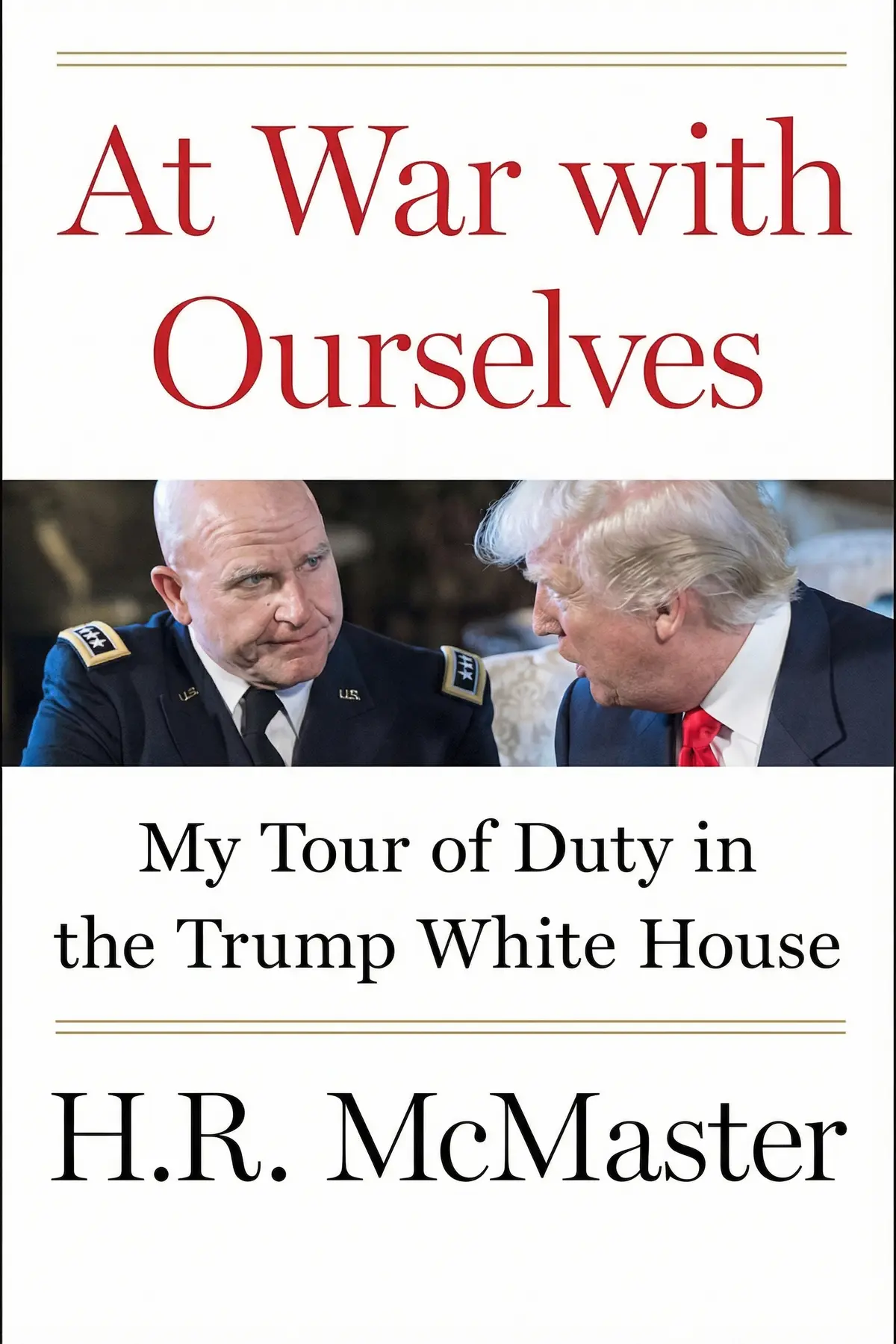
At War with Ourselves provides a candid, insider account of General H. R. McMaster’s tumultuous year as National Security Advisor, revealing the internal struggles and strategic hurdles of the Trump administration.
1 min 38 sec
The corridors of power in Washington are rarely as orderly as they appear from the outside, but even by those standards, the early months of 2017 were exceptional. When General H. R. McMaster accepted the role of National Security Advisor, he wasn’t just taking a job; he was stepping into a whirlwind. The administration was reeling from the rapid departure of his predecessor, and the world was watching to see if the new president could project a coherent vision for American safety and influence. McMaster, a man defined by military discipline and intellectual rigor, entered the West Wing with a clear mission: to replace chaos with strategy and to ensure that the nation’s long-term interests weren’t sacrificed for short-term political wins.
However, what he encountered was a landscape of deep-seated rivalries, clashing egos, and a fundamental disagreement over how the government should function. This wasn’t a typical tour of duty. Instead of a clear chain of command, McMaster found himself navigating a maze where policy was often secondary to personality. The throughline of his experience is the constant struggle to bridge the gap between a president who operated on instinct and a national security apparatus built on deliberation and precedent. In this exploration, we’ll look at the specific moments where strategy met reality—from the lavish sitting rooms of Florida to the high-stakes briefings in the Situation Room. We will see how one man tried to steer the ship of state through a storm of internal conflict, and the personal and professional cost of trying to maintain order in an administration that often thrived on its absence. This is a story of what happens when the duty to serve the country collides with the messy, unpredictable nature of modern political power.
2 min 08 sec
When a national crisis creates a vacancy at the top of the security apparatus, a decorated general finds himself in an unexpected interview that will change his life.
2 min 28 sec
Establishing order in the National Security Council meant confronting ideological figures who prioritized political agendas over strategic stability.
2 min 34 sec
To guide a leader who favored instinct over briefing books, the General had to innovate new ways of presenting complex geopolitical realities.
2 min 22 sec
Instead of a united front, the nation’s top security leaders found themselves divided by territorial disputes and differing views on how to handle the President.
2 min 12 sec
As internal rivalries simmered, a coordinated campaign of public character assassination began to erode the General’s standing in the West Wing.
2 min 17 sec
A high-profile trip to a global economic summit highlighted the growing gap between the General’s long-term vision and the President’s focus on branding.
2 min 19 sec
The poisoning of a spy on foreign soil and a final push for Russian accountability marked the end of a long and difficult tour of duty.
1 min 34 sec
The story of H. R. McMaster’s time in the White House is a sobering look at the limits of strategic influence in an era of extreme political volatility. Throughout his year-long tenure, McMaster attempted to apply the lessons of history and the discipline of military planning to an environment that often rejected both. He succeeded in establishing a more structured National Security Council and in pushing through key decisions on Afghanistan and Russian accountability, but these successes were constantly under threat from within. The ‘war with ourselves’ described in his account is not just about the clashing personalities of a specific administration; it is about the broader struggle to maintain institutional integrity and long-term vision in a world increasingly driven by immediate perception and partisan divide.
The actionable takeaway from this journey is the vital importance of process and objective advice in governance. McMaster’s experience shows that without a commitment to a shared set of facts and a collaborative decision-making structure, even the most brilliant strategy can fall apart. For those in leadership, the lesson is clear: your greatest challenges may not come from your external rivals, but from the internal discord and ego-driven silos within your own organization. True national security requires a unified front and a willingness to put the country’s long-term stability above short-term political or personal gain. As the blossoms of that final spring reminded the General, individuals come and go, but the strength of a nation depends on the health and resilience of the systems they leave behind.
This narrative dives into the complex and often volatile environment of the White House during a period of significant transition. It focuses on the tenure of H. R. McMaster, a highly respected military strategist who stepped into the role of National Security Advisor at a time of immense political pressure and global instability. The core of the story explores the inherent tension between long-term strategic planning and the immediate, often impulsive demands of a presidency defined by disruption. Listeners will gain a deeper understanding of the internal power dynamics that shape American foreign policy. The book promises to reveal how institutional order was established, how it was undermined by internal rivalries and ideological clashes, and what it truly looks like to advise a leader who views the world through a prism of personal loyalty and media perception. It is a study of leadership under fire, the difficulty of maintaining integrity in a partisan environment, and the constant battle to keep national interests at the forefront of the global stage.
H. R. McMaster is a retired lieutenant general in the United States Army and a prominent author. He held the position of National Security Advisor between 2017 and 2018 during the administration of President Donald Trump. His literary contributions to the field of military history and strategy include the notable works Dereliction of Duty and Battlegrounds.
Listeners consider the work highly readable and skillfully written, providing deep insights into the National Security Advisor's daily life. The book earns praise for its honesty and precision, with one listener pointing out the meticulous documentation of cited conversations. Additionally, the quality of the writing and the author’s moral perspective are well-received. However, the narrative flow gets a varied response; one listener found the account hard to follow, and several listeners reported issues with missing pages.
H.R. McMaster has written a remarkably grounded account that balances military discipline against the sheer unpredictability of the West Wing. I found the level of documentation staggering; he includes extensive citations that make the various conversations feel incredibly authentic and immediate. He really captures that 'witches' brew' of influence where ego-driven actors like Bannon constantly undercut the National Security Council's structured goals. I was particularly struck by how McMaster used visual aids, like photos of 1970s Kabul, to bridge the gap between complex strategy and the President's preference for tangible imagery. While some might find his 'service first' mentality a bit idealistic, his commitment to a moral compass in such a volatile environment is genuinely refreshing. It’s an easy read that doesn’t sacrifice intellectual rigor for the sake of gossip. This isn't just a memoir about one administration; it's a study on the friction between institutional order and political improvisation.
Show moreFinally got around to reading this, and I have to say, McMaster’s integrity shines through every single page. He provides a masterclass on how to maintain a strategic mindset when everyone else is focused on the next news cycle or Twitter feud. Unlike other tell-alls, this feels like a serious historical document rather than a collection of petty grievances. The way he breaks down the 'three As'—allies, authoritarians, and Afghanistan—helped me understand the administration’s foreign policy shifts far better than any cable news segment. His account of the World Economic Forum in 2018 shows just how hard he fought to keep the focus on China’s economic influence despite the surrounding circus. It is deeply personal, honest, and documented with the precision you’d expect from a three-star general. This is essential reading for anyone who cares about the future of American leadership.
Show moreThis book serves as a profound warning about the erosion of strategic discipline in the highest levels of government. McMaster writes with the authority of someone who has actually been in the foxhole and the boardroom. His analysis of the Pakistan 'army that has a country' was particularly enlightening and shows his deep grasp of regional nuances. I appreciated his honesty about the internal conflicts, including his admission that Trump simply wasn't a team builder. This isn't a partisan screed; it's a patriotic appeal for us to stop being 'at war with ourselves' and focus on the external threats that actually matter. The documentation and citations are top-notch, making this a reliable resource for future historians. It’s rare to find a book that is both an exciting page-turner and a serious academic contribution to national security studies.
Show moreEver wonder what it’s actually like to sit in the Situation Room with a leader who prefers gut instinct over prepared briefings? McMaster provides a very candid window into that world, highlighting the immense effort required to bring stability to the NSC after Flynn’s departure. I appreciated the specific details regarding his clashes with Mattis and Tillerson, which showed that the 'adults in the room' weren't always a united front. To be fair, the narrative occasionally feels a bit self-serving, as if McMaster is the only one truly focused on the long-term strategic horizon. The writing is sharp and the pacing is excellent, though my copy actually had a few missing pages toward the end, which was frustrating. Despite that, the book offers a necessary look at how foreign policy is actually hammered out amidst constant internal drama and public smear campaigns.
Show moreThe chapter on North Korea alone is worth the price of admission for anyone interested in high-stakes diplomacy. McMaster describes the frantic damage control required after the 'totally destroy' tweet with a level of detail that is both fascinating and terrifying. I found his description of 'tactical storytelling'—using photos to explain the human cost of the Afghan war—to be a brilliant insight into how one manages an impulsive boss. The book flows well, though it can get bogged down in the minutiae of NSC meeting structures. You really feel the isolation he experienced while being targeted by far-right activists and foreign bots. It’s a powerful reflection on the limits of public service. My only real gripe is that he sometimes glosses over his own 'yes-sir-ism' when a more forceful pushback might have been warranted.
Show moreAs someone who follows foreign policy closely, McMaster’s perspective on the strategic failures regarding Pakistan and Syria provided much-needed clarity. He isn't a 'dick,' but he is clearly a man of rigid military values who found himself in an environment that rewarded the exact opposite. I was surprised by how much he struggled with Mattis and Tillerson; I always assumed they were on the same team. The book is incredibly easy to read, with short, punchy sections that keep the narrative moving even when discussing complex bureaucratic maneuvers. He does a great job explaining why the 'globalist' labels thrown at him were so inaccurate and damaging. It’s a bit of a tragedy, really. You see a brilliant strategic mind being ground down by petty interpersonal drama and a president who forgets briefings within hours of receiving them.
Show morePicked this up on an impulse, and I found the writing surprisingly fluid and engaging for a military memoir. McMaster doesn't just list events; he explains the 'why' behind the National Security Strategy he tried to build. The tension in the book is palpable, especially when he discusses the smear campaigns launched by alt-right media figures. It makes you realize how vulnerable our system is to personality-driven politics. I did notice the 'self-serving' tone that some other reviewers mentioned, but frankly, if you don't advocate for yourself in DC, nobody will. The contrast between his disciplined approach and the administration's 'political improvisation' is the core of the book. It’s a sobering look at the fragility of our policymaking process. Definitely worth your time if you want to understand the 2017-2018 period.
Show moreFrankly, it’s a miracle anything was accomplished during McMaster's tenure given the environment he describes. He portrays the White House as a place where 'witches' brews' of conflicting advice made consistent policy nearly impossible. I found his focus on the NSC’s internal structure a bit dry at times, but it’s necessary to understand how he tried to bring order to the chaos. The book is well-written and displays a strong moral compass, even when he's being undercut by his own colleagues. I did have a small issue with the physical book quality—some pages were slightly blurred—but the content itself is excellent. He captures the difficulty of serving a leader who values flattery over facts. It’s a candid, often frustrating, but ultimately very necessary account of a tumultuous year.
Show moreLook, I expected more from a PhD historian who literally wrote the definitive book on military dissent during Vietnam. Instead, what we get here is a bit of a Pollyanna narrative where McMaster tries to rationalize chaos as 'disruptive energy.' He spends a lot of time comparing Trump to LBJ, but the analogy feels thin when you consider the vastly different ways they handled constitutional crises. His insistence that there was no collusion with Russia feels willfully blind if you've actually read the subsequent reports. Truth is, McMaster seems outmatched by the 'craven new world' of populist politics and social media bots. While the chapters on North Korea are insightful, his refusal to acknowledge the deeper systemic rot in the administration makes the whole thing feel like an exercise in reputation management. It’s well-written, but the analytical gaps are too wide to ignore.
Show moreNot what I expected from someone billed as one of the few 'adults' capable of restraining the administration’s worst impulses. McMaster seems to have a massive blind spot regarding Mike Flynn’s character and the general threat to democratic institutions. He argues for a zero-sum, colonial view of global relationships that feels outdated and overly simplistic for the 21st century. I found the writing quality high, but the story itself is difficult to follow because he keeps pivoting back to his own accomplishments whenever things go wrong. He describes himself as a victim of a 'witches' brew' of influencers, yet he never quite takes responsibility for his role in legitimizing the chaos. It feels more like a defense of his resume than a genuine piece of historical analysis. Honestly, it’s a disappointing read from someone I previously respected.
Show moreMasaji Ishikawa
Ben Macintyre
Yuval Noah Harari

James Shapiro
John Rawls

AUDIO SUMMARY AVAILABLE
Get the key ideas from At War with Ourselves by H. R. McMaster, plus 5,000+ more titles in English and Thai.







