
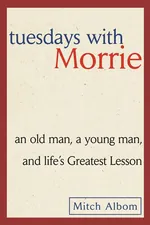

Abolish Rent: How Tenants Can End the Housing Crisis
Tracy Rosenthal
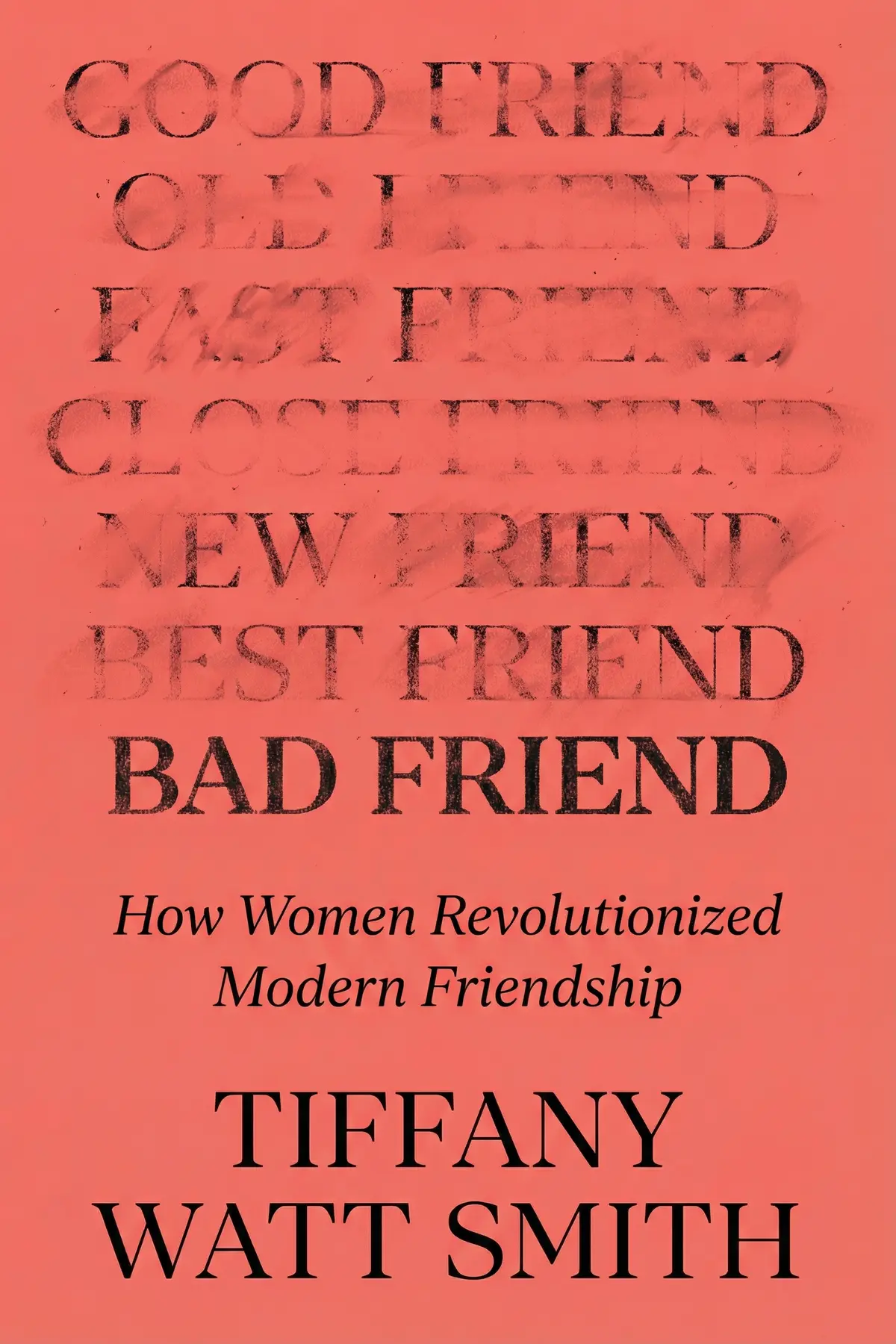
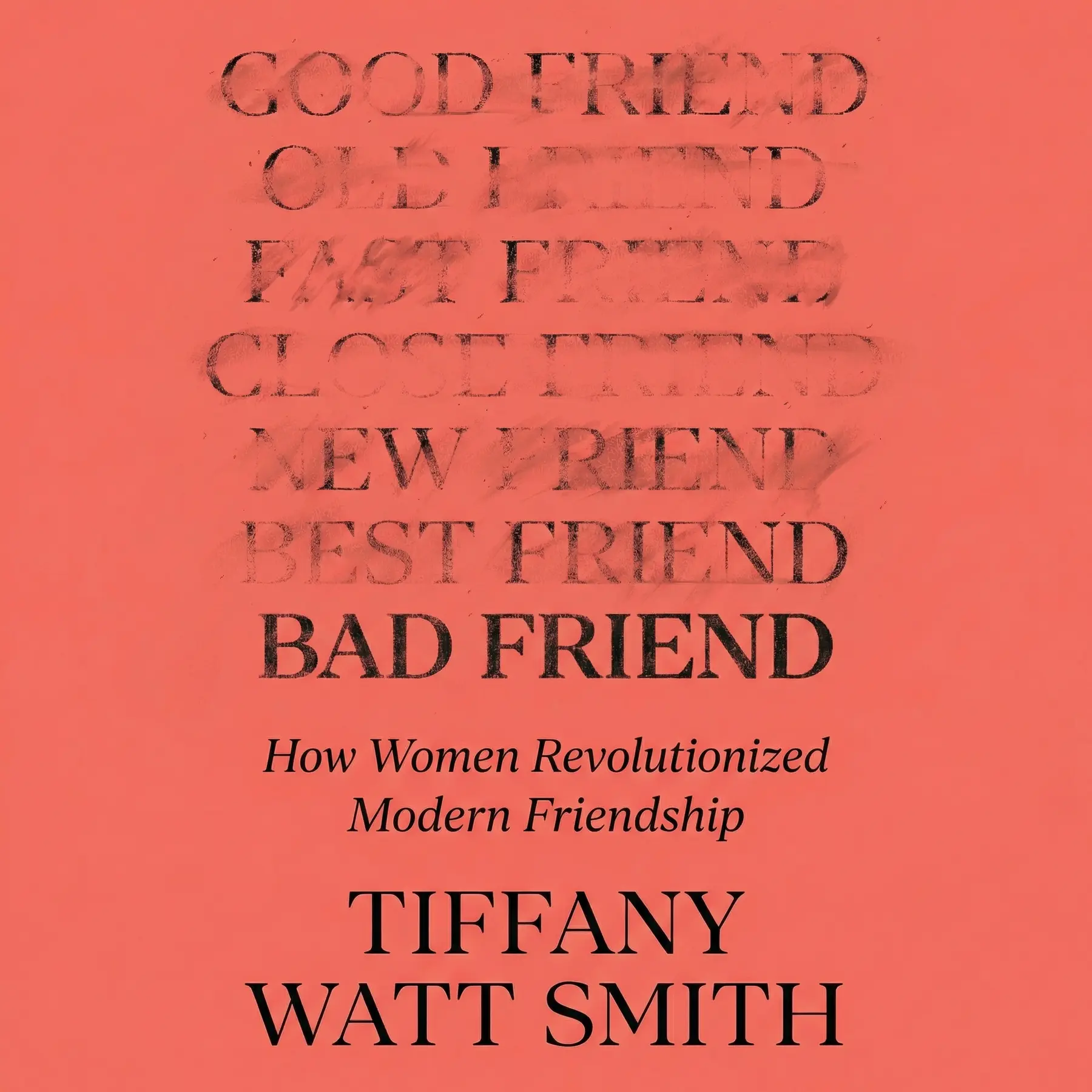
Bad Friend explores the misunderstood history of female connections, tracing how society has alternately dismissed, feared, and romanticized the deep bonds women form to navigate a world that often seeks to isolate them.
1 min 53 sec
Think about the way we talk about female friendship today. We see it everywhere, from the high-energy anthems of pop stars to the glossy depictions of inseparable groups in television dramas. We’ve entered an era where the “squad” is a status symbol and “besties” are considered essential for a well-lived life. But if you peel back the layers of this modern celebration, you’ll find a much more complicated and often darker history. For a very long time, the dominant voices in culture didn’t celebrate these bonds at all. Instead, they dismissed them as shallow, categorized them as dangerous, or tried to box them into very specific, controllable roles.
This journey into the evolution of friendship asks us to look past the surface-level tropes. It invites us to consider why society has spent so much energy policing who women spend time with and how they love one another. We often hear stories about the “bad friend”—the one who is too competitive, too needy, or a “bad influence.” But where did these ideas come from? As we’ll see, the label of the “bad friend” has often been used as a tool to discourage women from forming the kinds of alliances that could actually change the world.
In the following pages, we are going to explore a history that stretches from the cold logic of ancient philosophy to the bustling factories of the industrial revolution and the digital networks of today. We will see how friendship shifted from a male-only privilege to a romanticized Victorian ideal, and finally to a radical political tool. This isn’t just a look at social history; it’s an investigation into the throughline of human connection. It’s about how women have used their relationships to carve out spaces of freedom, intellectual growth, and physical survival in a world that wasn’t always built with their interests in mind. By understanding where we’ve been, we can better appreciate the complex, messy, and vital nature of the friendships we hold dear today.
2 min 33 sec
Philosophers once argued that women lacked the depth for true friendship, but their private letters tell a far more profound story of intellectual and emotional intimacy.
2 min 26 sec
In the nineteenth century, intense schoolgirl devotions were encouraged as preparation for marriage, yet some saw them as a path toward a different kind of freedom.
2 min 18 sec
As young women flooded into cities for work, their new independence sparked a panic about the ‘bad friend’ who might lead them astray.
2 min 22 sec
From the fight for the vote to the living room revolutions of the 1960s, friendship has served as the secret engine of feminist progress.
2 min 29 sec
While men’s professional bonds are seen as strategic ‘networking,’ women’s workplace connections have often been dismissed as mere ‘gossip’ to keep them from power.
2 min 32 sec
From medieval villages to modern group chats, the ‘art of neighboring’ reveals that social fluidity is actually the key to long-term health.
1 min 49 sec
As we look back at the winding path of female friendship, it becomes clear that these bonds have never been the simple, fragile things that philosophers once claimed they were. Instead, we see a history of resilience. We see women using their connections to educate one another when schools were closed to them, to survive the isolation of the city, and to spark revolutions that changed the legal and social fabric of our world. The “bad friend”—the one who was too intense, too political, or too independent—often turned out to be the very person who pushed the boundaries of what was possible for all women.
What can we take away from this for our own lives? First, we can release the pressure for our friendships to look like a perfect, static ideal. The history we’ve explored shows that friendship is naturally fluid. It changes as we change, and its value isn’t measured by how long it lasts, but by the support and growth it provides in the moment. Second, we should recognize that our “small talk” and “gossip” are often more important than we give them credit for. These are the tools of networking, safety, and community-building.
Ultimately, the story of female friendship is a reminder that we are not meant to navigate the challenges of life in isolation. Whether it’s through a deep, lifelong “soul mate” connection or the casual support of a neighbor, these bonds are our greatest resource. By honoring the complexity of our friendships—the messy parts, the political parts, and the practical parts—we are participating in a long and noble tradition of solidarity. The next time you reach out to a friend, remember that you aren’t just socializing; you are engaging in an act that has, for centuries, been a quiet but powerful engine of human history. Treasure those connections, for they are the invisible architecture of a meaningful life.
For centuries, the quality of women’s friendships has been a subject of intense scrutiny, debate, and often, dismissal. From ancient philosophers who claimed women were incapable of true platonic love to modern pop culture’s obsession with the “toxic” friend, these relationships have been viewed through a lens of suspicion. Bad Friend challenges these narrow interpretations by uncovering the rich, hidden history of female solidarity. It moves through different eras—from the intellectual sanctuaries found in eighteenth-century letters to the passionate schoolgirl crushes of the Victorian age and the revolutionary consciousness-raising groups of the twentieth century. This exploration reveals that female friendship has never been just about social pleasantries; it has always been a vital survival mechanism and a quiet form of rebellion. By examining how these bonds have been policed and pathologized by society, the book uncovers the profound power of “invisible leisure” and the “art of neighboring.” Ultimately, it offers a new perspective on why our close connections matter so much, suggesting that the fluidity and intensity of these relationships are not weaknesses, but rather the very things that sustain our mental health and social progress.
Tiffany Watt Smith is a cultural historian and author specializing in the history of emotions. Her books include The Book of Human Emotions and Schadenfreude: The Joy of Another's Misfortune. She is a Reader in Cultural History at Queen Mary University of London and has been recognized as one of the BBC’s New Generation Thinkers.
Listeners find this investigation into female friendships to be an evocative and affirming look at the "raw" reality of platonic relationships as opposed to the typical idealized image. While some listeners consider the book’s thematic framework to be disjointed or muddled, many value the distinctive mix of memoir and historical inquiry. They also appreciate the author’s perspective on why contemporary benchmarks for "best friends" can be impossible to meet, with one listener mentioning that seeing their own complex experiences reflected in history felt deeply comforting. Furthermore, the audiobook is well-received for its intelligent and intimate narration.
Wow, this book hit me right where I live. As someone who has always struggled with the guilt of "fading out" on people, Tiffany Watt Smith provided a framework that finally made me feel less like a villain. The idea that friendship is a process of "negotiating our endlessly changing selves" is going to stick with me for a long time. Truth is, the messy structure didn't bother me because the writing itself is so evocative and thoughtful. I loved the blend of personal narrative and historical research, especially the sections on how lopsided friendships can unintentionally mirror broader social power dynamics. It’s not a perfect book, but it’s a necessary one for any woman who has ever felt "less than" in her social life.
Show moreFinally, someone said it: being a good friend is actually quite hard, and we should stop pretending it’s effortless. Smith dives into the "ugly" side of platonic bonds—the resentment, the boredom, and the awkwardness. It’s incredibly validating. I found the historical perspective on how women’s friendships were viewed in the past to be eye-opening, especially the blurred lines between friendship and romance. Look, the layout is definitely unconventional and maybe a bit messy, but I think that mirrors the subject matter. Friendship is messy. Life is messy. If you want a neat, bulleted list of tips, look elsewhere. If you want a thoughtful, intelligent exploration of human connection, this is it.
Show moreAfter hearing so much buzz about this on social media, I was ready for a deep dive into the "toxic friend" phenomenon. What I got was much more contemplative and historical than I anticipated. Smith’s voice is gentle, especially in the audiobook, and it feels like a long, smart conversation over coffee. She explores how our expectations for platonic stability have become almost unbearable in the modern age. Seeing these patterns reflected in history was deeply comforting to me. I do think the book strays a bit too far into niche topics like social contracts for living together, but the core message about imperfection and humility in friendship is something I really needed to hear.
Show moreThe audiobook version of this is absolutely the way to go. Listening to Smith’s narration makes the more disjointed parts of the book feel like a natural, flowing stream of consciousness rather than a poorly organized text. She has this way of making "emotion history" feel incredibly relevant to my Friday night plans. I especially liked the exploration of "bids" for attention and why lopsided friendships feel so draining. It’s a very raw, honest look at the drama and angst we usually try to hide. While I agree with other reviewers that the organization is a bit of a "mish-mash," the intimacy of the prose makes up for the lack of a traditional structure.
Show morePicked this up because I’ve been feeling like a failure in my own social circle lately. Smith does a great job of dismantling the myth that a "best friend" is some kind of platonic soulmate who never lets you down. Frankly, the historical context about how these ideals were marketed to women was the strongest part for me. However, the organization was a bit of a mess; it jumps from the author’s personal drama to 19th-century letters and then to modern AI companions without much of a bridge. I wanted more sociology and perhaps a little less of the author’s own memoir-style reflections. It’s a solid 3-star read that offers some validation, even if the execution feels a bit scattered at times.
Show moreNot what I expected at all, but I mean that in both a good and bad way. I was looking for a more "how-to" guide on navigating difficult friendships, but this is definitely more of a cultural history with heavy personal anecdotes. Smith successfully illustrates that the unattainable ideal of the "best friend" is just as much of a trap as the "handsome prince" was for previous generations. We're all out here resenting ourselves for being human. My main gripe is that the most practical advice—actually being honest and showing up—is buried right at the end. The middle sections felt a bit muddled, making it difficult to maintain interest during the more academic historical bits.
Show moreEver wonder why we treat friendship breakups as minor footnotes compared to romantic ones? This book tackles that head-on, validating the lingering grief and anger that comes when a close bond dissolves. I appreciated the look at "chosen families" and how different cultures have handled intimacy throughout history. However, I found the narrative threads to be a bit haphazard. One chapter focuses on teenage angst, then suddenly we’re talking about senior care roommates. It’s a lot of ground to cover, and while each individual part is interesting, they don't always feel like they belong in the same volume. It’s a 3-star read for me—great ideas, but the cohesion just wasn't there.
Show moreFrankly, the structure of this book just didn't work for my brain. I struggled to get into a rhythm because the transition between the author's own life and historical case studies felt jarring. I was hoping for more of a psychological analysis of the "bad friend" archetype, but it felt more like a meandering meditation on the concept of connection. There are definitely gems here, specifically the part about how we use friends as "mirrors and journals" to record our own histories. That was beautiful. But for every profound quote, there was a long stretch about communes or AI that felt like filler. It’s an okay read, but I’m still searching for that definitive sociological study of female friendship.
Show moreWhy does every contemporary non-fiction book feel the need to include a chapter on AI these days? This started with such a fascinating premise—analyzing why we feel like "bad" friends—but it quickly devolved into a disjointed collection of themes that didn't quite gel. One minute we are discussing communes and radical family structures, and the next we are back to the author’s personal guilt over a friendship breakup. The chronological-meets-thematic layout was genuinely confusing and made it hard to follow a clear argument. To be fair, there are some brilliant insights buried in here about the "impossible yardstick" we use to measure other women. I just wish an editor had tightened the structure significantly.
Show moreThis book starts with a lot of promise but ultimately left me feeling a bit cold. I think the balance was off—too much memoir and not enough rigorous sociology. I wanted to understand the "why" behind modern friendship failures, but instead, I got a lot of stories about the author's own past. Some of the historical segments felt a bit cherry-picked to fit the theme of "bad" behavior rather than providing a balanced view. To be fair, her point about the "best friend" being a marketing ploy for the modern age is brilliant. I just wish the rest of the book had that same level of sharp, focused insight instead of drifting into topics like radical family structures.
Show moreTracy Rosenthal
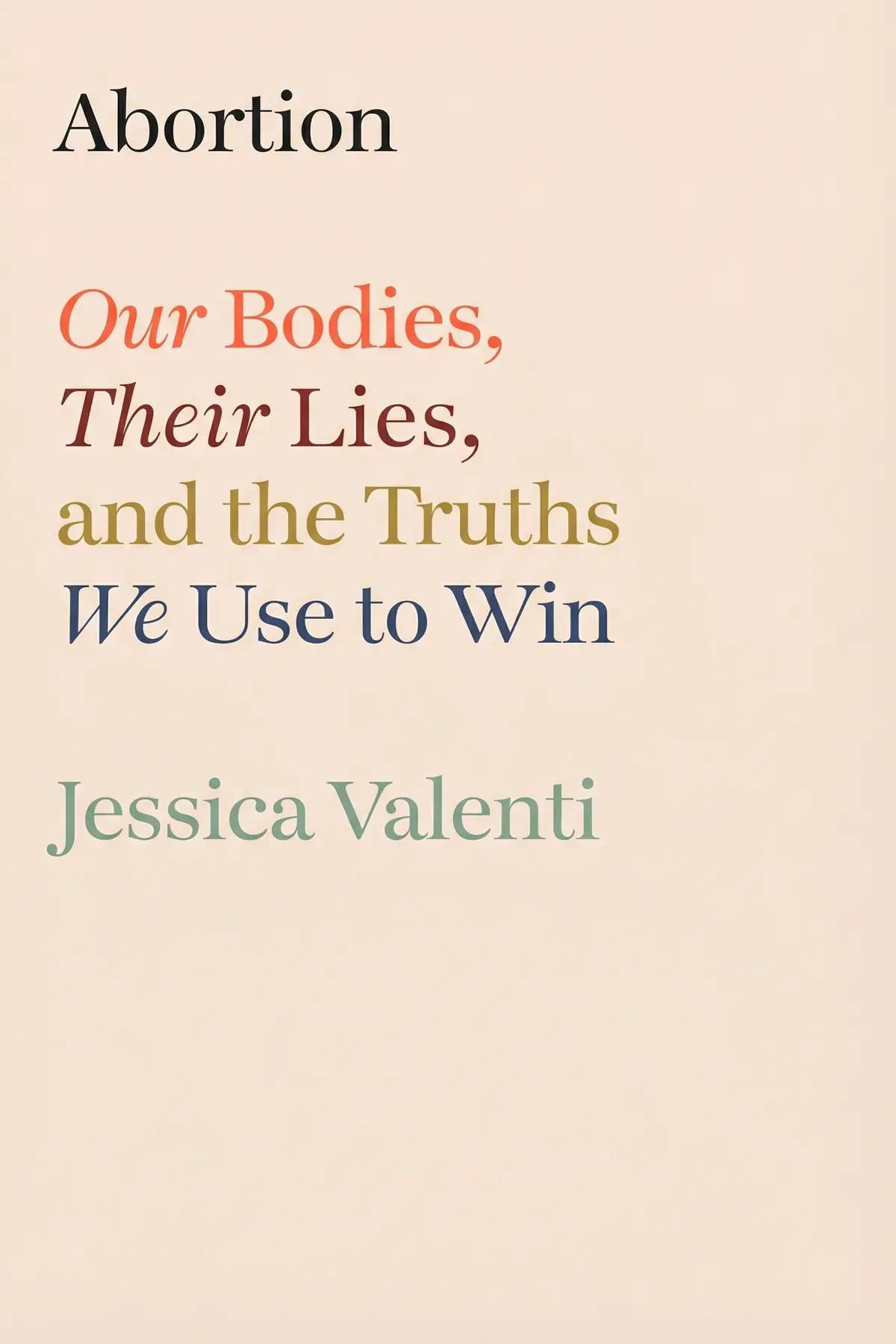
Jessica Valenti


Johny Pitts
bell hooks

Fay Bound Alberti

Daniel Goleman
AUDIO SUMMARY AVAILABLE
Get the key ideas from Bad Friend by Tiffany Watt Smith, plus 5,000+ more titles in English and Thai.







