
17 min 04 sec
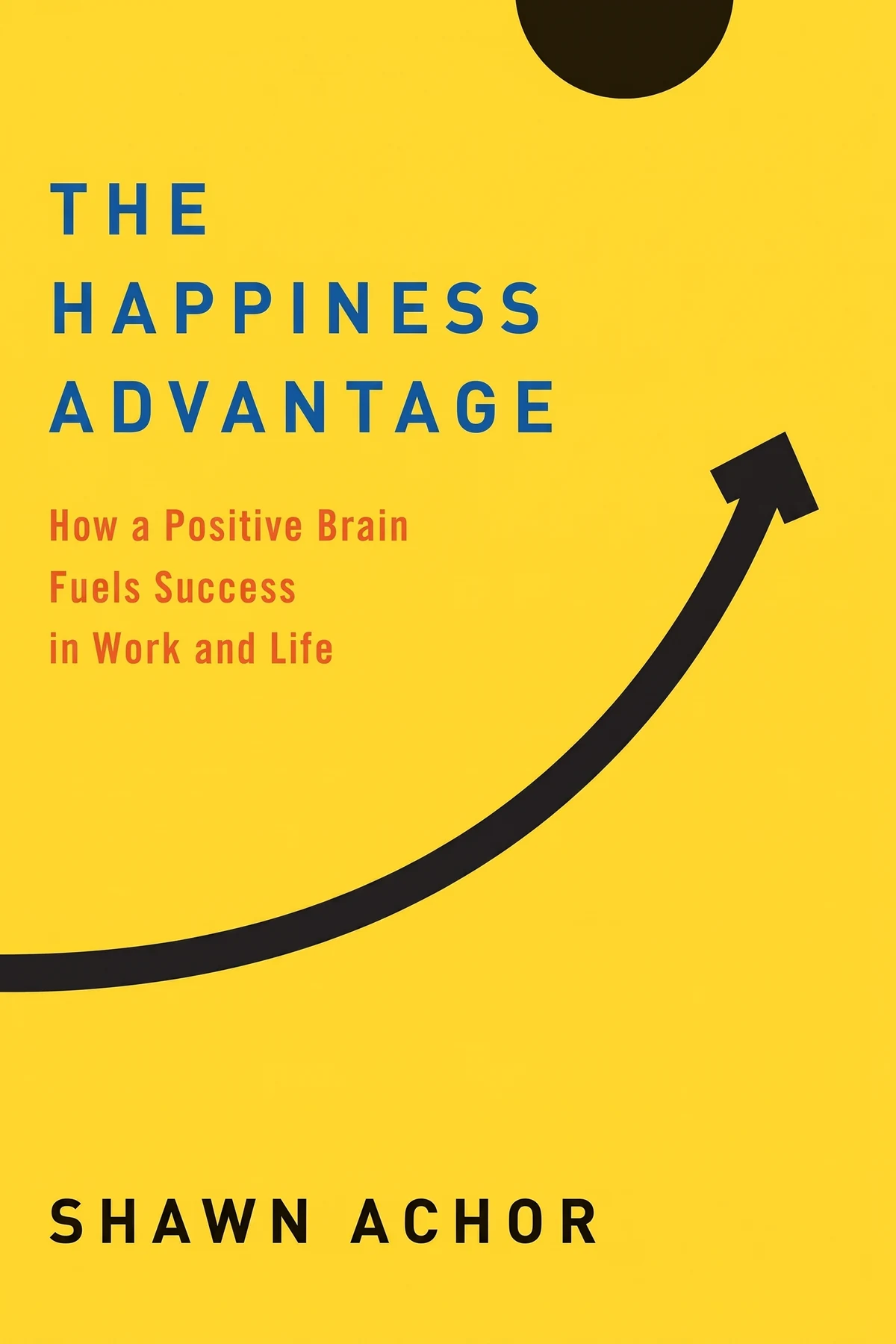
Before Happiness: The 5 Hidden Keys to Achieving Success, Spreading Happiness, and Sustaining Positive Change
By Shawn Achor
Before Happiness explores the psychological foundation of success, revealing how our perception of reality shapes our potential and how we can train our brains to identify more productive and positive paths.
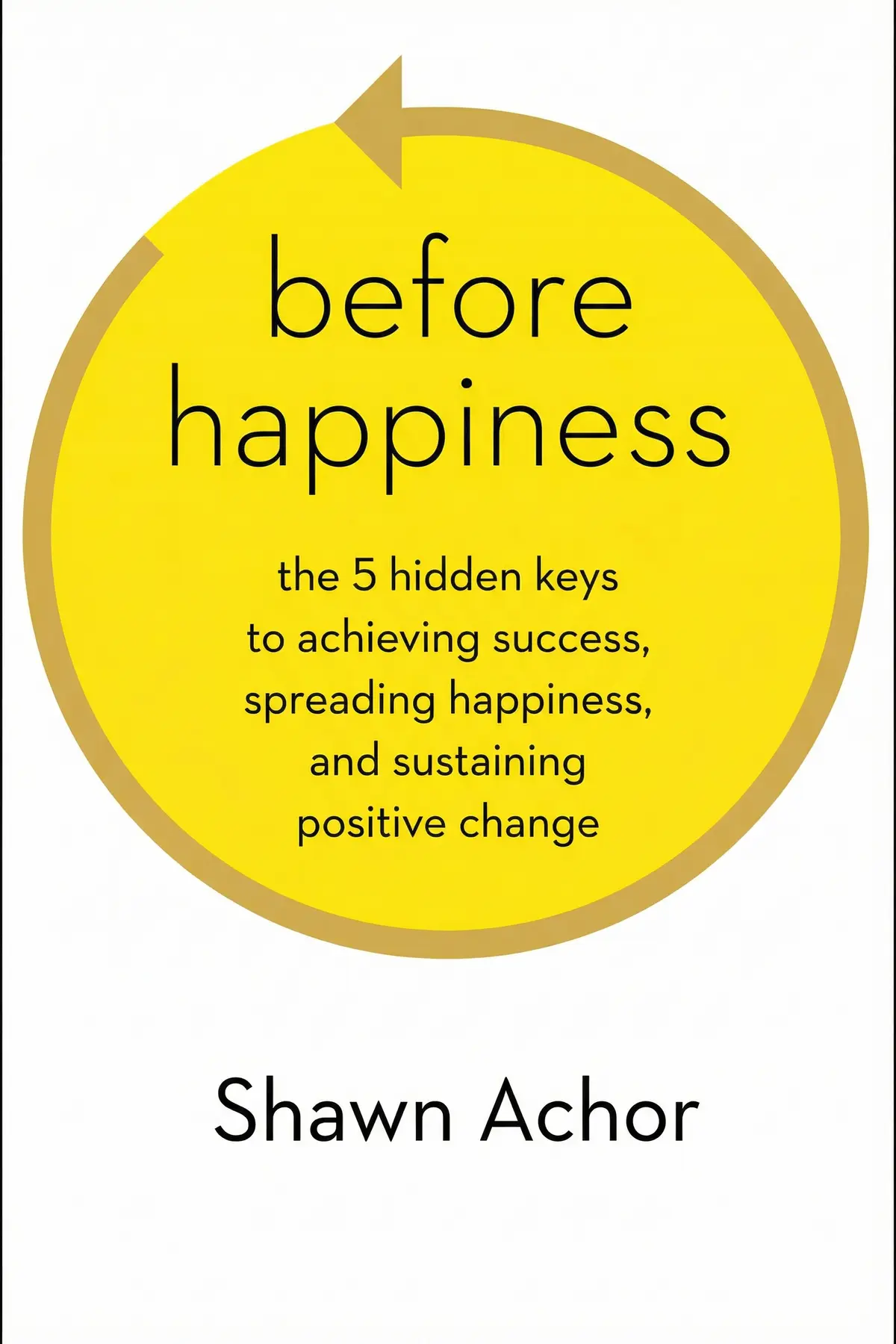
Table of Content
1. Introduction
1 min 59 sec
Have you ever wondered why some people seem to thrive regardless of the circumstances, while others struggle even when they have every advantage? We often attribute success and happiness to external factors like wealth, family background, or high intelligence. We assume that if someone is born with a winning hand of cards, they are destined for a good life. But this doesn’t explain the countless individuals who overcome immense poverty or illness to find joy and productivity. Nor does it explain why many talented people find themselves stuck in cycles of misery and stagnation. The difference isn’t found in what they have, but in how they see.
There is a specific cognitive skill that functions as a precursor to all success, and it is what we might call being a positive genius. This isn’t about ignoring the difficulties of life or forced optimism. Instead, it is the ability to look at any given situation and perceive the most productive path forward. Most of us go through life assuming that reality is a fixed, objective thing that we simply react to. However, the science of the mind tells a different story. Our brains are not passive recorders; they are active creators of maps.
Before you can reach your goals, you must first believe those goals are attainable. This sounds simple, but it is the cornerstone of high performance. If your internal map of the world is filled with roadblocks and dead ends, no amount of talent will get you to your destination. But if you can learn to redraw that map, you unlock the ability to see the resources and opportunities that were there all along. In this summary, we are going to explore the five hidden keys to shifting your perception. We will look at how your brain filters information, why stress can actually be a tool for growth, and how a specific ratio of positive input can change your internal chemistry. By the end, you will understand how to build a mental framework that doesn’t just hope for success, but makes it the most logical outcome of your reality.
2. The Foundational Power of Seen Possibility
1 min 54 sec
Success is less about the resources you possess and more about whether your brain believes those resources can actually lead to a meaningful result.
3. Subjectivity and the Fluctuating Weight of Reality
2 min 05 sec
Our challenges are not fixed values; the difficulty of any task changes based on our internal mental and physical state at the moment.
4. The Brain as a Selective Map-Maker
1 min 53 sec
With millions of data points hitting our senses every second, the reality we experience is simply the small fraction of facts our brain chooses to prioritize.
5. Redefining Stress as a Catalyst for Performance
1 min 52 sec
Stress is not inherently a villain; by changing how we perceive our pressure, we can unlock biological benefits that boost productivity and resilience.
6. The Art of Shifting Your Vantage Point
1 min 48 sec
True perspective is found by stepping back and looking at a situation from multiple angles, ensuring you haven’t missed the ‘pitcher of water’ on the table.
7. The Strategic Logic of the Three-to-One Ratio
1 min 57 sec
To maintain a healthy and productive mindset, we must actively seek out three positive signals for every one negative detail we encounter.
8. Mapping the Path and Identifying Resources
2 min 03 sec
Success requires a clear definition of your destination and a comprehensive inventory of the internal and external tools you already have available.
9. Conclusion
1 min 33 sec
The journey toward success and happiness doesn’t start with a change in your circumstances; it starts with a change in your cognitive mapping. Throughout this exploration, we’ve seen that reality is not a fixed, objective truth that we are forced to accept. Instead, it is a subjective construction built from the 40 bits of information our brains choose to process every second. By becoming a positive genius, you gain the ability to sort through the noise and identify the signals that lead to growth.
You now have the tools to reframe your world. You understand that your perception of a challenge dictates how much energy your brain will commit to it. You know that stress can be an ally if you choose to see it as fuel. You’ve learned the importance of shifting your vantage point to find the ‘pitcher of water’ you might have missed, and the critical need to maintain a 3:1 ratio of positive to negative signals to keep your mind in a state of high performance.
The most important takeaway is that these are not innate traits you are born with—they are skills that can be practiced and perfected. Start today by looking at a situation that feels ‘impossible’ and intentionally identifying three small positive details or opportunities hidden within it. Define your ‘Point B’ with crystal clarity and list the social and emotional resources you can use to get there. As you continue to redraw your internal maps, you will find that the world begins to change around you. Success becomes more than just a goal; it becomes the most natural and inevitable outcome of the reality you have chosen to perceive.
About this book
What is this book about?
Many people believe that happiness is a byproduct of success. However, research in positive psychology suggests the inverse is true: our mental state and how we perceive the world are the primary drivers of our achievements. This book introduces the concept of positive genius, which is the ability to see multiple versions of reality and select the one most likely to lead to growth and accomplishment. It serves as a precursor to finding the happiness advantage, focusing on the cognitive mapping that happens before we even begin our pursuit of goals. Through a series of actionable strategies, the book demonstrates how to reframe stress, expand our awareness of opportunities, and maintain a high ratio of positive to negative signals. By mastering these five keys, readers can move past the limitations of objective facts to build a subjective reality that empowers them to utilize their full range of intelligence and skills, ultimately sustaining long-term change and fulfillment.
Book Information
About the Author
Shawn Achor
Shawn Achor is one of the world’s leading advocates of positive psychology. After teaching and researching at Harvard for twelve years, he became the CEO of Good Think Inc., a Cambridge-based consulting firm, where he continues his research. He is the author of two New York Times best-selling books, The Happiness Advantage and Big Potential.
Ratings & Reviews
Ratings at a glance
What people think
Listeners find this book straightforward to follow and highly impactful, valuing its insightful research and practical strategies for increasing happiness. They describe it as an essential and entertaining listen, with one listener noting how the author blends personal stories with rigorous psychological studies. Listeners applaud the book's motivating message, with one review highlighting how it lays out practical strategies for increasing happiness.
Top reviews
Ratree
Shawn Achor has a knack for making complex psychology feel like a chat with a friend over coffee. I’ve always been interested in the science of happiness, but most books feel like a slog through dry data. This one was different. The concept of the 'Power Lead'—starting every conversation with something positive—is so simple but remarkably effective at shifting team dynamics. I tried it in my Monday morning meeting and the atmosphere changed instantly. The book is packed with these actionable 'success accelerators' that don’t require a total life overhaul. If you want to stop just surviving and start seeing the 'pitcher of water' instead of just the half-empty glass, you need to read this. It’s fun, fast-paced, and genuinely useful.
Show moreIsabelle
The chapter on 'Positive Inception' was a total game-changer for my leadership style. In my experience, most business books focus on the 'what' and 'how,' but Achor dives into the 'why' behind our perceptions. I particularly appreciated the discussion on blind spots, like the tendency to judge ourselves by context but others by their character. It made me realize how often I was bottling up emotions instead of creating a shared narrative with my team. The 10/5 Way from the Ritz Carlton is such a brilliant, low-cost way to improve culture. This book doesn't just tell you to be happy; it gives you the biological and psychological tools to build a reality where happiness is actually possible.
Show morePenelope
As someone who thrives on data, I loved how Achor bridges the gap between academic research and daily habits. He explains that our brains receive eleven million pieces of information but only process forty bits. This really makes you realize how much power you have in choosing which bits to focus on. Truth is, I was choosing the wrong forty bits for years. The writing is engaging and the 'X-spot' visualization technique has actually helped me stay on track with my fitness goals. It’s rare to find a book that is both scientifically grounded and fun to read. I've already bought three copies for my colleagues. It’s a must-read for anyone feeling burnt out by their current reality.
Show moreClaire
Not what I expected from a typical business book, but in the best way possible. Instead of just focusing on 'grinding,' Achor focuses on how to see the opportunities that are already there. The idea of 'diversifying your meaning portfolio' was a lightbulb moment for me. I was putting all my eggs in the career basket, and when work was bad, everything felt bad. Now, I’m working on finding meaning markers in my family life and hobbies too. The book is easy to follow and the strategies are simple enough to implement today. I started the 10/5 way in my apartment building and I’ve already made two new friends. Truly life-changing stuff if you actually apply it.
Show moreWanphen
Ever wonder why you can have a great day and then one rude email ruins everything? Achor explains the 3:1 ratio of positive to negative interactions, which really put things into perspective for me. Frankly, I realized my own 'reality architecture' was leaning way too far into the negative. The section on 'mental cartography' helped me identify the meaning markers I was missing in my daily routine. I gave it 4 stars instead of 5 because some of the corporate anecdotes felt a little repetitive by the end. However, the 10/5 way—smiling within ten feet and saying hello within five—is a fantastic, easy habit to adopt. It’s a solid follow-up to his previous work that provides a roadmap for sustainable optimism.
Show moreWittaya
Picked this up after seeing Achor’s TED talk and I wasn't disappointed. The book is very focused on how we perceive our environment before we even attempt to be happy. I loved the idea of the 'X-spot' and focusing on the proximity to the goal rather than the distance already traveled. It’s a subtle shift but it really helps with motivation when projects get long and tedious. My only gripe is that it leans very heavily into business and work-life scenarios. If you are looking for a book on personal joy or spiritual happiness, this might feel a bit too much like a management manual. Still, the strategies for canceling out internal and external noise are worth the price of admission alone.
Show moreYothaka
Finally got around to this after it sat on my nightstand for months. It’s a quick, punchy read that blends academic research with hilarious personal stories. Achor is a great storyteller. The concept of 'mental cartography' really stuck with me—especially the part about how success without meaning is hollow. I’ve started mapping my goals based on 'meaning markers' rather than just checking boxes. It has made my daily workload feel much less like a grind. I do wish there were more tips for personal life outside of the office, as most examples are very corporate-heavy. Regardless, it’s an inspiring book that encourages you to take control of your own perspective.
Show moreLandon
While I found a lot of value in the research, this felt like a bit of a sophomore slump compared to The Happiness Advantage. The science is undeniably interesting, especially the parts about how our brains only process forty bits of information out of millions. That said, I struggled with the tone at times. The author’s advice about 'positive inception'—essentially trying to influence others’ happiness—felt a bit manipulative in a corporate setting. The example of using these techniques for low-wage Wal-Mart employees felt slightly tone-deaf to me. To be fair, the 'noise canceling' strategies are excellent for anyone working in a high-stress environment. It's a decent read, but take some of the examples with a grain of salt.
Show moreNiphon
Look, the science is solid, but the writing style can get a bit repetitive if you read a lot of positive psychology. A lot of the studies mentioned are ones I’ve seen in other books, like the 'smile within 10 feet' rule. It’s a good refresher, but I didn't find as much 'original' content as I hoped for. That being said, the 'noise canceling' section was very timely for me. Learning to distinguish between 'signal' and 'noise' in my media consumption has helped my focus. It’s a worth-while read if you haven't read much Achor before. If you have, you might find yourself skimming through sections that feel like a retread of his previous work.
Show moreGiulia
To be fair, I think I am just the wrong audience for this brand of 'corporate' happiness. The book suggests that we can basically 'incept' people into being more productive, which feels a bit icky. One of the main examples involves helping impoverished employees at Wal-Mart feel happier without addressing their actual living conditions. It felt like a band-aid for systemic issues. While the tips on smiling more and using a 'power lead' in conversations are fine, they felt a bit superficial for a book claiming to be about the science of reality. If you love high-energy, business-oriented self-help, you might enjoy it. Personally, I found it too focused on productivity and 'franchising' success rather than genuine human emotion.
Show moreReaders also enjoyed

59 Seconds: Change Your Life in Under a Minute
Richard Wiseman


A Guide to the Good Life: The Ancient Art of Stoic Joy
William B. Irvine
A High-Performing Mind: Strengthen Your Mind and Live Your Best Life
Andrew D. Thompson


Abundance: The Inner Path to Wealth
Deepak Chopra
AUDIO SUMMARY AVAILABLE
Listen to Before Happiness in 15 minutes
Get the key ideas from Before Happiness by Shawn Achor, plus 5,000+ more titles in English and Thai.
- 5,000+ titles
- Listen as much as you want
- 7-day free trial
- Cancel anytime







