
22 min 55 sec
Available in:English
The Happiness Advantage: How a Positive Brain Fuels Success in Work and Life
By Shawn Achor
The Happiness Advantage challenges the conventional belief that hard work leads to success and then happiness. Instead, it reveals that cultivating joy is the essential precursor to achieving your highest professional and personal potential.
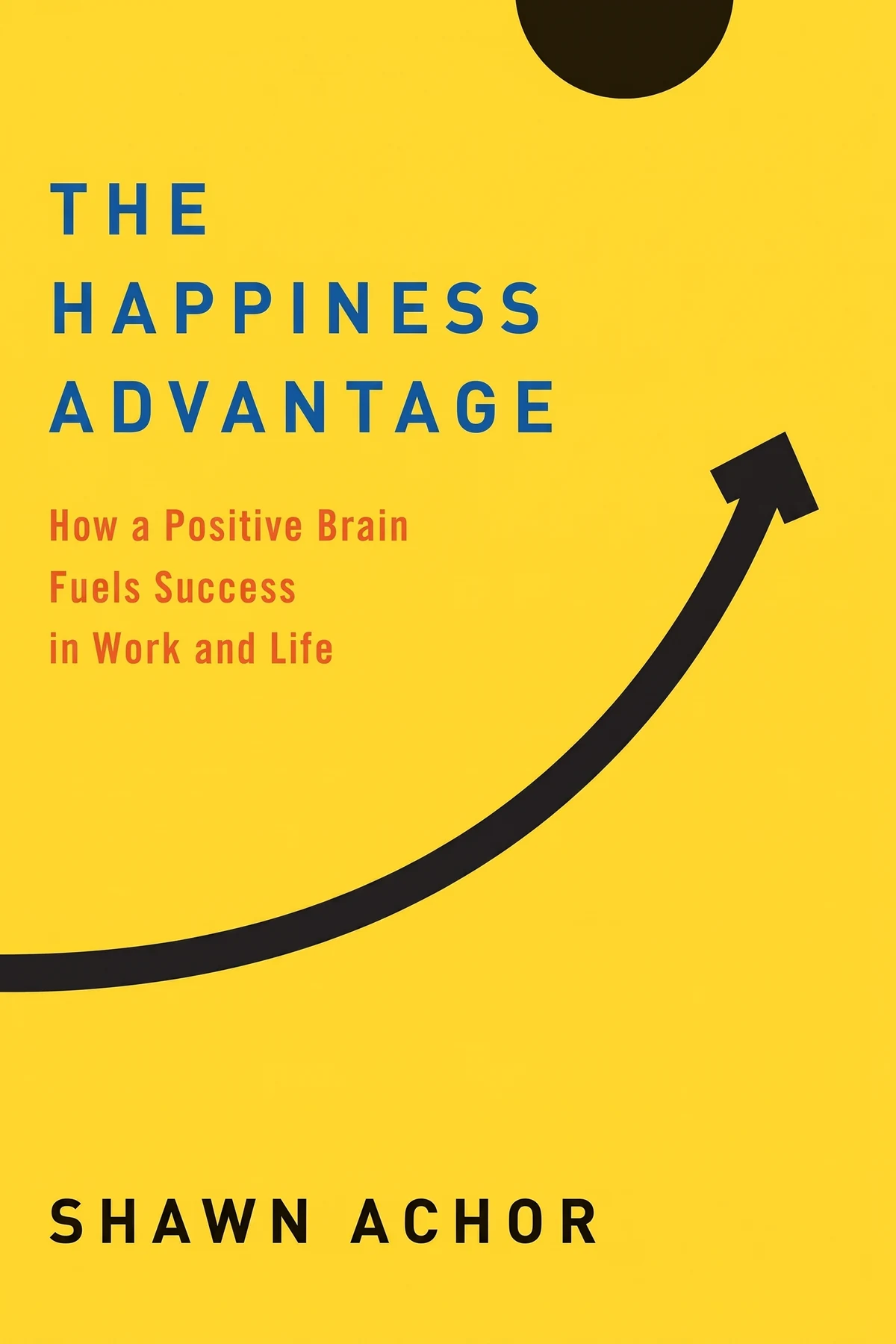
Table of Content
1. Introduction
1 min 50 sec
In our fast-paced, high-pressure world, we are often told a specific story about how life works. It’s a narrative that begins with sacrifice and ends with a smile. We are told that if we just put our heads down, work longer hours, and hit our targets, we will eventually reach the summit of success. And once we are standing on that peak, clutching our rewards, we will finally be happy. It sounds logical, but there is a major problem with this equation: it is scientifically incorrect.
What if the secret to getting ahead wasn’t about grinding through misery to reach a distant goal, but about finding joy right now? This is the core premise of The Happiness Advantage. The traditional model of success is broken because it keeps happiness perpetually on the horizon. Every time we achieve a goal, our brain simply moves the goalposts. You got a promotion? Now you need a bigger one. You hit your sales target? Now the next one is even higher. If happiness is always on the other side of success, we never actually get there.
Positive psychology offers a different path. It suggests that happiness is a literal physical and mental advantage that allows us to perform at our best. When we are in a positive state of mind, we are smarter, more motivated, and more capable of handling the inevitable stresses of life. It’s not just a feel-good sentiment; it’s a biological reality.
Throughout this exploration, we are going to look at seven specific principles that can help you flip the script. We will see how happiness can be trained like a muscle, why our social connections are our greatest financial and emotional assets, and how small changes in our daily routine can lead to massive shifts in our long-term achievements. By the end, you’ll see that happiness isn’t a luxury you earn later—it’s the tool you need to succeed today. Let’s dive into how you can start claiming your own happiness advantage.
2. Moving Beyond the Average in Psychology
2 min 25 sec
Discover why traditional psychology’s focus on the ‘middle’ prevents us from reaching the top, and how looking at outliers can redefine our potential.
3. The Neurobiology of the Happiness Advantage
2 min 35 sec
Uncover the chemical secrets of the brain that turn positive emotions into high-performance fuel for your career and personal life.
4. Mindset as a Fulcrum and Lever
2 min 16 sec
Your perception of reality is more powerful than reality itself. Learn how a simple shift in mindset can change your physical and mental capabilities.
5. Rewiring the Brain via the Tetris Effect
2 min 06 sec
Are you accidentally training your brain to see only the negatives? Learn how to break free from ‘mental ruts’ and spot the opportunities you’ve been missing.
6. Finding the Third Path After Failure
2 min 11 sec
Setbacks are inevitable, but your reaction isn’t. Learn why some people ‘fall up’ after a crisis and how you can use adversity as a springboard for growth.
7. Mastering Your World with the Zorro Circle
2 min 02 sec
Feeling overwhelmed? Discover how focusing on small, manageable circles of influence can help you regain control and achieve massive goals.
8. The 20-Second Rule and Habit Change
1 min 53 sec
Willpower is a finite resource that often fails us. Learn the secret of ‘activation energy’ and how to make good habits the path of least resistance.
9. Social Support as Your Greatest Asset
1 min 56 sec
In times of stress, we often withdraw from others. Learn why this is a mistake and how social investment is the ultimate predictor of long-term success.
10. The Ripple Effect of Positive Change
2 min 01 sec
Happiness isn’t just an individual benefit. Explore how your personal shift toward joy can trigger a ‘butterfly effect’ that transforms your entire community.
11. Conclusion
1 min 40 sec
As we wrap up our journey through the principles of The Happiness Advantage, it’s important to remember the central shift we’ve discussed: success does not create happiness, but happiness creates success. We have seen how a positive mindset acts as a biological engine, flooding our brains with the chemicals we need to learn, solve problems, and stay motivated. We have explored how to move our mental fulcrum to gain more leverage over our challenges, and how to train our brains to scan for opportunities rather than just threats.
We’ve also looked at the practical tools for making these changes stick. From the Zorro Circle that helps us regain control in times of stress, to the 20-Second Rule that makes habit formation nearly effortless, these aren’t just abstract theories—they are actionable strategies. And perhaps most importantly, we have seen that we don’t have to do this alone. Our social connections are the ultimate predictor of our success, and our personal growth has the power to ripple outward and change the lives of those around us.
The most important thing to take away is that your brain is not fixed. You are not stuck with the mindset you have today. Through consistent, small practices, you can literally rewire your neural pathways for a better life. Start tonight by writing down three things you are grateful for. Tomorrow, try to lower the activation energy for one good habit you’ve been wanting to start.
Don’t wait for the ‘perfect’ time to be happy. Don’t wait until you get the promotion, the house, or the accolades. Use the happiness you can find today as the fuel to reach those goals tomorrow. When you claim your happiness advantage, you aren’t just improving your mood—you are unlocking your true potential and inviting the rest of the world to do the same.
About this book
What is this book about?
The Happiness Advantage explores a fundamental shift in how we approach our goals. Most of us are raised on a formula: if you work harder, you will be more successful, and once you are successful, then you will be happy. This book uses years of research from Harvard and beyond to prove that this formula is actually backward. Happiness is not the reward for success; it is the fuel that drives it. When we are positive, our brains are more engaged, creative, and resilient. This summary breaks down the seven actionable principles that help individuals and organizations leverage this competitive edge. You will learn how to retrain your brain to spot opportunities, how to recover from setbacks with more strength than before, and how to make good habits stick by lowering the barriers to action. It’s a guide to transforming your mindset to unlock better health, higher productivity, and more meaningful connections.
Book Information
About the Author
Shawn Achor
Shawn Achor is an American author who spent 12 years at Harvard studying what makes people happy. He is a leading expert on the connection between happiness and success and has worked with successful leaders all over the world. In addition, he has written a number of New York Times best-selling books, including Before Happiness, Ripple’s Effect and The Orange Frog.
Ratings & Reviews
Ratings at a glance
What people think
Listeners find this work thoroughly researched and packed with actionable advice, making it essential reading for professionals, especially those in leadership roles. The content is captivating and accessible, featuring a lighthearted narrative style that helps listeners foster a more optimistic perspective. They value how it makes listeners aware of behavior and habits that affect happiness, and one listener describes it as a page-turner like a thriller novel. Listeners appreciate the intellectually stimulating insights, with one listener noting its excellent job of organizing studies in positive psychology.
Top reviews
Roo
After seeing Shawn Achor’s viral TED talk, I knew I had to dive deeper into the actual research, and this book did not disappoint. The core premise—that happiness is the fuel for success rather than the result of it—is a total game-changer for anyone feeling burnt out in a corporate environment. I especially loved the chapter on the 'Tetris Effect,' which explains how we can retrain our brains to spot patterns of possibility rather than just problems. The writing is incredibly engaging and fast-paced, making complex neuroscience feel accessible and actually fun to read. Some might find the tone a bit too 'sunshine and rainbows,' but the practical suggestions for daily habits are grounded in real-world application. It’s rare to find a business book that feels like a page-turner, yet I finished this in two sittings. If you are looking to boost your performance and your mood simultaneously, this is a must-read.
Show morePisit
Believe the hype: this book reads with the frantic, engaging pace of a thriller, which is a breath of fresh air for a psychology text. I was hooked from the first chapter because Achor manages to make the science of the brain feel deeply personal and relevant. The way he explains mirror neurons and how our emotions are literally contagious in an office setting was eye-opening for me. It’s not just about being 'happy'; it’s about the competitive edge that a positive brain provides in terms of creativity and problem-solving. Some critics call it toxic positivity, but I found it to be a very pragmatic guide to habit formation and mental discipline. The book is well-organized and filled with concrete things you can start doing today to improve your life. Honestly, it’s a gift to humanity to have these complex ideas simplified so effectively for the general public.
Show moreDing
Wow. This book is a total masterclass in how to reorganize your life around what actually matters. Shawn Achor has a way of taking complex research from Harvard and turning it into something you can use while you're sitting in traffic or dealing with a difficult boss. The '20-Second Rule' has completely changed my morning routine; by making my good habits 20 seconds easier to start, I’ve actually stuck with them for the first time in years. I love that the book doesn't just tell you to 'be positive'—it explains exactly why our brains perform better in a positive state. It’s engaging, thought-provoking, and surprisingly funny. Even if you’re a skeptic, the data on how happiness impacts the bottom line for businesses is hard to ignore. This is one of those rare books that I will keep on my desk to reference whenever I feel my motivation starting to flag.
Show morePat
Picking this up was the best decision I've made for my career this year. I used to be the person who stayed isolated in the library or at my cubicle, thinking that hard work alone would lead to happiness. Achor completely debunked that myth for me. The 'Social Investment' principle taught me that my relationships are actually the greatest predictor of my success and well-being. The writing style is very accessible and feels like you're having a conversation with a very enthusiastic friend. I appreciate how he organizes the studies into seven clear principles, making it easy to track your progress. Even the small things, like the '10 most common positive emotions' list, gave me a new vocabulary for my mental health. It’s an inspiring, evidence-based guide that I think every professional should have on their shelf. I’m definitely in the 'pro-Achor' camp after finishing this!
Show moreAva
As a manager struggling with team morale, I found the concept of 'social investment' to be the most valuable takeaway from this entire book. Achor argues that when things get stressful, we shouldn't retreat into our shells but rather lean into our social networks. That advice alone changed how I approached our last quarterly crunch. The '20-Second Rule' is another brilliant, practical tool that I’ve started using to minimize distractions at my desk. To be fair, the book does suffer from some typical self-help fluff, and some of the scientific studies mentioned likely wouldn't survive the modern replication crisis. However, the actionable habits he suggests—like journaling about positive experiences—do actually work if you give them a fair shot. It’s an easy, thought-provoking read that organizes the findings of positive psychology into a very digestible framework for professionals. I’ve already recommended it to several colleagues who are feeling the weight of the current economic climate.
Show moreAnawin
The idea that happiness is a precursor to success completely flipped my worldview upside down. For years, I told myself I’d be happy once I hit that next promotion or salary bracket, but Achor proves that’s a moving target we can never actually hit. His style is very conversational and lighthearted, which makes the psychological theories easy to swallow. I did roll my eyes at a few of the personal anecdotes—like the story about being addicted to Vice City—because they felt a bit infantile for a serious business book. Despite that, the 'Zorro Circle' concept helped me manage my overwhelming to-do list by focusing on small, controllable goals first. It’s not a perfect scientific text, and he definitely pads the word count with some repetitive stories, but the overarching message is incredibly empowering. It’s a great resource for anyone looking to develop a more resilient and positive outlook on their career.
Show moreWichai
Finally got around to reading this and I'm genuinely impressed by how Achor structures the seven principles. Each section provides a clear roadmap for changing your mental patterns, which I found much more useful than the vague advice found in most self-help books. I particularly enjoyed the section on 'Falling Up,' which focuses on using failure as a catalyst for growth rather than a reason to quit. The writing is very jolly—perhaps a bit too much for some—but it fits the theme of the book perfectly. I did find myself questioning the 'mirror neuron' claims, as that science has been heavily debated recently, but the practical application still holds up. It’s a great read for anyone in a leadership position who wants to create a more supportive and energized work culture. Just be prepared for some repetitive anecdotes that could have been edited down for a more concise experience.
Show moreBrahim
While I appreciate the overall message of optimism, I couldn't help but notice that many of the studies cited here are quite dated. The book was published right as the behavioral sciences were hitting a replication crisis, and Achor doesn't really distinguish between robust science and 'hokey' fringe theories. The idea that we can slow aging just by pretending to be younger sounds a bit far-fetched to me. That said, the 'Happiness Advantage' itself is a solid concept that aligns with common sense. The last few chapters on forming habits and the importance of workplace leadership are definitely worth the price of admission. It’s a bit of a mixed bag; you have to sift through a lot of filler and 'infomercial' style writing to get to the gems. If you can ignore the slightly infantile humor and the author's constant name-dropping, there are some genuinely helpful strategies for improving your daily productivity.
Show moreSarocha
Let’s be real: this is essentially a collection of business-friendly anecdotes masquerading as hard science. While the 'mind over matter' sentiment is nice, the author relies on some seriously questionable references to make his points. For instance, he cites a 1998 New York Times article about people not reacting to poison ivy as scientific proof, which is shoddy at best. The stories also feel incredibly cherry-picked; using a massive multinational like Coca-Cola to prove that 'positivity' saves companies during a crisis is a weak argument. Achor’s writing style is also quite polarizing, often feeling like a high-energy infomercial that never stops selling. I found the constant self-aggrandizing about his time at Harvard and his world-renowned expertise to be more than a little distracting. You are better off reading a summary of the seven principles online and skipping the 200 pages of extraneous filler and dated psychology.
Show moreJib
Frankly, I found this to be one of the most overhyped business books I’ve ever read. The author spends an exhaustive amount of time trying to convince us of his brilliance and his connections, but the actual 'science' is flimsy and often non-existent. He uses a 1998 newspaper article as a primary reference for a major psychological claim—that’s just lazy. The entire premise is also a bit bizarre: we should be happy so that we can be more productive for our corporate overlords? It commodifies human emotion in a way that feels cheap and disingenuous. The writing is bloated with extraneous filler and stories that don't even support his points, like the weirdly defensive example of Coca-Cola's success. If you want real psychology, read Daniel Kahneman or Robert Sapolsky. This is just a padded-out motivational speech that offers nothing new or innovative to the genre.
Show moreReaders also enjoyed

59 Seconds: Change Your Life in Under a Minute
Richard Wiseman

A Guide to the Good Life: The Ancient Art of Stoic Joy
William B. Irvine
A High-Performing Mind: Strengthen Your Mind and Live Your Best Life
Andrew D. Thompson

AUDIO SUMMARY AVAILABLE
Listen to The Happiness Advantage in 15 minutes
Get the key ideas from The Happiness Advantage by Shawn Achor, plus 5,000+ more titles in English and Thai.
- 5,000+ titles
- Listen as much as you want
- 7-day free trial
- Cancel anytime







