
14 min 59 sec
Beyond Getting By: The Financial Diet's Guide to Abundant and Intentional Living
Beyond Getting By challenges the culture of extreme frugality and financial shame, offering a blueprint for building wealth that prioritizes personal values, ethical spending, and sustainable career growth for a truly abundant life.
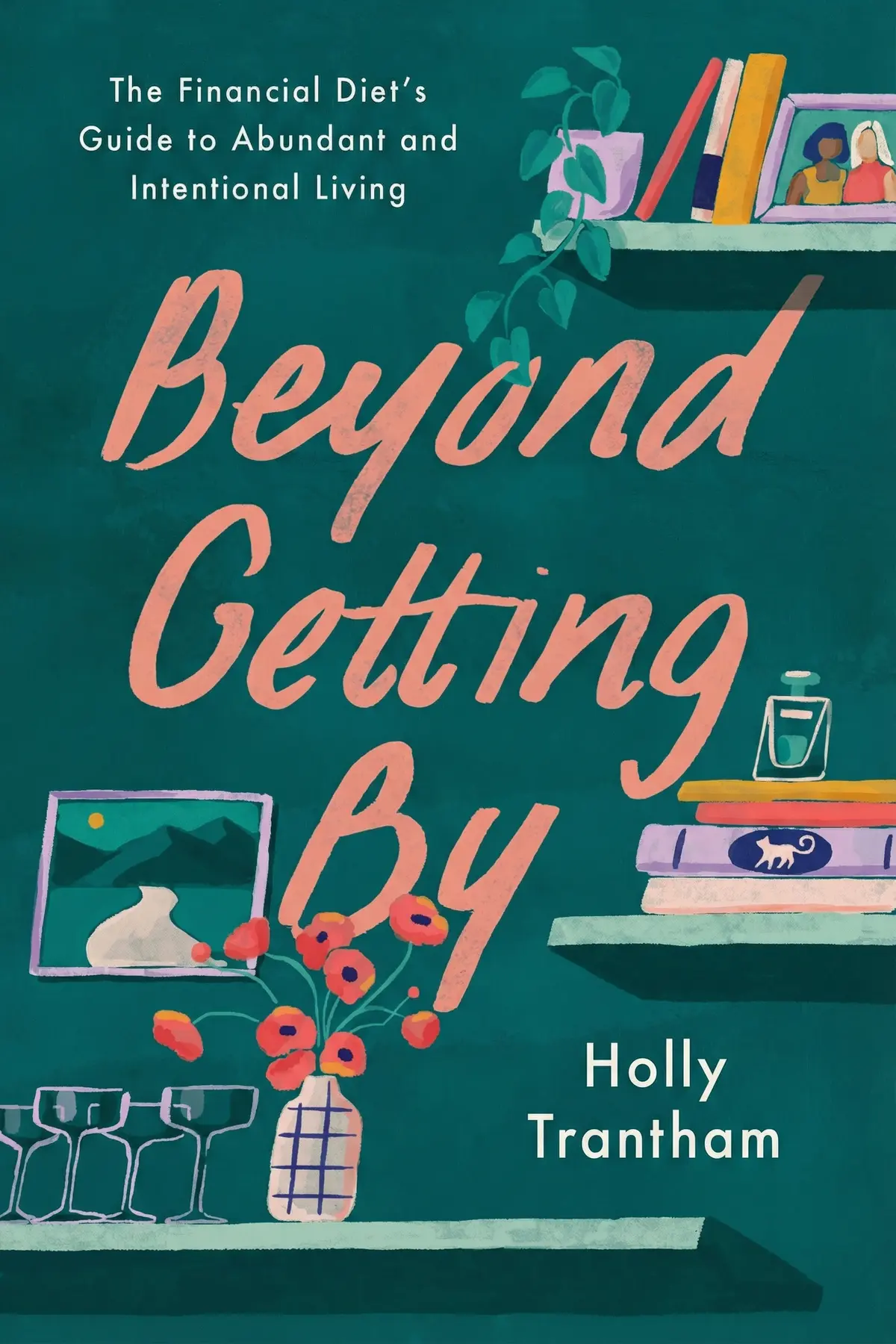
Table of Content
1. Introduction
1 min 28 sec
Have you ever felt like you were doing everything right—skimping on lattes, tracking every penny, and saying no to social outings—yet you still felt exhausted and unfulfilled? It is a common trap in the world of personal finance. We are often told that the only way to achieve security is through a life of total deprivation and relentless saving. But if the end goal is happiness, why does the journey feel so miserable?
Holly Trantham, the creative force behind The Financial Diet, suggests that the problem isn’t your willpower; it is the framework we use to think about money. In Beyond Getting By, she explores the idea that financial health is not just about the numbers in a bank account, but about how those numbers align with your values and your humanity. This is a look at how to navigate an unstable economy without losing your soul or your sanity in the process.
Over the course of this summary, we will explore why shame is a failing motivator for financial change and how to replace it with a more compassionate approach. We will look at the concept of the happiness threshold—the point where more money stops buying more joy—and how to identify yours. We will also dive into the hidden costs of our obsession with cheapness and how to advocate for your worth in a workplace that often undervalues you. The goal isn’t just to survive or to ‘get by’; it is to build a life that feels abundant and intentional. Let’s explore how to bridge the gap between financial responsibility and personal fulfillment.
2. Moving Past Financial Shame
2 min 30 sec
Traditional money advice often relies on guilt and deprivation, but lasting financial health requires a more compassionate, shame-free approach to budgeting and debt management.
3. Defining Your Happiness Threshold
2 min 16 sec
True wealth isn’t about infinite accumulation; it’s about finding the specific income level where your needs are met and your joy is maximized without diminishing returns.
4. The True Cost of Cheapness
2 min 24 sec
Being frugal is about value, but being cheap often comes at a high ethical and personal cost, impacting the environment, our relationships, and our own well-being.
5. Overcoming the Meritocracy Myth and Negotiating Your Worth
2 min 19 sec
Confidence in the workplace is often hampered by the false idea that hard work alone leads to success; learning to advocate for yourself is essential to closing the pay gap.
6. Redefining Success and Collective Advocacy
2 min 25 sec
True financial well-being involves looking beyond individual wealth to advocate for equitable workplaces and collective systems that support everyone’s ability to thrive.
7. Conclusion
1 min 37 sec
As we reach the end of this journey through Holly Trantham’s Beyond Getting By, the central message is clear: your financial life does not have to be a source of constant stress or a series of joyless sacrifices. Financial stability is not an end goal in itself, but a means to an end—the end being a life that is full, intentional, and lived on your own terms. We’ve seen that by letting go of the shame that so often surrounds money, we can begin to build a relationship with our finances that is based on compassion and reality rather than guilt and deprivation.
We explored how to find your own happiness threshold, ensuring that your pursuit of income serves your well-being rather than consuming it. We looked at the importance of choosing intentionality over cheapness, and the power of advocating for your worth in the workplace by overcoming the myth of meritocracy. Finally, we saw that true success involves a shift toward collective advocacy, recognizing that we all thrive when our workplaces and communities are more equitable.
The most important step you can take today is to start aligning your daily financial choices with your long-term values. Whether that means starting a sinking fund for a dream trip, finally negotiating that raise, or simply deciding to stop feeling guilty about a small purchase that brings you joy, every intentional act moves you away from the struggle of just getting by. Financial health is a practice, not a destination. By embracing an abundance mindset and focusing on what truly matters, you can build a future that is not just secure, but genuinely abundant. Now, go forth and start building that life—one intentional choice at a time.
About this book
What is this book about?
Many financial guides focus on deprivation and rigid rules that often lead to burnout and guilt. Beyond Getting By offers a different path, focusing on the intersection of money and well-being. It examines how systemic issues and cultural shame influence our relationship with wealth and provides practical strategies to reclaim agency over your financial future. Readers will learn to navigate the complexities of modern economics by defining their own happiness thresholds and moving past the myth of meritocracy. From negotiating fair compensation and overcoming imposter syndrome to understanding the true cost of cheapness, this guide promises a more intentional and joyful approach to managing money that doesn't require sacrificing your quality of life.
Book Information
About the Author
Holly Trantham
Holly Trantham is the creative director at The Financial Diet, where she has been a key figure since 2016. Known for her expertise in personal finance and creative strategy, she has contributed significantly to making financial advice more accessible and engaging.
Ratings & Reviews
Ratings at a glance
What people think
Listeners find that while perspectives differ on the book’s level of practical depth, they value its innovative emphasis on intentional living and values-based decision-making. Furthermore, they suggest the included worksheets are superb instruments for a financial reset, with one listener noting the text is encouraging without being preachy. The analysis of contemporary work culture is also frequently commended, with one listener specifically highlighting the useful distinction made between frugality and cheapness.
Top reviews
Sarawut
The worksheets alone are worth the price of admission for anyone needing a serious financial reset. I’ve read a lot of money books, but this is the first one that felt truly encouraging without being preachy or judgmental. It shifted my perspective toward abundance rather than just grueling over-consumption or self-deprivation. Using the included tools to perform an audit of my spending habits was eye-opening. Not gonna lie, I usually skip the 'active' parts of these books, but these were actually helpful. I feel much more intentional about my future now. This is a must-have for anyone struggling to align their bank account with their actual life goals.
Show morePornpimon
Wow, I didn't expect a personal finance book to feel so much like a therapy session for my bank account. The way Holly discusses 'enoughness' vs. seeking the next big thing really resonated with my current life stage. It’s an uplifting read that doesn’t rely on the typical shame-based tactics found in this genre. I found myself highlighting passages on every other page because the insights were so spot-on. Got to say, this was exactly the financial reset I needed to stop comparing my life to people on Instagram. If you're feeling burnt out by the constant pressure to consume, please read this. It’s a total game changer.
Show moreVarinee
After hearing Holly on The Financial Diet podcast for years, I knew I had to pick this up. The book successfully captures the same vibe as their video essays, focusing heavily on how we navigate a capitalist world. I particularly enjoyed the sections on 'enoughness' and moving away from the constant pressure of lifestyle inflation. In my experience, most finance books focus only on the math, but this one focuses on the psychology of spending. It's a great companion piece for anyone who already enjoys TFD's content, though it might feel a bit familiar if you're a superfan. Still, having everything organized in this format is very useful for reference.
Show moreAroon
Finally got around to reading this, and I appreciate how Trantham dismantles the 'girlboss' myth without being too cynical. The book highlights the importance of values-based decision making, which is a breath of fresh air compared to traditional 'get rich' advice. My favorite part was the commentary on modern work culture and how we’ve been conditioned to view our jobs as our entire identities. It's refreshing to hear someone say that it's okay not to be obsessed with your career. The writing style is casual and easy to digest, which makes the heavier systemic critiques feel much more approachable. I'll definitely be recommending this to my coworkers.
Show moreRapee
As someone who grew up in a Dave Ramsey household, the chapter on faith and finances hit home in a way I didn't expect. It’s rare to find a book that tackles the intersection of Christianity and modern capitalism without feeling like a sermon. Trantham manages to be critical of certain financial gurus while still keeping the tone uplifting. Truth is, I didn’t agree with every single political take, but that’s to be expected with a book this honest. It’s an amazing resource for anyone who wants to better understand the systems they’re living in. Definitely worth a spot on your shelf for the worksheets alone.
Show moreNannapat
The distinction between being frugal and just being cheap was a total lightbulb moment for me. Holly explains how buying from places like Shein isn't actually saving money when you consider the human and environmental costs involved. It’s about a low-cost-at-all-costs mindset that we really need to unlearn. To be fair, some of the advice on work-life balance felt a bit idealistic for those of us in high-stress industries. However, the overarching message about choosing a life that fits your values is incredibly timely. It’s a solid read for anyone tired of the typical 'grind' narrative that dominates most financial media today.
Show moreWachira
Ever wonder if we're all just chasing a lifestyle we don't even like? That’s the core question here, and while I agree with the sentiment, the book felt a bit basic. It raises several interesting issues regarding work culture and intuitive eating parallels but fails to provide in-depth discussions on complex topics like unionization. Personally, I found it to be more opinion-based than rigorously researched. There were a couple of small errors that caught my eye, which made me question some of the broader conclusions. It's a decent entry-level text for intentional living, but seasoned finance readers won't find much new info here. It's fine for a quick library read.
Show moreSatit
Look, if you already follow TFD on YouTube, you’ve probably heard about 70% of this content before. While I love their channel, I was hoping for more granular detail and deeper research in a full-length book format. The chapters on the death of the girlboss and the 40-hour work week are interesting, yet they feel like scripts for their videos. It's a bit disappointing when a book doesn't expand further on the themes it introduces. That said, it’s a quick, accessible read that would be perfect for a friend who isn't already deep into the world of personal finance. It’s good, just not groundbreaking for long-time fans.
Show morePat
Holly Trantham offers a refreshing perspective that prioritizes personal values over just accumulating more stuff, but I wanted more 'how-to'. The first part of the book is excellent, focusing on intuitive spending and intentionality. Unfortunately, the momentum fizzles out as it pivots into rants about celebrity culture and politics. I was looking for practical advice on investment strategies or sustainable clothing resources, but those were mostly absent. It’s a very basic self-help book that serves as a good introduction for beginners but lacks the meat I was craving. It’s fine for a library read, but I probably wouldn’t buy a permanent copy for my collection.
Show moreSomsri
This book had some promise in the early chapters, but the second half felt like a disjointed collection of rants about Goop and the Kardashians. Frankly, I experienced major whiplash going from discussions on values to repetitive critiques of celebrity culture. While I agree that 'girlboss' energy is exhausting, I didn't pick up a finance book to read about nepotism for fifty pages. It lacks the practical investment strategies or sustainable living resources I was hoping for after such a strong start. It felt more like an opinion piece than a structured guide. It's a shame because the beginning was actually quite fresh and intriguing.
Show moreReaders also enjoyed
Big Mistakes: The Best Investors and Their Worst Investments
Michael Batnick
Buffett: The Making of an American Capitalist
Roger Lowenstein
AUDIO SUMMARY AVAILABLE
Listen to Beyond Getting By in 15 minutes
Get the key ideas from Beyond Getting By by Holly Trantham, plus 5,000+ more titles in English and Thai.
- 5,000+ titles
- Listen as much as you want
- 7-day free trial
- Cancel anytime







