


18 min 41 sec
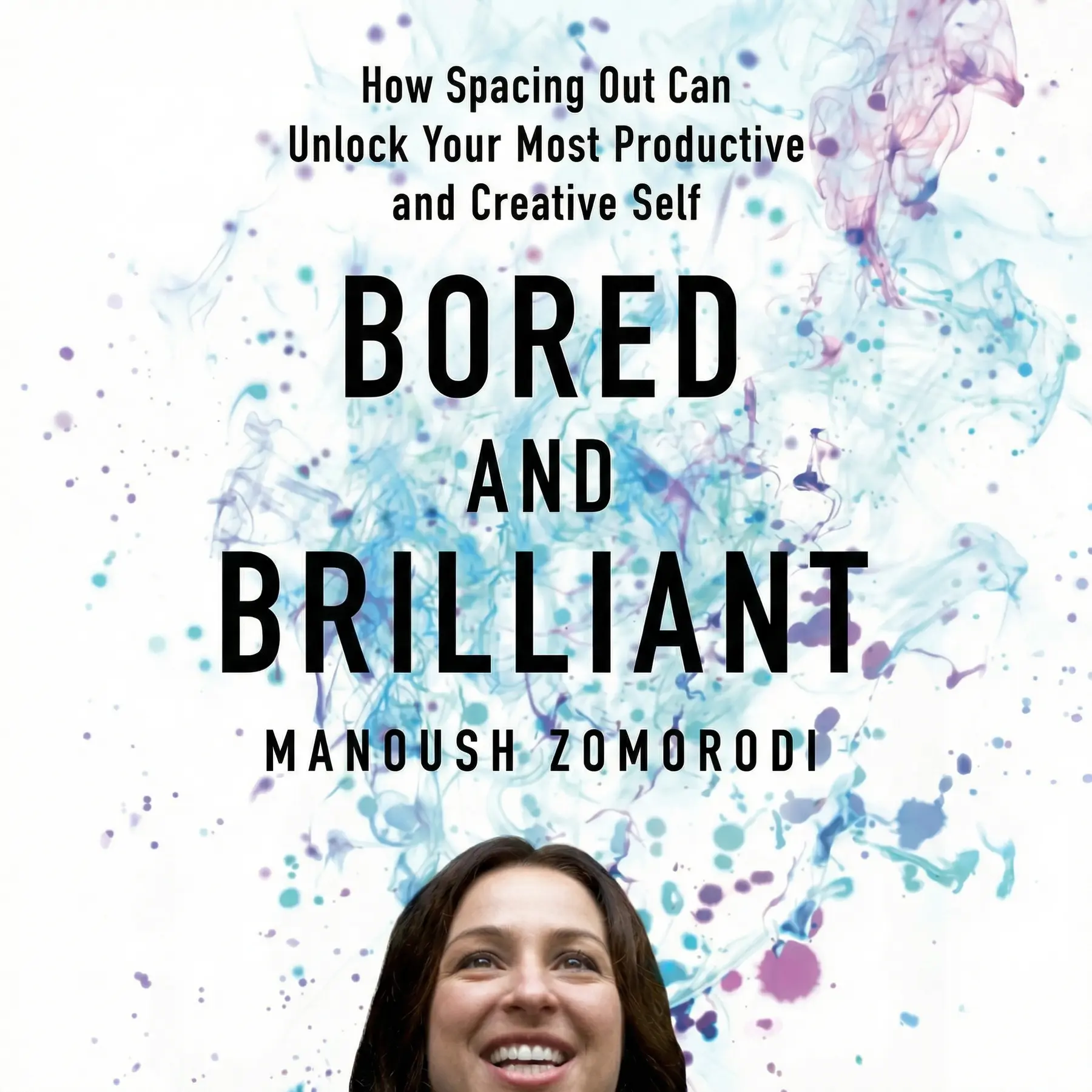
Bored and Brilliant: How Spacing Out Can Unlock Your Most Productive and Creative Self
Explore how reclaiming moments of stillness and boredom can spark profound creativity. This guide offers practical strategies to disconnect from digital noise and rediscover the power of an unfocused mind.
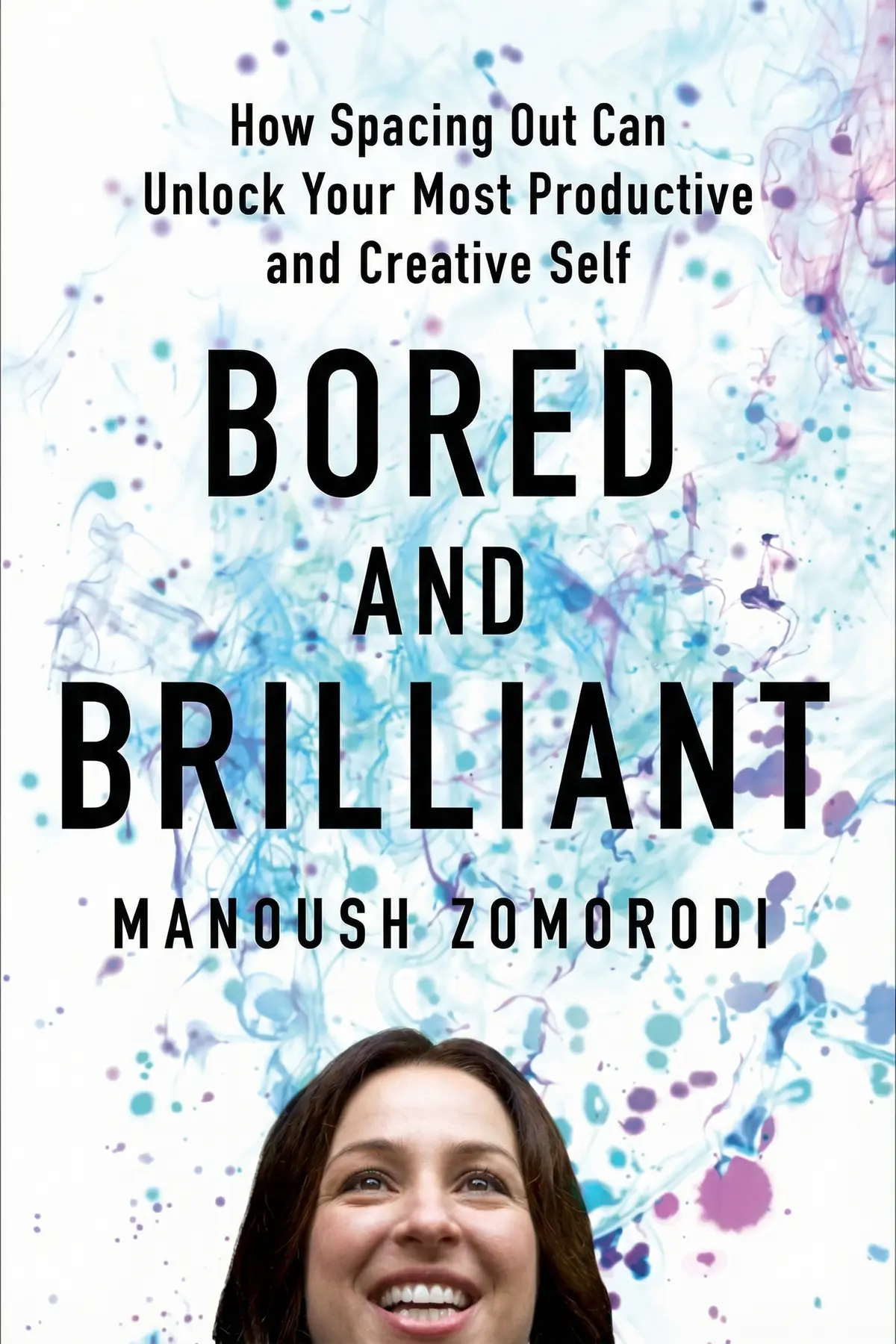
Table of Content
1. Introduction
1 min 33 sec
Have you ever wondered where your best ideas actually come from? Think back to the last time a truly great insight hit you. It probably wasn’t while you were scrolling through a social media feed or refreshing your email for the tenth time in an hour. More likely, it happened when you were doing something remarkably mundane—perhaps while you were in the shower, taking a quiet walk, or simply staring out a window. There is a reason for this phenomenon, and it lies in the intersection of boredom and brilliance.
We live in a world that treats every spare second as an opening for digital consumption. If we are waiting for a bus, we check our phones. If we are standing in line at the grocery store, we play a quick game. We have effectively eliminated the experience of ‘nothingness’ from our lives. While this feels like we are being more efficient or entertained, we are actually starving our brains of the fuel they need to innovate.
In this summary, we are going to explore why your brain needs those quiet, seemingly empty moments to function at its peak. We’ll look at the physiological shifts that occur when we let our minds wander and examine the ways modern technology is subtly rewriting our cognitive habits. Most importantly, we will walk through a practical, week-long challenge designed to help you reclaim your attention and reset your digital life. This journey isn’t about becoming a luddite or throwing your phone into the ocean; it’s about finding a sustainable balance that allows you to be both connected and creative. By the end, you’ll see that boredom isn’t something to be feared or avoided—it is actually a gateway to your most brilliant self.
2. The Creative Power of an Unoccupied Mind
1 min 59 sec
Discover why the brain’s ‘default mode’ is essential for problem-solving and why we often prefer physical pain to a moment of silence.
3. How Screens Change the Way We Read and Remember
1 min 55 sec
Explore the shift from linear to non-linear reading and how digital photography might be erasing your most precious memories.
4. The Psychological Tactics of the Attention Economy
2 min 00 sec
Uncover the subtle design tricks companies use to keep you hooked, from progress bars to the illusion of scarcity.
5. Digital Distractions and the Erosion of Empathy
1 min 56 sec
Learn how the mere presence of a phone can lower the quality of your conversations and why schools are banning laptops.
6. Finding a Middle Ground with Mobile Gaming
1 min 55 sec
Not all screen time is equal. Discover how to use games as a tool for resilience and education rather than an escape.
7. Nurturing the Next Generation in a Digital World
1 min 53 sec
Explore why tech CEOs limit their own children’s device use and how to teach kids to manage their own digital boundaries.
8. Reclaiming Your Life: The First Steps of the Challenge
1 min 55 sec
Begin your journey to brilliance with the first four days of the Bored and Brilliant program, from self-tracking to app deletion.
9. From Silence to Solutions: Finalizing the Reset
2 min 02 sec
Complete the challenge by taking a ‘fakeation’ and using the power of extreme boredom to solve your deepest problems.
10. Conclusion
1 min 33 sec
In our fast-paced, digital world, we have come to view boredom as a failure—a gap that needs to be filled as quickly as possible with a screen. But as we have seen, this constant connectivity comes at a heavy price. We are sacrificing our deep reading skills, our long-term memories, and even our capacity for empathy. Most importantly, we are shutting down the ‘default mode’ of our brains, the very state where our most creative and brilliant thoughts are born.
The journey toward being ‘Bored and Brilliant’ is not about rejecting the modern world. It is about reclaiming your agency. It’s about realizing that while technology is a powerful tool, it should never be the master of your attention. By intentionally inviting stillness back into your life—whether through a seven-day challenge or simply by leaving your phone in your pocket during a walk—you open the door to a more innovative and connected version of yourself.
As a final takeaway, consider a simple practice to maintain your mental clarity and emotional health. Take a moment each day to think of someone you care about and silently wish for their happiness. Hold that thought for three breaths. It sounds simple, but this brief moment of intentional, non-digital focus can reduce stress and increase your sense of connection to the real world. Remember, your brilliance doesn’t live in your smartphone; it lives in the quiet spaces between your thoughts. Give yourself the gift of boredom, and see what amazing things your mind can create when it has the room to breathe.
About this book
What is this book about?
In an era of constant connectivity, we have lost the art of doing nothing. This book explores the vital link between boredom and brilliant thinking, revealing how our reliance on smartphones is fundamentally changing our brains, our memory, and our ability to empathize with others. Through a series of thoughtful experiments and research-backed insights, the author provides a roadmap for restructuring our relationship with technology. The promise is simple but life-changing: by intentionally stepping away from the screen, we can unlock our most innovative ideas and lead more present, fulfilling lives.
Book Information
About the Author
Manoush Zomorodi
Manoush Zomorodi is a journalist, radio host, and author. She is best known for her award-winning podcast, Note to Self, which explores the complex relationship between humans and technology.
Ratings & Reviews
Ratings at a glance
What people think
Listeners find the work thoroughly researched and engaging, offering actionable advice for navigating digital habits. They value the exploration of how mindfulness relates to mind-wandering and appreciate the useful insights into fostering creativity. The book is praised for its message and difficulty level, with one listener highlighting its significant utility within high school classrooms.
Top reviews
Viroj
As someone who works in a high school setting, I think every teenager needs to grapple with these concepts before their attention spans are gone for good. Zomorodi connects the dots between mindfulness and the actual biological need for mind-wandering in a way that feels urgent, especially considering how we are raising a generation that doesn't know how to be alone. The book provides such a refreshing perspective on how "doing nothing" is actually the engine of creativity. Truth is, I even found myself putting the book down just to stare out the window for a while, which I guess means it worked! The tone is conversational and engaging, making complex psychological ideas accessible without being condescending. It’s a vital toolkit for the modern age.
Show moreSurasit
Wow, I didn't realize how much my phone was actually stunting my creative output until I sat down with this. Manoush Zomorodi has such a relatable voice, especially when she talks about her own struggles with gaming and distractions. It’s refreshing to read a book on productivity that isn't written by a Silicon Valley tech bro. Instead, it feels like advice from a smart friend who truly understands the struggle. The connection between mind-wandering and "brilliance" is backed up by some really interesting interviews. I actually listened to the audiobook, which she narrates herself, and her passion is contagious. It made me rethink my entire relationship with my commute. I’m now choosing to just sit and think instead of immediately reaching for a podcast.
Show morePannipa
Finally got around to reading this after hearing Manoush on her podcast, and it didn't disappoint. As a writer, I constantly struggle with the urge to check my feed every time a sentence gets difficult. This book isn't some preachy anti-tech manifesto; instead, it's a practical guide to reclaiming our cognitive space. I loved the "Two Dots" anecdote because it made the author feel human rather than some productivity guru. To be fair, some of the science felt a bit light, but the actionable challenges more than made up for it. I’ve already started leaving my phone in the other room during dinner. It's a small change, but the mental clarity is noticeable. Definitely a solid read for anyone feeling burnt out by digital noise.
Show moreBella
Ever wonder why your best ideas come to you in the shower or while folding laundry? This book explains the "default mode" of our brains and why we need to protect it from constant pings. I found the section on how we lose our capacity for deep reading particularly convicting. It's not just about being "bored"; it's about making space for the brain to synthesize information. The author’s background as a podcaster shines through in the pacing—it feels like a series of well-produced segments. In my experience, the challenges were the highlight, especially the one about deleting that one "addictive" app. I deleted my favorite puzzle game and actually started sketching again. It’s a very practical, non-judgmental look at our tech habits.
Show moreDarawan
Picked this up because I’ve been feeling like my brain is permanently fried from too much scrolling. The "Bored and Brilliant" project is an interesting concept, and I liked the step-by-step challenges. Some of them, like "Photo-Free Day," were surprisingly difficult but eye-opening. To be honest, though, the book feels a bit fluffy in the middle. I didn't need three chapters to convince me that smartphones can be addictive. It’s a quick read, and the tone is very friendly, which I appreciated. But I think it could have been half the length and still had the same impact. It’s a solid 4-star read that offers some good food for thought without being too taxing.
Show morePaisley
The chapter on how digital communication is changing the way students interact with professors was a total eye-opener for me. It highlights the loss of "patience" in our modern discourse—the patience to let a messy thought evolve into something great. Zomorodi does a fantastic job of presenting both sides of the coin. She isn't telling us to throw our phones in the river, but rather to use them with intention. The interviews with researchers, ranging from neuroscientists to psychologists, provide a solid, multifaceted foundation for her arguments about why the wandering mind is actually essential for high-level problem solving. It’s an entertaining read that provides a much-needed perspective on our digital habits.
Show moreApichat
This book felt like a long-form blog post that got stretched way past its natural breaking point. The central message is incredibly simple: put down your phone and look around. While I agree with the premise, I found myself skimming through chapters that essentially repeated the same point. Personally, if you’ve ever thought about digital detoxing, you already know everything this book has to offer. It lacks a formal reference section, which makes the 'scientific' claims feel a bit anecdotal and shaky. I was hoping for deep insights into the mechanics of creativity, but what I got was a collection of mini-challenges I could have found on a Pinterest board. Not exactly the 'brilliant' deep dive I was expecting based on the title, though it is well-written.
Show moreNiphon
While I appreciated the interactive nature of the challenges, I couldn't help but feel that I wasn't the intended audience for this. I already practice a lot of digital hygiene, so many of the "revelations" about social media addiction felt like old news. Manoush is a great narrator and the book is clearly well-researched, but it occasionally dips into repetitive territory. Look, the interviews with scientists are fascinating, but they often lead back to the same basic conclusion about unplugging. It’s a well-written project summary, but maybe not a groundbreaking piece of literature. If you are already conscious of your screen time, you might find this a bit elementary. However, for a digital novice, it’s probably a life-changer.
Show moreIvan
Honestly, I had mixed feelings about this one by the time I finished the last page. On one hand, the message is incredibly important and the "challenges" are genuinely helpful for resetting your habits. On the other hand, the writing can be quite repetitive, almost as if she’s trying to hit a word count. Not gonna lie, I loved the author's voice and her honesty about her own "Two Dots" addiction. It made the advice feel much more attainable than a typical self-help book. However, if you are looking for a rigorous scientific study, this isn't it. It’s more of a sociological experiment and a call to action. It’s worth a read if you feel like your phone is winning the battle.
Show moreSienna
Not what I expected at all, and frankly, I'm disappointed by the lack of original substance here. The title is a massive misnomer because it’s more of a "How to Use Your Phone Less" manual than a deep dive into brilliance. If you've read Cal Newport or any basic mindfulness blog, you have already encountered these ideas in a more succinct format. I found the author’s musings to be quite watered down and the lack of a formal reference section is a red flag for any book claiming scientific backing. It felt like she was just reporting on her own podcast project rather than conducting a real experiment. For a book about boredom, it was ironically quite dull to get through. Save your money and just turn your phone off for an hour instead.
Show moreReaders also enjoyed

AUDIO SUMMARY AVAILABLE
Listen to Bored and Brilliant in 15 minutes
Get the key ideas from Bored and Brilliant by Manoush Zomorodi, plus 5,000+ more titles in English and Thai.
- 5,000+ titles
- Listen as much as you want
- 7-day free trial
- Cancel anytime







