
15 min 11 sec
Breaking The Habit of Being Yourself: How to Lose Your Mind and Create a New One
By Joe Dispenza
Dr. Joe Dispenza explores the intersection of neuroscience and spirituality to show how you can reprogram your subconscious. Learn to break limiting patterns, harness gratitude, and use meditation to consciously design a new reality.
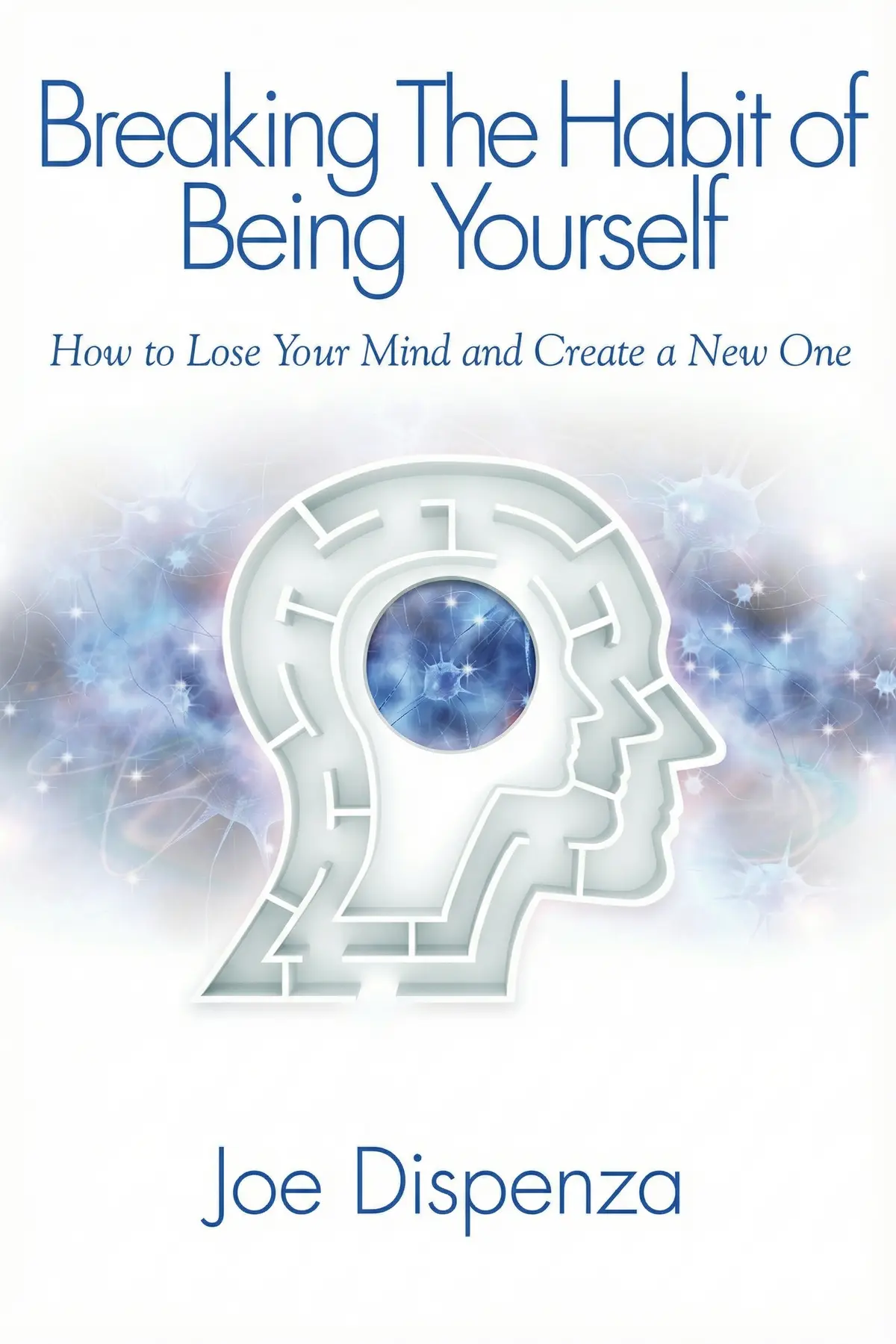
Table of Content
1. Introduction
1 min 55 sec
Imagine waking up every single morning feeling truly empowered, deeply inspired, and fully in control of your destiny. For most people, this sounds like a dream, or perhaps a temporary state that only lasts until the first stressor of the day arrives. But what if this sense of agency could be your permanent reality? What if you actually possessed the internal machinery to change your thoughts and emotions so precisely that you could attract a life perfectly aligned with your deepest desires?
As it turns out, this isn’t just wishful thinking. According to the latest insights in neuroscience and biology, you have the capacity to consciously reshape your mind. The challenge, however, is that most of us are operating on autopilot. We are living out a series of memorized responses and ingrained habits—effectively, we are in the ‘habit’ of being ourselves. This habit is so strong that it dictates our health, our relationships, and our success without us even realizing it.
To break this cycle, we have to look under the hood of our own consciousness. We need to understand the science behind how our thoughts and emotions impact our very biology and our perception of what is possible. By harnessing the latent power within our brains and our genes, we can begin the work of reprogramming the subconscious mind. This journey is about more than just ‘positive thinking’; it’s about a fundamental shift in how we exist in the world.
In the following pages, we will explore how your mental imagery and emotional states serve as the blueprints for your reality. We will look at the role of gratitude as a powerful creative force and see how meditation acts as the primary tool for deep-seated change. This is a guide to trading in your old, limiting habits for a new way of being. Whether you want to break free from self-doubt or simply align your daily life with your higher goals, the path to transformation starts here. Let’s dive into the mechanics of losing your old mind to create a better one.
2. The Biological Blueprint of Reality
2 min 06 sec
Can your thoughts actually rewrite your genetic expression? We explore the fascinating intersection of neuroscience and reality, revealing how your daily mental patterns physically carve the pathways of your life.
3. Bending Reality Through Gratitude
1 min 53 sec
Why does focusing on what we hate only make it stronger? Discover the psychological mechanism behind resistance and how a specific emotional shift can begin to bend your reality toward your desires.
4. The Construction of Empowering Beliefs
1 min 50 sec
Is your current life a result of your past or your beliefs? Learn the two-step process for identifying the mental seeds you’re planting and how to swap limiting views for empowering ones.
5. Meditation as the Tool for Rewiring
1 min 53 sec
What if meditation was more than just a way to relax? We dive into how quiet introspection serves as a biological tool to bridge the gap between your public persona and your true self.
6. Preparing for the Shift
1 min 50 sec
Before you can change who you are, you must change where you are—both inside and out. Explore the practical steps of “induction” and how to prepare your brain for deep reprogramming.
7. The Persistence of the New Self
1 min 52 sec
Breaking a lifelong habit requires more than just willpower; it requires a new identity. Uncover the final stage of transformation: the mental rehearsal needed to make your future self your present reality.
8. Conclusion
1 min 52 sec
We’ve traveled through the profound landscape of the mind, seeing how the interplay of neuroscience, emotions, and belief shapes the world we inhabit. The central takeaway is as challenging as it is liberating: you are not a finished product, nor are you a victim of your past or your genes. You are a dynamic being with the biological equipment to rewrite your own story.
By understanding that your thoughts and feelings are the primary drivers of your reality, you can move from a passive state of existence to an active state of creation. We have seen how resistance only strengthens the things we dislike, while gratitude and visualization provide the fuel for a new future. We’ve explored how meditation serves as the bridge, allowing us to quiet the analytical mind and reach the subconscious levels where real change happens. And finally, we’ve discussed the importance of consistency and mental rehearsal in making your new identity stick.
The throughline of this entire process is the intentional use of your attention. Where your attention goes, your energy flows, and your neural pathways grow. If you want to change your life, you must change where you place your focus.
As you move forward, start small but stay consistent. Use meditative introspection to check in with yourself daily. Practice the ‘induction’ into a calm state, and then spend time vividly imagining and feeling the person you want to become. Challenge your old, limiting assumptions the moment they arise and replace them with empowering truths. You deserve to be the best version of yourself, and the tools to achieve that have been within you all along. It’s time to stop being who you’ve always been and start being who you were meant to be. The gates to your transformation are open; all you have to do is walk through them.
About this book
What is this book about?
Have you ever felt like you are a passenger in your own life, driven by habits and emotional reactions you can’t seem to control? Breaking The Habit of Being Yourself suggests that your personality is not a fixed trait, but a collection of memorized thoughts and behaviors that have become hardwired into your biology. Dr. Joe Dispenza provides a scientific framework—drawing on epigenetics, neuroscience, and quantum physics—to explain how your internal state dictates your external world. The book’s promise is one of radical transformation. It argues that by understanding the link between the mind and the body, you can move out of a state of survival and into a state of creation. You will learn how to dismantle the 'old' version of yourself and replace it with a more empowered identity. Through practical techniques like meditation, mental rehearsal, and the cultivation of gratitude, this guide provides the tools necessary to bridge the gap between who you appear to be and who you truly want to become. It is a roadmap for those looking to lose their limitations and create a brand-new mind.
Book Information
About the Author
Joe Dispenza
Dr. Joe Dispenza is a prominent neuroscientist, chiropractor, and international lecturer. He is widely recognized for his pioneering work in the fields of epigenetics and quantum physics. As a best-selling author, his notable works include Breaking the Habit of Being Yourself and the 2014 hit You Are the Placebo: Making Your Mind Matter. Dr. Dispenza’s career is dedicated to bridging the divide between rigorous science and spiritual experience. He focuses on empowering individuals by exploring the immense power of the human mind to influence physical reality and overall well-being.
Ratings & Reviews
Ratings at a glance
What people think
Listeners find this work enlightening and simple to grasp, highlighting the impressive research and straightforward descriptions of brain mechanics. They value its transformative power, with one listener mentioning how it guided them in overcoming past patterns. The book is praised for its accessibility, spiritual resonance, and utility as a self-help resource, resulting in a compelling and absorbing experience.
Top reviews
Ratthapong
Wow. This book completely shifted my perspective on how my own thoughts dictate my physical reality and daily routine. Joe Dispenza has a gift for making complex brain mechanics feel accessible to the average person who isn't a neuroscientist. I found the sections on neuroplasticity particularly enlightening because they provided a logical framework for why I felt 'stuck' in my old personality. By understanding that my brain was essentially hardwired to repeat the same loops, I felt empowered to finally break those cycles. Not gonna lie, the meditation techniques take some genuine commitment to master, but the results are undeniable if you stick with it. My stress levels have plummeted, and I feel like I'm finally taking the reins of my life again. This isn't just another fluff-filled self-help guide; it’s a manual for a total mental overhaul.
Show moreSomporn
Ever wonder why you keep making the same mistakes even when you know better? Joe Dispenza breaks down the biological 'survival mode' that keeps us trapped in the past. This book is a literal game-changer for anyone who feels like their personality is set in stone. The way he explains how we live in a state of constant stress, reacting to our environment instead of creating it, really hit home for me. I’ve read a lot of self-help, but this is the first time I actually understood the 'how' behind changing my habits. The meditation exercises are deep and require you to really confront your inner self, which can be uncomfortable but is totally necessary. I feel more excited about my future than I have in years. If you’re ready to stop being a victim of your circumstances, this is your roadmap.
Show moreDaranee
Finally got around to finishing this, and I can say the hype is real if you're willing to put in the work. This isn't a book you just skim through; you have to live it. I loved the deep dive into how our environment and our memories keep us in a loop of the same old reality. Dispenza provides a very clear path toward breaking those chains through a structured four-week meditation program. I’ve noticed that I’m much less reactive to the little annoyances of life, and I feel a sense of inner peace that I didn't think was possible. Some people complain about the 'science' part, but for me, it provided just enough of a framework to make the spiritual stuff feel believable. It’s an empowering read that makes you realize you are the architect of your own life.
Show moreWipada
The chapter on brain waves was worth the price of the book alone. It explains the 'why' behind meditation in a way that feels logical and grounded, rather than just mystical. I've always struggled to sit still and clear my mind, but understanding what’s happening in my frontal lobe helped me stay focused. Dr. Joe’s writing is encouraging and makes you feel like anything is possible if you can just master your own internal state. I especially liked the part about how we can choose a 'potential' from the quantum field and align our emotions with it before it even happens. It sounds 'woo-woo' at first, but when you practice it, you really do start to feel a shift in your energy and your outlook. This book is a fantastic tool for anyone wanting to transcend their current limitations and build a better life.
Show moreSakura
Picked this up during a particularly stagnant period in my life, and the step-by-step meditation guide was exactly the kickstart I needed. Dispenza manages to bridge the gap between spiritual growth and biological reality in a way that feels fresh and exciting. I particularly appreciated the detailed breakdown of brain waves—Alpha, Beta, Theta—and how they relate to our ability to access the subconscious mind. While some of the 'universal intelligence' talk felt a little too much like 'The Secret' for my taste, the practical application of these ideas is where the book shines. Personally, I found that focusing on a future version of myself helped me let go of past traumas that were holding me back. It takes work, and it isn't an overnight fix, but the mental clarity I’ve gained is worth every second of effort.
Show morePhimwan
As someone who has struggled with chronic stress for years, the concept of 'unlearning' an emotion was a total light-bulb moment. I’ve always known that my thoughts affected my health, but Dispenza explains the chemistry of it so clearly that it finally clicked. The idea that we can literally signal new genes in new ways through our thoughts is mind-blowing. I do think the book could have been about fifty pages shorter, as it gets a little repetitive in the middle sections. Also, some of the anecdotes about people curing major illnesses felt a bit anecdotal and lacked the rigorous proof I usually look for. However, the overall impact on my daily mood and my ability to catch myself in negative thought loops has been huge. It’s a very practical guide to becoming the person you actually want to be.
Show moreJai
To be fair, there is some overlap with his other work like 'You Are the Placebo,' but the practical exercises here are superior. I appreciated the emphasis on how the body becomes the mind, essentially functioning on autopilot based on past experiences. Breaking that habit requires more than just 'positive thinking'—it requires a physiological shift, which he explains in great detail. My only gripe is that the writing style can be a bit dry during the heavy technical explanations. Sometimes I had to re-read paragraphs three times just to grasp the concepts. But once you get to the application part, it all starts to make sense. It’s a solid guide for anyone serious about personal transformation and understanding the connection between the brain and behavior. I’ve already recommended it to several friends who are looking for a more 'intellectual' approach to spirituality.
Show moreDarawan
After hearing so much hype about Dr. Joe, I finally dove into this one with an open mind and a healthy dose of skepticism. The first half of the book is truly excellent, offering a fascinating look at how our bodies become addicted to certain emotional states. However, the author lost me a bit when he started jumping into 'quantum' theories to explain how we manifest our desires. Look, I believe in the power of the mind, but some of the scientific leaps he makes feel a bit like a stretch to fit his narrative. The story about his daughter’s Italy trip, for instance, felt more like a fortunate coincidence than a quantum miracle. That said, the actual meditation advice is solid and has helped me become more mindful of my subconscious habits. It’s a bit of a mixed bag, but still worth reading if you can filter out the pseudoscientific jargon.
Show moreArm
The first half of this book is a masterclass in neuroplasticity and understanding how our brains actually wire themselves through repetition. I was totally onboard with the idea of 'unlearning' negative emotions and building new neural pathways to improve health and happiness. Truth is, the second half where he brings in the quantum field felt like it was written by a completely different person. He uses scientific terms in ways that don't quite align with actual physics, which might annoy readers with a technical background. I also listened to some of the meditations and they were a bit repetitive for my liking. In my experience, there is enough real science in the first 150 pages to justify the purchase, but you might find yourself rolling your eyes at the later chapters. Still, the core message about personal change is powerful.
Show moreDivya
Frankly, I wanted to like this more, but the author's loose interpretation of quantum mechanics really ruined the credibility for me. He takes very specific physical theories and applies them to human consciousness in a way that feels more like fantasy than science. It’s frustrating because the parts about neurobiology are actually quite good and grounded in reality. Why hide good advice under a layer of quackery? The book is also quite long-winded and repeats the same points over and over again. To be fair, if you can ignore the buzzwords, the meditation instructions might be useful for some people. But for me, the constant mention of 'electromagnetic signatures' and 'quantum creator fairies' made it impossible to take the message seriously. I think there are better, more grounded books on meditation and habit change out there that don't resort to this kind of bending of facts.
Show moreReaders also enjoyed
A New Earth: Awakening to Your Life’s Purpose
Eckhart Tolle
59 Seconds: Change Your Life in Under a Minute
Richard Wiseman
Aflame: Learning from Silence
Pico Iyer
A Guide to the Good Life: The Ancient Art of Stoic Joy
William B. Irvine
AUDIO SUMMARY AVAILABLE
Listen to Breaking The Habit of Being Yourself in 15 minutes
Get the key ideas from Breaking The Habit of Being Yourself by Joe Dispenza, plus 5,000+ more titles in English and Thai.
- 5,000+ titles
- Listen as much as you want
- 7-day free trial
- Cancel anytime







