
16 min 25 sec
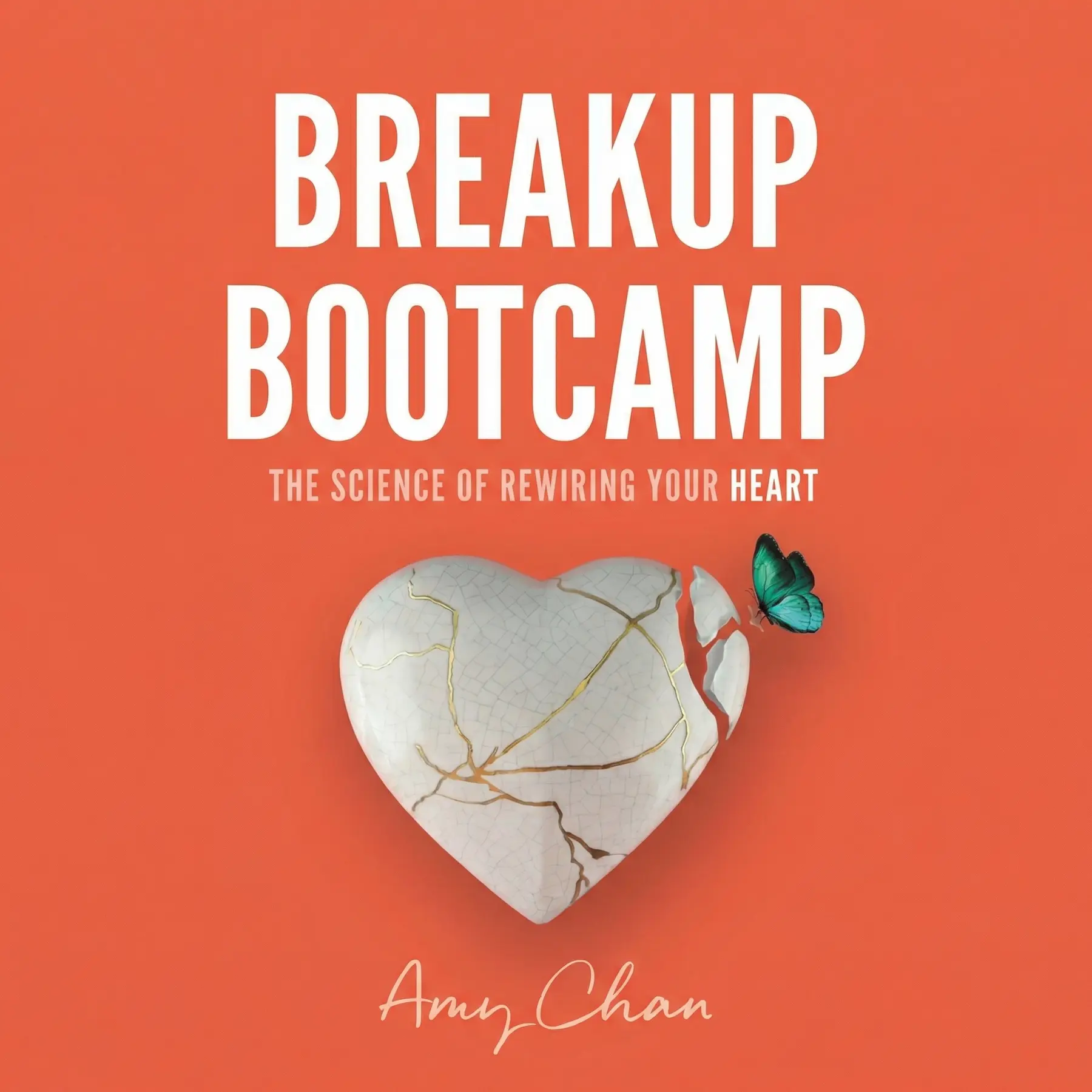
Breakup Bootcamp: The Science of Rewiring Your Heart
By Amy Chan
Amy Chan provides a science-based roadmap for navigating heartbreak. By understanding the brain’s reaction to loss, readers can dismantle negative thought patterns, rewire their emotional responses, and build a foundation of self-acceptance.
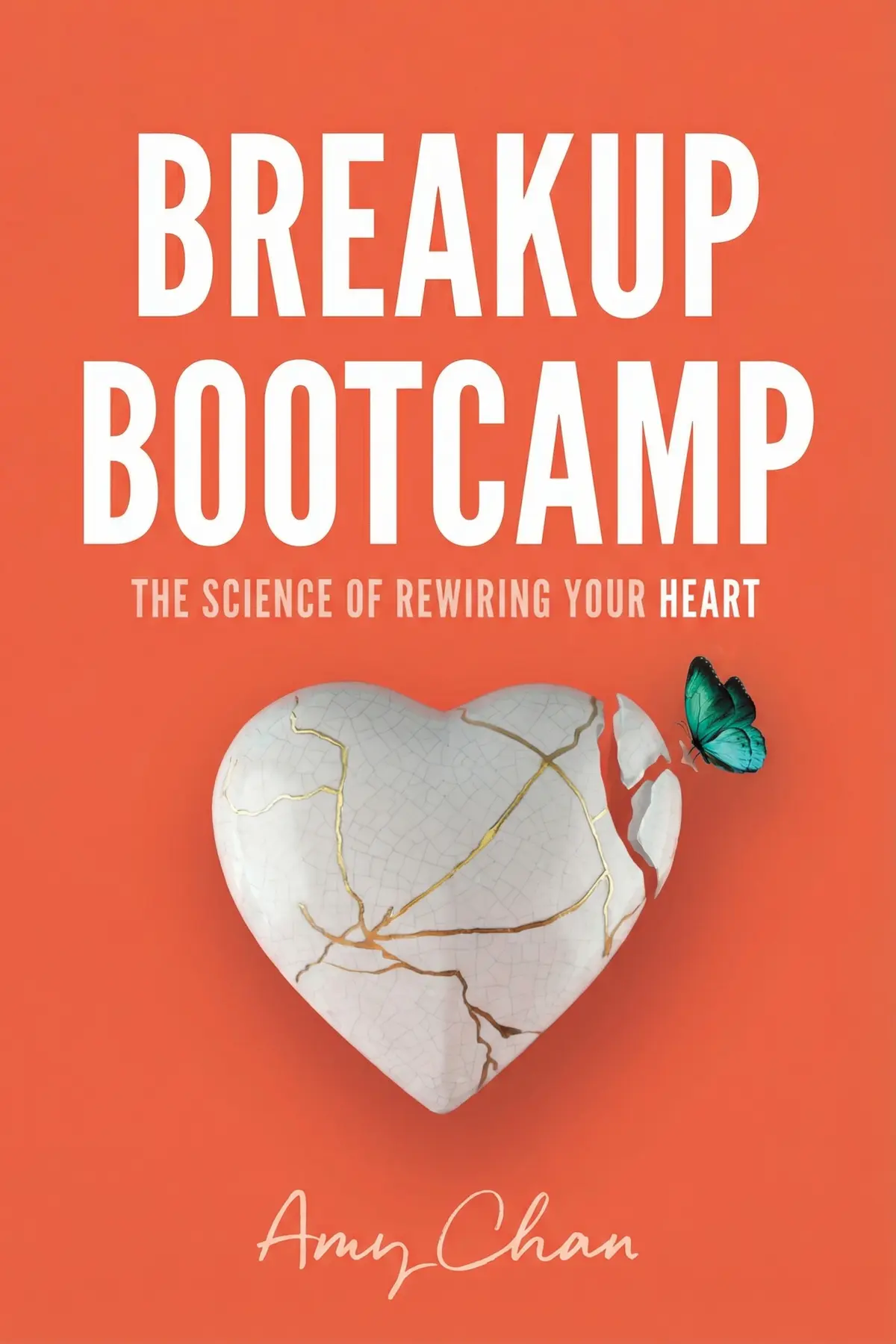
Table of Content
1. Introduction
1 min 47 sec
Imagine the feeling of your world suddenly tilting on its axis. When Amy Chan was twenty-nine years old, she faced a reality she never saw coming: the man she intended to spend her life with had been unfaithful. That discovery didn’t just break her heart; it shattered her sense of the future. The pain was visceral, overwhelming, and seemingly endless. However, it was this very descent into the depths of heartbreak that became the catalyst for something much larger than a single relationship. Out of that struggle, Chan developed a new sense of purpose, leading her to create a specialized retreat known as the Renew Breakup Bootcamp.
What she discovered through her own recovery and extensive research into the science of love and loss is that heartbreak isn’t just an emotional event—it’s a biological and neurological one. Many of us are taught to simply “wait it out” or find a distraction when a relationship ends, but this summary explores a more proactive approach. The core idea is that while you cannot simply skip the agony of a breakup, you can use the experience as a laboratory for self-discovery. You can actually learn to rewire your brain’s response to the loss.
In the following pages, we are going to walk through the practical exercises and psychological shifts that Chan recommends. We will look at why our brains behave like they are in drug withdrawal after a split, how we get trapped in false narratives about our exes, and how we can systematically change our deepest beliefs about our own worth. This isn’t about just getting over someone; it’s about using the pain of the present to ensure a more resilient and peaceful future. If you are currently navigating the wreckage of a relationship, or if you simply want to understand your own romantic patterns better, consider this your guide to moving from the chaos of heartbreak to the clarity of self-acceptance.
2. The Biological Reality of a Broken Heart
3 min 03 sec
Discover why your brain treats a breakup like drug withdrawal and learn the crucial difference between naturally feeling your pain and unintentionally feeding it.
3. Escaping the Trap of False Narratives
2 min 44 sec
Our brains are wired to tell stories to protect us, but these tales often lead to unnecessary suffering. Learn how to separate facts from fiction.
4. Climbing the Ladder of Belief
2 min 16 sec
Your deep-seated beliefs about love often stem from childhood. Learn how to gradually shift these unhelpful convictions using a structured approach.
5. Rewiring the Brain Through Visualization
2 min 17 sec
Harness the power of mental rehearsal to create new neural pathways and prepare yourself for a future that feels vibrant and full of possibility.
6. From External Validation to Internal Acceptance
2 min 22 sec
Learn how to stop making your happiness dependent on things outside your control and find a sense of fulfillment that stays with you, no matter what.
7. Conclusion
1 min 56 sec
As we reach the end of this journey through the principles of Breakup Bootcamp, it’s worth looking back at how far we’ve come. We started with the jarring realization that heartbreak is a physical, neurological event—a form of withdrawal that demands patience and chemical rebalancing. We explored how the stories we tell ourselves can either be a source of constant retraumatization or a tool for clarity. By stripping away the ‘thinking traps’ of our internal interpreter, we can finally see the facts for what they are, allowing the ninety-second waves of emotion to pass without being fed by false narratives.
We also saw that our patterns in love are rarely accidental; they are often the result of deep-seated beliefs formed long ago. Through the ‘ladder of beliefs,’ we’ve seen that it is possible to bridge the gap between self-doubt and self-worth, one small, plausible thought at a time. And by using the power of visualization, we’ve learned that we can actually prime our brains for a future of peace and resilience, creating new neural pathways that don’t depend on anyone else’s approval.
The throughline of all these lessons is a shift in focus. A breakup is undoubtedly an ending, but it is also a unique window of opportunity to redirect your life. It is a time to stop looking outward for validation and start building an internal foundation that is unshakable. The ultimate takeaway is that while love is a beautiful part of the human experience, it is not the source of your value. By practicing acceptance and mindfulness, you can find a sense of fulfillment that is entirely your own. You have the tools to rewire your heart, and in doing so, you can move forward not just as a survivor of heartbreak, but as someone who is truly at home within themselves. Take these exercises, be patient with your progress, and remember that the most important relationship you will ever cultivate is the one you have with yourself.
About this book
What is this book about?
Breakup Bootcamp is a compassionate yet rigorous guide to surviving the end of a relationship. It moves beyond standard platitudes to explain the biological and psychological mechanisms that make heartbreak feel like a physical addiction. The book promises a path toward healing not by forgetting the past, but by understanding it and using that insight to transform one's future. Through a series of practical exercises based on psychological and scientific research, the book helps readers move through the stages of grief. It addresses the way the brain processes dopamine withdrawal after a split and offers tools like the "ladder of beliefs" and visualization to shift one's identity. Ultimately, the book's promise is to help individuals find a sense of peace that is independent of their relationship status, turning a painful ending into a transformative new beginning.
Book Information
About the Author
Amy Chan
Amy Chan is a relationship expert and the founder of Renew Breakup Bootcamp, a retreat that takes a scientific approach to healing from heartbreak. Her work has been featured in major publications such as the New York Times, Fortune, and the Huffington Post. Chan’s expertise lies in combining emotional insights with evidence-based practices to help people navigate the complexities of modern dating and recovery from loss.
Ratings & Reviews
Ratings at a glance
What people think
Listeners find this guide both encouraging and useful, offering actionable tasks that lead them through the recovery journey. They value the evidence-based methods and perspectives, with one listener mentioning how it transformed their outlook on grief and ending relationships. The material earns praise for its accessibility and ability to mend a broken heart, with one listener characterizing the experience as a "giant hug." Listeners prize the relationship coaching, as one individual points out its role in bettering their connections with others.
Top reviews
Worawit
Finally got around to reading this after a rough few months, and it truly felt like a giant hug from someone who actually understands the neurobiology of heartache. Amy Chan doesn't just offer simple platitudes; she provides a scientific framework for why we feel so shattered when a relationship ends. The practical exercises throughout the book helped me shift my mindset from loss to growth in a way I didn't think was possible right now. I particularly loved the sections on attachment theory because they explained so much about my past patterns. While some of the anecdotes from her retreat felt a little polished, the overall impact was incredibly empowering. I finished the last page feeling like my frontal lobe had finally finished developing. If you’re currently in the thick of it, this is the companion you need on your nightstand.
Show moreElise
Wow, I didn't expect a book about breakups to make me feel so empowered about my entire life, not just my dating status. Amy Chan has a gift for taking complex psychological concepts and making them accessible for the average person. The exercises are practical and actually require you to do the work rather than just nodding along to the text. I found the circle of love ending to be a beautiful way to reframe my perspective on connection. Not gonna lie, I was skeptical about the scientific claims at first, but the way she integrates expert advice from psychiatrists really won me over. It is rare to find a book that addresses the mind, body, and spirit with such balance. This truly felt like the relationship coaching I never knew I needed. It is a must-read for anyone feeling lost after a split.
Show moreArthit
Picked this up during a time when I felt like I was drowning, and it was exactly the lifeline I needed. The mix of personal anecdotes and relationship coaching makes for a very compelling read that is hard to put down. I loved that the author does not just tell you to move on but gives you the actual tools to process the grief. The exercises are the real heart of the book; they forced me to look at my own contributions to my relationship patterns. It is empowering to realize that you have the agency to change your future outcomes. I have read a lot of self-help, but this one stands out because it feels grounded in reality rather than just positive vibes. The scientific insights into how our brains process loss helped me stop blaming myself so much. I feel much more equipped to handle future relationships now.
Show moreGift
After hearing the hype about the Breakup Bootcamp retreat, I was curious if the book could capture that same magic. For the most part, it does a fantastic job of weaving together stories of transformation with psychological wisdom. The focus on self-care as a form of hard work—rather than just bubble baths—is a refreshing take on the concept. In my experience, most books in this genre are too soft, but Chan provides a rigorous path forward. The breakdown of attachment styles was incredibly eye-opening and helped me realize my bad luck was just a pattern. It is a supportive guide that offers a lot of clarity during a confusing time. I truly feel like a different person after finishing this. It is like having a private coach walking you through the wreckage.
Show moreLillian
The chapter on attachment styles alone makes this book worth the purchase for any single person. It was like a lightbulb went off and I finally understood why I kept choosing the same type of unavailable partner. Amy Chan writes with a lot of empathy, and the book really feels like a supportive coach in your pocket. I loved the practical exercises because they moved me out of my head and into direct action. The way she frames a breakup as a shake-up for growth is such a powerful mindset shift for the brokenhearted. I have recommended this to several friends already, even those who are not currently going through a split. It is just good relationship coaching in general. While some of the retreat-specific stories felt a little like marketing, the value of the advice is undeniable.
Show moreBond
This book feels like a conversation with a very smart, very direct friend who won't let you wallow for too long without a plan. I appreciated the emphasis on the psychological and neurological aspects of love because it validated that my pain wasn't just in my head. The stories from women at the actual bootcamp were the highlight for me, as they made the advice feel grounded and real. To be fair, some of the biological arguments regarding testosterone levels felt a bit oversimplified and dated. I also found the suggestion to do a plank to release negative emotions a little bit odd for a book about deep emotional healing. However, the core relationship coaching is solid and helped me navigate a recent friendship fallout as well as my romantic history. It is a readable, fast-paced guide that balances heavy science with actionable steps for recovery.
Show moreKan
Ever wonder why it is so hard to stop checking your ex’s Instagram even when you know it hurts? This book answers that question through the lens of neurology and it is honestly life-changing. I really appreciated how Chan treats a breakup like a chemical detox rather than a personal failure. The sections on attachment theory provided a mirror that was uncomfortable to look into but necessary for my growth. Personally, I found the advice about finding a new lover after a specific timeframe a bit strange, especially after she explained how sex affects female hormones. It felt like a weird contradiction in an otherwise very thoughtful book. Still, the overall message of self-actualization is powerful. It is a great resource for anyone looking to understand the reason behind their heartache. The writing style is engaging and it never feels like a dry textbook.
Show moreViroj
Truth is, the science in this book is great, but the underlying philosophy did not always sit right with me. I appreciated the deep dive into how our bodies react to heartbreak and the practical steps to rewire those neural pathways. However, the message that you must be your own entire world and source of meaning felt a little hollow to me at times. To be fair, Chan acknowledges she is speaking from her own worldview, but it is very focused on individual self-actualization. I also found the chapter on biological differences between genders to be a bit reductive for my taste. It is still a very helpful book if you can filter out the parts that do not align with your personal values. The stories from the other women were definitely the most engaging part and kept me reading until the end.
Show moreChamnong
As someone who usually avoids the self-help aisle, I was drawn to the promise of a scientific approach to heartbreak. There is definitely some gold in here, specifically the breakdown of love addiction and how our brains get wired to crave toxic partners. However, I found the tone to be a bit preachy and repetitive in the middle sections. My biggest gripe is how the book relies on a very traditional, binary view of gender roles and heterosexual dynamics. It felt a bit limiting given how diverse and fluid modern relationships are today. Also, the transition from talking about deep emotional bonding to suggesting casual hookups after three months felt contradictory. Frankly, it felt more like an advertisement for her expensive retreat at times than a standalone manual. I would still recommend it for the attachment style insights, but keep a critical eye on some of the more strange suggestions.
Show moreKet
I wanted to like this book because the premise is so strong, but I struggled to get past the fluff. It felt like Amy Chan was just recounting her own painful breakup and then trying to sell me on a weekend retreat. Some of the tips, like planking a pose to release negative energy, felt totally ridiculous and did not align with the scientific branding. Then there was the chapter involving a dominatrix which completely took me out of the experience. Look, I am sure the in-person workshop is transformative for some, but in book form, it felt disjointed and a bit corny. I also could not get behind the idea that men and women are fundamentally different just because of hormone levels. I did like the personal stories from the other women, but those were too few and far between. It just was not the right fit for me.
Show moreReaders also enjoyed

All About Love: New Visions
bell hooks
Alcoholics Anonymous
Alcoholics Anonymous World Services
A Liberated Mind: How to Pivot Toward What Matters
Steven C. Hayes
AUDIO SUMMARY AVAILABLE
Listen to Breakup Bootcamp in 15 minutes
Get the key ideas from Breakup Bootcamp by Amy Chan, plus 5,000+ more titles in English and Thai.
- 5,000+ titles
- Listen as much as you want
- 7-day free trial
- Cancel anytime







