
A Long Way Gone: Memoirs of a Boy Soldier
Ishmael Beah
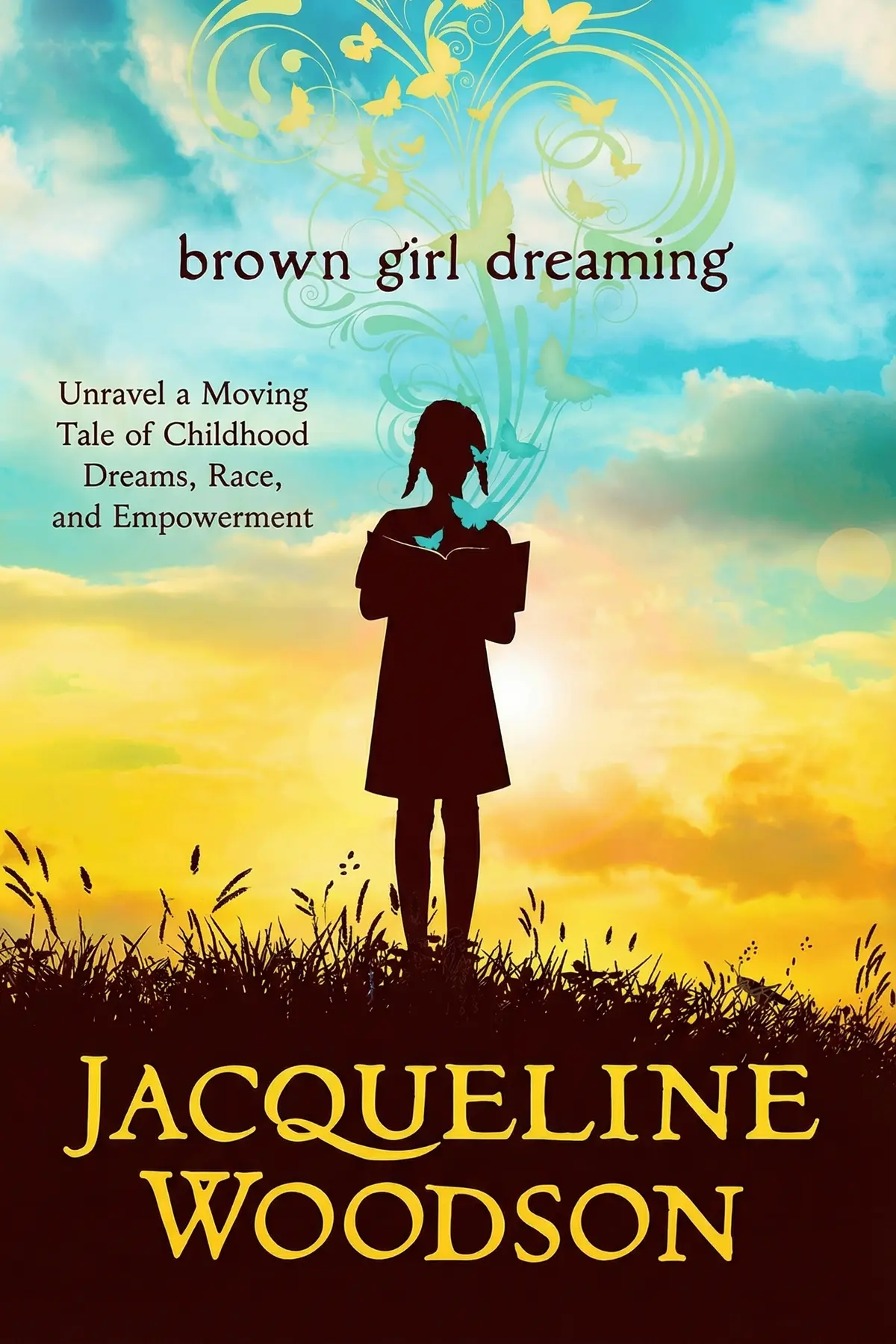
A poetic memoir tracing Jacqueline Woodson’s childhood across the American South and North. It captures the essence of the Civil Rights era while following a young girl's journey to find her voice as a writer.
1 min 23 sec
The story of Jacqueline Woodson is more than just a personal history; it is a lens through which we can view the evolving soul of America during the 1960s and 70s. As we step into her world, we aren’t just looking at dates and locations. We are entering a landscape where the air is thick with the scent of southern pines and the grit of Brooklyn streets, and where the echoes of a divided past meet the hopeful noise of a changing future. This narrative follows a journey of profound resilience, personal discovery, and an unyielding search for a place to belong.
What does it mean to be born into a country that is wrestling with its own identity while you are trying to forge your own? This is the throughline of Woodson’s experience. From her earliest days in Ohio to her formative years in the South and her eventual transition to the North, her path is marked by the tension between who her family was and who she is becoming. We’ll see how names carry the weight of expectations, how silence can be as loud as a protest, and how a simple composition notebook can become a sanctuary. As we move through these chapters of her life, we find a story that isn’t just about the obstacles of race and loss, but about the incredible empowerment that comes when a young person finally finds their voice and realizes they have the power to define their own world.
2 min 15 sec
Discover how a birth in 1963 Ohio serves as a crossroads for family expectations and national transformation, where a simple name carries the weight of a child’s entire future.
2 min 08 sec
Explore the contrast between a nurturing family home and the strict social lines of South Carolina, where the lessons of the past meet the struggles of the present.
1 min 59 sec
Witness the culture shock and emotional complexity of moving to Brooklyn, where the smells of pine are replaced by concrete and the search for home begins anew.
2 min 10 sec
Follow the blossoming of a writer’s soul as a simple composition notebook becomes a place to capture memories and invent new possibilities.
2 min 24 sec
See how new friendships and the political movements of the 1970s broaden a young girl’s perspective on the diverse world around her.
2 min 11 sec
Experience the culmination of a journey where the pain of loss and the endurance of heritage lead to the ultimate realization of personal power.
1 min 18 sec
Jacqueline Woodson’s journey from the heart of the segregated South to the bustling streets of Brooklyn serves as a profound map of the human spirit’s ability to find its way. Through her eyes, we have seen how the legacy of a name can inspire strength, how the rules of a divided society can be navigated with dignity, and how a passion for storytelling can transform a sense of alienation into a source of power. This memoir reminds us that our identities are not fixed points, but vibrant mosaics made up of every place we’ve lived and every person we’ve loved.
The lesson here is clear: our heritage is a foundation, not a prison. By embracing the many ‘worlds’ within us, we gain the agency to write our own narratives. Whether you are seeking your own creative voice or simply trying to understand your place in a complex world, Woodson’s story offers a beacon of hope. It encourages us to look at our own histories with pride, to find sanctuary in our passions, and to remember that we always have the power to choose which world we will build for ourselves tomorrow. Let her journey be a reminder that even when the landscape changes, the stories we carry within us are the most enduring home we will ever know.
Brown Girl Dreaming is a deeply personal narrative that explores the complexities of growing up African American in the 1960s and 1970s. The story moves from the segregated reality of South Carolina to the vibrant, urban landscape of Brooklyn, New York. Along the way, it delves into the rich history of a family whose roots stretch back to the early days of the nation and whose future is being rewritten by the social transformations of the mid-twentieth century. At its heart, the book is about the power of heritage and the persistence of dreams. It promises a look at how a child’s environment, from the warmth of a grandparent’s porch to the challenges of a new city, shapes their identity. Readers will discover the significance of familial bonds, the struggle for equality, and the transformative moment when a young girl realizes that her stories have the power to create a world of her own.
Jacqueline Woodson is an American writer known for her works in children’s literature and young adult fiction. She has received several prestigious awards, including the National Book Award and the Newbery Honor, for books such as Miracle’s Boys and After Tupac and D Foster.
Listeners find this book to be a powerful experience that captivates them through its format as a novel written in verse. The story is elegantly shared through poems, and listeners characterize it as an extraordinary series of poetry brimming with affection and profound emotion. Furthermore, the work functions as an informative and evocative memoir, offering lifelike depictions of childhood moments. Finally, listeners value how it encourages them to craft poems from their personal histories, making it an excellent selection for both children and adults.
Jacqueline Woodson has a way of turning silence into a melody that lingers long after the final page is turned. This beautiful memoir, written entirely in free verse, captures the delicate nuances of a childhood caught between the strict traditions of the South and the fast-paced energy of New York. I found myself completely immersed in her vivid descriptions of South Carolina, where the smell of pine trees and the warmth of a potbellied stove created a sense of safety despite the racial tensions outside. The way she handles heavy themes like Jim Crow laws and the Civil Rights movement is both gentle and profoundly impactful for readers of any age. Every poem feels like a polished stone, small but heavy with meaning and history. To be fair, I wasn’t sure if the verse format would keep my attention, but the rhythm of her words actually made the story feel more intimate and immediate. It is a masterful exploration of family, faith, and the burning desire to find one’s own voice in a world that often tries to silence it.
Show moreMy children and I shared this as an audiobook on a long drive, and it sparked the most profound conversations we’ve ever had about justice. Listening to Woodson read her own words adds an extra layer of soulfulness to an already powerful story. My ten-year-old had so many questions about Ruby Bridges and the guards at the schools, which led to a very honest discussion about the reality of the 1960s. It is amazing how children can instinctively spot the wrongness of discrimination when it is presented through the lived experience of someone their own age. Personally, I was struck by the themes of family as a shelter, providing warmth and security even when the society outside was exploding with violence and change. The imagery of her sister reading under the kitchen table or the specific smell of a new composition notebook is just sublime. This is the kind of book that stays with you, settling into your memory and becoming a part of how you see the world.
Show moreEver wonder what it takes to find your voice when the world seems determined to keep you quiet? This book answers that question through a series of stunning poems that trace the author’s life from birth into her adolescence. I was fascinated by the religious aspect of her upbringing as a Jehovah's Witness and how that intersected with the broader cultural shifts of the 1970s. The writing is so evocative that I could feel the humidity of the South and the crisp air of New York City through her words. Frankly, the most powerful moment for me was when she found a book with a brown boy on the cover and realized that people who looked like her could actually be the stars of their own stories. Representation matters, and Woodson demonstrates that by becoming the writer she needed when she was a child. It is a gorgeous, inspiring collection that I would recommend to anyone who has ever had a big dream.
Show moreThis book is a stunning reminder that representation isn't just a buzzword; it's a lifeline for a child who has never seen themselves in a story. I was so moved by the scene where she finally finds the book "Stevie" and realizes that her own life is worthy of being written down. Woodson’s journey toward becoming a writer is told with such honesty, especially regarding her struggles with reading and the pressure to perform like her sister. The poems are dripping with imagery, from the "pink bits of eraser" to the way stories would "curl around each other" in her mind. It’s a book that encourages you to listen to the silence and find the stories hidden there. Frankly, I think every student should read this to understand the human side of the Civil Rights movement beyond just the dates in a textbook. It’s emotional, it’s historical, and it’s ultimately a very hopeful account of a young girl finding her place in the world.
Show moreReading this memoir felt like looking through a window into a past that is both painful and deeply beautiful. Woodson recalls her upbringing in the 1960s with such clarity that you can almost taste the biscuits and grits her grandmother prepared. I was particularly moved by the sections detailing her grandfather’s wisdom on how to fight for equality with a quiet, persistent dignity rather than just using fists. The contrast between her life in Ohio, South Carolina, and eventually Brooklyn provides a fascinating look at how geography shaped the African American experience during that era. While some of the middle sections felt a little slower than the rest, the emotional payoff in the final chapters is absolutely worth it. Truth is, the book serves as a vital reminder of how much has changed and how much remains the same regarding race and identity. It’s an essential read for middle graders, but adults will find just as much depth and wisdom in these pages.
Show moreI’ll be the first to admit that I usually steer clear of books written in verse, but this was a total game-changer for me. The format actually allowed Woodson to distill her memories into their most potent forms, making every word count toward the larger narrative of her life. Following her journey as she discovers her passion for storytelling—even when she struggled with reading and was constantly compared to her brilliant sister, Odella—was incredibly relatable. Not gonna lie, the parts about being the "other Woodson" in the classroom really hit home for me because we've all felt overshadowed at some point. The book does a fantastic job of introducing historical figures like Malcolm X and Rosa Parks through the eyes of a child, making history feel personal rather than academic. My only minor gripe is that I wanted even more detail about her later years in New York, as that transition felt a bit rushed. Overall, it’s a cadent and courageous portrait of a young girl dreaming of a better world.
Show moreThe parts where Jacqueline describes being "the other Woodson" hit me right in the gut because I know exactly how that feels. Growing up in the shadow of a sibling who seems to do everything perfectly is a universal struggle, and Woodson captures that envy and search for identity so well. I loved seeing her journey from a girl who found words difficult to a writer who realized that stories could "wake up and walk all over the room." The book is filled with such rich, sensory details—the
Show morePicked this up for a book club and was immediately struck by the vivid descriptions of Southern life versus the hustle of New York. The way Woodson contrasts the "gentle" fight of the South with the different tensions of the North provides a really nuanced look at the era. I particularly enjoyed the focus on her grandmother’s influence and the way family served as an anchor through every move. Sentence by sentence, the poetry is tight and rhythmic, making it a very quick read despite the heavy subject matter. I did find myself wanting a little more depth regarding her relationship with her mother, as that felt slightly secondary to the bond she had with her grandparents. In my experience, memoirs in verse can be hit or miss, but this one definitely lands more hits than misses. It’s a thoughtful exploration of race, religion, and the specific magic of a blank composition notebook waiting to be filled with letters.
Show moreThere’s no denying the lyrical beauty of Woodson’s prose, though the pacing felt a bit uneven for me at times during the first half. I appreciated the historical context and the way she wove the Civil Rights movement into her personal family history, but I struggled to stay engaged with some of the more abstract poems. Look, the writing is objectively excellent and the themes are undeniably important, but the free verse format occasionally felt like it distanced me from the characters rather than drawing me in. I did love the sections about her grandfather and the quiet way they had to navigate the world in the South. The struggle she faced with learning to read at the same pace as her peers was also very movingly portrayed. While it didn't completely capture my heart like I expected it to, I can see why it is so highly regarded in middle grade literature. It’s a solid, thought-provoking memoir that offers a unique perspective on a pivotal time in American history.
Show moreWhile the historical snapshots were fascinating, I struggled to connect with the poetic structure in the middle sections of the book. I picked this up because of the high praise, and while I agree the message is vital, the narrative flow felt somewhat disjointed to me. To be fair, the moments dealing with her family's grief and the loss of her grandfather were handled with incredible grace and poignancy. I also found the descriptions of the training teenagers received to sit at lunch counters without fighting back to be incredibly eye-opening. However, I think I would have preferred a traditional prose format to really dig into the complexities of the move to New York. It’s a meaningful book with a lot of heart, but it just didn't quite click for me as a cohesive story. Still, I can't deny that Woodson has a gift for metaphors that perfectly capture a fleeting thought or a specific childhood fear.
Show moreIshmael Beah

James Herriot

Barack Obama
Masaji Ishikawa
Ben Macintyre
Fay Bound Alberti
AUDIO SUMMARY AVAILABLE
Get the key ideas from Brown Girl Dreaming by Jacqueline Woodson, plus 5,000+ more titles in English and Thai.







