

A Bigger Prize: How We Can Do Better Than the Competition
Margaret Heffernan
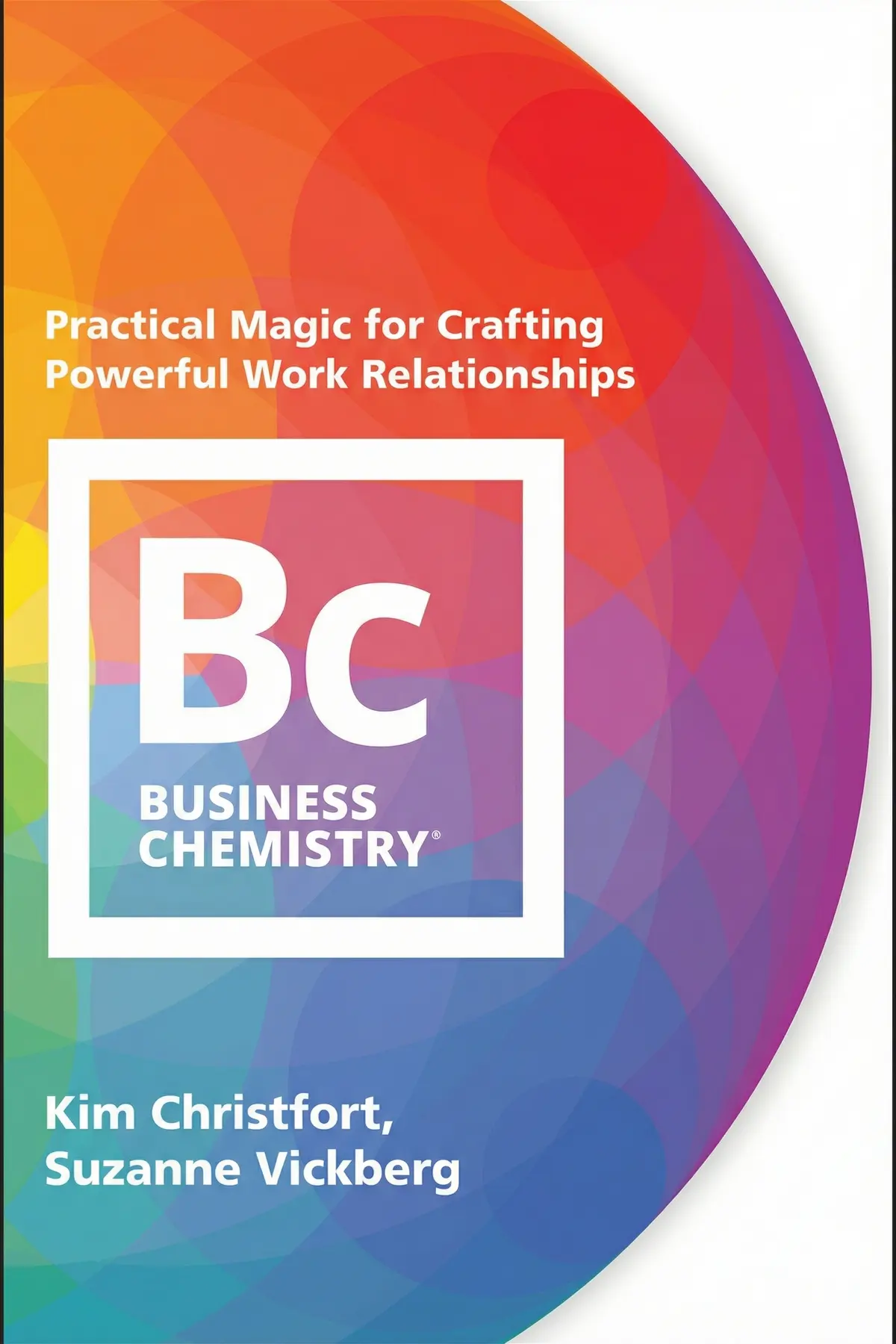
Business Chemistry explores the four primary personality types found in the workplace, offering practical strategies to improve professional relationships, team dynamics, and overall organizational success through psychological insights and empathy.
1 min 55 sec
Every workplace is a complex ecosystem of personalities, motivations, and communication styles. We often talk about office chemistry as if it were a mystical, unchangeable force—something we either have with a colleague or we don’t. We might feel an effortless synergy with a project partner one day, only to find ourselves completely stalled by a misunderstood email from a manager the next. When things go well, we credit a ‘good fit.’ When they go poorly, we chalk it up to a clash of personalities. But what if we could move beyond this vague intuition and actually decode the mechanics of these interactions?
The reality is that professional rapport isn’t an accident. It is rooted in deep-seated psychological preferences and perceptions. By understanding the underlying framework of how people think and work, we can transform the way we collaborate. This journey isn’t just about making the office a friendlier place; it’s about unlocking the full potential of a team. It’s about recognizing that the very traits that might annoy us in a coworker are often the same qualities that make them indispensable to the organization’s success.
In the following discussion, we will explore a powerful system for categorizing these diverse professional personalities. We’ll look at the four primary archetypes that dominate the modern office: the visionary Pioneer, the structured Guardian, the goal-oriented Driver, and the relationship-focused Integrator. You will learn how to spot these styles in the wild, how to speak their language, and how to create an environment where every type can thrive. Whether you are leading a Fortune 500 company or just trying to survive your next team meeting, understanding these dynamics is the key to crafting powerful, productive work relationships. We will dive into the specific motivations of each type, the historical figures who embodied these traits, and actionable strategies for bridging the gaps between us. By the end, you’ll have a new lens through which to view every interaction, turning potential conflict into a strategic advantage.
2 min 34 sec
Discover the charismatic freethinker who drives innovation with big ideas but often leaves the messy details for everyone else to clean up.
2 min 18 sec
Meet the office’s anchor, the detail-oriented professional who values tradition and structure above all else, keeping the team grounded in reality.
2 min 23 sec
Explore the world of the high-achieving Driver, a personality focused on data and efficiency who prioritizes winning over workplace pleasantries.
2 min 12 sec
Meet the peacemaker of the office, the Integrator, who believes that building strong bonds is the real secret to long-term success.
2 min 17 sec
Learn why the word ‘no’ is a Pioneer’s biggest enemy and how to redirect their creative energy without crushing their spirit.
2 min 17 sec
Guardians need more than just a desk; they need clarity and time. Learn how to support their need for structure to get their best work.
1 min 56 sec
Drivers value efficiency above all. Discover how to frame social interactions in a way that makes sense to their logical, competitive minds.
2 min 04 sec
Isolation is the enemy of the Integrator. Learn how to foster the collaboration they need and make sure their ‘soft’ skills get the credit they deserve.
1 min 54 sec
Why the best teams aren’t made of like-minded people, and how to embrace ‘cognitive friction’ for better decision-making.
1 min 41 sec
In the end, the secret to a thriving professional life isn’t about finding a magical office where everyone thinks exactly like you. It’s about developing the ‘Business Chemistry’ necessary to turn the inevitable friction of diverse personalities into a source of energy and innovation. We have seen how the Pioneer brings the vision, the Guardian provides the foundation, the Driver ensures the results, and the Integrator builds the bonds. Each of these roles is essential, and each comes with its own set of needs and potential pitfalls.
The most important takeaway is that empathy is a strategic advantage. When you stop viewing a colleague’s different approach as a character flaw and start seeing it as a distinct working style, everything changes. You stop being frustrated that a Guardian is ‘too slow’ and start appreciating their commitment to quality. You stop being annoyed that a Driver is ‘too blunt’ and start valuing their efficiency. This shift in perspective allows you to communicate more effectively, reduce your own stress, and help those around you reach their full potential.
As you move forward in your career, challenge yourself to be a student of the people around you. Pay attention to the cues—the way they speak, the way they handle deadlines, the things that seem to stress them out. Try out the strategies we’ve discussed: give the Guardian more time, give the Driver more data, give the Integrator more connection, and give the Pioneer more ‘yes.’ By becoming a master of these interpersonal dynamics, you won’t just improve your work relationships; you will become the kind of leader who can build teams capable of achieving extraordinary things. The chemistry is in your hands—it’s time to start crafting the relationships that will define your success.
Have you ever wondered why you instantly click with some colleagues while others seem to speak a completely different language? This guide breaks down the science of office rapport, moving beyond vague notions of chemistry to identify four distinct working styles: the Pioneer, the Guardian, the Driver, and the Integrator. Each style brings unique strengths, from the visionary creativity of the Pioneer to the steady reliability of the Guardian. The promise of this work is a more harmonious and productive office environment. By learning to identify these styles in yourself and others, you can tailor your communication, manage stress more effectively, and build teams that leverage diverse perspectives rather than clashing over them. It is a roadmap for turning interpersonal friction into a powerful catalyst for innovation and progress.
Kim Christfort holds an MBA from the Stanford Graduate School of Business and has over eighteen years of management consulting experience. She currently leads the Deloitte Greenhouse team, a group that specializes in enhancing teams and accelerating progress. Suzanne Vickberg is a psychologist and researcher who holds both a PhD in social-personality psychology and an MBA from the Stern School of Business at NYU.
Listeners find the book’s insights highly beneficial, with one listener pointing out its evidence-based methodology and concrete advice. Furthermore, they value its overall impact, as one listener describes the work as a game-changer for their career and another emphasizes its ability to spark cognitive diversity. The book also earns praise for its focus on collaboration, enabling individuals to cooperate more successfully with their peers.
After hearing about Business Chemistry at a professional development workshop, I was eager to see if the book lived up to the hype. It really did. The focus on 'working styles' rather than just deep personality traits makes the insights immediately applicable to my daily Zoom calls and project planning. I've always struggled to get through to the 'Guardians' on my team, but this book gave me a new lens to see their need for structure as a strength rather than a hurdle. Frankly, it’s a game-changer for anyone trying to activate the full potential of a diverse group. The writing is clear, and the research feels credible without being overly academic. It’s rare to find a business book that combines data with such a human-centered approach to collaboration.
Show morePicked this up because I wanted to move beyond just 'getting along' with my colleagues and actually start leveraging our different strengths. The concept of cognitive diversity is often mentioned in business, but this book actually shows you how to activate it within a project team. I loved the breakdown of how Pioneers and Guardians can actually balance each other out instead of constantly clashing over tiny details. In my experience, most team-building books are too touchy-feely, but this one stays focused on results and efficiency. The authors have managed to create a system that feels both professional and deeply personal. It’s an essential guide for anyone who leads people or simply wants to be a better collaborator in a high-pressure environment.
Show moreWow. I didn't think a book about work styles would actually make me feel more seen, but here we are. Identifying as a Guardian helped me understand why I feel so drained by the 'move fast and break things' mentality of my current startup. More importantly, it taught me how to communicate my need for data and process to my Pioneer boss without sounding like a wet blanket. The authors provide such specific, actionable advice that I was able to use some of the tips in a meeting the very next day. It’s a game-changer for building meaningful connections in a world that often feels dominated by technology and Slack pings. This is definitely a book I’ll be recommending to my entire department.
Show moreIn a world where we spend most of our lives at work, understanding the 'chemistry' of our teams is just as important as the actual work we do. This book offers a brilliant roadmap for navigating the complexities of human behavior without being overly simplistic. I especially appreciated the focus on how to build teams that aren't just homogenous groups of people who think alike. The research-based approach gives the whole system a level of credibility that many pop-psychology books lack. Honestly, the insights on how to foster a collaborative environment have already changed the way I approach my weekly one-on-ones. It’s a must-read for anyone who believes that human connection is the key to a better bottom line and a happier workplace.
Show moreThis book provides a surprisingly robust framework for navigating the messy world of office politics and team dynamics. While I usually roll my eyes at personality tests, the four categories here—Pioneers, Guardians, Drivers, and Integrators—felt grounded in real data rather than just vibes. The authors from Deloitte do a great job of explaining how cognitive diversity actually works in a boardroom setting. I appreciated the specific strategies for communicating with types that are opposite to my own style. To be fair, some of the corporate jargon gets a bit thick in the middle chapters, which might slow you down. However, the actionable advice on building balanced teams makes it a worthwhile investment for any manager. It’s less about pigeonholing people and more about fostering a culture of empathy through better understanding.
Show moreEver wonder why certain coworkers just seem to speak a different language when it comes to deadlines? This book answers that question by breaking down our work habits into four distinct 'chemical' profiles that actually make sense. I realized I’ve been approaching my projects like a total Driver, which was alienating the Integrators who actually keep the team together. The specific suggestions for adapting your tone and style are the real gold here. I’m not saying it will solve every HR conflict, but it definitely gives you a better vocabulary for discussing friction. My only gripe is that it can feel a bit repetitive if you read it cover to cover in one sitting. It's much better as a reference guide you keep on your desk.
Show moreAs someone who has spent years in management, I've seen plenty of 'flavor of the month' systems come and go. Business Chemistry feels like it has more staying power because it’s backed by significant research and practical application at Deloitte. The authors avoid the trap of making one type better than the others, emphasizing instead how a mix of all four leads to better decision-making. I found the section on 'stress triggers' for each type to be particularly illuminating for my current role. Truth is, we often expect everyone to work the way we do, and this book is a gentle but firm reminder that diversity is a competitive advantage. It’s a very practical, if somewhat dry, look at the mechanics of human interaction at work.
Show moreThe chapter on Drivers really hit home, but I felt like some of the other sections dragged on a bit too long. Like most systems developed by consultants, it feels a little too neat and tidy for the actual chaos of a startup environment. I appreciated the emphasis on empathy as a tool for results, but I wondered if the four types are enough to capture the nuance of a modern workforce. To be fair, the 'hacks' for managing different types are quite useful in a pinch. If you enjoy Enneagrams or MBTI, you will likely find this fascinating, but skeptics might find it a bit reductive. It’s a solid read that offers some good takeaways if you’re willing to sift through the fluff.
Show moreFinally got around to reading this after seeing it on my manager's shelf for months. It’s a decent framework, and I can see why it’s popular in big corporate settings where everyone needs a common language. The descriptions of the four types are accurate enough to be helpful, though I felt myself drifting toward a mix of three different ones. It makes you realize how much empathy matters in a professional setting, which is a nice change of pace from books that focus purely on 'grinding.' Personally, I think the advice on 'flexing' your style is the most useful part of the book. It’s not a revolutionary masterpiece, but it’s a functional tool for your professional kit if you work in a large organization.
Show moreNot what I expected given the high praise I saw from my colleagues on LinkedIn. While the Deloitte methodology is clearly well-researched, the actual reading experience felt like sitting through a very long PowerPoint presentation. I found the distinction between a 'Pioneer' and an 'Integrator' felt a bit arbitrary at times, and I struggled to see how this was significantly different from the dozens of other personality assessments already on the market. Look, it’s not that the information is wrong, it just feels like it could have been a long article instead of a full-length book. I found myself skimming the second half just to get to the summary sections. It might work for some corporate environments, but it didn't click for me.
Show moreMargaret Heffernan
Joseph A. Maciariello

Deborah Gruenfeld
AUDIO SUMMARY AVAILABLE
Get the key ideas from Business Chemistry by Kim Christfort, plus 5,000+ more titles in English and Thai.







