
15 min 24 sec
Buy This, Not That: How to Spend Your Way to Wealth and Freedom
By Sam Dogen
Discover a mathematical framework for making life’s biggest financial choices. Sam Dogen provides strategic rules for purchasing homes, cars, and investments to help you reach financial independence and early retirement.
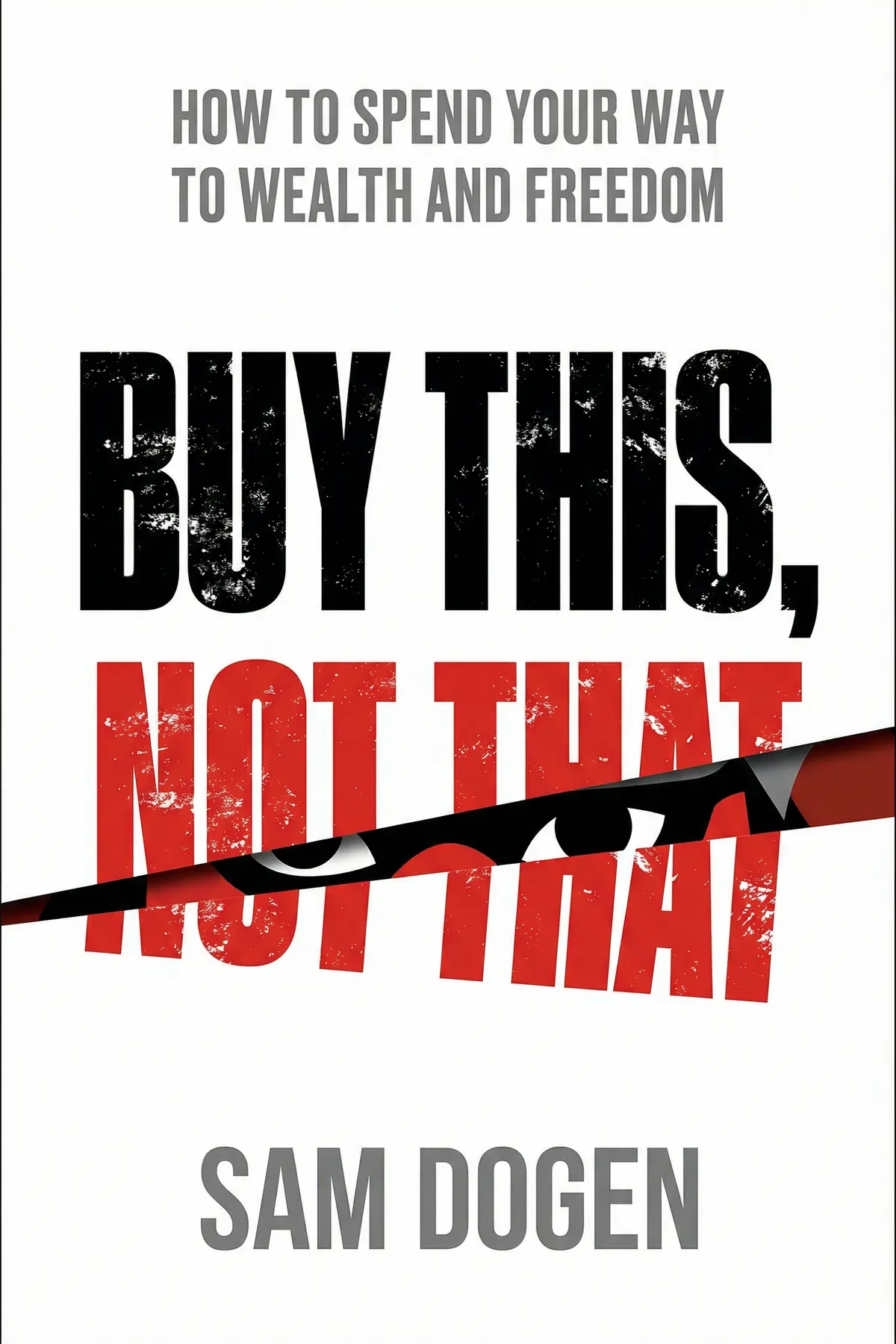
Table of Content
1. Introduction
1 min 28 sec
Imagine for a moment that your alarm goes off on a Monday morning, but instead of that familiar pang of dread or the rush to start a commute, you feel a deep sense of calm. You aren’t getting out of bed because you owe someone your time; you’re getting up because you have a purpose that you’ve chosen for yourself. This is the core of financial independence. It isn’t just about having a large pile of money; it’s about the freedom that money buys. It’s the freedom from a boss you don’t respect, the security to handle a sudden medical bill, and the luxury of being present for your family without the constant hum of financial anxiety in the back of your mind.
Most of us want this kind of freedom, but we often stumble because we make the wrong choices at the major crossroads of life. We buy too much house, we take on too much car debt, or we invest without a clear strategy. In this summary of Sam Dogen’s approach to wealth, we’re going to look at a logical, data-driven framework for making those high-stakes decisions. We’ll explore how to define what wealth looks like for you and how to set up the systems that will eventually replace your paycheck.
As we walk through these ideas, notice the throughline: every dollar you spend is a choice between a temporary comfort today and a day of freedom in your future. By the end of this journey, you’ll have a set of specific rules—like the 30/30/3 rule for real estate and the one-tenth rule for car buying—that take the emotion out of spending and replace it with a clear path toward independence. Let’s explore how you can stop guessing and start building the life you truly want.
2. Defining Financial Independence and the Power of High Savings
1 min 59 sec
What does it actually take to stop working forever? Learn the two specific benchmarks for freedom and the math behind how your savings rate dictates your timeline.
3. A Strategic Hierarchy for Eliminating Debt
2 min 07 sec
Not all debt is created equal. Discover the specific order in which you should pay off your liabilities and the ‘one-tenth’ rule for vehicle purchases.
4. Customizing Your Investment Portfolio to Your Life Stage
2 min 05 sec
One size does not fit all in investing. Explore three distinct models of asset allocation and the rules for protecting your wealth as you age.
5. The 30/30/3 Rule for Sustainable Home Ownership
2 min 00 sec
Buying a home is the biggest financial decision most people ever make. Learn the mathematical formula that prevents you from becoming ‘house poor.’
6. Optimizing Your Career and the Necessity of a Side Hustle
1 min 59 sec
Your primary income is your greatest wealth-building tool. Learn how to maximize your salary and why a ‘brand-based’ side hustle is superior to the gig economy.
7. Investing in Education, Relationships, and Smart Decision-Making
2 min 14 sec
Wealth is meaningless without people to share it with. Discover the financial logic behind marriage, the timing for children, and the ’70/30′ rule for life decisions.
8. Conclusion
1 min 32 sec
The journey to financial independence is rarely about a single lucky break or a sudden windfall. Instead, it is the result of a thousand small, disciplined decisions made over many years. It starts with the clarity of knowing your ‘why’—knowing exactly what you are working toward so that you have the motivation to save fifty percent of your income or drive a ten-year-old car while your neighbors are leasing new ones. It’s about following the order of operations for debt, using the 30/30/3 rule to keep your housing costs from ballooning, and diversifying your investments so you can sleep soundly through any recession.
As we’ve seen, true wealth isn’t just a number on a screen; it’s the ability to spend your time with the people you love and on the projects that fulfill you. It’s about building a career foundation, nurturing a side hustle, and making smart choices about your education and your family. By applying the 70/30 rule to your decision-making, you can move past the fear of making a mistake and start taking the actions that will lead you to freedom.
Here is your immediate takeaway: look at your current car or house situation. Do they fit the rules we discussed today? If not, don’t panic, but start making a plan to bring your life into alignment with these mathematical frameworks. Every step you take to lower your debt and increase your savings rate is a step toward a Monday morning where you are the master of your own time. Financial independence is within your reach, provided you have the courage to choose the path of logic over the path of impulse. Start today, stay disciplined, and enjoy the freedom you are building for yourself.
About this book
What is this book about?
The path to financial independence is often obscured by confusing advice and emotional decision-making. This summary of Buy This, Not That offers a clear, logic-based roadmap for navigating the most significant financial milestones in your life. It moves beyond simple budgeting, providing specific frameworks for how much to spend on a house, how to prioritize debt, and which investment models best fit your personal risk profile and timeline. You will learn how to transition from working because you have to, to working because you want to. The promise of the book is that by applying rigorous rules—like the 30/30/3 rule for real estate or the 1/10 rule for car buying—you can remove the guesswork from your finances. It also explores the often-overlooked financial side of life’s personal choices, including the timing of starting a family and the ROI of higher education, ensuring that your wealth supports a life of freedom and meaning rather than just a high balance in a bank account.
Book Information
About the Author
Sam Dogen
Sam Dogen is the creator of the widely read financial blog Financial Samurai. After a successful career in a top-tier investment bank and earning an MBA while working part-time, he achieved full retirement at the age of 34. His writing is fueled by a desire to help others reach financial independence through practical, real-world advice.
Ratings & Reviews
Ratings at a glance
What people think
Listeners find this personal finance guide clearly written and straightforward, offering practical advice on daily financial matters. They value the thorough insights and distinctive outlook provided, as one listener specifically points out its detailed treatment of the housing and stock markets. Listeners view it as a high-quality asset, with one mentioning it generates 100x more value than its cost.
Top reviews
Nathan
Finally got around to reading Sam Dogen’s debut and it’s easily the most comprehensive coverage of the stock and housing markets I’ve seen in years. Most FIRE books just tell you to eat lentils and buy VTSAX, but this actually goes into the math of life. I specifically loved the 30/30/3 rule for home buying. It’s conservative, sure, but in this economy, you need a buffer. The writing is incredibly clear and easy to understand even when he’s diving into complex probability matrices. The 70/30 philosophy for decision-making has already changed how I approach my career moves. I’ve been a follower of the Financial Samurai blog for a long time, and this book feels like the ultimate distillation of his best wisdom. Truly an excellent investment that will likely generate 100x more value than the cover price.
Show moreAkosua
Real estate advice in most personal finance books is usually just a footnote, but Dogen actually dives into the mechanics of property as a wealth builder. The 30/30/3 rule is a game changer for anyone trying to figure out if they can actually afford a mortgage in a high-cost area. I also loved the 70/30 philosophy. We often get paralyzed by indecision, but thinking in terms of probabilities is so much more effective than looking for a perfect 'yes' or 'no.' This book is a masterclass in making suboptimal decisions less frequent. It’s dense, it’s data-driven, and it doesn't sugarcoat the hard work required. If you're serious about financial independence, this is a must-buy. It’s rare to find a book that covers everything from credit card debt to angel investing with the same level of expertise.
Show moreIsabelle
Ever wonder why some people just seem to make better life choices than everyone else? This book explains the logic behind those 'winners' by using a probability-based mindset. I’ve read a lot of finance books, but Sam Dogen’s approach to the 'happiness equation' is totally fresh. He understands that money is just a tool for freedom, not the end goal. I particularly enjoyed the sections on how to value your time and when to finally leave the corporate grind. The 'Buy This, Not That' framework makes daunting decisions—like whether to buy a fixer-upper or a remodeled home—much simpler. It’s an excellent investment of time. My favorite takeaway was the 70/30 rule for decision making; it has already reduced my anxiety about making 'perfect' choices.
Show moreLeah
After hearing the author on a few podcasts, I decided to see if the book lived up to the hype. It definitely does. This isn't just about saving pennies; it's a comprehensive guide to building a life of freedom. The deep analysis of real estate versus stocks was particularly eye-opening for me. I’ve always been a stock-only investor, but Dogen’s arguments for the stability of property during downturns changed my perspective. The book is easy to understand despite being packed with data. It’s well-written, punchy, and provides solid guidance on everything from student loans to passive income streams. I also appreciated the 'Financial Samurai' mindset of working hard in your 20s to reap the rewards later. Highly recommend for anyone looking for a modern blueprint for wealth.
Show morePrasarn
As someone who usually finds personal finance books incredibly dry, I was surprised by how much the 'life' aspect of this one resonated with me. Sam doesn't just talk about spreadsheets; he talks about when to have kids, how much to spend on a wedding, and why finding a life partner is a financial decision. It’s a unique perspective that you don't get from Dave Ramsey or Suze Orman. My only gripe is that some of the car-buying rules—like only spending 1/10th of your gross income—feel nearly impossible with today's vehicle prices unless you're buying a total clunker. Still, the logic holds up. The book is well-written and provides solid guidance on everyday topics that most people ignore until it’s too late. I appreciated the chapter on side hustles particularly because it focused on building a brand rather than just trading time for money.
Show moreIsaiah
Picked this up specifically for the chapters on career optimization and I wasn't disappointed. The concept of 'income tethering'—linking every investment to a specific life goal—is brilliant and helps keep the motivation high. Dogen's background at Goldman Sachs shows in his analytical approach to risk. He makes a compelling case for 'working while others are sleeping' to get ahead. I do think the book is a bit heavy on the math at times, which might scare off casual readers. I had to read the allocation model chapter twice to really grasp it. But overall, it offers a deep analysis of how to navigate a corporate career and exit on your own terms. It's refreshing to read someone who has actually lived the high-stakes finance life they are advising on.
Show moreNoppadol
Is it a math textbook or a self-help guide? To be fair, it's a bit of both, which can be a double-edged sword depending on your patience for numbers. I appreciated the sections on real estate fundamentals and the breakdown of different investment models like the 'Financial Samurai' path. However, large swaths of the book felt irrelevant to me because I’m not planning on having children. The author is very obsessed with the nuclear family structure and 'The Bank of Mom and Dad.' If you're single or child-free by choice, you’ll be skimming a lot of pages. The advice on getting a side hustle is good, but nothing I haven't heard before on various podcasts. It's a solid 3-star read: informative but occasionally narrow-minded in its view of what a 'successful' life looks like.
Show moreLogan
To be fair, I didn't expect a personal finance book to tell me when I should have kids or how much to spend on a wedding. Some of the personal advice felt a bit preachy, and the 1/10th rule for cars is just plain depressing. I understand the math behind it, but it feels disconnected from the reality of the current market. On the plus side, the chapters on real estate and career strategy were top-notch. I never thought about negotiating a layoff instead of just quitting, and that chapter alone was worth the price of the book. It’s a mixed bag for me. Some of it is visionary, while other parts feel like they’re aimed exclusively at people making $200k+ in San Francisco. Good info, but take it with a grain of salt.
Show moreNuk
This book feels like it was written in a different stratosphere than the one most working-class people inhabit. Frankly, the author’s perspective is so heavily rooted in his high-earner finance background that a lot of the 'hacks' feel inaccessible. He spends a significant amount of time discussing how to negotiate a massive severance package so you can sail into early retirement. That is great for a tech exec, but how does that apply to a teacher or a retail manager? The advice is technically accurate, I suppose, but it lacks the relatability needed for 'the rest of us' who don't have six-figure safety nets. I found the tone a bit elitist at times. If you aren't already making a quarter-million a year, you might find yourself rolling your eyes more than taking notes. It’s a deep analysis of wealth, just not for the average person.
Show moreErn
Honestly, if you aren't pulling in a six-figure salary, most of these 'rules' are going to feel like a punch in the gut. The author suggests saving 50% of your income to reach FIRE, which is a pipe dream for most of America. I also found the section on education a bit contradictory; he says prestige doesn't matter, but then talks about his own elite MBA and background at Goldman. It’s hard to reconcile the 'everyman' branding with the reality of the author's life. The math is sound, but the application is for a very specific demographic of high-achieving corporate workers. I was looking for more 'spending' advice for regular people, but this was mostly about being a landlord and making high-level investments. Not my favorite.
Show moreReaders also enjoyed
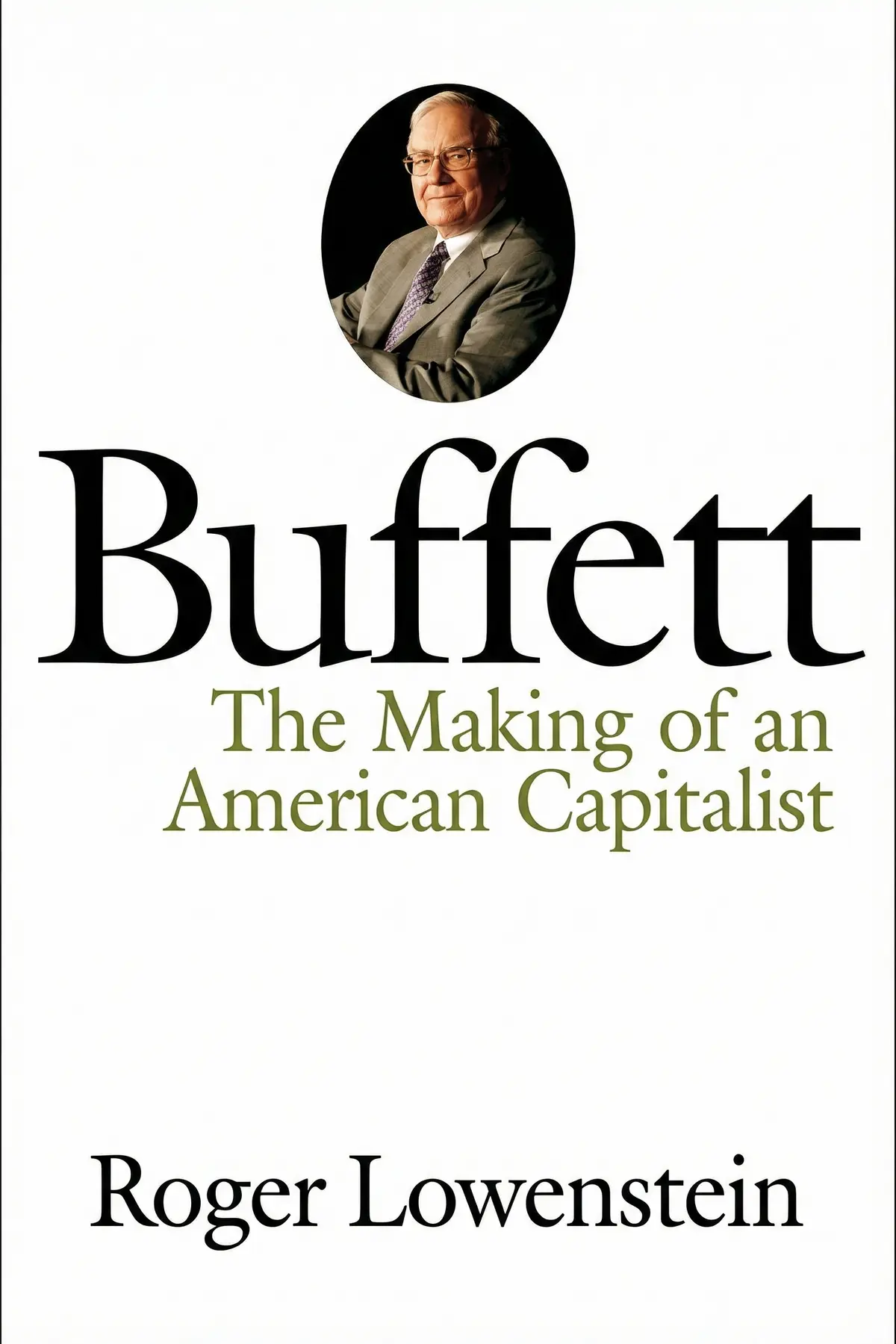
Buffett: The Making of an American Capitalist
Roger Lowenstein

Cashing Out: Win the Wealth Game by Walking Away
Julien Saunders
AUDIO SUMMARY AVAILABLE
Listen to Buy This, Not That in 15 minutes
Get the key ideas from Buy This, Not That by Sam Dogen, plus 5,000+ more titles in English and Thai.
- 5,000+ titles
- Listen as much as you want
- 7-day free trial
- Cancel anytime







