
18 min 04 sec
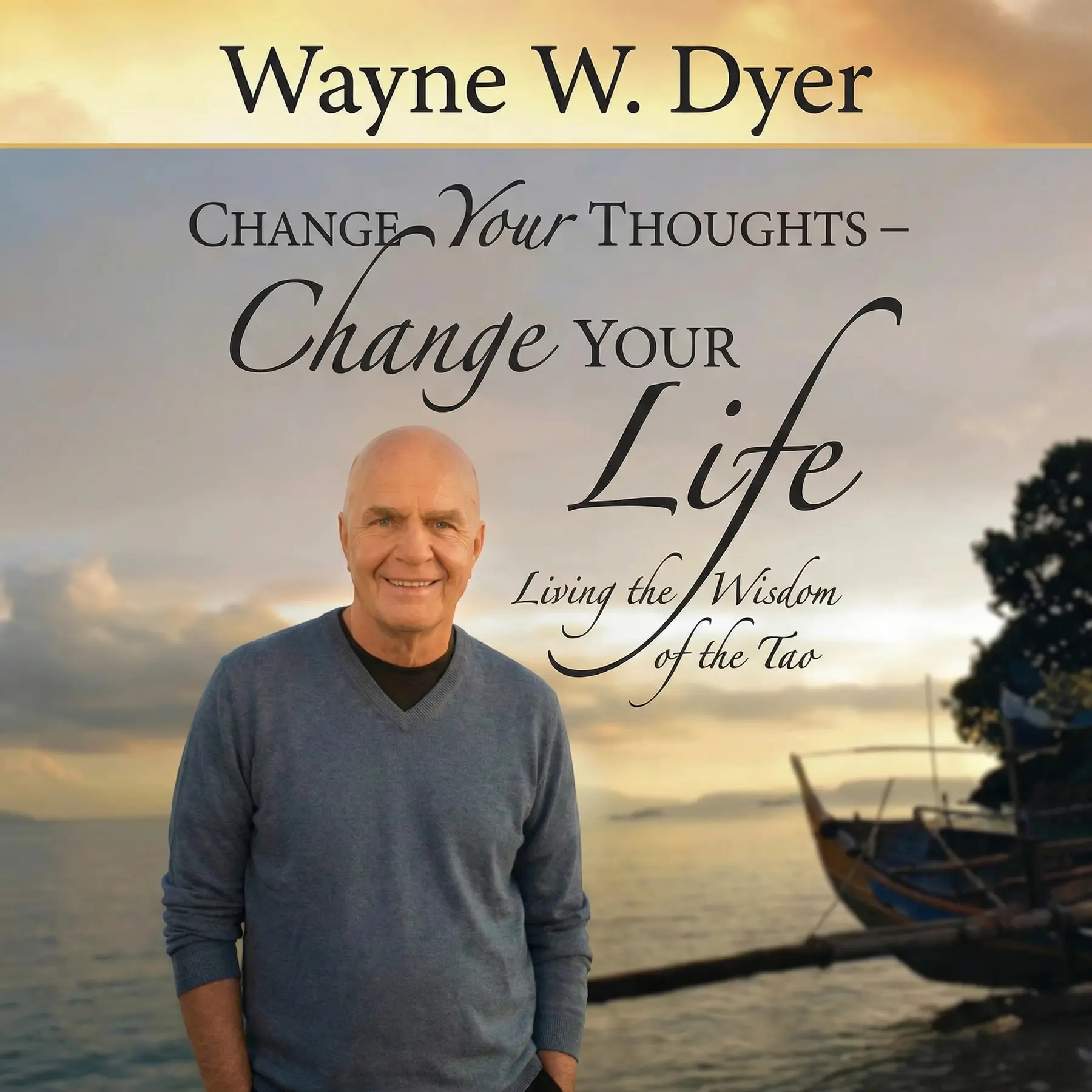
Change Your Thoughts – Change Your Life: Living the Wisdom of the Tao
Dr. Wayne W. Dyer provides a modern interpretation of the Tao Te Ching, offering practical lessons on living with effortlessness, humility, and harmony by shifting your internal perspective and thought patterns.
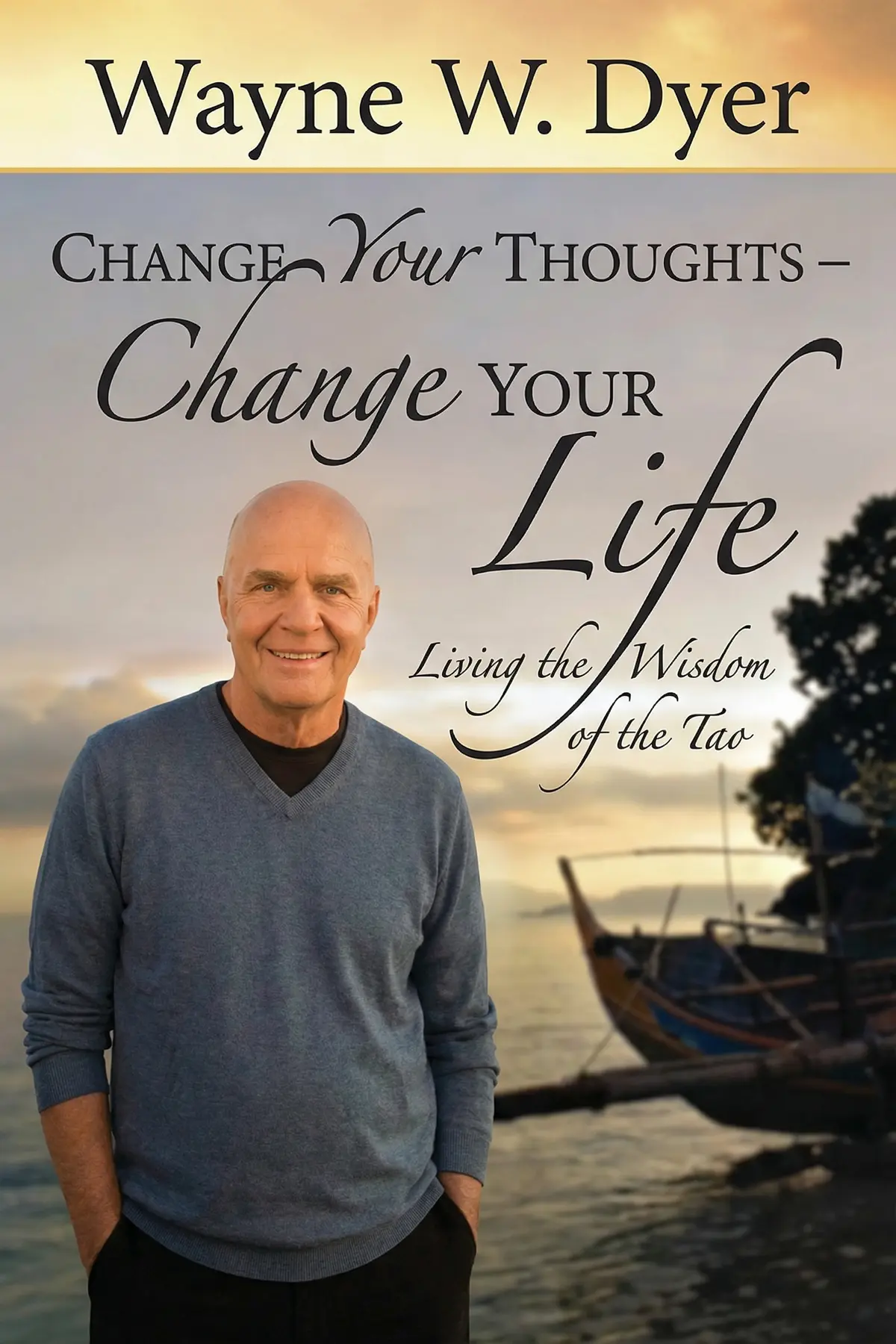
Table of Content
1. Introduction
1 min 40 sec
Imagine a text written over two thousand years ago, consisting of just eighty-one short passages, that somehow holds the keys to navigating the complexities of the twenty-first century. This is the Tao Te Ching, a cornerstone of Eastern thought attributed to the philosopher Laozi. Despite its brevity—only about five thousand Chinese characters—its influence is vast, though its poetic and paradoxical nature often makes it difficult to grasp at first glance. This is where Dr. Wayne Dyer steps in. By studying numerous interpretations of this ancient work, Dyer has crafted a bridge between the distant past and our current lives.
The core of this journey is the concept of the ‘Tao’—a term that is often translated as ‘the Way.’ It refers to the underlying flow of the universe, the source of all things, and the natural order that governs everything from the rotation of the planets to the growth of a blade of grass. Dyer’s central argument is that most of our modern suffering comes from being out of sync with this natural flow. We push when we should yield; we cling when we should let go; and we label when we should simply observe.
In this summary, we are going to explore how to realign ourselves with the Tao. We will look at why reducing our intense desires can actually bring us more of what we need, and how embracing the contradictions of life leads to true wisdom. We’ll learn the value of being like water—flexible, humble, and life-giving—and discover why the most powerful thing you can do is often nothing at all. This isn’t just about intellectual understanding; it’s about a fundamental shift in consciousness. By the end, you’ll see how the simple act of changing your thoughts about the world can radically alter your experience of living within it. Let’s begin by uncovering the mystery of the source itself.
2. Living Beyond Labels and Desires
2 min 05 sec
Discover why the names we give to things are often the very obstacles preventing us from seeing their true nature and power.
3. The Unity of Opposites
1 min 57 sec
Learn how embracing the contradictions of life can lead to a more balanced and peaceful existence in a world obsessed with binaries.
4. The Power of Non-Attachment
1 min 55 sec
Uncover how letting go of your ego’s need for recognition and possessions can unlock a deeper sense of natural motivation.
5. Finding Strength in the Void
1 min 51 sec
Explore the counterintuitive idea that emptiness is actually more useful and important than being full.
6. The Way of Water
1 min 42 sec
See why the humblest element in nature is actually the greatest teacher of how to live an enlightened life.
7. Flexibility as the Essence of Life
1 min 35 sec
Understand why the ability to bend is your greatest protection and a sign of true inner strength.
8. The Art of Silent Leadership
1 min 28 sec
Discover a revolutionary approach to leadership where trust and non-interference create the best results.
9. Choosing Peace Over Contention
1 min 49 sec
Learn how to respond to conflict and aggression with a powerful, non-violent ‘nothing’ that ends the cycle of force.
10. Conclusion
2 min 02 sec
As we come to the end of this exploration of the Tao Te Ching and Dr. Wayne Dyer’s insights, it’s worth reflecting on the central theme: the power of ‘the Way.’ We have seen that by shifting our focus from the solid and the named to the empty and the mysterious, we can tap into a source of wisdom that is both ancient and eternally fresh. We’ve learned that the most effective way to navigate life isn’t through force or the relentless pursuit of ego-driven desires, but through flexibility, humility, and the quiet power of being like water.
The journey of changing your thoughts to change your life is ultimately a move toward simplicity. It’s about stripping away the labels, the judgments, and the constant need to be ‘doing’ something, so that you can simply ‘be.’ It’s the realization that you are not separate from the world around you, but a vital part of a unified, natural flow. When you stop fighting against that flow and start moving with it, the stress and tension of modern life begin to fall away, replaced by a sense of effortless ease.
To put this into practice immediately, look for opportunities to recognize when ‘enough is enough.’ The Tao warns us that if we sharpen a blade too much, it will quickly lose its edge. This is a perfect metaphor for almost every area of our lives. We often overwork, overeat, and over-complicate things, thinking that ‘more’ is always ‘better.’
Starting today, try to observe the natural end-point of your activities. When you are eating, listen for the moment your body tells you it is no longer hungry, rather than waiting until you are stuffed. When you are working, notice the point where your efforts become less productive and more forced—and give yourself permission to stop. By learning to retire when the work is done, you align yourself with the ‘way of heaven.’ This simple habit of moderation and self-awareness is the first step toward a life of harmony. Remember, the Tao is always present, and the path to it is always open. All it takes is a change in your thoughts to find your way back to it.
About this book
What is this book about?
Change Your Thoughts – Change Your Life explores the ancient wisdom of the Tao Te Ching, a pillar of Eastern philosophy attributed to the sage Laozi. While the original text consists of only five thousand characters across eighty-one short verses, its depth has influenced seekers for millennia. Dr. Wayne Dyer takes these profound, often paradoxical teachings and translates them into a guide for the contemporary reader, showing how ancient concepts like non-action and humility can solve modern problems of stress and ego. The book promises a total transformation of the way you perceive the world. By moving away from a life of constant desire, competition, and labeling, and moving toward a state of allowing and oneness, you can find a more peaceful existence. Dyer’s interpretation focuses on the practical application of these verses, encouraging readers to embody the spirit of the Tao in their daily interactions, careers, and personal growth. It is a journey into the 'way' of nature, teaching that by changing your thoughts, you inevitably change the trajectory of your entire life.
Book Information
About the Author
Wayne W. Dyer
Dr. Wayne W. Dyer was a highly respected figure in the world of self-development. He earned a doctorate in educational counseling and spent time as an associate professor at St. John’s University before focusing on his career as an author and motivational speaker. Dyer authored many influential works, including the acclaimed New York Times best sellers The Power of Intention and 10 Secrets for Success and Inner Peace.
Ratings & Reviews
Ratings at a glance
What people think
Listeners find this work exceptionally accessible and insightful, offering a more lucid outlook on Taoist wisdom. Furthermore, they value the way it facilitates transformation in their mindset and lifestyle, noting its simplicity and usefulness for daily life. Plus, they prize its capacity to instill serenity and stillness, with one listener noting its integration into their everyday meditative practice.
Top reviews
Gun
Incorporating this into my morning coffee ritual has completely shifted my mindset before I even start my commute. Dr. Dyer takes the 81 verses of the Tao Te Ching and breaks them down into digestible, bite-sized lessons that actually feel applicable to a modern life. While the original Chinese text can feel quite abstract and difficult to parse, this version offers a clearer perspective that resonates with the struggles of the 21st century. I found the sections on 'doing the Tao' particularly helpful, as they provide concrete actions like practicing silence or letting go of the need for control. It brings a sense of peace and calm that I haven't found in other self-help books. If you are looking for a practical way to align your thoughts with a more harmonious way of being, this is a must-read. It’s a book to be savored slowly, one verse at a time, rather than rushed through.
Show morePraepimon
Dr. Dyer has a gift for making ancient, often cryptic wisdom feel accessible for the modern, stressed-out professional. This book isn't just something you read; it’s a manual for living that helps you change your life by simply shifting your internal dialogue. Personally, I appreciated how he bridges the gap between spirituality and practical everyday application. The idea that we can manifest a better reality by changing our thoughts might sound like wishful thinking to some, but the psychological benefits of this shift are undeniable. I’ve noticed a significant decrease in my anxiety levels since I started reflecting on one verse every few days. It is enlightening to see how these ancient principles regarding 'non-action' and 'living in the flow' can actually solve problems at work or in personal relationships. It is highly readable and perfect for anyone who feels overwhelmed by the fast-paced nature of today's world.
Show moreCooper
To be fair, I was at a very low point when I picked this up, and the concept of 'living in harmony with the source' really saved my mental health. Dr. Wayne Dyer has a way of speaking directly to the soul without sounding too condescending or overly clinical. I followed the suggestion to read one chapter a day, and it became the highlight of my routine. Each verse provided a new lens through which to view my problems, making them seem smaller and more manageable. The book is incredibly enlightening, especially the chapters on letting go of the need for credit and the importance of staying humble. It helped me realize that most of my stress was coming from my own ego trying to force outcomes. By changing my thoughts, I truly feel like I’ve changed the trajectory of my life. It’s a spiritual feast that I plan on revisiting every single year.
Show moreDarius
Finally got around to finishing this massive volume and I feel like a weight has been lifted from my shoulders. This book is a masterpiece of simplification, taking complex spiritual truths and making them feel like common sense. I loved the daily assignments at the end of each chapter; they forced me to actually live the lessons rather than just nodding along with the text. The chapter on sickness and health was particularly eye-opening, even if his interpretation of the Chinese 'disease' metaphor is a bit loose. It brings such a profound sense of calm to my day that I've started gifting copies to my friends. It is easily understood, practical for everyday application, and serves as a constant reminder that we don't have to live in a state of constant strive and struggle. Dr. Dyer has left a wonderful legacy with this interpretation of Lao-tzu’s work.
Show moreWei
As someone who struggles with a constant need for control and 'ego,' Dyer’s interpretation of the Tao was exactly what I needed to hear. He manages to strip away the intimidation factor of ancient texts and offers a clearer perspective on how to live a balanced life. Every page feels like a warm conversation with a wise mentor who just wants you to be happy. I’ve found that my personal relationships have improved significantly since I started applying the principle of 'being like water'—flexible and yielding rather than rigid and confrontational. Honestly, the book is a bit of a commitment due to its length, but the rewards are well worth the time spent. It teaches you how to be sick of being sick, how to find strength in weakness, and how to change your thoughts to manifest a more peaceful existence. It has become a permanent part of my morning meditation routine.
Show moreYothaka
While I’m usually wary of 'new age' gurus, there's no denying the practical utility of Dyer’s take on Lao-tzu. The book is structured beautifully, giving you the verse followed by an essay and then a specific 'Do the Tao' exercise. Some of the assignments felt a little silly—like spending an hour observing a frog—but the underlying message of mindfulness is solid. Frankly, the book is a bit long and can feel repetitive because Dyer is essentially hammering home the same few points about ego and harmony in eighty-one different ways. However, the repetition actually helped reinforce the concepts for me. It’s not a work of deep scholarship, and purists will probably hate how he ignores the historical context of the Tao, but for a regular person looking for some peace and calm, it hits the mark. It’s a gentle, encouraging read that doesn't demand perfection, just a willingness to think differently.
Show moreZanya
After hearing so much about the Tao, I found the original verses a bit too abstract to apply to my 21st-century life, but Dyer's interpretation provided the bridge I needed. He has a way of taking these ancient, oblique metaphors—like the 'uncarved wood' or the 'mysterious female'—and explaining them in a way that makes sense for a modern parent or employee. Some might call it 'Americanized,' but I call it useful. Not every book needs to be a scholarly dissertation; sometimes you just need something that helps you get through a tough day with a bit more grace. I did find some of his personal anecdotes about his time in Maui a little disconnected from my own reality, but the core teachings remained impactful. It’s a very readable guide that encourages you to slow down and appreciate the 'ten-thousand things' around you. Definitely worth a spot on the nightstand.
Show moreLeila
The truth is, I didn't read this in the contemplative way Dyer recommends; I actually powered through it like a novel on my commute. Even with that approach, I still gained a lot of perspective on how my own thoughts were creating unnecessary conflict in my life. The writing is very accessible, though it can get a bit 'wordy' at times when a simpler explanation would have sufficed. I particularly appreciated the focus on 'Wu-wei' or non-action, which was a revolutionary concept for someone like me who always feels the need to force things to happen. It's a peaceful book that doesn't judge you for your mistakes but gently nudges you toward a better way of thinking. While I don't agree with every spiritual claim he makes, the overall impact on my mood was positive. It’s a great tool for anyone trying to develop a more mindful and less reactive personality.
Show moreSelin
Look, the messages here—being less controlling, finding silence, and respecting nature—are undeniably valuable, but the repetition wears thin after about thirty chapters. It's a bizarre book in some ways because it takes a tiny, poetic text and stretches it into a massive volume of 'advice' that often feels like fluff. I liked the core ideas, and Dyer’s writing style is easy to follow, but I’m not sure we needed 400 pages of this. I found myself skimming the later essays because they started to sound exactly like the earlier ones. To be fair, if you are new to Eastern philosophy, this might be a great jumping-off point. But if you’ve read any actual works of philosophy or psychology, you might find the methodology a bit suspect. It’s a decent book for a daily meditation practice, but don't expect a rigorous academic analysis of the Tao Te Ching. It’s strictly for the self-help crowd.
Show moreCholada
Why take a minimalist masterpiece like the Tao Te Ching and bloat it into a 400-page self-help manual? To be fair, Dyer's intentions seem good, but this feels like an unnecessarily Americanized expansion of a text that was meant to encourage quiet reflection, not endless commentary. My main grievance is that he treats ancient, nuanced philosophy like a 'fill-in-the-blank' game for his own New Age theories. He relies on English translations without acknowledging the linguistic or cultural depth of the original Chinese. At times, the advice feels like 'woo-woo' shamanism packaged for a suburban audience. While some of the messages about being less controlling are fine, the writing is repetitive and often strays far from what Lao-tzu actually intended. If you want to understand the Tao, just read a standard translation and sit in silence. You don't need a Maui-based guru to explain why you should be nice to people for eighty-one chapters straight.
Show moreReaders also enjoyed
A Guide to the Good Life: The Ancient Art of Stoic Joy
William B. Irvine
A High-Performing Mind: Strengthen Your Mind and Live Your Best Life
Andrew D. Thompson
Abundance: The Inner Path to Wealth
Deepak Chopra
A Force for Good: The Dalai Lama's Vision for Our World
Daniel Goleman
AUDIO SUMMARY AVAILABLE
Listen to Change Your Thoughts – Change Your Life in 15 minutes
Get the key ideas from Change Your Thoughts – Change Your Life by Wayne W. Dyer, plus 5,000+ more titles in English and Thai.
- 5,000+ titles
- Listen as much as you want
- 7-day free trial
- Cancel anytime







