
A Liberated Mind: How to Pivot Toward What Matters
Steven C. Hayes
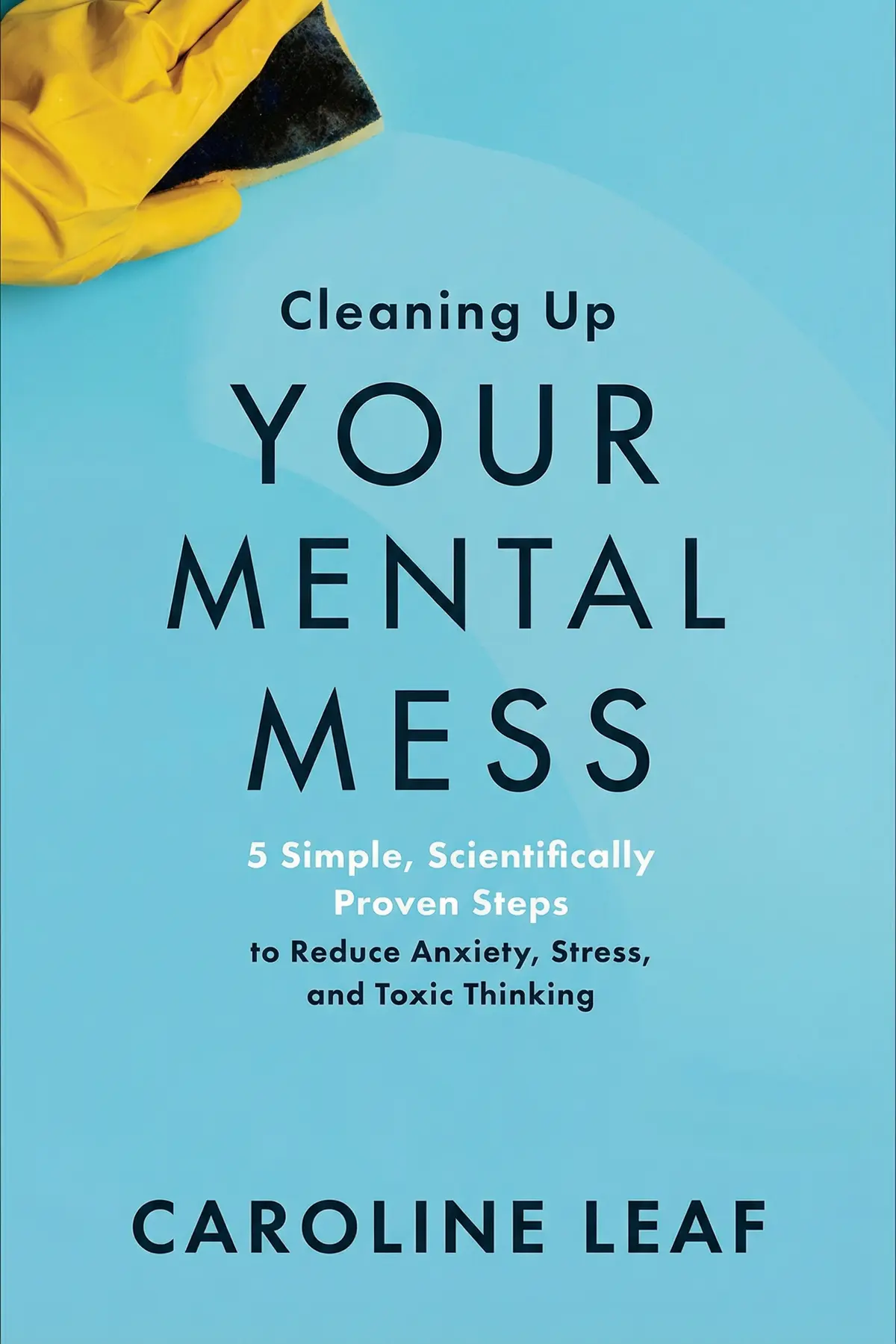
Discover a scientifically validated five-step system to declutter your mind. This guide explains how to dismantle toxic thinking patterns, reduce chronic stress, and harness neuroplasticity to improve your mental and physical well-being.
1 min 38 sec
Have you ever felt like your mind was a chaotic room filled with unfiled papers, loud noises, and flickering lights? Most of us have experienced those moments where anxiety, self-doubt, or persistent negative thoughts feel completely overwhelming. It’s a common experience, but it’s one that carries a heavy price if left unchecked. We live in an era where we focus intensely on the quality of the food we eat and the number of steps we take each day, yet we often ignore the most foundational element of our health: our mental state. When our minds are messy, our bodies suffer, our productivity plummets, and our relationships strain.
The central throughline of this journey is that while we cannot always control the external events of our lives, we have an incredible, innate ability to control our internal responses. This isn’t just about ‘positive thinking’ or willpower; it’s about a biological process that occurs every time we have a thought. By understanding how the mind and brain interact, we can become the active directors of our own neurological health.
Over the next several sections, we are going to dive into a structured, scientifically-backed method for tidying up that internal chaos. We will explore how toxic thoughts actually change your DNA, why the popular ‘twenty-one-day habit’ rule is actually a myth, and how you can use a five-step process called the Neurocycle to fundamentally rewire your brain. Whether you are dealing with the lingering effects of trauma or simply want to improve your daily focus and mood, the goal is the same: to transition from being a passive observer of your mental mess to becoming its master.
2 min 18 sec
Your thoughts are more than just abstract ideas; they are physical structures that influence your biochemistry, your immune system, and even your genetic expression.
2 min 07 sec
To change a habit or a thought, you must first understand the powerhouse that drives your behavior: the nonconscious mind.
2 min 14 sec
Mind management is more than just a concept; it is a practical five-step system designed to harness the power of neuroplasticity.
2 min 06 sec
Forget the twenty-one-day myth; true neurological change requires a longer, more dedicated commitment to ensure new habits actually stick.
2 min 01 sec
You can treat your brain like a muscle by using mind management to improve your intelligence and emotional resilience.
1 min 58 sec
Healing from the past isn’t about finding out ‘why’ something happened, but about reconceptualizing how it lives within you now.
1 min 57 sec
Better physical habits start with a managed mind; learn how the Neurocycle can improve your sleep and nutrition.
1 min 46 sec
How you begin your day sets the trajectory for your mental health, making a proactive morning routine essential.
1 min 33 sec
In our journey through the mechanics of the mind, we’ve seen that mental clutter is far more than a simple inconvenience; it is a physical reality that impacts every cell in our bodies. However, the most vital takeaway is that our brains are not fixed. Through the power of neuroplasticity and the structured approach of the Neurocycle, we can dismantle toxic thoughts and build a new, healthier architecture for our lives.
Cleaning up your mental mess is not a task you complete once and forget. It is a continuous, daily practice of self-regulation. By committing to the sixty-three-day process, you allow your brain the time it truly needs to make lasting structural changes. You’ve learned that by gathering your thoughts, reflecting on their roots, writing them down, rechecking your perspective, and taking active steps every day, you can heal from trauma and improve your physical health.
As you move forward, remember the actionable advice of starting your morning with intention. Before you let the outside world in, take a moment to decide who you want to be and how you want to think. You possess the incredible ability to direct your own brain changes. By taking control of your mind, you are taking control of your life. It’s time to stop being a bystander to your stress and start being the architect of your own peace. Start today, stick with it for sixty-three days, and watch as your mental mess transforms into a masterpiece of resilience and health.
We are often told that physical health is a matter of diet and exercise, but we frequently overlook the primary driver of our overall wellness: the mind. In this summary, we explore how unregulated thoughts and persistent mental clutter create a state of toxic stress that physically damages the body and brain. The core promise here is that you are not a victim of your biology or your circumstances. By understanding the relationship between the conscious and nonconscious mind, you can learn to direct your own brain changes. Through a process called the Neurocycle, you will discover five specific steps—gathering, reflecting, writing, rechecking, and active reaching—to identify the root of negative patterns and replace them with healthy habits. By following this structured path over a dedicated sixty-three-day period, you can move beyond temporary fixes and achieve lasting neurological change. This summary provides the tools to navigate anxiety, heal from past trauma, and build a more resilient brain, ultimately allowing you to take the lead in your own mental health journey.
Dr. Caroline Leaf is a cognitive neuroscientist and mental-health expert who has dedicated more than thirty years to researching the connection between the mind and the brain. She is a specialist in neuroplasticity and has authored several best-selling books, including Switch On Your Brain and Think and Eat Yourself Smart. In addition to her writing, she hosts the popular podcast Cleaning Up the Mental Mess.
Listeners find the book deeply educational and scientifically grounded, with one listener emphasizing the persuasive quantitative data it provides. Furthermore, they view it as a remarkable, life-altering read that supports the development of a healthy mind and can truly rewire your brain. Nevertheless, opinions on its readability and clarity are split; while some find the content accessible and simple to track, others feel it is challenging initially and contains too much technical jumbo. Additionally, several listeners point out that the material can be quite repetitive.
Finally, a mental health book that acknowledges change isn't instant or easy. I've always struggled with consistency, but understanding the 21-day and 63-day cycles changed my entire perspective on habit formation. It's not a quick fix; it's a daily practice of mind management. The five steps—gather, reflect, write, recheck, and active reach—are clear once you reach that section of the book. Truth is, this is life-altering information if you actually do the work. The quantitative data she provides gave me the confidence to stick with the routine even when I didn't feel like it. It’s hard work, but Leaf provides a roadmap that is grounded in reality rather than just positive thinking.
Show moreThis was exactly what I needed to get my mind right this year. Leaf shows how our thoughts physically impact our biology in ways I never realized. Not gonna lie, the first half is quite dense with scientific explanations, but it provides the foundation needed to trust the five-step process. Using the Neurocycle daily has helped me identify my toxic triggers and actually rewire my response to them. It has helped me reduce my daily anxiety significantly. The book is scientifically proven and offers a compelling look at brain health. I highly recommend it to anyone who feels like their thoughts are spinning out of control. It’s a life-changing guide for anyone willing to commit to the 63-day process.
Show moreAs a self-proclaimed science nerd, I absolutely loved the depth of research here. Most self-help books are too fluffy for my taste, but Leaf provides actual quantitative data that feels scientifically proven. The explanation of how thoughts physically change the landscape of our brains was absolutely fascinating to me. To be fair, it does take quite a while to get to the actual 'Neurocycle' steps, but I think the 'why' is crucial for long-term commitment. You can't just skim this. It requires your full attention. My only gripe is that the writing can be a bit dry in the middle sections. However, the five-step process itself is a game-changer if you’re willing to put in the hard work.
Show moreEver wonder why you keep falling into the same toxic thought patterns even when you know better? This book explains the biology behind those ruts with impressive detail. I found the five-step process to be a very structured and logical way to handle stress. It’s definitely heavy on the technical side, so I recommend keeping a highlighter nearby. The concept of 'cleaning up' your mental mess is presented as a hygiene routine for the brain, which really resonated with me. My only complaint is that it can be a bit long-winded at times. You really have to want to learn the science to enjoy the first half. Overall, it’s an awesome resource for building a healthier mind.
Show moreAfter hearing Caroline on a podcast, I had to pick this up to see the full framework. The book goes much deeper than any interview can. Frankly, it’s a lot of work. You can't just skim this and expect results; it requires 63 days of genuine dedication and mental effort. I wish there were a few more real-life examples of the steps in action to bridge the gap between the theory and the practice. However, the framework itself is scientifically sound and very empowering. It teaches you that you aren't a victim of your biology. You have the tools to change your brain. It’s a bit scientific and long-winded, but the results are worth the effort if you stay disciplined.
Show moreWhy did it take 200 pages to get to the actual advice? The book is split into two distinct parts, and the imbalance is striking. Part one is a massive data dump about clinical trials and brain plasticity. While the science is interesting, it becomes overwhelming and repetitive after a few chapters. Part two finally gives you the tools to manage your thoughts, but it feels rushed compared to the massive setup. I agree that we need to take control of our minds, but I didn't need half the book to convince me of that. I just wanted to know how to do it. It's a decent resource, but you’ll need some patience to dig through the technical jumbo.
Show moreLook, the information is solid, but the delivery is incredibly repetitive. She mentions her research and the 'Neurocycle' constantly before actually explaining the mechanics of the process. At times, it felt like I was being sold a product I had already purchased. That said, once you extract the actual exercises from the jargon, they are very helpful for managing daily anxiety and brain fog. I appreciated the emphasis on writing as a tool for clarity. It's an informative read, but it could have been half as long if she had trimmed the self-promotion. If you can get past the 'research paper' feel of the first few chapters, there is some real value hidden inside these pages.
Show moreTotal information overload is the best way to describe this reading experience. I felt like I was reading a medical thesis from a top-tier university rather than a standard self-help book. There is so much jargon and technical data that the practical steps occasionally get lost in the shuffle. If you don't have a background or interest in neuroscience, this is going to be a very difficult and dry read. I did find the 63-day habit timeline very enlightening, though. It explains why my previous attempts at change always failed after a week. It's a useful book, but it requires a lot of 'brain power' just to get through the introduction. It’s helpful, but definitely not light reading.
Show moreThe audio narration was a major struggle for me. Caroline Leaf reads it herself, and while she is clearly brilliant, her voice is very monotone and 'doctory' throughout the performance. It made it incredibly hard to stay focused on the complex neuroscience she was trying to explain. By the time she finally got to the actionable five-step process, I was already checked out mentally. It felt like I was sitting in a very long, very dry lecture hall. Personally, I think this works much better as a physical book where you can underline key points. As an audiobook, it’s just a snooze-fest that lacks the emotional resonance needed to keep a listener engaged with such heavy material.
Show moreI really wanted to like this, but I couldn't even finish it. The book reads like a never-ending promotional ad for her research and her app. I waited weeks for this at the library, only to be disappointed by the lack of actual instructions in the first half. By the time I reached chapter three, she was still talking about the 'five principles' without actually explaining what they were! It felt like she was trying to convince me why I needed the book rather than just giving me the tools. If you’re looking for a quick self-help guide, this definitely isn't it. The technical jargon is thick, and the pacing is glacial. It felt more like reading a long-winded academic dissertation than a helpful guide for mental health.
Show moreSteven C. Hayes


Leanne Maskell



AUDIO SUMMARY AVAILABLE
Get the key ideas from Cleaning Up Your Mental Mess by Caroline Leaf, plus 5,000+ more titles in English and Thai.







