

15 min 46 sec
Co-Intelligence: Living and Working with AI
Ethan Mollick explores the transformative era of generative AI, offering a roadmap for collaborating with large language models to enhance creativity, productivity, and professional growth in a rapidly evolving digital landscape.
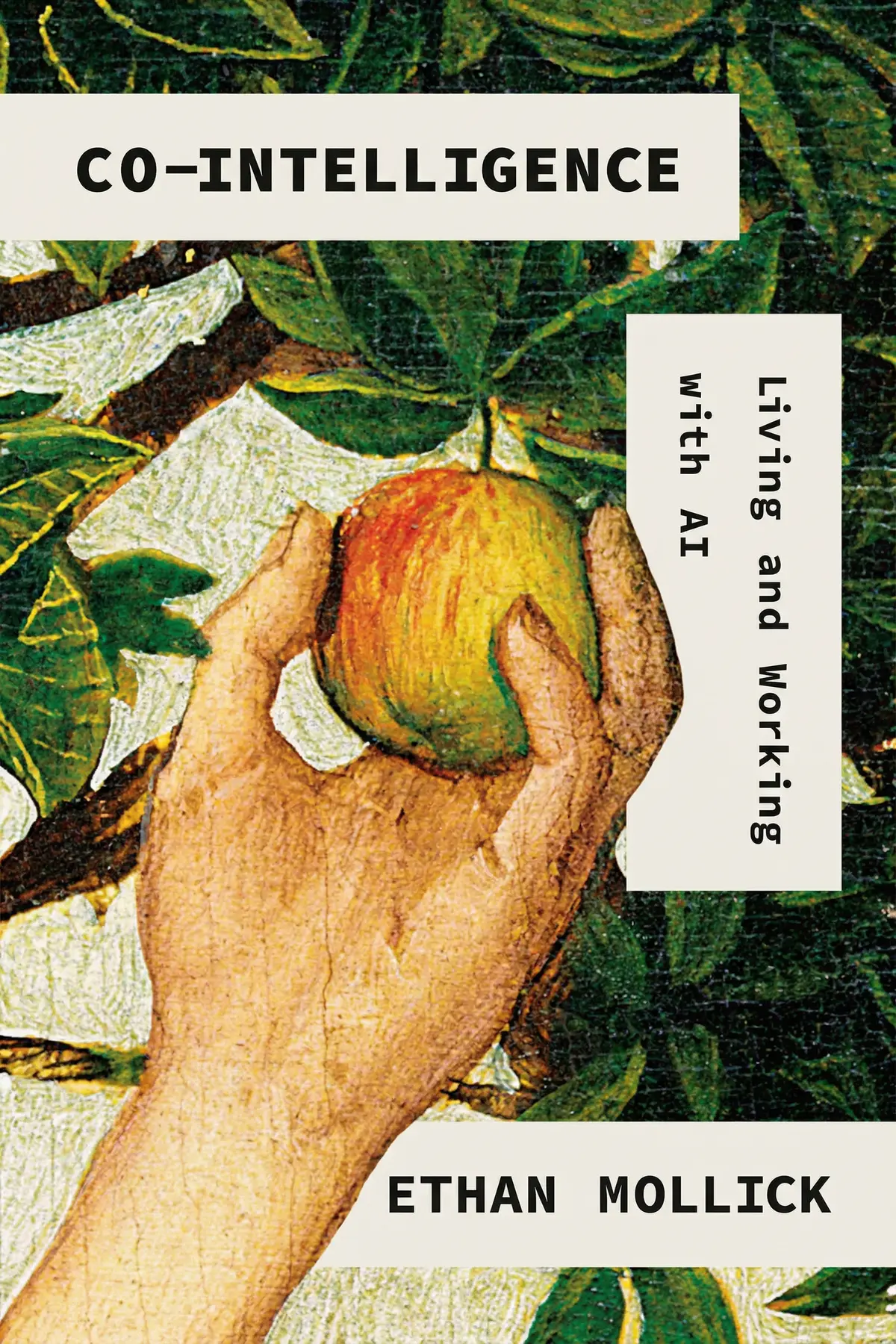
Table of Content
1. Introduction
1 min 53 sec
In late 2022, the world experienced a quiet but massive shift. It wasn’t a physical event, but the release of a digital tool that would change how we interact with information forever. When ChatGPT was introduced, it didn’t just become another app; it became the fastest-growing consumer product in history, reaching 100 million users in record time. But the real story isn’t about the software’s popularity—it’s about the fundamental change in how we think about intelligence itself. We are moving away from a world where computers are just tools for calculation and entering an era of co-intelligence.
Co-intelligence is the idea that artificial intelligence has evolved past being a simple, procedural machine. It now functions as a sort of intellectual companion, one that emulates human thought patterns and language with startling accuracy. This new generation of technology, known as generative AI, isn’t just about efficiency; it’s about a collaborative relationship that can boost productivity by more than half in some sectors. From the way we draft emails to the way we solve complex scientific problems, the presence of AI is being felt everywhere.
However, this isn’t a simple story of progress. There are quirks, risks, and a steep learning curve involved in working with an ‘alien’ mind that doesn’t think exactly like we do. In this summary, we will explore the nuances of this new partnership. We’ll look at how large language models function, the creative sparks they can provide, and how they are fundamentally rewriting the rules of the workplace and education. By the end, you’ll see how AI can serve as a muse, a colleague, and a mentor, provided you know how to navigate its unique landscape.
2. The Nature of Large Language Models
2 min 02 sec
What if your most versatile collaborator wasn’t actually a person, but a system that predicts the future of language? Understanding the core logic of AI is the first step to mastering it.
3. Mastering the AI Persona
2 min 02 sec
Your AI assistant can be anyone from a stern CEO to a poetic dreamer. Learning to assign the right role is the key to unlocking its full potential.
4. The Combinatorial Muse
2 min 04 sec
Creativity isn’t always about creating something from nothing; often, it’s about connecting the dots. Discover how AI acts as the ultimate engine for innovation.
5. Navigating the Jagged Frontier
2 min 01 sec
AI can solve complex coding problems but might fail at simple logic. Understanding where the technology excels—and where it falls short—is crucial for survival.
6. The Changing Landscape of the Workplace
2 min 06 sec
From professors to programmers, almost no job is untouched by AI. How do we redefine our value in an age where machines can do the ‘grunt work’?
7. AI as the Ultimate Mentor
2 min 10 sec
Imagine having a personal tutor available at any hour, ready to give feedback on your every move. This is the new future of learning.
8. Conclusion
1 min 28 sec
As we have seen throughout this exploration of Co-Intelligence, we are standing at a crossroads. Generative AI is not just a trend or a better version of a search engine; it is a fundamental shift in the human experience. It offers us the chance to expand our productivity, unlock new forms of creativity, and receive personalized guidance in our professional lives. But this power comes with a new set of responsibilities. We cannot afford to be passive users of this technology. To thrive in the age of co-intelligence, we must remain the ‘human in the loop,’ providing the ethics, the fact-checking, and the ultimate vision that machines cannot provide.
The throughline of this journey is partnership. We are moving from a world where we use computers to a world where we work *with* them. This requires us to be more intentional about our roles. We must learn to craft better personas, navigate the pitfalls of the jagged frontier, and use AI as a mirror to sharpen our own skills. By embracing AI as a collaborative partner rather than a replacement, we can solve more complex problems and push the boundaries of what is possible. The future is not a competition between human and machine, but a symphony where each plays to its strengths. The potential is boundless, and the journey has only just begun. It is time to step into this new frontier and discover what we can achieve together.
About this book
What is this book about?
Co-Intelligence examines the seismic shift caused by the emergence of generative artificial intelligence, specifically large language models like ChatGPT. Rather than viewing AI as a simple replacement for human labor, Ethan Mollick argues that we are entering an era of partnership where technology functions as a collaborative intellectual partner. The book details the inner workings of these models, explaining how they predict language patterns based on human data to create surprisingly sophisticated—yet sometimes flawed—outputs. Readers are guided through the practicalities of working alongside AI, from crafting effective personas to navigating the 'jagged frontier' where AI excels at some tasks while failing at others. Mollick explores how this technology reshapes creativity by acting as a combinatorial engine, changes the nature of professional roles, and offers a new paradigm for education and mentorship. The promise of the book is a future where humans and machines leverage their unique strengths to achieve a level of collective intelligence that was previously unimaginable.
Book Information
About the Author
Ethan Mollick
Ethan Mollick is an associate professor who teaches innovation and entrepreneurship at the Wharton School of the University of Pennsylvania. A startups expert, Mollick has penned several renowned management papers, as well as authoring the book The Unicorn’s Shadow: Combating the Dangerous Myths that Hold Back Startups.
Ratings & Reviews
Ratings at a glance
What people think
Listeners find the work offers excellent perspective on AI's educational potential and functions as a comprehensive primer on the field. They also value its hands-on utility as a guide for engagement, with one listener mentioning it includes specific directions. Additionally, the text is easy to follow and logically organized, and listeners appreciate how it examines various possible scenarios for AI’s future.
Top reviews
Aom
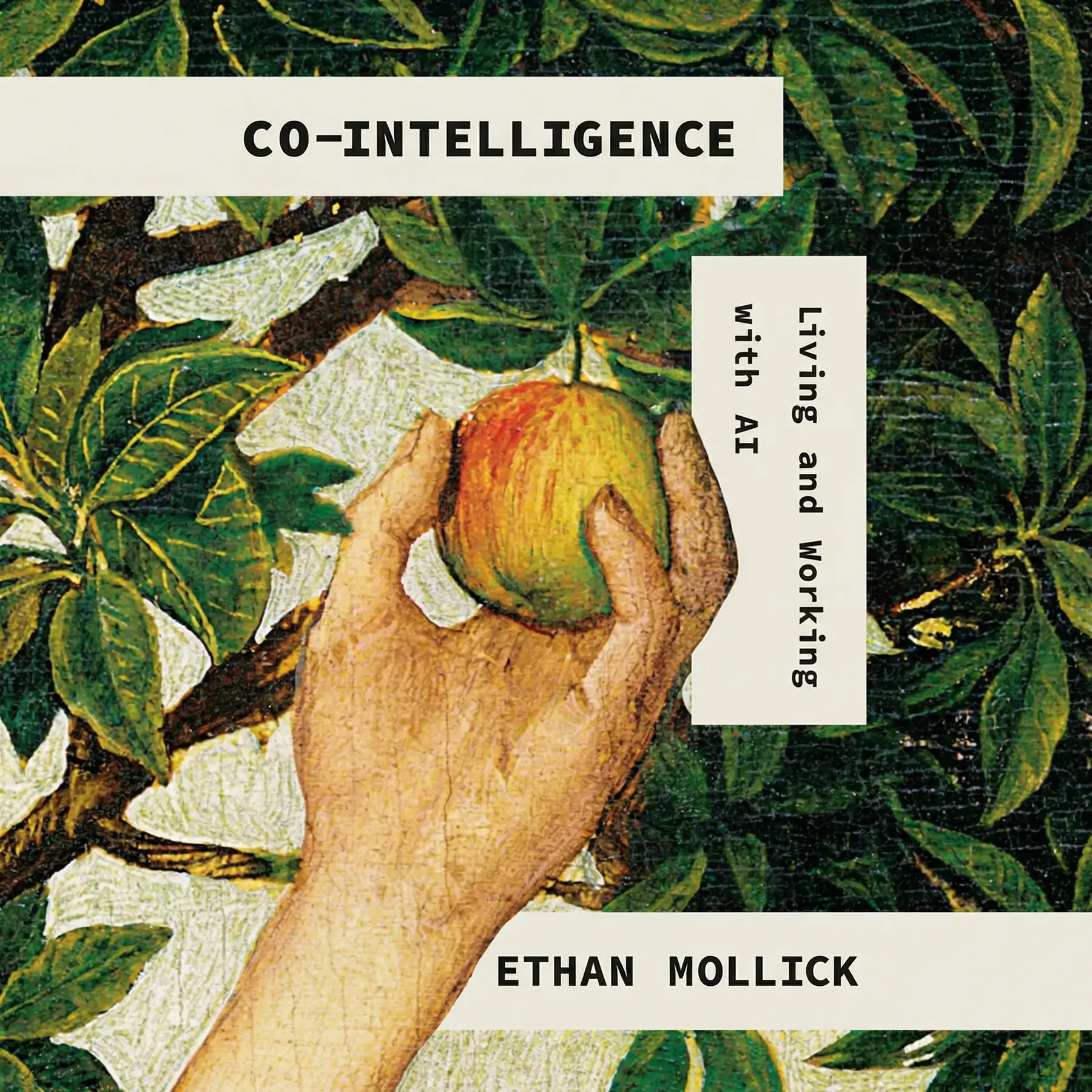
As an educator drowning in a sea of student-led AI usage, I found Mollick’s perspective to be a literal lifesaver. While many of my colleagues are busy trying to ban ChatGPT, this book argues convincingly for embracing the 'alien mind' to actually improve learning outcomes. The section on the two-sigma advantage was particularly eye-opening for me. It suggests a future where every student has access to a world-class tutor, regardless of their background. Mollick writes with a structured clarity that makes the complex landscape of LLMs feel manageable even for the non-technical crowd. To be fair, he doesn't pretend to have all the answers regarding the long-term impact on the workforce, but his optimism is contagious. I loved the practical examples of using AI as a critical reader or a teammate rather than just a search engine. This isn't just theory; it’s a manual for the next decade of human-machine collaboration. If you are worried about the 'Apple of Eden' on the cover, don't be. This is a grounded, essential guide.
Show moreWit
The chapter on treating AI like a person—specifically an 'alien mind'—completely changed my mental model of how to interact with these tools. Mollick explains that LLMs aren't just software; they behave more like a 'jagged frontier' of capabilities that we are still mapping out. I’ve started using his suggestion of giving the AI a specific persona, like an uninformed member of the public or a harsh editor, and the results have been transformative for my writing. Gotta say, the way he handles the ethical questions around job displacement and UBI felt more grounded than most Silicon Valley manifestos. He acknowledges the disruption while focusing on the promise of a world where boring work is automated away. The writing style is punchy and accessible, making it a quick read for such a dense subject. It’s rare to find a tech book that feels both practical and visionary at the same time. This is definitely the one book I’ll be recommending to my non-tech friends this year.
Show moreSarawut
Ever wonder why your AI prompts yield such boring results? Mollick’s book explains exactly why that happens and how to fix it by becoming a better 'co-pilot' to the machine. I’m a data scientist, and even though I work with this tech every day, I still found his framing of the 'alien mind' to be incredibly useful for explaining AI to my non-technical colleagues. The book is packed with great insights into AI’s promise for education and how it can act as a team of virtual assistants. I loved the honesty regarding the ethical dilemmas, like what happens to entry-level jobs when the AI can do the work of a junior analyst. The writing is clear, structured, and avoids the usual buzzwords that plague the tech industry. It really helped me see AI as a tool for poetry and friendship, not just data processing. This is the definitive guide for anyone trying to navigate our current inflection point.
Show morePornpimon
Is this book just a glorified blog post, as some critics claim? Perhaps to the ultra-technical crowd who spends all day on AI message boards, but for the rest of us, it is a clear-eyed primer. Mollick manages to distill the chaotic energy of the AI revolution into a framework that actually makes sense for daily work. I especially appreciated the 'human in the loop' concept which emphasizes that AI is a tool to augment our creativity, not replace it entirely. Truth is, most people are still using LLMs like a slightly better Google, and they are missing the point. The book provides detailed instructions on how to push past surface-level interactions. I did find some of the personal anecdotes a bit repetitive toward the middle, and the comparison to steam power felt a little hyperbolic at times. However, the core message about removing redundant tasks to focus on intrinsically rewarding work is something we all need to hear. It’s a solid, four-star roadmap for anyone feeling left behind by the current tech curve.
Show moreAudrey
Look, we are living through a massive shift in how work gets done, and Mollick is one of the few voices actually providing a roadmap instead of just screaming into the void. This book is exceptionally useful for business leaders who need to understand how to 'invite AI to the table' without losing the human element. I appreciated the specific examples, like using ChatGPT to build a website prototype even if you can't code a single line yourself. It highlights how the bar for entry-level work is being raised across every industry. My only minor gripe is that he occasionally dismisses the 'mirror effect' of AI too quickly. AI can be very conformist, often reshaping your thoughts to match the most probable response rather than the most creative one. You have to be a very active 'human in the loop' to get the best out of it. Still, the structured suggestions for daily tasks make this a must-read for anyone in a corporate environment.
Show moreJonathan
After hearing Mollick on a few podcasts, I wasn't sure if the book would offer anything new, but I was pleasantly surprised by the structured approach to experimentation. He doesn't just tell you AI is powerful; he shows you how to test its limits yourself. The idea that we are 'co-intelligent' partners with these machines is a helpful shift away from the doom-and-gloom headlines. I found the section on the 'mythical four-day work week' and the practicalities of achieving it through AI-driven productivity to be quite thought-provoking. While some parts felt a bit like a beginner's guide, the insights into how AI sounds like the user—becoming a reflection of our own expectations—were fascinating. The book is very well-written and serves as a great primer for anyone who feels uncertain about the future. It’s not a technical deep dive, but it is an excellent sociological exploration of our new reality. A solid four stars for the clear-eyed optimism.
Show morePriya
Picked this up because the title offered a glimpse into a more collaborative future, and I wasn't disappointed by the practical approach. In my experience, most books on AI are either too technical or too dystopian, but Mollick strikes a nice balance between the two. He gives you a general interaction guide that feels like a masterclass in prompting, without being overly prescriptive. I particularly enjoyed the exploration of various potential futures, from the utopian removal of drudgery to the more uncertain impacts on global healthcare. While I agree with some reviewers that it can feel a bit 'surface-level' in the later chapters, the initial framework is strong enough to carry the book. It’s an interesting and useful read for anyone trying to find a strategy for the AI revolution. I came away feeling much more empowered to use these tools in my own creative work. A very solid four-star effort.
Show moreSureerat
Finally got around to reading this after seeing it all over my LinkedIn feed, but I found the experience to be a bit of a mixed bag. For a rank beginner, this is easily the best introduction to generative AI currently on the market because it is well-structured and easy to digest. But if you’ve been following Mollick’s Substack for a while, you might find yourself skimming large sections that feel like recycled content. Personally, I was hoping for more depth regarding the differences between specific models like Claude and GPT-4 or perhaps a discussion on local models. Instead, we get a very broad overview that feels like a snapshot that might be obsolete by next year. The author’s enthusiasm is great, but he tends to brush over the valid concerns about AI acting as a 'fun-house mirror' of our own biases. It is a decent, helpful read, but it didn't quite live up to the massive hype for me.
Show moreMai
Not what I expected from someone who usually provides such deep dives on his Substack. While I appreciate Mollick's humor and the easy-to-read style, the book often feels like it's skimming the surface of much larger issues. He spends a lot of time on amusing conversations with ChatGPT that don't always lead to a substantive point about the technology's limitations. For example, he dismisses the idea of anthropomorphization as harmless, yet later claims we should treat the AI like a person to get better results. Which is it? The logic feels a bit circular at times. To be fair, he does provide a good overview of the potential AI futures, but I wanted more on the fundamental nature of AI versus human cognition. It’s a decent book for someone who knows absolutely nothing about LLMs, but if you’re already an active user, you’ll probably find yourself wanting something a bit more substantial.
Show moreSirichai
This felt like a collection of anecdotal evidence stitched together without the rigorous scientific backing I expected from a Wharton professor. Frankly, the book is much ado about nothing for anyone who has spent more than an hour playing with an LLM. Mollick cites studies very lightly, often ignoring the small sample sizes or narrow scopes to suit his optimistic narrative. The opening comparison between AI and steam power felt ridiculous and lacked historical nuance. It seems targeted at 'AI lovers' who want to believe an assistant will do all their boring work while they magically become creative geniuses. In reality, the AI often just regurgitates the most probable, bland information from its training corpus. My cat shows more genuine cognitive flexibility than these models do when they fail at something as simple as a game of Tic-Tac-Toe. It’s a very poor exploration of true intelligence that relies way too much on the author’s personal vibes rather than hard evidence.
Show moreReaders also enjoyed
AUDIO SUMMARY AVAILABLE
Listen to Co-Intelligence in 15 minutes
Get the key ideas from Co-Intelligence by Ethan Mollick, plus 5,000+ more titles in English and Thai.
- 5,000+ titles
- Listen as much as you want
- 7-day free trial
- Cancel anytime







