
15 min 31 sec
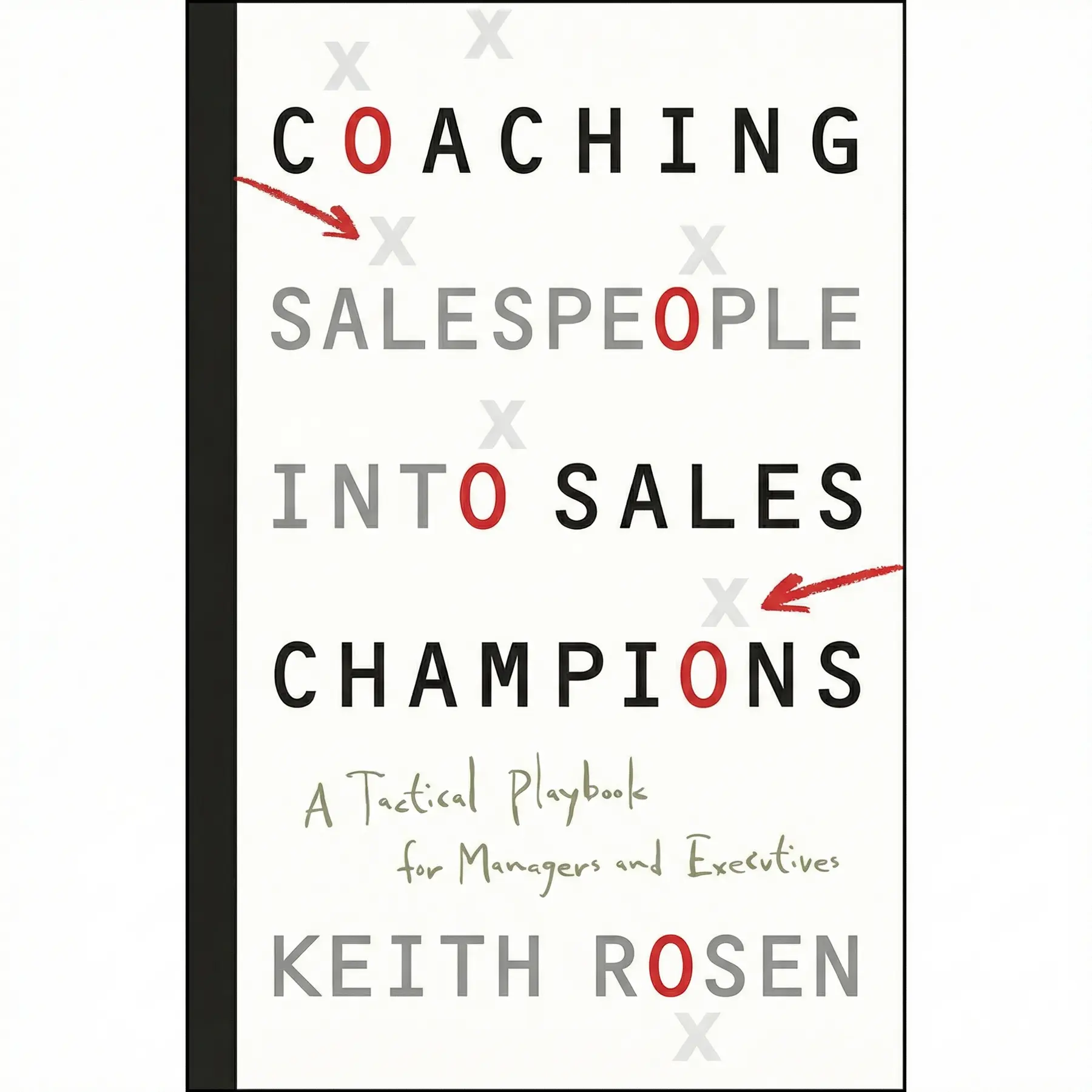
Coaching Salespeople into Sales Champions: A Tactical Playbook for Managers and Executives
By Keith Rosen
Learn how to transition from a traditional sales manager to an elite coach who fosters independence, tackles fear-driven performance issues, and aligns individual motivations with company goals for long-term success.
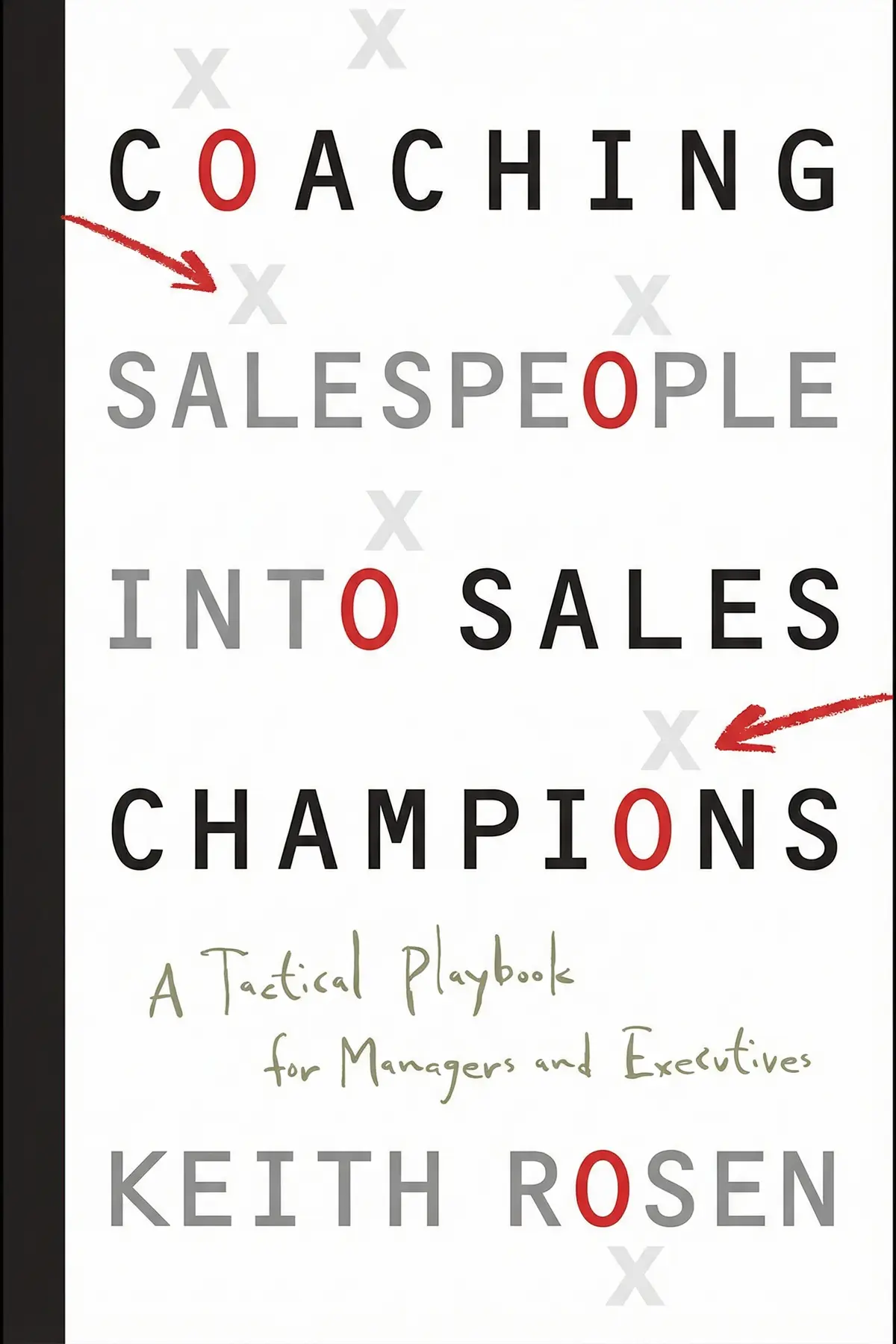
Table of Content
1. Introduction
1 min 42 sec
Think about the typical day of a high-level sales manager. It is often a whirlwind of fires to put out, angry customers to appease, and spreadsheets that never seem to show high enough numbers. Most managers spend their time playing the role of the ‘hero,’ diving in at the last minute to save a deal or doing the work for their team members because they think it’s the only way to ensure it gets done right. But here is the hard truth: being a great sales manager isn’t about how many deals you can close yourself. It is about how many people you can empower to close deals without you.
To achieve this, a manager must undergo a fundamental transformation. They must stop being just a manager and start being a coach. While these terms are often used interchangeably, they represent two vastly different approaches to human potential. A manager manages tasks and targets; a coach develops the person behind those targets. Like a coach of a championship sports team, your job isn’t to run onto the field and catch the ball. Your job is to push your athletes to be better every single day, developing their skills and their mindset so they can perform at their peak when the pressure is on.
The throughline of our exploration today is the shift from a reactive, fear-based management style to a proactive, growth-oriented coaching culture. We are going to look at why most managers are unintentionally crippling their teams, how to stop being the ‘answer man’ for every problem, and how to align your coaching with what your employees actually care about. By the end of this journey, you’ll understand that the secret to a high-performing sales team isn’t more pressure or more training—it’s more effective coaching. Let’s dive into how you can make that transition and lead your team to become true sales champions.
2. Distinguishing Between Consulting, Training, and Coaching
2 min 32 sec
Discover why your development efforts might be failing by learning the crucial differences between these three distinct leadership roles and how to use them effectively.
3. Conquering the Fear-Based Management Trap
2 min 23 sec
Uncover how the anxiety of hitting quotas can actually poison your team’s performance and learn the secret to leading from a place of presence.
4. Shifting Focus from Outcomes to the Process
2 min 24 sec
Learn why fixating on the final sale is counterproductive and how focusing on the ‘how’ creates more consistent and predictable success.
5. Coaching the Individual, Not the Quota
2 min 15 sec
Discover why projecting your own motivations onto your team is a mistake and how to align their personal goals with professional performance.
6. Ending Dependency by Asking the Right Questions
2 min 35 sec
Learn how to stop the ‘firefighting’ cycle and empower your sales team to solve their own problems through the power of solution-oriented inquiry.
7. Conclusion
1 min 40 sec
As we wrap up our look at Keith Rosen’s approach to sales leadership, it’s clear that the journey from manager to coach is one of the most rewarding transitions a professional can make. It is a journey from control to empowerment, from fear to presence, and from being a lone hero to being a builder of champions. We have seen that while consulting and training have their place, it is coaching that provides the vital connective tissue that turns knowledge into consistent high performance.
To implement these ideas, remember the power of authentic enrollment. Before you dive into coaching, you must build a foundation of trust. This means having honest, open conversations where you share your own experiences and listen deeply to your team’s vision. Use words that spark imagination and ask for permission to partner with them in their growth. When they feel seen and heard, they will be ready to join you on the path to excellence.
One final, actionable piece of advice as you move forward: refine the way you give praise. In a coaching culture, a simple ‘good job’ is insufficient. It is too vague to be truly meaningful. Instead, offer specific, observation-based recognition. Tell them exactly what they did well—perhaps it was the way they maintained their patience with a difficult client or how they perfectly transitioned into a closing question. Specificity shows that you are paying attention and reinforces the exact behaviors you want to see repeated. By focusing on the person, the process, and the power of the right questions, you won’t just hit your targets—you’ll build a legacy of success that outlasts any single sales quarter. Go out there and start coaching your champions today.
About this book
What is this book about?
Coaching Salespeople into Sales Champions explores the critical paradigm shift required to move from being a manager who focuses on tasks to a coach who focuses on people. While many leaders feel their job is to fix problems and hit quotas, this approach often creates a cycle of dependency and stress. The book provides a tactical roadmap for breaking that cycle, distinguishing clearly between consulting, training, and coaching to show why typical management often falls short of building a top-tier team. Listeners will discover how to overcome the paralyzing fear of missed targets by grounding their leadership in the present moment and the underlying sales process. The summary outlines the importance of individualizing motivation, explaining that not every salesperson is driven by the same goals. By mastering the art of the coaching conversation—shifting from providing answers to asking empowering questions—managers can develop self-reliant champions who take ownership of their results. This guide is ultimately about building a culture of authenticity and continuous growth that benefits both the individual and the organization.
Book Information
About the Author
Keith Rosen
Keith Rosen is the CEO of Profit Builder, a premier organization that focuses on sales development and management coaching. His impact in the field is widely recognized, with both Inc. magazine and Fast Company naming him among the top five most influential executive coaches globally. He is a specialist in helping sales leaders move beyond traditional management into high-impact coaching roles, leveraging years of experience to transform sales organizations into self-sustaining cultures of excellence.
Ratings & Reviews
Ratings at a glance
What people think
Listeners find this coaching manual to be an excellent tool that provides useful advice for their everyday work. The material is simple to navigate, with one listener pointing out its direct methods, and listeners value the all-encompassing strategy for managing sales. They believe it is a great value, with one review mentioning how the book helps hold sales leaders accountable to their dreams.
Top reviews
Look
After hearing so much buzz about Rosen’s methods, I decided to give this a shot to help cultivate a better culture in my department. The results have been almost immediate, especially regarding how I approach underperformers with the 30-day turnaround strategy. This book is a must-read if you are serious about growing your people rather than just hitting your monthly numbers through sheer force of will. Not gonna lie, some of the question scripts feel a bit repetitive, but the underlying message about authentic conversations is vital. It creates a foundation of trust that I didn't realize was missing from my management style until now.
Show moreGai
Finally got around to finishing this, and I can say it is well worth the investment of both time and money. The way Rosen helps you hold sales leaders accountable to their dreams is a refreshing take on what can often be a very dry subject. I’ve found that by using these straightforward techniques, my team is more engaged and takes more ownership of their individual pipelines. The narrative moves along at a good pace once you get past the introductory chapters, proving its points through various case studies. It’s easily one of my favorite books on management in general because the principles are so universally applicable.
Show moreSiraporn
Wow, the chapter on creating a progressive coaching culture really changed the way I look at my role in this organization. It isn't just about selling better; it's about empowering every individual to reach their full potential through thoughtful, question-based guidance. I love how the book emphasizes that we shouldn't give the answer away for free, even when it’s tempting to just 'fix' the problem ourselves. Some of the dialogue examples are a bit too perfect to be true, but the logic behind them is sound and easy to adapt. This is a must-read for any executive or entrepreneur who wants to stop being the bottleneck for their own company.
Show moreBoy
Picked this up on a recommendation and found it to be a remarkably straightforward resource for my daily routine. Keith Rosen manages to break down the complexities of sales management into techniques that you can actually implement the very next morning. Personally, I found the L.E.A.D.S. framework to be the most valuable part because it provides a structural backbone for meetings that used to wander aimlessly. Although some of the examples are a bit dated, the core philosophy of holding your team accountable to their own goals is powerful. It’s a solid investment for anyone looking to transition from a 'telling' manager to a 'coaching' leader.
Show moreDek
To be fair, the shift between wearing a 'manager hat' and a 'coaching hat' is one of the hardest skills to master in the corporate world. Rosen does a great job of explaining why we shouldn't settle for surface-level answers from our reps. I really appreciated the library of coaching questions, which gave me a concrete starting point when I felt stuck during a one-on-one session. My only gripe is that the coach in the book occasionally offers advice too early, which contradicts some of the more pure coaching philosophies I’ve studied elsewhere. Still, it’s a terrific resource that delivers practical insights for anyone overseeing a sales team.
Show moreThanakorn
In my experience, many managers fail because they assume they know what their employees need without ever truly digging deeper. This book challenges those assumptions head-on and forces you to confront your own fears about fostering authentic, sometimes difficult, conversations. I particularly enjoyed the section on not just waiting for your turn to speak, but actually listening to the subtext of what a salesperson is saying. The book is easy to follow and the L.E.A.D.S. framework is something I now keep on a sticky note at my desk. It’s a high-quality guide for anyone who wants to build a world-class team.
Show morePatchara
As someone who has struggled to balance the demands of being a boss and a mentor, I found this guide to be incredibly helpful. The truth is, coaching is a distinct skill that most of us are never actually taught before we get promoted. Rosen provides a library of forms and scripts that make the transition much smoother than if you were just winging it. I did find that some of the points were belabored, and the book could have been about fifty pages shorter without losing much. However, the 30-day strategy for low performers is worth the price of the book alone.
Show moreChamp
Is this really a sales book? Not exactly; it’s more of a manual on the art of coaching where sales just happens to be the backdrop for every example. For those of us used to simply giving orders, the transition to asking questions as Rosen suggests can be quite jarring and even uncomfortable. Look, the book starts off incredibly slow and took me a while to really sink into, but the final third of the text is where the real value lies. I wish there were more specific selling skills included, but the emphasis on active listening and avoiding assumptions is still quite useful. It’s a decent read for night-time professional development.
Show morePensri
Frankly, it felt like a very long-winded version of common sense, though perhaps that’s because I’ve already spent years in leadership training. While the book provides a comprehensive approach to sales management, it doesn't offer much for those who have already achieved a master-level certification in coaching. The example conversations are clearly crafted to fit the author's specific points, making them feel a bit unrealistic during actual employee interactions. That being said, for a new manager who has never been exposed to the idea of 'asking' instead of 'telling,' this would be a revelation. It serves as a good enough entry-point into the world of professional development.
Show moreEllie
The narrative style here is unfortunately quite rambling, often belaboring points that should have been addressed in a single paragraph. While I appreciate the intent behind the sample dialogues, they feel incredibly wooden and far from how real people actually communicate in a high-pressure office. Truth be told, most of this feels like common corporate sense wrapped in a very long-winded package. I was hoping for more tactical, grit-under-the-fingernails advice rather than idealistic scripts that feel like they were written for robots. It's not a total waste of time, but you really have to dig through a lot of fluff to find the actionable nuggets.
Show moreReaders also enjoyed



AUDIO SUMMARY AVAILABLE
Listen to Coaching Salespeople into Sales Champions in 15 minutes
Get the key ideas from Coaching Salespeople into Sales Champions by Keith Rosen, plus 5,000+ more titles in English and Thai.
- 5,000+ titles
- Listen as much as you want
- 7-day free trial
- Cancel anytime







