
17 min 45 sec
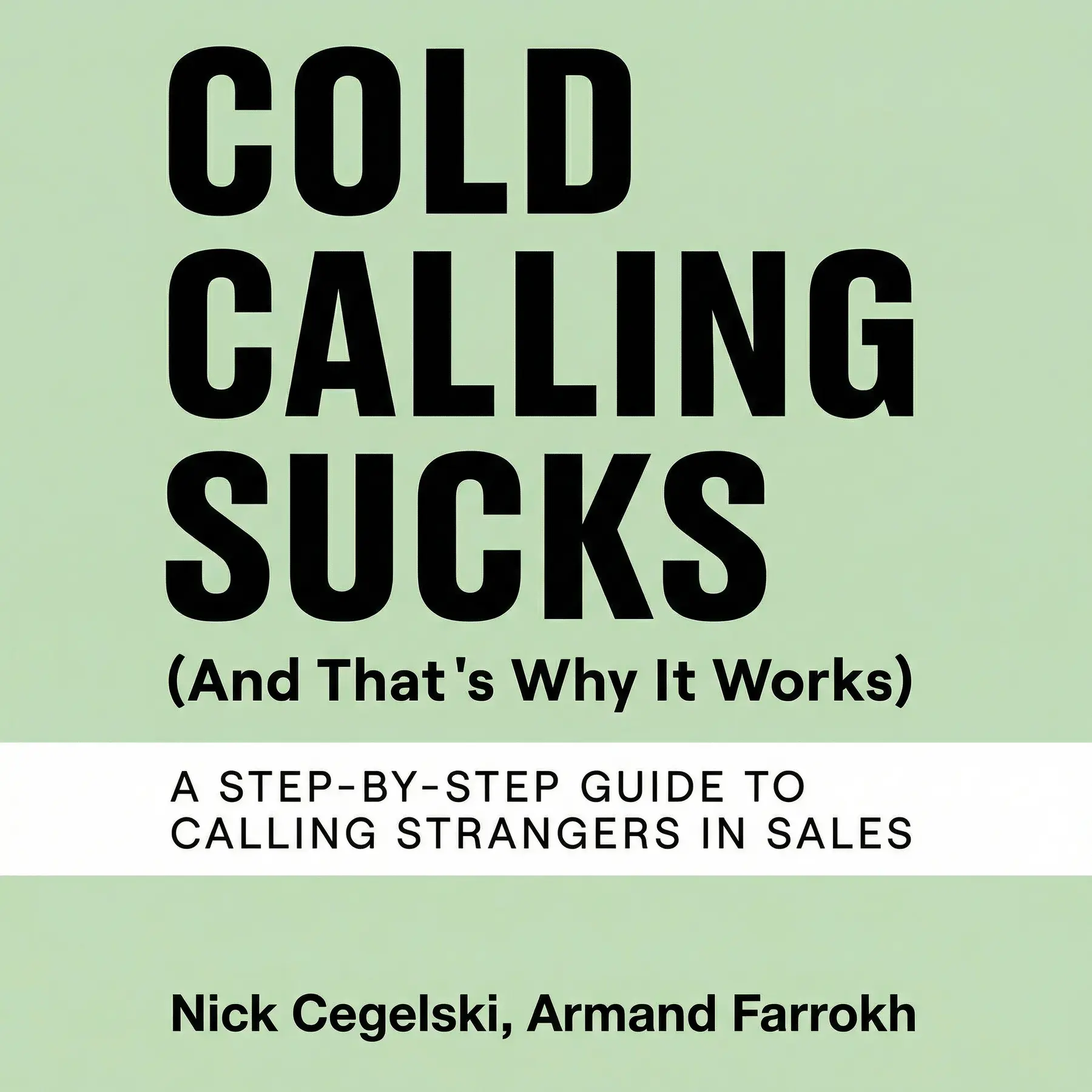
Cold Calling Sucks (And That’s Why It Works): A Step-by-Step Guide to Calling Strangers in Sales
Cold Calling Sucks (And That's Why It Works) provides a tactical blueprint for mastering the most difficult part of sales. Learn to overcome rejection, bypass gatekeepers, and turn interruptions into high-value conversations.
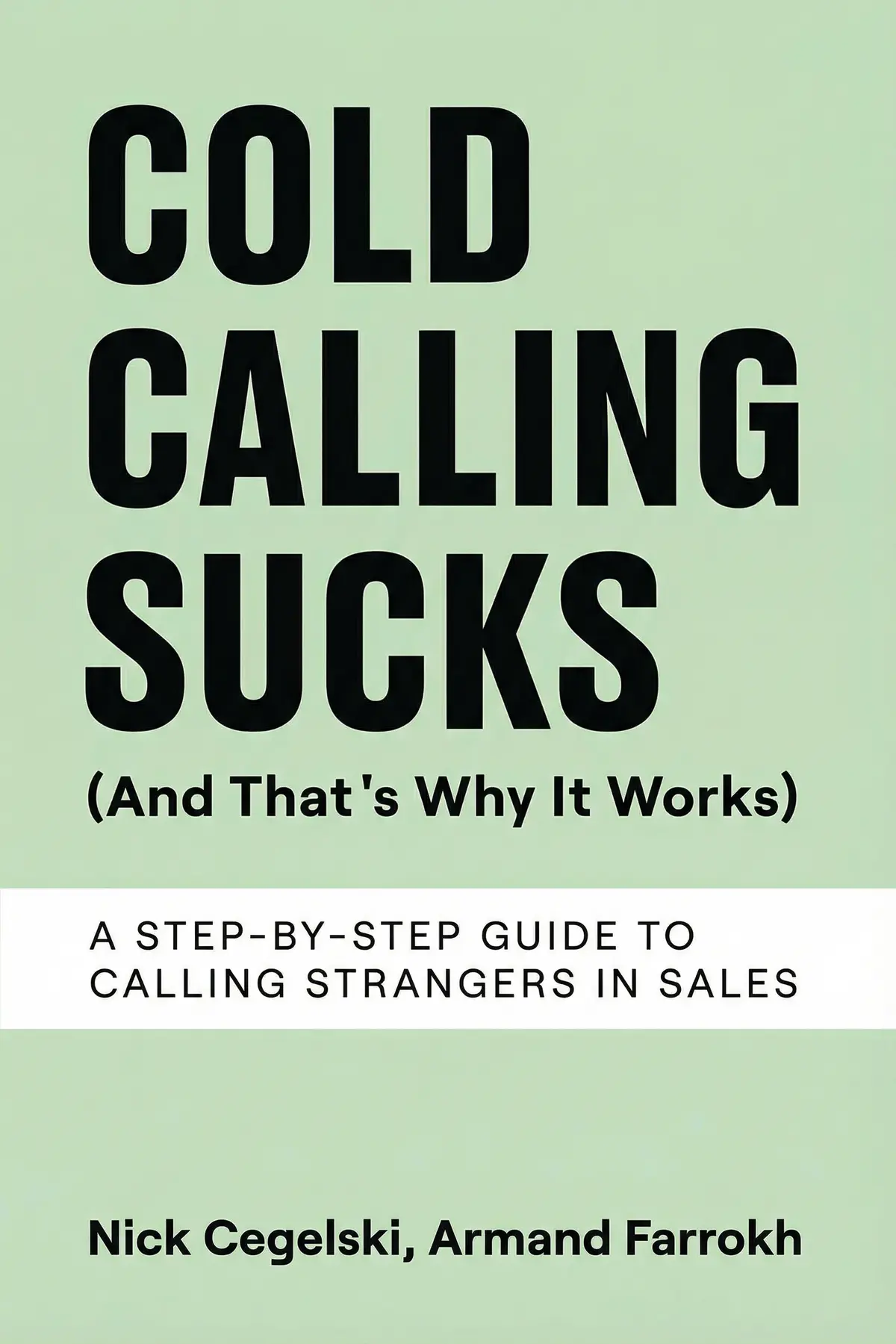
Table of Content
1. Introduction
1 min 50 sec
Think for a moment about the psychological weight of a telephone. For most people in sales, that small device can feel like it weighs a thousand pounds when it’s time to dial a stranger’s number. There is a deep, instinctual fear of intrusion and rejection that makes cold calling one of the most avoided tasks in the business world. We’ve all been on the receiving end of a bad sales call, and the last thing we want to be is that person—the annoying interruption in someone’s busy afternoon. Yet, here is the paradox: because almost everyone else is trying to avoid that discomfort, the phone remains the most underutilized and effective tool for reaching high-level decision-makers. If you can push through the awkwardness that stops your competitors, you gain access to opportunities they will never even see.
This is the core philosophy behind Cold Calling Sucks (And That’s Why It Works). It’s not about pretending that calling strangers is fun or easy; it’s about accepting that it is difficult and then using that difficulty to your advantage. Success in this field doesn’t come from a magical script that eliminates rejection—it comes from a systematic approach that reduces friction and builds rapport in seconds. In this summary, we are going to break down the mechanics of the call itself, from the opening sentence to the moment you secure a meeting on the calendar.
We will explore how to stop sounding like a telemarketer and start sounding like a peer. We’ll look at the specific psychological triggers that cause people to hang up and, more importantly, how to bypass them. By the end of this journey, you won’t just have a few new lines to say; you’ll have a complete framework for managing your time, your metrics, and your mindset so that you can turn the phone into your most reliable revenue generator.
2. Winning the First Sixty Seconds
3 min 05 sec
The opening moments of a call determine whether a prospect listens or hangs up. Learn how to bypass the telemarketer filter by using social proof and problem-focused hooks.
3. The Art of Handling Reflexive Rejections
2 min 53 sec
Objections are often just knee-jerk reactions to being interrupted. Discover a three-step method to lower defenses and turn a ‘no’ into a productive dialogue.
4. Bypassing the Gatekeeper and Using Voicemails
2 min 41 sec
Gatekeepers aren’t obstacles; they’re filters. Learn the ‘belonging’ mindset to get through to decision-makers and use a multi-touch voicemail strategy.
5. Optimizing Your Funnel Through Key Metrics
2 min 47 sec
Success in cold calling is a numbers game, but only if you track the right numbers. Focus on connect, set, and show rates to maximize your efficiency.
6. Building the Cold Calling Machine
2 min 59 sec
Overcome procrastination and call reluctance by creating strict routines. Use ‘Green Hours’ and quirky commitment rules to ensure you hit your targets daily.
7. Conclusion
1 min 30 sec
As we wrap up this look at the strategies of Nick Cegelski and Armand Farrokh, the most important takeaway is that cold calling is a skill that can be mastered by anyone willing to embrace the initial discomfort. We’ve explored how the first minute of a call is about pattern interruption and social proof. We’ve seen how the Mr. Miyagi Method can turn a defensive ‘no’ into a collaborative ‘maybe.’ We’ve looked at the importance of acting like you belong when facing gatekeepers and the necessity of tracking the right metrics to ensure your efforts are actually producing results.
But beyond the tactics, the real secret to success in sales is the willingness to do what others won’t. If you can build a daily routine that prioritizes direct outreach, and if you can view every rejection not as a personal failure but as a necessary step in the process, you will inevitably outpace your competition. The phone is a tool that grants you direct access to the people who can change the trajectory of your business.
So, as you step back into your daily work, take the pressure off yourself to be perfect. Instead, focus on being consistent. Start your next ‘Green Hour’ by remembering that the person on the other end of the line is just another human being with problems that you might be able to solve. Use the frameworks you’ve learned to lower their defenses and open a door. It might suck at first, but that’s exactly why it works. Now, pick up the phone and make that first dial.
About this book
What is this book about?
The world of modern sales often tries to hide behind emails and LinkedIn messages, but the most direct path to growth remains the cold call. Cold Calling Sucks (And That's Why It Works) is a candid, step-by-step guide designed to help sales professionals face their fears and embrace the discomfort of calling strangers. It acknowledges a fundamental truth: cold calling is difficult and often unpleasant, yet its difficulty is exactly why it remains a competitive advantage for those who master it. Throughout this summary, you will explore the psychological shifts required to handle rejection without losing momentum. The authors move beyond high-level theory to provide specific frameworks for the first minute of a call, strategies for navigating the defensive barriers of gatekeepers, and methods for turning standard objections into invitations for further dialogue. You will also learn how to optimize your daily schedule and focus on the specific metrics—like connect and show rates—that actually move the needle for your revenue goals. The promise is a transition from being an ignored interruption to a respected partner who provides real solutions.
Book Information
About the Author
Nick Cegelski
Nick Cegelski is the cofounder of 30 Minutes to President’s Club, a premier sales media company and home to the top-ranked sales podcast. He built his reputation as a high-performing enterprise seller, closing significant six- and seven-figure deals. Armand Farrokh, also a cofounder of 30 Minutes to President’s Club, previously served as the VP of Sales at Pave. At Pave, he played a central role in the company’s explosive growth, helping scale annual recurring revenue from zero to over thirteen million dollars in just two years.
Ratings & Reviews
Ratings at a glance
What people think
Listeners view this sales volume as an essential read for every professional, delivering thorough and pragmatic expertise with the logic behind every technique and plan explained in detail. Additionally, the book earns praise for its sequential methodology, which makes it straightforward to comprehend and execute, and listeners highly value the concrete suggestions it offers. They also appreciate its impact; one listener mentions how it helped save their job and marriage, while another points out its significant relevance to the modern sales environment.
Top reviews
Muk
This book is the ultimate antidote to the outdated, robotic sales scripts that have been floating around since the mid-nineties. Instead of teaching you how to manipulate people into a meeting, Nick and Armand focus on genuine human psychology and lowering the prospect's guard. I love how they acknowledge that picking up the phone is genuinely uncomfortable for most people. There is zero fluff here, just a highly tactical manual that you can keep on your desk and reference during your actual power hours. It’s concise, punchy, and built for the way people actually talk today. If you’re tired of feeling like a telemarketer, this is exactly what you need.
Show moreOat
Finally got around to finishing this, and the biggest takeaway is how it simplifies the entire prospecting workflow into manageable chunks. Many sales books get lost in high-level strategy that doesn't help when a gatekeeper is shutting you down in real-time. This one gives you the literal words to say while explaining the "why" so you can adapt it to your own personality. It’s like having a high-performing mentor sitting right next to you at your desk. I appreciate that they don't promise magic results without the actual hard work of making the dials. It's a field manual, not a fairy tale.
Show moreTariq
Wow, the sheer density of actionable advice in these pages is actually a bit overwhelming in the best way possible. Nick and Armand have managed to strip away all the "rah-rah" motivational garbage and replaced it with a step-by-step blueprint for success. I’ve been struggling with my conversion rates for months, and implementing just two of their objection-handling techniques helped me hit my quota this week. The writing style is direct and punchy, making it an easy read for busy salespeople. It’s refreshing to see a book that treats cold calling as a skill to be mastered rather than a chore to be avoided.
Show moreRod
The chapter on navigating gatekeepers like a pro is worth its weight in gold for any BDR struggling to reach decision-makers. Personally, I found the breakdown of the "Priority-Based Opener" to be the most impactful part of the entire book. It shifts the conversation from a pitch to a peer-to-peer discussion, which immediately changes the dynamic of the call. The authors don't shy away from the fact that this job is hard, but they give you the tools to make it significantly less painful. It’s a tactical guide that focuses on results rather than theory. This should be mandatory reading for every new hire in sales.
Show moreTeng
As someone who used to dread the morning block of calls, this book has been a total game-changer for my daily routine. It gave me the confidence to stop sounding like a telemarketer and start sounding like a human being who actually solves problems. The grit and commitment required are still there, but now I have a roadmap to follow instead of just guessing. I’ve already recommended it to my entire team because the logic is so sound and easy to implement. This isn't just about selling; it's about understanding how to communicate effectively under pressure. My results have improved drastically since I started applying these frameworks.
Show moreNam
Not what I expected from a sales book, but exactly what I needed to hear at this point in my career. Instead of the usual "Always Be Closing" nonsense, the authors emphasize respect for the prospect's time and genuine curiosity. The structure is incredibly logical, moving from the initial mindset to the final close of the meeting request. It’s a fast read with no filler, which I deeply appreciate as someone with a short attention span. It feels like a modern update to the prospecting world that has been stuck in the nineties for way too long. It is honest, useful, and worth every penny.
Show morePim
After hearing so much hype on LinkedIn, I finally grabbed a copy to see if the 30MPC guys could actually write a cohesive guide. Frankly, it’s much more than just a collection of tips; it’s a full-blown operating system for outbound prospecting. The scripts are modern and don’t make me cringe when I read them out loud. My only slight gripe is that some of the objection handling feels a bit repetitive by the end of the book. However, the logic behind the "Permission-Based Opener" is worth the price of the book alone for any struggling SDR. It successfully bridges the gap between high-level theory and the grit required to succeed in a tough market.
Show moreTom
Ever wonder why your current outreach strategy feels like shouting into a void? This book breaks down the psychology of why most cold calls fail before the five-second mark. I’ve read a lot of prospecting books, but this one is uniquely focused on the friction that happens in modern B2B environments. To be fair, some of the tactics require a lot of confidence to pull off, so it might not be for the faint of heart. But if you are willing to embrace the discomfort, the framework provides a very clear path to booking more meetings. The section on creating curiosity is particularly brilliant and immediately deployable.
Show moreParichat
Look, there is some genuinely good information in here, especially regarding the mindset shifts needed to handle constant rejection. However, I felt the book leaned a bit too heavily on the "bro-sales" culture that seems to dominate social media lately. The advice is solid and practical, but the tone can be a little grating if you prefer a more professional or academic approach to sales. It’s definitely effective for high-volume outbound, but I’m not sure how well these scripts would play in highly conservative industries like legal or healthcare. It’s a decent resource, but take some of the "grit" talk with a grain of salt.
Show moreDimitri
Was this book written for people who have never touched a phone before? While I respect the hustle of the authors, I found the content to be largely a rehash of their podcast episodes and basic sales 101 principles. The "no fluff" promise felt like an excuse for a very short book that lacks deep strategic insights for complex enterprise deals. If you are a complete beginner starting an agency, you might find some value in the scripts. But for a seasoned professional, there isn't much here that hasn't been covered better in older classics. It felt a bit overhyped for what it actually delivers.
Show moreReaders also enjoyed
AUDIO SUMMARY AVAILABLE
Listen to Cold Calling Sucks (And That’s Why It Works) in 15 minutes
Get the key ideas from Cold Calling Sucks (And That’s Why It Works) by Nick Cegelski, plus 5,000+ more titles in English and Thai.
- 5,000+ titles
- Listen as much as you want
- 7-day free trial
- Cancel anytime







