

20 min 15 sec
Creative Acts for Curious People: How to Think, Create, and Lead in Unconventional Ways
Unlock your hidden creative potential with a toolkit from Stanford’s d.school. Learn to solve complex problems through observation, experimentation, and design thinking, transforming how you approach challenges in work and life.
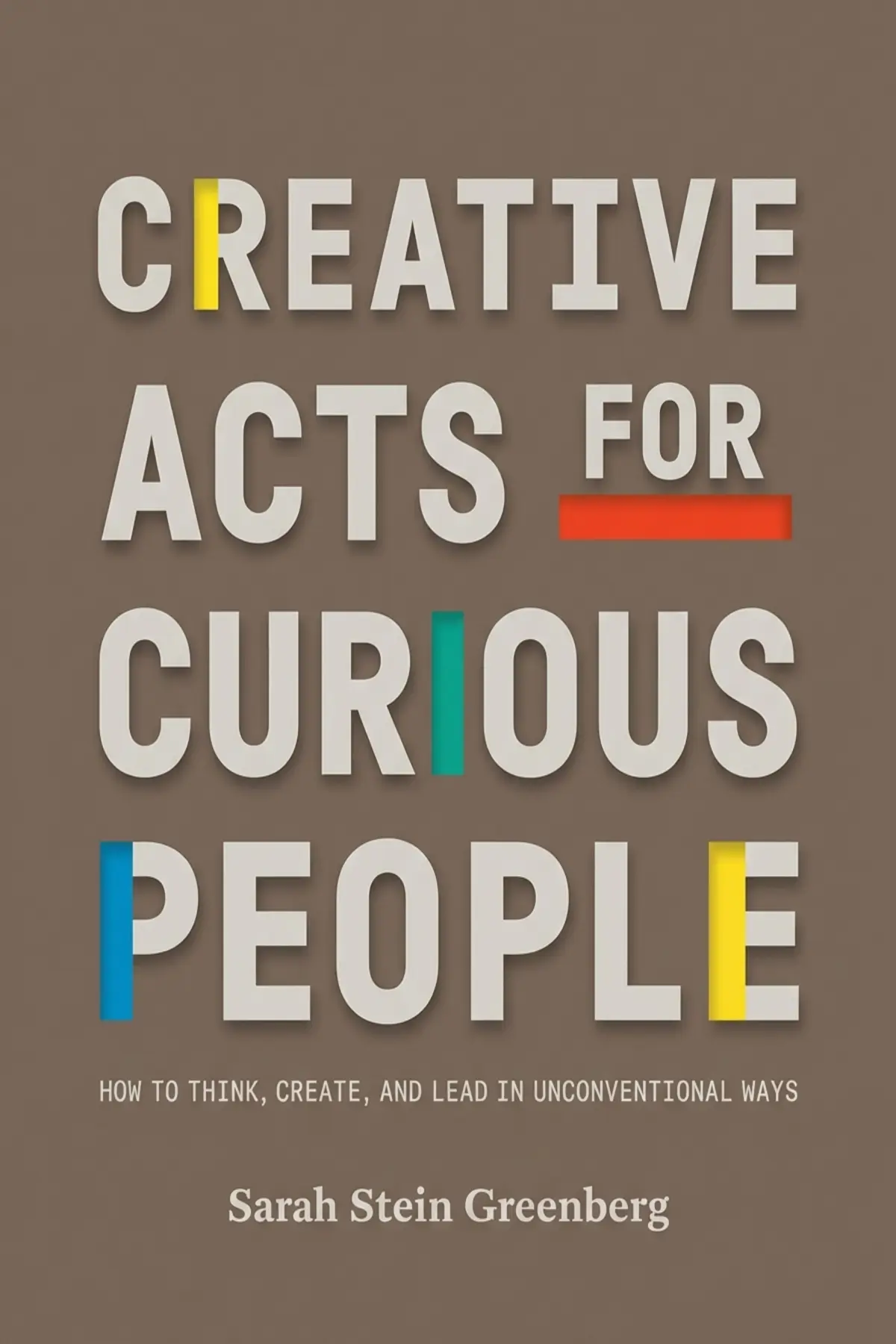
Table of Content
1. Introduction
2 min 01 sec
When you hear the word ‘design,’ what is the first image that enters your mind? Perhaps it is a sleek new smartphone, an architect’s blueprint, or a high-fashion garment on a runway. For many of us, design feels like an elite club reserved for specialists with aesthetic genius. But what if design wasn’t about how things look, but about how the world functions? At the world-renowned Stanford d.school, design is taught not as a craft for the few, but as a creative methodology for the many. It is a way of seeing the invisible threads that connect problems to solutions and a toolkit for improving the lives of others.
In our modern era, we are constantly surrounded by shifting landscapes—technological revolutions, environmental crises, and social upheaval. These aren’t just abstract headlines; they are challenges that require us to be resourceful and inventive in our daily lives. Whether you are trying to reorganize a struggling department at work, rethink your family’s morning routine, or solve a systemic issue in your neighborhood, you are engaging in the act of design. The throughline of this summary is the development of ‘creative confidence.’ This isn’t a personality trait you’re born with; it is a muscle you build through specific, intentional practices.
Throughout this exploration, we will dive into a series of assignments and insights used by Stanford faculty to help students from all backgrounds unlock their latent potential. We will look at why ‘problem-finding’ is often more important than problem-solving, how the simple act of slowing down can reveal hidden truths about our environment, and why the most frustrating moments of a project are often the precursors to your biggest wins. You’ll learn how to navigate the messy middle of a creative project and how to foster a team environment where everyone feels safe enough to be brilliant. By the time we finish, you’ll have a new perspective on your own curiosity and a roadmap for turning that curiosity into impactful action. Let’s begin by looking at the four fundamental pillars that support every creative act.
2. The Four Pillars of Creative Action
2 min 10 sec
True innovation requires more than just smart thinking. Learn why you must balance observation, logic, emotion, and physical action to achieve real-world impact.
3. The Art of Problem Finding
2 min 01 sec
Sometimes the solution is hidden because we are asking the wrong question. Explore how embracing uncertainty can lead to transformative discoveries.
4. Cultivating the Patience to See
2 min 05 sec
In a world of constant distraction, true observation is a superpower. Discover a simple exercise that will change how you perceive your surroundings.
5. Unpacking Your Data for Hidden Insights
2 min 01 sec
Collecting information is only half the battle. Learn the systematic way to digest your observations and find the ‘creative treasure’ within.
6. Mapping the Layers of Impact
2 min 15 sec
No product exists in a vacuum. Discover how to analyze the six layers of any project to understand its broader influence on the world.
7. The Power of Active Experimentation
2 min 07 sec
Stop over-planning and start doing. Learn why ‘monsoon thinking’ and rapid prototyping are the fastest ways to learn what works.
8. Fostering Psychological Safety in Teams
1 min 57 sec
Innovation dies in an atmosphere of fear. Learn how to use warm-up sequences to build the trust necessary for creative collaboration.
9. Embracing the Productive Struggle
1 min 50 sec
That feeling of wanting to quit? It’s actually a sign you’re close to a breakthrough. Discover why the ‘dip’ is essential to the creative process.
10. Conclusion
1 min 48 sec
As we reach the end of this journey through the Stanford d.school’s philosophy, let’s revisit our primary throughline: design is a mindset, not a job title. We’ve seen that true creative action is a delicate balance of logic, observation, empathy, and experimentation. By learning to slow down and ‘tether’ ourselves to the world, we discover details others miss. By ‘unpacking’ our data, we find systemic solutions instead of quick fixes. And by embracing the ‘productive struggle,’ we turn our moments of doubt into catalysts for growth.
The most important takeaway is that you have ‘creative agency.’ You are not a passive recipient of the world as it is; you are an active designer of the world as it could be. Whether you are dealing with a complex professional challenge or a simple household frustration, you now have the tools to look at the situation with fresh eyes. You can map the layers of impact, run a small experiment, and foster the trust needed to collaborate with others.
To put these ideas into immediate practice, try the ‘Learn How You Learn’ exercise. Reflect on a moment in your life—either in school or in your career—where you had a major ‘aha!’ moment. What were the conditions? Who was with you? What was the physical environment like? By identifying these five or six features that were present when you were at your most receptive, you can begin to recreate those conditions in your current work. Don’t wait for inspiration to strike by chance; design the environment that makes inspiration possible. Your curiosity is a powerful force. With these tools in hand, you are ready to turn that curiosity into acts that change the world around you. Now, go out and find a problem worth solving.
About this book
What is this book about?
Creative Acts for Curious People serves as a practical manual for anyone looking to navigate an increasingly complex world with ingenuity and confidence. While many associate design strictly with aesthetics or professional industries, this guide reframes it as a fundamental problem-solving mindset accessible to all. Drawing on the rich history and unconventional assignments of the Stanford d.school, the book provides a series of mental exercises and collaborative activities designed to sharpen your perspective and foster innovation. Through the lens of design thinking, the text explores how to integrate diverse skills—such as observation, emotional intelligence, and rapid prototyping—to address real-world issues. Whether you are leading a corporate team, organizing a local community project, or simply looking to redesign your daily habits, the promise of this work is a heightened sense of 'creative agency.' By the end of this summary, you will understand how to move past initial assumptions, build psychological safety within teams, and embrace the productive struggles that lead to meaningful breakthroughs.
Book Information
About the Author
Sarah Stein Greenberg
Sarah Stein Greenberg is the executive director of the Stanford d.school, a hub for innovation and multidisciplinary problem-solving. A recognized public speaker, she focuses on the intersections of design, business, and education. Beyond her academic role, she contributes to global sustainability as a trustee for the conservation organization Rare.
Ratings & Reviews
Ratings at a glance
What people think
Listeners find the book’s creative material appealing, with one listener mentioning it is full of various exercises and concepts. Additionally, the work is recognized for its utility, with one listener characterizing it as a treasure trove of practical wisdom. Listeners also admire the artistic and illustrative components and consider the information straightforward to put into practice.
Top reviews
Max
Wow. I didn’t realize how much my brain had actually checked out until I started working through the exercises in this treasure trove. The focus on sensory exploration, like the one-hour walk where you follow a single color, really forced me to engage with my environment in a new way. It's much more than a design book; it’s an invitation to stop overthinking and start doing. The illustrations are gorgeous and the pacing allows for a self-paced journey into your own subconscious. My only minor gripe is that some of the group-specific tasks are hard to do if you’re reading this solo, but the individual prompts more than make up for it. This is exactly the kind of push I needed to get out of my creative rut.
Show moreCamila
Ever wonder how some people just seem to have a constant stream of fresh ideas while the rest of us struggle? This book basically hands you the keys to that engine by breaking down the creative process into manageable, actionable steps. I’ve recommended this to every person I know because it shifts the focus from the outcome to the actual practice of being curious. The contour drawing and disagree and agree games are deceptively simple but incredibly powerful for changing your mental state. It made me realize I’ve been using all the wrong parts of my brain for years. While it starts a little slow, it definitely finds its stride once you commit to the doing part of the book.
Show moreEye
Picked this up because I wanted to incorporate more design thinking into my daily routine, and it has turned out to be a complete treasure trove. The sheer variety of ideas—from analyzing your fridge to shadowing students—is staggering and keeps the experience feeling fresh. It’s a how-to manual that doesn’t take itself too seriously, yet it manages to convey deep wisdom about the human experience. I loved the section on turning off your internal self-judgment, which is something I struggle with every single day. The layout is beautiful, and the prompts are easy to follow, even if they aren't always easy to execute emotionally. It’s a must-read for anyone who wants to rediscover their sense of play and wonder in a world that often feels too rigid.
Show moreEvelyn
As someone who works in a corporate environment, I was looking for a way to shake up our stale brainstorming sessions. This volume functions more like a curated manual of prompts than a traditional narrative book on design theory. Coming straight from the Stanford d.school, it carries a certain prestige that is immediately evident in the polished layout and quirky illustrations. I particularly enjoyed the contour drawing exercise as a way to lower self-judgment among my colleagues. While some of the prompts feel a bit academic or even abstract for a fast-paced office, the sheer volume of ideas makes it a worthwhile investment. It might feel a little scattered at times, but you can easily flip to any page and find a spark for your next project.
Show moreChee
This book is essentially a gym membership for your imagination, provided you are willing to actually do the heavy lifting of the assignments. The talking to strangers and shadowing exercises are uncomfortable at first, yet they yield surprisingly deep insights into how others perceive the world. I love how the activities are grouped into categories, making it easy to jump around based on your current mood or specific roadblock. To be fair, the writing style can feel a bit fragmented since it’s pulling from so many different contributors and d.school instructors. Some prompts will resonate deeply while others will feel like a total miss, but that’s the nature of a workbook. If you want a deep philosophical treatise, look elsewhere; if you want to get your hands dirty, buy this.
Show moreOksana
After hearing about this for months, I finally dived in and found it to be a refreshing antidote to creative burnout. The design-school DNA is everywhere, especially in the way it encourages learning by doing rather than just passive reading. I found the Learn How You Learn section particularly illuminating, as it helped me identify the specific environments where I’m most productive. Some of the activities are a bit out there, and I can't see myself doing them with my more traditional co-workers without some pushback. However, for a solo creator or a progressive team, there are gems here that you won't find in standard business books. It’s a fun, visual, and highly interactive experience that mostly lives up to its reputation.
Show moreDavid
Truth is, I was a bit skeptical of another creativity handbook, but Stein Greenberg’s approach is genuinely unique and grounded in the d.school’s hands-on methodology. The book is packed with assignments that force you to step outside your comfort zone, which is exactly where growth happens. I found the talkers and listeners exercise to be a fantastic tool for team bonding and improving communication dynamics. My only minor complaint is that the physical size of the book makes it a bit clunky to carry around while doing the outdoor sensory walks. Still, the quality of the content is high, and the visual design is top-notch. It’s a great resource for anyone who feels like their creative muscles have started to atrophy lately.
Show moreNiramai
Finally got around to Sarah Stein Greenberg’s guide, and I have mixed feelings about the actual implementation of these creative acts. On one hand, the research and effort that went into compiling these activities are undeniably impressive. On the other hand, it feels like the book is struggling to find its identity between being a personal journal and a professional development tool. Truth is, many of these tasks—like talking to everyone you meet on the way to the store—feel geared toward students rather than busy professionals. I struggled to see how some of these could be applied in a high-stakes leadership context without looking a bit silly. It’s a beautiful object to own, but the practical utility depends heavily on how much free time you have to play around.
Show moreChamlong
The chapter on Learn How You Learn was the highlight for me, but the rest of the book felt somewhat inconsistent in its delivery. I appreciate the vast variety of topics covered under the umbrella of creativity, but I often felt like I was being pulled in too many directions at once. Frankly, I was looking for exercises that could be more directly applicable to leadership contexts, and many of these felt a bit too artsy for that. The icebreaker about your name was a nice touch, but it’s something I’ve seen in a dozen other workshops before. It’s a solid manual if you need a quick burst of inspiration, but it doesn’t quite reach the heights of a definitive text on design thinking. Good for a browse, but maybe not a cover-to-cover read.
Show moreNan
Not what I expected given the high praise and the d.school connection, as I found the content largely impractical for real-world application. While the author is clearly an expert, the acts often felt more like collegiate icebreakers than deep creative frameworks. I was particularly frustrated by the lack of reflection on the actual philosophy of creativity, as it jumped straight into activities without much why. Look, sharing a photo of your fridge to have a stranger judge you might be fun in a classroom, but it doesn't solve complex design problems. There’s also an underlying ideological tone that isn't really defended or explained, which might alienate some readers looking for objective methodology. I’ll keep it on the shelf for the art, but I won't be using it for work.
Show moreReaders also enjoyed


AUDIO SUMMARY AVAILABLE
Listen to Creative Acts for Curious People in 15 minutes
Get the key ideas from Creative Acts for Curious People by Sarah Stein Greenberg, plus 5,000+ more titles in English and Thai.
- 5,000+ titles
- Listen as much as you want
- 7-day free trial
- Cancel anytime







