
18 min 40 sec
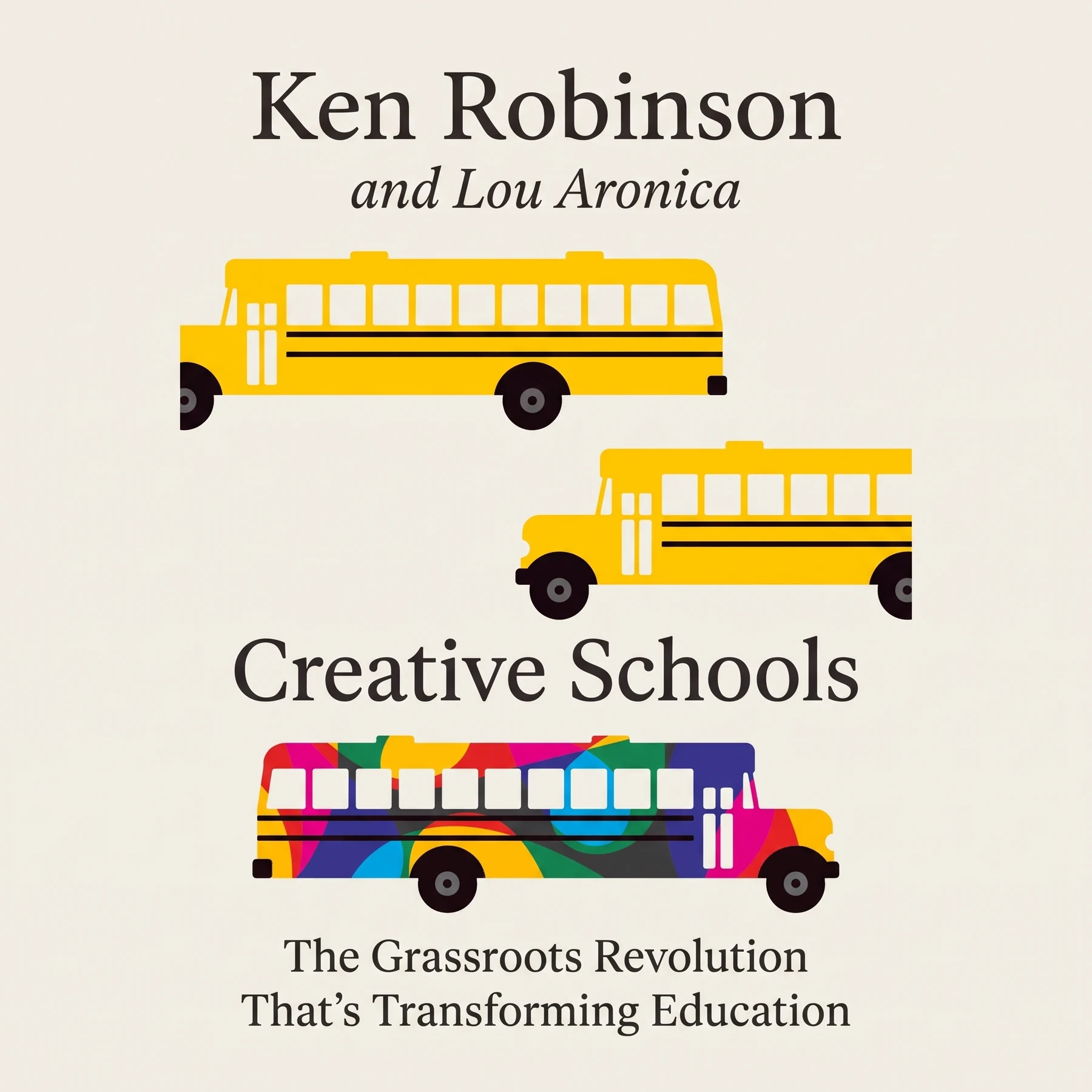
Creative Schools: The Grassroots Revolution That's Transforming Education
Creative Schools reimagines education by moving beyond the outdated industrial model toward a personalized, organic approach. It provides a roadmap for fostering creativity and essential life skills in every student.
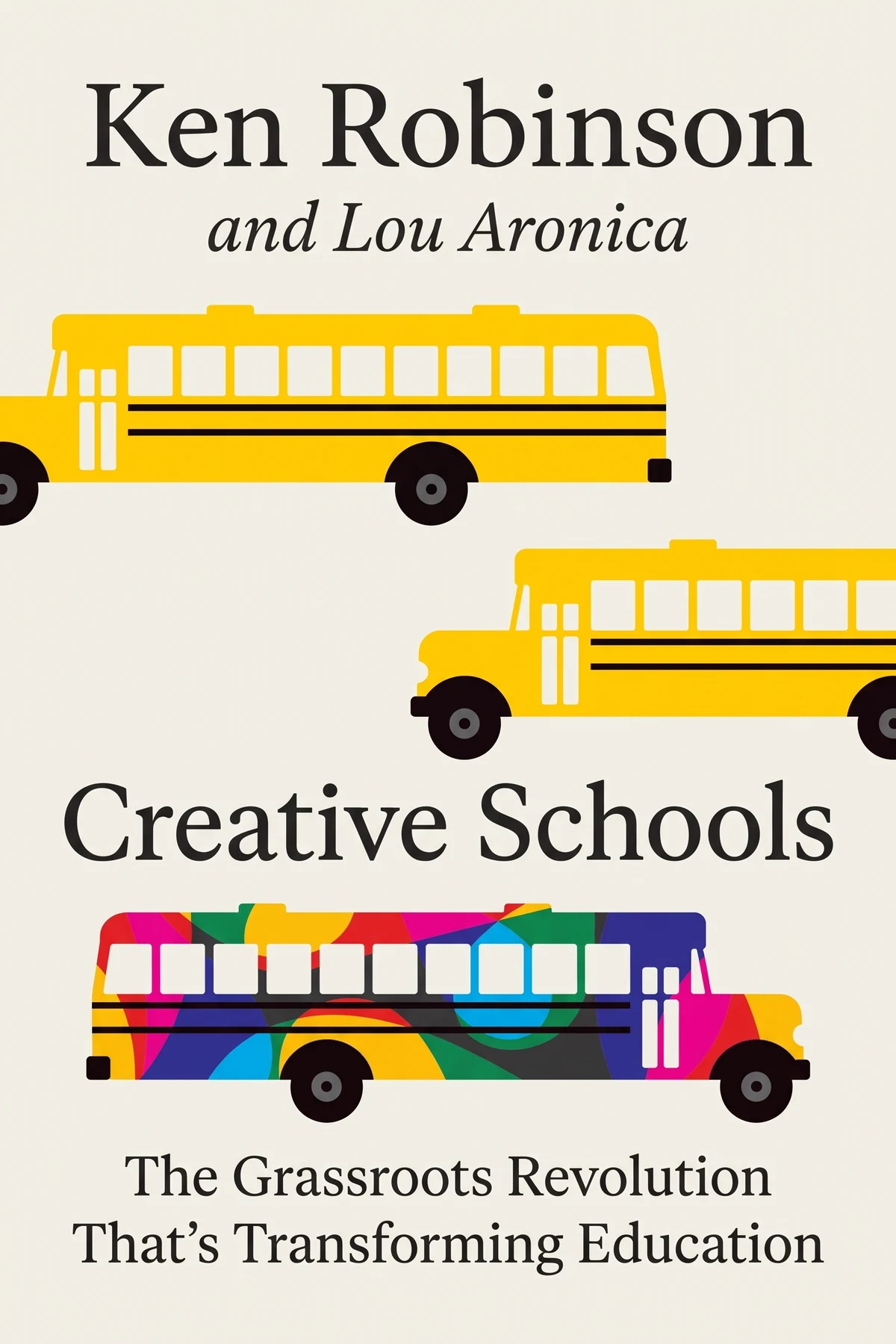
Table of Content
1. Introduction
1 min 44 sec
Every child enters the world with a natural, unquenchable thirst for knowledge. You see it in the way a toddler relentlessly asks ‘why’ or how a baby explores every object within reach. Yet, for many children, that spark begins to dim the moment they step into a formal classroom. By the time they reach high school, the joy of discovery is often replaced by the stress of testing and the boredom of rigid schedules. This raises a fundamental question: why does a system meant to cultivate the mind so often end up crushing the spirit of learning?
The answer lies in the very foundations of our modern school system. We are currently operating on an educational model that was never designed for individual flourishing. Instead, it was built to satisfy the demands of a bygone industrial era. To fix this, we need more than just minor reforms; we need a total revolution in how we think about teaching and learning.
This journey explores the concept of ‘creative schools.’ This isn’t just a buzzword for schools that prioritize the arts. Rather, it represents a shift toward a personalized, organic approach to education. It is about creating environments where teachers, students, and parents all participate in a dynamic process of growth. Over the next few sections, we will examine why the current system is broken, how we can draw inspiration from the world of organic farming, and what specific skills our children actually need to thrive in an uncertain future. We will see that when we treat students as unique individuals rather than standardized products on an assembly line, the results are nothing short of transformative.
2. The Industrial Roots of Modern Schooling
2 min 20 sec
Uncover how the 18th-century factory model still dictates how children learn today, prioritizing conformity over creativity in the modern classroom.
3. The Failure of Standardization
2 min 13 sec
Explore why treating humans like uniform products leads to disengagement, high dropout rates, and a loss of potential in the workforce.
4. Adopting an Organic Model of Education
1 min 59 sec
Learn how the principles of organic farming—health, ecology, fairness, and care—can provide a better blueprint for nurturing students’ minds.
5. The Teacher as a Gardener
2 min 09 sec
Discover how shifts in teaching philosophy, moving from lecturers to mentors, can reignite a child’s innate desire to learn and explore.
6. Foundations for the Future: The First Three Cs
2 min 20 sec
Explore the essential competencies of curiosity, creativity, and criticism that help students navigate an increasingly complex world of information.
7. Developing the Whole Person: The Final Five Cs
2 min 04 sec
Dive into the social and emotional skills—from collaboration to composure—that are necessary for personal success and a healthy society.
8. Leading the Change from the Ground Up
2 min 09 sec
See how visionary principals and collaborative policymakers can break through bureaucratic barriers to foster innovation in local schools.
9. Conclusion
1 min 42 sec
The industrial age of education has run its course. For too long, we have treated our children like raw materials in a factory, measuring success through standardized yields and uniform testing. But as we have seen, this model is fundamentally at odds with human nature. To prepare our children for a world that prizes innovation and adaptability, we must move toward an organic model—one that values the health, ecology, fairness, and care of the learning environment.
The transformation of our schools doesn’t require a miracle; it requires a shift in perspective. It starts by recognizing that teachers are gardeners of potential, and that every child possesses a unique set of talents that deserve to be nurtured. By focusing on the eight core competencies, we can equip students with the tools they need to navigate an uncertain future with curiosity and confidence. Whether you are a parent, an educator, or a concerned citizen, you have a role to play in this revolution.
As a practical first step, consider the power of peer-to-peer learning. We often forget that students are sometimes the best teachers for one another. When a student has recently mastered a difficult concept, they still remember the specific hurdles they had to overcome. By encouraging students to explain ideas to their peers, we not only reinforce their own understanding but also create a collaborative culture where everyone is a learner. The future of education isn’t found in a new set of standards or a better test—it’s found in the creative potential of every child, waiting for the right environment to bloom.
About this book
What is this book about?
The current global education system is often criticized for being a relic of the Industrial Revolution, designed to produce compliant factory workers rather than innovative thinkers. In Creative Schools, the authors argue that this standardized, one-size-fits-all approach is stifling the natural curiosity of children and failing to prepare them for a rapidly changing world. By examining the flaws of high-stakes testing and rigid curricula, the book proposes a radical shift toward a more personalized and 'organic' form of learning. This transformation isn't just about adding more art classes; it's about fundamentally changing the culture of schools. The book outlines how educators can act as gardeners rather than factory managers, nurturing the unique talents of every child. Through a set of eight core competencies—ranging from curiosity to citizenship—and real-world examples of schools that have successfully innovated, the text promises a vision where education is a journey of self-discovery. It serves as a call to action for parents, teachers, and policymakers to collaborate in building an environment where every student can flourish intellectually, socially, and emotionally.
Book Information
About the Author
Ken Robinson
Ken Robinson was an acclaimed author, international speaker, and advisor on education. He served as a professor of pedagogy at the University of Warwick and provided guidance to the UK government regarding arts in education. He is widely known for delivering the most-watched TED presentation of all time, titled How Schools Kill Creativity. Lou Aronica is a prominent American publisher and editor who has authored four novels and co-written numerous works of nonfiction.
Ratings & Reviews
Ratings at a glance
What people think
Listeners find the writing captivating and articulate, noting its depth of research and insight. They value its utility for teachers, pointing out the wealth of strategic examples and citations provided. The text champions the cultivation of creativity, which listeners view as essential, with one review highlighting its exceptional understanding of public schooling. Responses to the tempo are varied, as some listeners mention a lack of practical instructions for applying the suggested concepts.
Top reviews
Talia
Robinson really strikes a chord with his critique of the industrial education complex that treats children like widgets on an assembly line. His writing is incredibly engaging, blending a conversational tone with a sense of urgency that makes it hard to put down. I was particularly moved by how he redefines the curriculum not as a rigid checklist, but as the living expression of a school's culture. While some critics say he's light on the "how-to," I found the specific examples of innovative schools across the globe to be more than enough to spark my own ideas. This isn't just for administrators; it's a vital read for anyone who believes that curiosity and compassion should be at the heart of learning. It’s an optimistic antidote to the standardized testing obsession that has dominated our classrooms for far too long.
Show moreMint
Wow, what a refreshing perspective on the stale debates surrounding public school reform that usually focus only on test scores. This book is a passionate defense of the human spirit and an argument for why schools must evolve beyond the 19th-century factory model. Robinson argues that the goal of education is to create people who know what to do when they don’t know what to do, and that hit me hard. The examples he provides aren't just "fluff"; they are proof that alternative paths aren't just possible but are already thriving in pockets around the world. I finished this feeling energized and ready to advocate for my own children's right to a diverse and creative curriculum. It’s easily one of the most important books on social progress I’ve picked up in years.
Show moreLevi
After following Robinson’s work online for years, I was delighted to find that this book expands on his core message with a wealth of global references. He doesn't just complain about the status quo; he highlights educators who are actively pushing the envelope and reimagining what a classroom looks like. The comparison to other educational texts is striking because Robinson manages to stay optimistic without being naive about the challenges ahead. He correctly identifies that the curriculum should drive the schedule, not the other way around, which is a revolutionary concept in most districts. This book is a must-read for anyone involved in policy-making because it highlights the disconnect between what businesses say they want and what the system actually produces.
Show moreManee
Ever wonder why we still group kids by their "date of manufacture" instead of their interests or abilities? Robinson asks these tough questions with a sharp wit and a deep well of knowledge that makes Creative Schools an essential read for the modern age. He moves beyond the "standardization" trap to argue for a personalized approach that honors the unique talents of every child. The writing is punchy, the research is integrated smoothly, and the tone is one of hopeful determination rather than despair. It’s the kind of book that you’ll want to highlight and share with every parent in your neighborhood. We are living through a period of massive global change, and our schools need to start reflecting that reality if we want our kids to thrive.
Show moreGrace
Finally sat down with this one after hearing so much buzz in my faculty lounge, and I have to say it lived up to the hype regarding style. Robinson’s prose is fluid and remarkably accessible, making complex educational theories feel like common sense. The truth is, we have become so accustomed to batching students by age that we forget how arbitrary and counterproductive that practice can actually be. I loved the emphasis on personalized learning environments, though I do understand why some might find the lack of a "Step 1, Step 2" guide frustrating. To be fair, he’s trying to shift our entire philosophy rather than just provide a teaching manual. It’s a thought-provoking piece that forced me to reconsider my own pedagogy and how I foster creativity in my classroom.
Show moreElise
As a veteran teacher, I appreciate how Robinson dismantles the myth that a broad curriculum is a luxury we can no longer afford in a competitive economy. He makes a compelling case that innovation isn't just about technology; it's about fostering critical thinking and collaboration among students. The book is well-written and serves as a great bridge between abstract educational theory and the lived experiences of students who feel alienated by current norms. I did find the pacing a bit uneven in the middle sections where he lists off different school models, but the overarching message remains powerful. It’s a call to arms for educators to reclaim their profession from the bean-counters and refocus on the individual child. We need more voices like his in the conversation about where our schools go from here.
Show morePatchara
Look, this isn't a technical manual for school board members, and if you go in expecting that, you’ll likely walk away disappointed like some other reviewers. What this book actually offers is a profound shift in mindset that prioritizes the "curiosity" and "composure" of the student over standardized metrics. I found the historical context of how our schools became so rigid to be fascinating and deeply eye-opening. It provides a necessary vocabulary for parents and teachers who know something is wrong with the system but can't quite put their finger on the cause. While it's true that the book relies heavily on anecdotes, those stories serve to humanize a debate that is often far too clinical. It’s a highly readable and inspiring manifesto for change.
Show moreKrisada
The chapter discussing the Eight Core Competencies alone makes the entire purchase worthwhile for any parent or professional educator. Robinson breaks down essential skills like "Communication" and "Citizenship" in a way that feels actionable, even if the book doesn't provide a literal blueprint. I’ve been thinking a lot about his point that the basic prerequisite for effective education is cultivating a student’s enthusiasm for learning. Not gonna lie, some of the school examples felt a bit too "perfectly curated," but the underlying principles are sound and desperately needed. It's a balanced mix of research-backed insights and anecdotal evidence that makes for a very engaging read. I would have liked more focus on how to bridge the gap in low-income areas, but the overall vision is undeniably strong.
Show moreKob
The transition from watching his legendary TED talk to reading this full-length book left me feeling surprisingly conflicted about the final product. Robinson is an undisputed master of identifying the structural flaws in our current systems, and his "Eight Core Competencies" provide a fantastic framework for what a modern learner needs. However, the narrative often gets bogged down in rose-tinted anecdotes that feel more like success stories from a brochure than rigorous case studies. I kept waiting for a granular implementation plan or a deep dive into how to navigate restrictive state mandates, but those practicalities were largely missing. It’s a beautiful vision of what education could be, but it lacks the grit needed to help a teacher on the ground change their Monday morning routine.
Show moreAnna
Maybe my expectations were just too high after seeing how many people recommended this as a revolutionary text. Frankly, the book felt like a repetitive collection of abstract ideas that failed to address the harsh realities of underfunded urban schools. Robinson paints these glowing pictures of "creative schools" that seem to exist in a vacuum where budgets, parental pushback, and bureaucratic red tape simply vanish. Where are the stories of the failures or the schools that tried these methods and struggled to maintain them? It felt too much like a weekend movie script—impoverished kids, one charismatic leader, and suddenly everything is perfect. I agree that creativity is essential, but I needed more substance and less utopian dreaming to find this truly useful for my professional development.
Show moreReaders also enjoyed
AUDIO SUMMARY AVAILABLE
Listen to Creative Schools in 15 minutes
Get the key ideas from Creative Schools by Ken Robinson, plus 5,000+ more titles in English and Thai.
- 5,000+ titles
- Listen as much as you want
- 7-day free trial
- Cancel anytime







