
17 min 15 sec
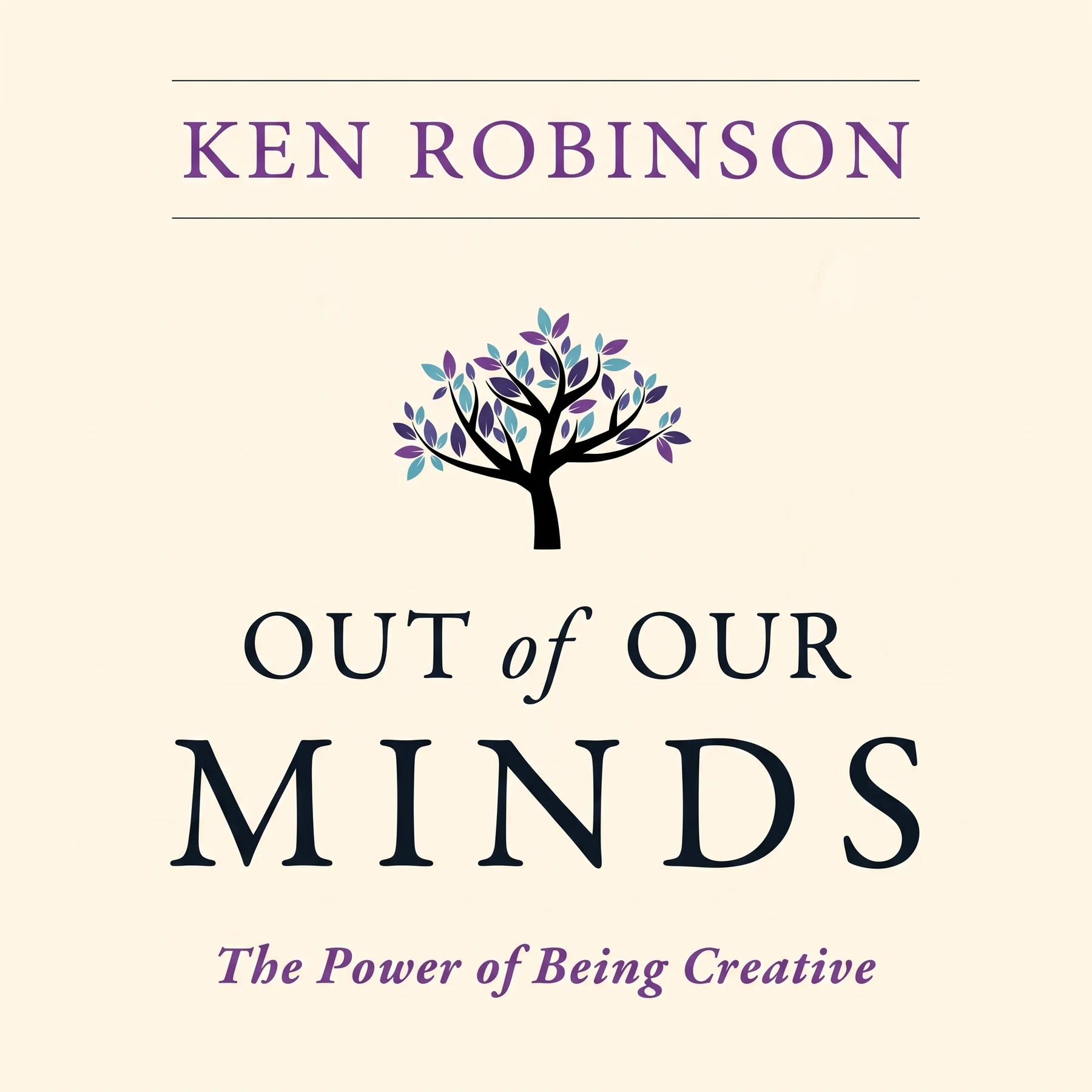
Out of Our Minds: The Power of Being Creative
By Ken Robinson
Explore how the industrial-age education system limits human potential. This summary reveals why creativity is the most vital skill for the future and how to nurture it in schools, businesses, and families.
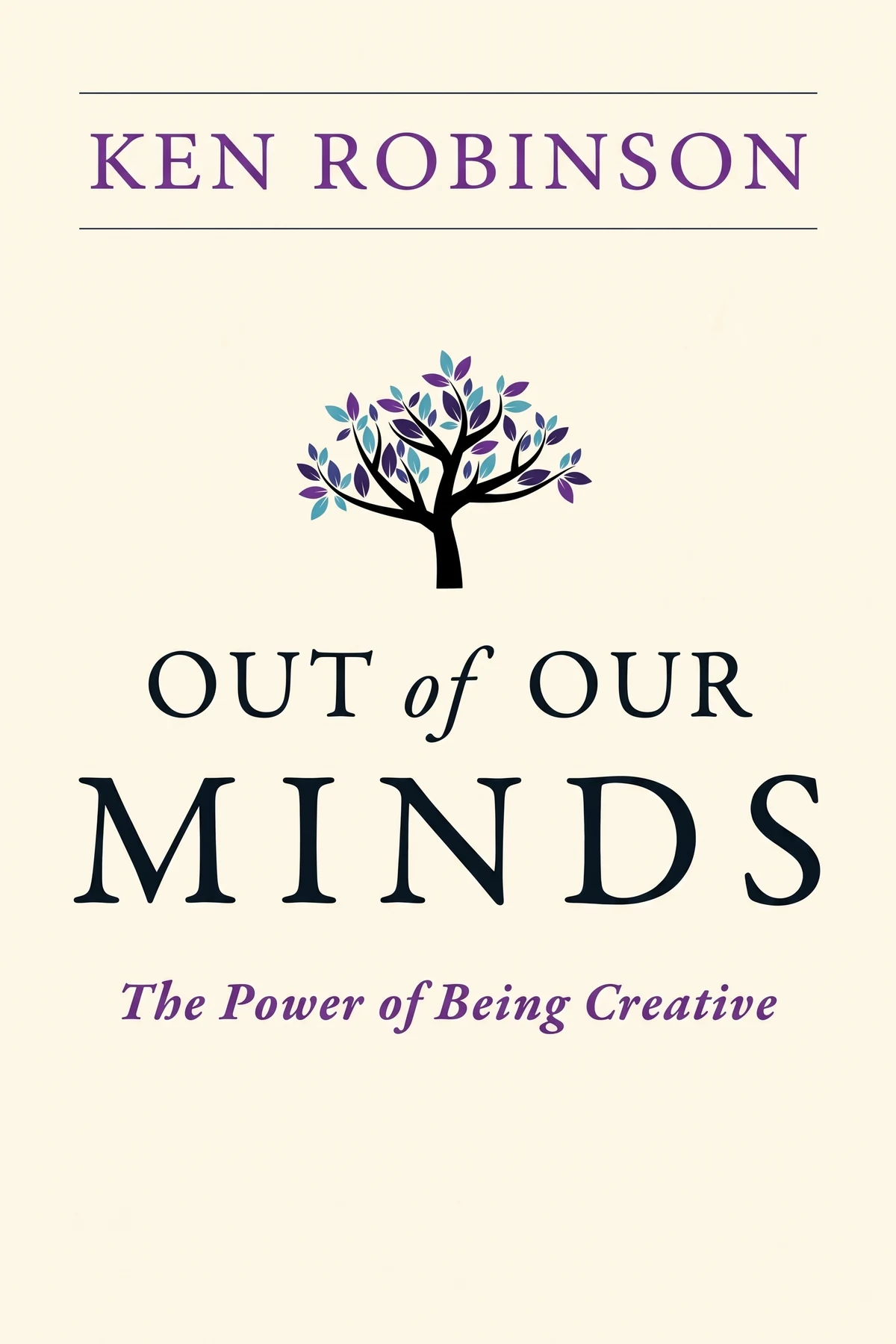
Table of Content
1. Introduction
1 min 47 sec
If you were to ask a room full of people whether they consider themselves creative, you would likely see a lot of hesitant looks and polite deflections. Many people associate the word creativity exclusively with high art—painting masterpieces, composing symphonies, or writing epic novels. Because they don’t spend their days in a studio, they assume they simply weren’t born with the creative gene. But this is a profound misunderstanding of what it means to be human. Creativity isn’t an elective skill reserved for a select few; it is a fundamental part of our nature that manifests in everything from solving a complex scientific puzzle to organizing a more efficient workflow at the office.
The real question we should be asking isn’t whether we are creative, but why so many of us feel we aren’t. As we will explore in the following segments, the answer lies in the very systems designed to prepare us for life. From the moment we enter the classroom, we are often steered away from our natural inclinations and toward a model of conformity and standardized thinking. We are taught to follow the rules and find the one ‘right’ answer, rather than exploring the infinite possibilities that our imaginations offer.
In this summary of Out of Our Minds, we are going to look at why creativity is no longer just a ‘nice to have’ skill, but an absolute necessity for survival in the modern world. We will trace the history of our current education system to understand its limitations, define what creativity actually looks like in practice, and examine how the world’s most innovative organizations are breaking the mold to stay ahead. By the end, you’ll see that reclaiming your creative capacity isn’t just about making art—it’s about learning how to adapt and thrive in an age of revolutionary change.
2. The Velocity of Modern Transformation
2 min 28 sec
Think technological progress is fast? You haven’t seen anything yet. Discover how a simple 12-hour clock reveals the staggering speed of our recent evolution.
3. The Industrial Ghost in the Classroom
2 min 20 sec
Our schools were designed for a world that no longer exists. Learn how the mid-19th century factory model still dictates how children learn today.
4. The High Cost of Standardized Thinking
2 min 13 sec
As the demand for creative leaders hits an all-time high, our schools are doubling down on test scores. See the disconnect between education and the job market.
5. Defining Creativity as Applied Imagination
2 min 18 sec
Is creativity a mystery or a process? Learn the two essential steps that turn a simple idea into a world-changing innovation.
6. Leading for Innovation, Not Control
2 min 08 sec
Managers often fear that creativity means chaos. Here is why the most innovative leaders focus on the environment rather than having all the answers.
7. The Power of Interdisciplinary Teams
2 min 14 sec
Why did Pixar succeed while others failed? Discover the secret of ‘cross-pollination’ and how it can transform your own productivity.
8. Conclusion
1 min 47 sec
As we have seen, the world is moving at a pace that our traditional systems simply weren’t built to handle. We are living in a revolutionary age, yet we are still largely relying on an educational and managerial philosophy that was designed for the steam engine and the assembly line. The disconnect between our current capabilities and our future needs is the defining challenge of our time. But the solution isn’t to work harder at the old systems—it’s to rethink them entirely.
Creativity is not a luxury. It is the core resource of the twenty-first century. It is the engine that will allow us to navigate the technological shifts and social upheavals that lie ahead. By recognizing that creativity is a universal human trait and an applied process, we can begin to nurture it in ourselves and in our institutions. This means valuing the arts as much as the sciences, fostering collaboration over competition, and trading rigid hierarchies for flexible, interdisciplinary teams.
Here’s a practical way to start applying these ideas today, especially if you have children: allow them the space to be flexible. It’s natural to want your child to pick a ‘safe’ path—to decide early on that they want to be a doctor or a lawyer and follow a straight line to get there. But life is rarely linear. A child who explores diverse interests in art, philosophy, and technology isn’t ‘lost’; they are building a multifaceted perspective that the future will prize. Encourage them to follow their own internal compass and stay open to new opportunities. In a world that is constantly being redesigned, the most valuable thing anyone can be is someone who knows how to learn, how to adapt, and how to create. It is time to step out of the old industrial mindset and reclaim the full power of our minds.
About this book
What is this book about?
Modern society is currently caught in a paradox: we live in a period of unprecedented technological and social acceleration, yet our foundational systems for learning and work are rooted in the nineteenth century. Out of Our Minds identifies the disconnect between how we are taught to think and the creative demands of the twenty-first century. It argues that creativity is not a rare gift for the few, but a fundamental human trait that has been systematically suppressed by a factory-model education system. The book provides a compelling promise: by understanding the true nature of imagination and innovation, we can transform our institutions to better serve human potential. From the history of the industrial revolution to the modern success of companies like Pixar and IDEO, the text illustrates how flexibility and interdisciplinary collaboration are the keys to thriving in an uncertain future. Whether you are a business leader looking to foster innovation, a parent concerned about your child’s schooling, or an individual seeking to reclaim your own creative spark, this summary offers a blueprint for navigating a world in flux.
Book Information
About the Author
Ken Robinson
Sir Ken Robinson was an internationally recognized authority on creative development and human resources. He held the title of Professor Emeritus of Education at the University of Warwick and served as a consultant for governments, international agencies, cultural organizations, and Fortune 500 companies. Renowned for his advocacy of education reform, his TED talks on the subject have reached a global audience of millions.
Ratings & Reviews
Ratings at a glance
What people think
Listeners find this book to be a deep investigation into creativity, with one reviewer highlighting its practical instances and up-to-date data. Furthermore, the work receives positive feedback for its wisdom, with one listener noting its pressing and relevant outlook. Listeners also appreciate its educational worth, with one mentioning the cross-functional nature of contemporary knowledge. However, listeners offer varying feedback regarding the ease of reading.
Top reviews
Aom
Ever wonder why our schools feel like assembly lines from the 1900s? Robinson’s exploration of the networking revolution versus the industrial model is nothing short of brilliant. He argues that we are still stuck in a system designed for linearity and mass production, which is why so many people feel they aren't creative. I was particularly struck by the example of a digital wristwatch having more computing power than the Apollo moon lander. It really puts the speed of technological change into perspective. This book isn't just for teachers; it is a wake-up call for anyone trying to navigate the modern world. The third edition feels incredibly timely, providing the fuel needed to challenge outdated standards in both education and corporate culture. It truly changed how I view the potential of the human mind.
Show morePrim
The chapter on 'connectomics' was a total revelation for me. Robinson dives into the work of Jeff Lichtman regarding how the brain prunes neural connections as we age. This scientific grounding adds so much weight to his argument that we are born with immense talent that simply goes uncultivated. I loved the orchestra metaphor—the idea that the human mind functions through the integration of different 'sections' rather than isolated subjects. It makes the case for arts education feel like a necessity rather than a luxury. While some might find the history of education a bit long-winded, I thought it provided essential context for why we are in this mess. This is a profound exploration of what it means to be human in a cross-functional, complex world. Every parent needs to read this.
Show moreRania
Wow, this was a dense but incredibly necessary read for anyone in management. Robinson tackles the big questions, like why businesses can't find the leaders they need despite record numbers of college graduates. He correctly identifies that our current judging format commoditizes students instead of celebrating their unique consciousness. The insights into the networking revolution versus the industrial age helped me understand why our office protocols feel so backward. I especially loved the humor he injects into the writing, like his description of academics who view their bodies merely as transport for their heads. It’s a witty, urgent, and deeply stimulating book that challenges you to think about innovation as a systematic process rather than a random stroke of luck. It has definitely made me more open to collaborative risks.
Show moreUbolrat
Picking this up after years of working in corporate training, I felt seen. Robinson’s point about how we are 'educated from the waist up' is spot on. We spend so much time focusing on the left side of the brain that we lose the intuitive, search-for-patterns style of thinking that Carl Sagan praised. The third edition includes great data on the information revolution that keeps the material feeling fresh. I found the section on how television transformed American culture to be a fascinating case study in how technology doesn't just fit into our lives—it changes our values. This book is an impassioned plea for a revolution in how we value human potential. It’s transformative, providing a clear definition of creativity that moves beyond standard cultural assumptions. I cannot recommend it highly enough for those looking for purpose.
Show morePiyanart
As someone who works in STEM, I found Robinson’s critique of our focus on 'core' subjects very thought-provoking. He doesn't say math and science aren't important, but rather that the supremacy of the deductive worldview has made our thinking sterile. He makes a compelling case for the integrated nature of knowledge. Some of the most groundbreaking work today is happening in the 'seams' between disciplines, like cognitive neuroscience. While I agree with other reviewers that the book can be repetitive if you've seen his TED talks, the written format allows him to go much deeper into the historical evolution of the school system. My only gripe is that his suggestions for change are a bit vague. It’s a great 'why' book, even if it’s a bit weak on the 'how' for those in the trenches.
Show morePor
Finally got around to reading this, and I have to say, it’s a bit of a mixed bag but mostly positive. On one hand, Robinson’s writing style is incredibly readable and his sense of humor keeps the dryer historical sections moving. On the other hand, the overlap with his online speeches is impossible to ignore. If you are a die-hard fan, you might feel like you're paying for content you've already seen for free. Still, having all the arguments about linearity and conformity laid out in one place is valuable. I particularly liked his take on how the 2008 financial crisis was a failure of creative leadership. It’s a solid 4-star read that will definitely spark some interesting conversations at your next meeting, even if you don't agree with every single conclusion he reaches.
Show moreRungrat
Robinson’s perspective on the 'neural pruning' process in infants really made me rethink my parenting style. We often try to force children into pre-canned formats of who they should become, but this book argues for a more nurturing approach to their natural talents. I loved the examples of geniuses like Picasso and Einstein who flourished despite the stifling ideas of their time. However, I do wish the book focused a bit more on how adults can reclaim their creativity rather than spending so much time on the history of school districts. It’s a bit more of a sociological study than a self-help book. Regardless, the writing is engrossing and the cross-functional insights into science and art are brilliant. It is a timely and urgent call for us to get 'out of our minds' and into our potential.
Show moreSau
Truth is, this book covers way too much territory too briefly. Robinson touches on everything from the history of Gutenberg to the 2008 financial meltdown, but the hierarchy of ideas is a bit of a mess. The headings are all formatted the same, making it difficult to distinguish between a major theme and a minor anecdote. It felt more like a series of sound bites than a cohesive academic argument. I did appreciate the message that we need to expose people to creative mediums early on, but I found myself skimming the parts I'd already read in his other books. It’s an interesting read for someone new to the subject, but if you’re looking for deep, evidence-based research, you might find this a bit light on the data side.
Show moreAlice
After hearing so much hype about Sir Ken Robinson's TED talks, I expected a practical roadmap for my classroom. To be fair, the book is written well, but it suffers from a total lack of actionable ideas. As an educator, I kept waiting for the 'how-to' section, only to find suggestions that were either wildly unrealistic or things we've been doing for decades. The prose is repetitive, often circling back to the same anecdotes he uses in his videos. If you’ve seen his presentations online, you’ve already captured the essence of his message. I found the section on school restructuring to be particularly unwieldy for public school implementation. It is a nice manifesto on why creativity matters, but it fails to provide the tools to actually foster it in a diverse, troubled classroom environment.
Show moreUbolwan
To be fair, Robinson is an engaging speaker, but this book relies way too heavily on anecdotes rather than rigorous research. For example, he uses Pixar’s internal school to argue that 'creativity loves collaboration.' However, he never actually proves that this collaborative environment led to their success; he just assumes it. I’ve read Susan Cain’s 'Quiet,' which offers a much better-researched perspective on how many creative people actually need solitude to thrive. Robinson’s claims often feel bold and loud but ultimately empty when you look for a bibliography to back them up. The title is also quite misleading. I thought I was getting a guide on how to be more creative myself, but instead, I got a long-winded history lesson on the education system. I came away feeling more frustrated than inspired.
Show moreReaders also enjoyed
AUDIO SUMMARY AVAILABLE
Listen to Out of Our Minds in 15 minutes
Get the key ideas from Out of Our Minds by Ken Robinson, plus 5,000+ more titles in English and Thai.
- 5,000+ titles
- Listen as much as you want
- 7-day free trial
- Cancel anytime







