

A Biography of Loneliness: The History of an Emotion
Fay Bound Alberti
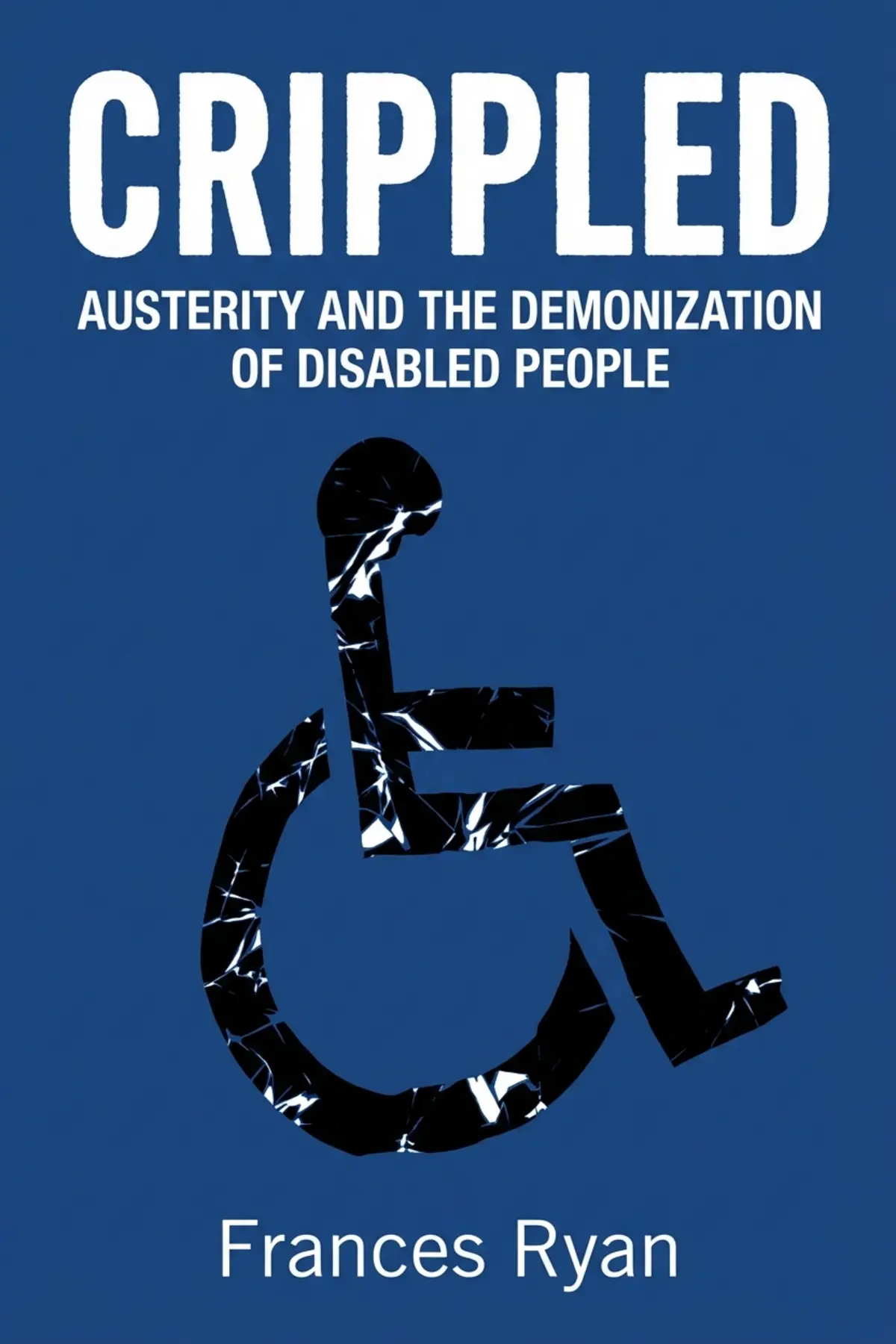
This analysis explores the harrowing consequences of UK austerity measures on disabled citizens, revealing how systemic budget cuts and harmful rhetoric have dismantled essential support systems and stripped away basic human dignity.
1 min 51 sec
In 2012, as the world watched the London Paralympic Games, the United Kingdom was hailed as a global leader in disability rights. The image presented to the international community was one of inclusion, triumph, and state-of-the-art support. Yet, beneath this polished exterior, a very different story was unfolding for the millions of disabled people living in Britain. While the government celebrated the achievements of elite athletes, it was simultaneously implementing a series of fiscal policies known as austerity that would systematically dismantle the safety net many relied on for their very survival.
This throughline of contradiction—the gap between public rhetoric and private reality—is essential to understanding the modern disabled experience in the UK. Austerity was framed as a necessary economic correction following the 2008 financial crash, a way for the nation to “live within its means.” But the reality of these cuts was far from equitable. Instead of targeting the financial institutions responsible for the economic collapse, the policy focused its edge on the welfare state. For the twelve million Britons living with disabilities, this meant an unprecedented assault on their income, their mobility, and their independence.
As we move through these insights, we will look at how a wealthy nation allowed its most vulnerable citizens to fall into state-sanctioned poverty. We will examine the human cost of these decisions through the eyes of those who have lost their homes, their health, and in some cases, their lives. This is not just a story of numbers and budgets; it is a profound look at what happens to a society’s humanity when it decides that the support of its citizens is a luxury it can no longer afford. It is an exploration of how policy becomes a tool of marginalization and why the fight for disability rights is, at its core, a fight for the fundamental right to exist with dignity.
2 min 16 sec
Discover how the 2010 transition toward austerity fundamentally altered the UK’s social fabric, leading to a situation that international observers labeled a disaster for human rights.
2 min 10 sec
Learn how the government utilized a specific narrative to turn public opinion against those receiving state support, justifying massive cuts through the illusion of widespread fraud.
2 min 16 sec
Understand why cutting benefits is particularly devastating for the disabled, as they face significant hidden costs that the non-disabled population often ignores.
2 min 01 sec
Examine the bureaucratic hurdles of the Work Capability Assessment and the tragic consequences of mislabeling individuals as able to work when they are clearly not.
2 min 06 sec
Explore why the push to get disabled people into jobs often backfires, as discrimination and lack of accessibility remain major hurdles in the professional world.
2 min 14 sec
See how the dismantling of social care services has effectively imprisoned many disabled people in their own homes, reversing years of progress in civil rights.
2 min 07 sec
Analyze why the lack of suitable housing is one of the most significant barriers to a dignified life for disabled people in the United Kingdom.
2 min 09 sec
Examine the unique challenges faced by disabled women, who often find themselves at the crossroads of multiple forms of discrimination and systemic neglect.
2 min 11 sec
Understand how the current climate of budget cuts is failing the next generation of disabled citizens, limiting their potential from a very young age.
2 min 13 sec
Reflect on what these systemic failures say about the state of British society and why a fundamental change in attitude is necessary to move forward.
1 min 50 sec
The narrative of austerity in Britain is often presented as a dry tale of spreadsheets and fiscal responsibility. But as we have seen throughout this summary, the reality on the ground is one of profound human suffering and systemic injustice. The twelve million disabled people in the United Kingdom have been subjected to an experiment in radical cost-cutting that has touched every aspect of their lives—from the food they eat and the warmth of their homes to their ability to work, move, and parent their children.
The throughline of this experience is the deliberate dismantling of a once-pioneering welfare state, replaced by a punitive system that views the vulnerable with suspicion rather than compassion. We have seen how the scrounger myth was used to manufacture consent for cruelty, and how the loss of social care has stripped away the independence that disability activists fought so hard to achieve. The stories of Jimbob, Bessie, Robert, and Louis are not outliers; they are the predictable results of a policy that prioritizes the national budget over the national character.
As we look toward the future, the message is clear: the current path is unsustainable and inhumane. The decline in living standards, the crisis in housing, and the introduction of even more complex benefit systems threaten to push the disabled community even further into the margins. However, there is also hope in the growing public recognition that this situation is unacceptable. To move forward, we must reject the rhetoric of demonization and reclaim the idea of the collective good. We must recognize that supporting disabled people is not a charitable act, but a fundamental duty of a just state. The call to action is simple but profound: we must see the humanity in our neighbors and build a society that reflects that vision. It is time to stop viewing the disabled as a problem to be solved and start seeing them as citizens with an equal right to a full, dignified, and independent life.
At its heart, this exploration investigates the devastating intersection of government policy and the lives of the United Kingdom’s disabled population. Following the 2008 financial crisis, a wave of austerity measures was introduced, ostensibly to balance the national budget. However, as this account reveals, the burden of these fiscal choices fell disproportionately on those least able to bear them. Through a combination of rigorous statistics and deeply personal stories, the narrative exposes a reality where millions are forced into poverty, isolation, and precarious living conditions. The book promises to pull back the curtain on the "demonization" of benefit recipients, showing how a manufactured narrative of fraud was used to justify the removal of vital lifelines. It examines the breakdown of social care, the crisis in accessible housing, and the specific hardships faced by disabled women and children. Ultimately, it serves as an urgent call to recognize the humanity of every citizen and demands a fundamental shift in how society supports its most vulnerable members, moving away from punishment and toward empowerment.
Dr. Frances Ryan is an acclaimed journalist, broadcaster, and dedicated campaigner known for her incisive work on disability rights. She pens a weekly column for the Guardian and received high commendation as Specialist Journalist of the Year at the 2019 National Press Awards. Recognized for her significant influence, the disability charity Shaw Trust named her one of the most influential disabled people in the United Kingdom in 2018.
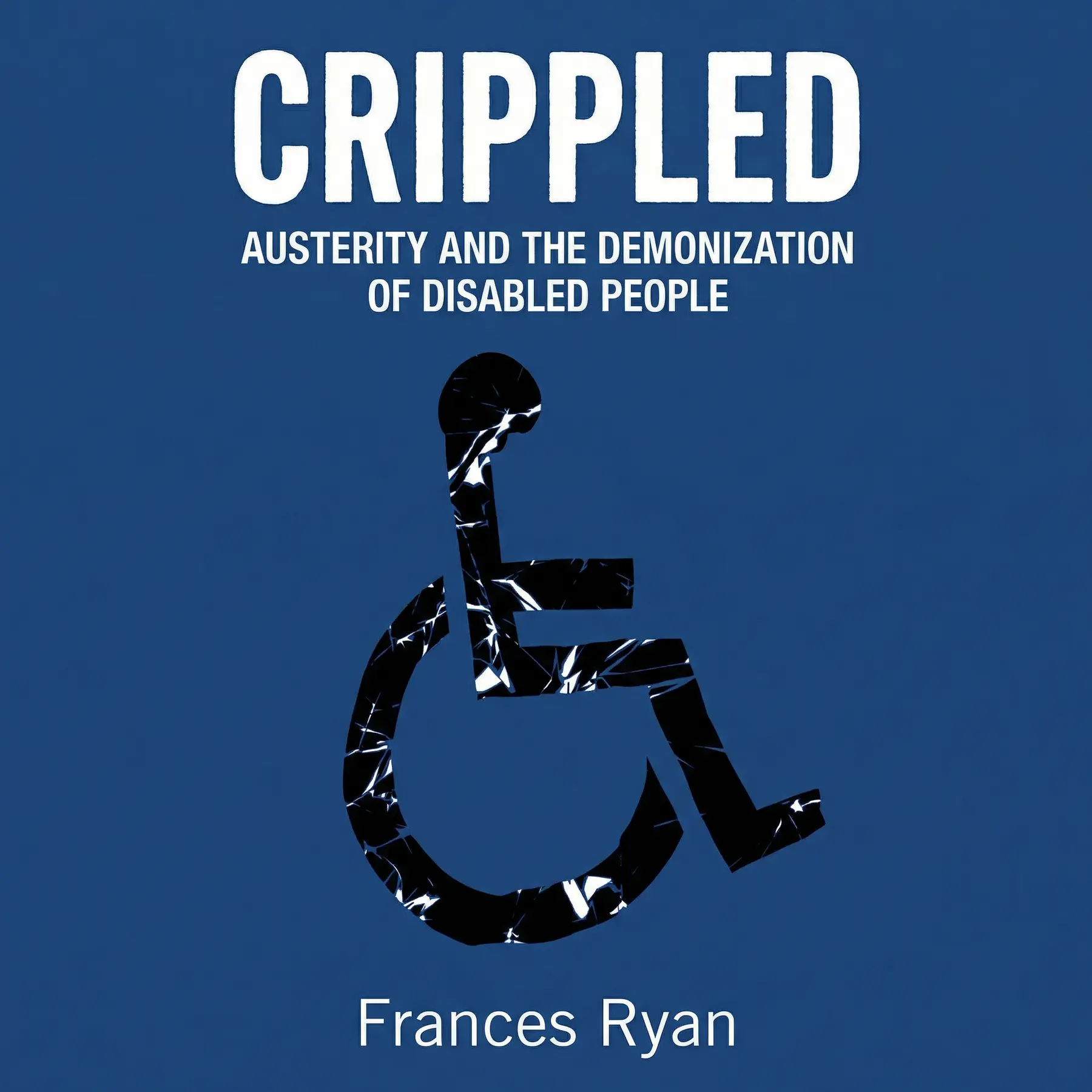
Listeners describe *Crippled* as a compelling and evocative work that offers a robust platform for the disabled community using sensitive, evidence-based journalism. They also value the way Frances Ryan merges distressing personal narratives with comprehensive research to map the catastrophic results of austerity. While perspectives differ on the level of detail in the book’s historical and political evaluation, listeners remark that it is still a vital, if agonizing, study of social inequality. Furthermore, they point out the book's success in giving life to dense statistics, with one listener commenting the stories are "hard to read but you will be thankful you did."
Wow. This is a visceral, unflinching look at the human debris left behind by a decade of UK austerity. Frances Ryan doesn’t just cite figures; she breathes life into the statistics of the 1.5 million people currently living in destitution. It is a gut-wrenching read. Every page reminds you that these aren't just 'policy failures' but active choices made by a government that prioritized tax cuts over the lives of its disabled citizens. The journalism here is top-tier, striking a perfect balance between empathetic storytelling and rigorous factual analysis. I found myself having to put the book down frequently just to breathe. It’s angry, it’s loud, and it is absolutely vital for anyone who cares about social justice in the modern age.
Show moreEver wonder how a supposedly 'civilized' nation justifies leaving its most vulnerable members to starve in silence? Ryan answers that question with chilling precision, detailing the deliberate demonization of benefit claimants that paved the way for lethal budget cuts. This book is a heavy lift emotionally, but the testimony from the disabled community is handled with such dignity and urgency. The writing is sharp and evocative, particularly when discussing the 'fit-for-work' tests that have been linked to hundreds of suicides. Truthfully, it’s hard to read about people being trapped in their own homes due to the bedroom tax without feeling a profound sense of rage. This is more than a book; it is a scream for help on behalf of millions who have been systematically silenced.
Show moreAs a disabled person, I have spent years feeling invisible, but Frances Ryan has handed our community a megaphone. She captures the sheer anxiety of the PIP assessment process perfectly—that constant, gnawing fear that your lifeline could be cut off by a bureaucrat with a clipboard. The book is incredibly well-researched, utilizing data from the Joseph Rowntree Foundation to back up the heartbreaking personal stories. It’s a painful examination of how the social safety net has been transformed into a trap. Look, the reality of disabled people being unable to afford food or basic home adaptations is a national scandal. Ryan doesn't sugarcoat the misery, and for that, I am deeply grateful. This book gives us a voice that is finally impossible to ignore.
Show moreLook, the sheer volume of research packed into these pages is staggering, yet it never feels like a dry academic text. Ryan chronicles the slow, agonizing dismantling of the welfare state with the precision of a surgeon. It is brutal. It is necessary. She highlights how the government spent more money assessing people for work than they actually saved in benefit cuts, which perfectly illustrates the 'absurdity' mentioned in the introduction. The personal stories—like the mother who had no respite care for her daughter—are what stay with you long after you close the cover. This isn't just about money; it’s about the fundamental right to exist with dignity. Every politician in the country should be forced to read this before they vote on another budget.
Show morePersonally, I think Frances Ryan has done something incredible by balancing cold, hard data with the kind of personal vignettes that stay with you. The book is a savage indictment of the 'scrounger' narrative pushed by the media. She shows how this rhetoric directly led to an increase in hate crimes and social isolation for disabled people. The sections on the housing crisis were particularly eye-opening for me, especially the fact that 93% of UK housing stock is inaccessible. It’s a staggering figure that highlights just how much of a struggle 'independent living' really is. This is a powerful, stirring account that gives a loud voice to a community that has been pushed to the absolute margins. A must-read.
Show moreFinally got through this harrowing account, and while the call-to-action in the conclusion felt a bit weak to some, the preceding chapters are essential documentation of a human rights crisis. Ryan’s ability to weave together individual testimony and systemic failure is masterful. The way she describes disabled people being forced into prostitution or destitution because of sanctions is nothing short of a horror story. I appreciated the specific focus on how women and children are uniquely impacted by these cuts, even if the analysis wasn't perfect. This book is an act of resistance. It refuses to let these stories be buried under the rug of political 'necessity.' If you want to understand the true cost of austerity, start here. You will be thankful you did, even if it leaves you feeling shaken.
Show moreAfter hearing the praise for Ryan's work, I dove in expecting a heavy read, and it certainly delivered on that front. The comparison to Owen Jones’s 'Chavs' is spot on; both books expose a calculated effort to dehumanize the working class and marginalized groups. Ryan is a gifted journalist who knows exactly how to humanize complex statistics, making the 'million people' statistic feel like a million individual tragedies. I did feel that some sections became a bit redundant, repeating the same themes of government callousness without adding new layers of political depth. However, the chapter on independent living and the loss of social care is essential reading. It’s a stirring account that demands we look closer at the cruelty of our current political landscape.
Show morePicked this up during a commute and ended up missing my stop because the vignettes were so gripping. Ryan writes with a sense of controlled fury that makes the facts pop off the page. The sheer incompetence of the private companies like Atos and Maximus is laid bare here in a way that is both informative and infuriating. While I agree with some critics that it could have delved deeper into the neoconservative roots of these policies, the human impact is what truly matters here. The book is quite accessible, avoiding overly academic jargon in favor of a clear, journalistic style. It’s a grim tour of the UK’s social security system, but a necessary one for anyone oblivious to the reality of life on benefits.
Show moreTo be fair, the content is five-star material, but the audiobook narration by Georgie Morrell made it difficult to stay engaged. The reader had a strange tendency to stress random words, which often obscured the meaning of the more complex sentences. Regarding the text itself, while the reporting is empathetic, the book feels a bit narrow in its scope. It focuses heavily on the post-2010 era without fully grappling with how capitalism itself necessitates a surplus of 'unproductive' bodies. The tone is very airado—angry—which is justified, but the repetition of the same tragedies over 250 pages started to feel a bit desensitizing. It is an important archive of a dark time, but perhaps could have been tighter in its editing.
Show moreThe chapter on women really threw me for a loop because it seemed to lean so heavily on traditional gender binaries that felt quite dated and exclusionary. While I appreciated the early vignettes and the focus on the absurdity of austerity, the analysis felt increasingly shallow as the book progressed. For example, the chapter on children focuses almost entirely on the parents, effectively erasing the actual disabled individuals from their own narratives. Frankly, Ryan’s historical perspective that 'things were okay' before 2010 is demonstrably false and ignores the long history of systemic ableism. I was hoping for a radical critique of capitalism like you find in Marta Russell’s work, but this felt more like a call for a slightly kinder welfare state. It’s disappointing given the potential.
Show moreFay Bound Alberti
Daniel Goleman
Tracy Rosenthal
Virginia Woolf
Jessica Valenti

Yanis Varoufakis
AUDIO SUMMARY AVAILABLE
Get the key ideas from Crippled by Frances Ryan, plus 5,000+ more titles in English and Thai.







