


A River in Darkness: One Man’s Escape from North Korea
Masaji Ishikawa
A powerful memoir exploring the intersection of Korean-American identity, the profound weight of grief, and the healing power of culinary tradition following the loss of a mother.
1 min 45 sec
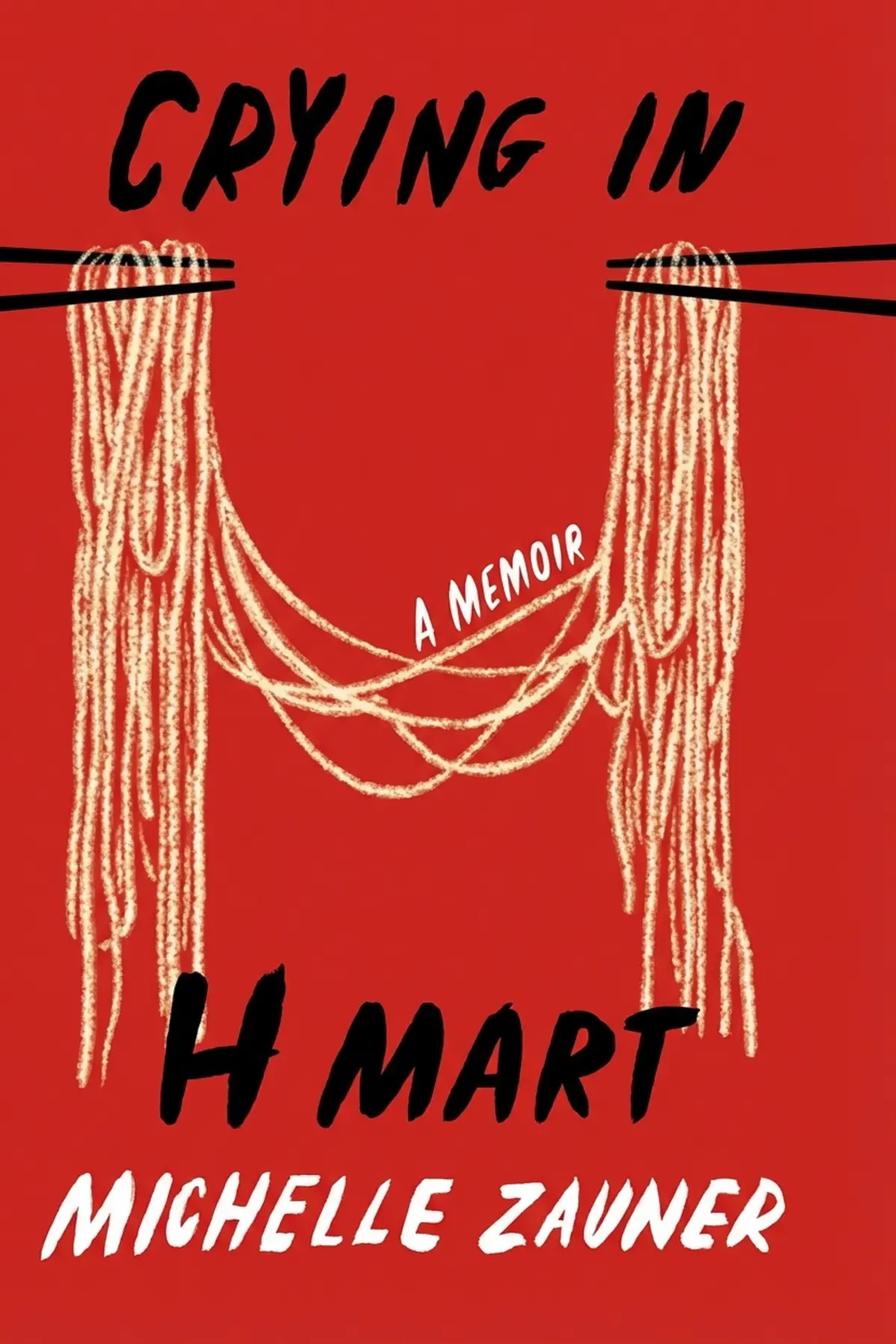
Have you ever found yourself standing in the middle of a grocery store, surrounded by the mundane sights of produce and packaging, only to be hit by a wave of emotion so strong it stops you in your tracks? For Michelle Zauner, this experience happens at H Mart, a popular Asian supermarket chain. It isn’t just a place to buy rice or seaweed; for her, it’s a living archive of her relationship with her mother.
In this narrative, we explore a journey that is as much about the palate as it is about the heart. We follow Zauner through her upbringing in the Pacific Northwest, where she often felt caught between two worlds—never quite American enough and never quite Korean enough. At the center of this world is her mother, Chongmi, a woman whose love was expressed not through flowery words, but through the precise preparation of a meal and the high expectations she held for her daughter.
As we walk through the story, we’ll see how a terminal cancer diagnosis forced a reckoning between mother and daughter, turning a rebellious young woman into a dedicated caretaker. We’ll witness how grief can be a creative catalyst, leading to the birth of the musical project Japanese Breakfast. But most importantly, we will see how food acts as a tether. Even when a person is gone, the flavors they loved, the way they chopped a vegetable, and the specific brands they trusted remain. This throughline explores how we digest loss and how we find our way back to our ancestors, one bite at a time. It is a story of love, conflict, and the enduring power of a shared heritage.
2 min 19 sec
Explore how a simple grocery trip becomes a profound search for identity and a way to navigate the heavy shadows of loss.
2 min 09 sec
Trace the evolution of a daughter’s rebellion and her search for self-expression through the alternative music scene of the Pacific Northwest.
2 min 02 sec
Witness the raw reality of a family transformed by terminal illness and the desperate attempt to find healing through devotion.
2 min 07 sec
Observe the poignant race to create lasting memories through a final trip and a wedding planned in the shadow of the end.
2 min 07 sec
Follow the journey of how a daughter’s mourning led to a breakthrough musical career and a final homecoming in Seoul.
1 min 25 sec
The story of Michelle and Chongmi Zauner is one of fermentation. Much like the kimchi that defines Korean cuisine, their relationship required time, pressure, and a breakdown of its original form to become something new and enduring. The journey from the aisles of H Mart to the stages of Seoul reveals that identity is not something we simply inherit; it is something we actively maintain through the rituals we keep and the stories we tell.
In the end, we see that grief does not have to be a dead end. For Michelle, it was a gateway to understanding her mother’s life as a complete person, rather than just a parent. By embracing the flavors, the music, and the culture that her mother cherished, she found a way to bridge the gap between the living and the dead.
What can we take away from this? Perhaps it’s the realization that our connections to our roots are often found in the most mundane places—a specific brand of tea, the way we season a soup, or the songs we sing when no one is listening. If you find yourself near an H Mart, or any place that reminds you of where you come from, take a moment to look closer. Taste the food, watch the people, and remember that the people we love are never truly gone as long as we continue to nourish the parts of ourselves they helped create. Through food and memory, we can always find our way home.
This memoir chronicles the life of Michelle Zauner, the creative force behind the musical project Japanese Breakfast. It is a deeply personal exploration of her complicated relationship with her mother, Chongmi, and the devastating impact of her mother’s battle with terminal cancer. The narrative moves between the quiet forests of Oregon and the vibrant streets of Seoul, using food as the primary lens through which Zauner examines her heritage and her sorrow. Listeners will journey through the highs of musical discovery and the lows of caregiving, witnessing how a daughter attempts to reclaim her identity after the person who defined it most clearly is gone. It is a story about the endurance of cultural bonds, the specific rituals of mourning, and how the art we create can serve as a bridge to those we have lost. Ultimately, it promises a raw look at the transformative power of memory and the flavors that keep us connected to our roots.
Michelle Zauner is a celebrated singer and guitarist, best known for her dreamy, shoegaze-inspired music created under the name Japanese Breakfast. Her acclaimed albums, Psychopomp and Soft Sounds from Another Planet, earned her international praise and established her as a unique voice in the indie music scene. Her literary debut, Crying in H Mart, achieved massive success, remaining on the New York Times best-seller list for over a year.
Listeners find this memoir heart-wrenching and beautifully composed, with one listener remarking on how the author’s unfiltered storytelling pulls them directly into her childhood home. Furthermore, the book earns praise for its moving tribute to mother-daughter bonds and its culinary focus, with one listener highlighting how food acts as a cohesive force. Additionally, listeners appreciate its accessibility, with one noting its suitability for teenagers and 22-year-olds, while another describes how the narrative fully immerses them in the moment.
Michelle Zauner’s prose cuts straight to the bone with a surgical precision that most seasoned novelists would envy. This isn’t just a memoir about losing a parent; it is a sensory exploration of how flavor and scent tether us to a heritage we sometimes try to outrun. I found myself sobbing over descriptions of doenjang jjigae, not because I know the dish, but because I know that desperation to hold onto a fading connection. The way she bridges her life as a musician with the quiet, devastating reality of her mother’s chemo treatments is nothing short of masterfully executed. While the pacing occasionally stutters during the middle chapters, the emotional payoff is absolutely overwhelming. You don’t need to be a fan of Japanese Breakfast to feel the weight of every sentence in this beautiful tribute.
Show moreWow. I wasn’t expecting a memoir about terminal illness to be this vibrant, yet Zauner manages to infuse even the bleakest hospital scenes with a strange, pulsing life. She doesn’t shy away from the "ugly" parts of caregiving—the resentment, the exhaustion, and the petty arguments that happen even when someone is dying. The chapter involving the friend Kye trying to convert her mother while she was semi-conscious made my blood boil, which shows how immersive the writing truly is. It felt like I was sitting right there in the kitchen, watching the fermentation process of her grief. It’s heart-wrenching, yes, but it’s also a deeply necessary meditation on what we owe the people who raised us.
Show moreEver wonder how a simple grocery trip can turn into a spiritual experience? That is exactly what this book explores, turning the aisles of H Mart into a cathedral for the bereaved and the hungry. Zauner’s ability to weave together the intricate steps of making jatjuk with the heavy, leaden reality of her mother’s stage IV diagnosis is stunning. I felt like an intruder in her childhood home, witnessing moments of intense privacy that were both uncomfortable and deeply humanizing. The book perfectly captures the transition from being a rebellious teen to becoming the primary caretaker for the person you once tried so hard to escape. It’s a love story to a mother who was difficult to love, and that makes it all the more authentic.
Show moreNo one prepares you for the way grief changes your relationship with your own body and the things you consume. Michelle Zauner’s journey through the stages of her mother’s illness is rendered with such terrifying clarity that I had to put the book down several times just to breathe. It’s a beautiful tribute that refuses to sanitize the person it’s honoring, presenting her mother as a complex, often harsh woman who loved through high standards and hot soup. The scenes in Seoul are particularly transportive, capturing the sights and sounds of a culture that the author is desperately trying to memorize before it’s too late. If you’re looking for a cathartic cry, this is the gold standard of modern memoirs.
Show moreAs someone who also grew up in a household where food was the only consistent love language, this hit me like a freight train. Zauner manages to articulate that specific brand of maternal love that is both smothering and life-sustaining, all while navigating the brutal landscape of palliative care. The book serves as a powerful reminder that we don't just inherit DNA; we inherit recipes, tastes, and the heavy burden of cultural expectations. While some might find the detailed descriptions of medical decline to be too much, I think that raw honesty is exactly what makes the story so resonant. It’s a gorgeous, devastating, and ultimately healing piece of work.
Show morePicked this up after seeing it all over social media, and I have to say, the hype is mostly justified. Zauner captures that specific, agonizing dissonance of being "not Korean enough" for the locals but "too Asian" for her peers in Oregon with incredible clarity. The food isn't just a gimmick; it’s the primary dialect spoken between a mother who didn't know how to say "I love you" and a daughter who was still finding her voice. My only real gripe is that the author’s father feels like a ghost in his own house, overshadowed by the intense, often volatile gravity of the mother. It’s a messy, unflinching look at a relationship that was as much about friction as it was about devotion.
Show moreAfter hearing all the buzz about this being the "best book of the year," I went in with a healthy dose of skepticism. To my surprise, the writing is remarkably accessible and lacks the pretentious "artist" tone I feared might come from a successful indie musician. It’s a very readable, linear account that feels particularly poignant for anyone in their twenties or thirties grappling with the mortality of their parents. I did feel like the section about her wedding was a bit rushed, especially considering the weight she placed on her mother being there for the ceremony. Still, the way she uses food as a unifying force to reclaim her identity is something that will stay with me for a long time.
Show moreNot what I expected from a "celebrity memoir," as it lacks the glossy, self-congratulatory veneer that usually plagues the genre. Instead, it’s a gritty and sometimes painful look at the American immigrant experience and the culinary threads that hold families together across oceans. I loved the focus on the mundane details of Korean cooking, though I think the book would have been even stronger as a collection of standalone essays. Some of the transitions between her time in the band and her time in the kitchen felt a bit clunky and disjointed. Despite that, the emotional honesty is palpable, and it perfectly captures that feeling of being unmoored after the death of the person who most defined your world.
Show moreFrankly, I found myself conflicted throughout most of this reading experience. On one hand, the descriptions of Korean cuisine are so evocative they practically leap off the page and demand you go find a bowl of kimchi. However, the central relationship between Michelle and her mother felt incredibly draining, bordering on what many would define as emotionally damaging or even abusive. Zauner seems to acknowledge this, yet she often reverts to a self-flagellating tone that makes the narrative feel a bit repetitive and stuck in a loop of guilt. It’s a raw, honest account of grief, but the lack of deeper psychological interrogation regarding her mother’s behavior left me feeling more exhausted than moved. Good, but perhaps too close to the trauma for the author to see it clearly yet.
Show moreThe truth is, I struggled to connect with the author's voice, which often came across as quite juvenile and self-absorbed. While I sympathize deeply with the pain of losing a parent at a young age, the way she described her interactions with her boyfriend—essentially wearing him down until he agreed to a quick wedding—was deeply uncomfortable to read. There’s a certain "only child energy" here that makes it difficult to empathize when she lashes out at those trying to help, like the caregivers or her own father. The descriptions of food are the only reason I finished the book, as they provided a much-needed reprieve from the constant, unexamined angst of the narrative. It felt more like a private therapy journal than a polished memoir intended for a general audience.
Show moreMasaji Ishikawa

Ben Macintyre


James Shapiro



Ben Macintyre

Jacinda Ardern

Ron Chernow
AUDIO SUMMARY AVAILABLE
Get the key ideas from Crying in H Mart by Michelle Zauner, plus 5,000+ more titles in English and Thai.







