
14 min 22 sec
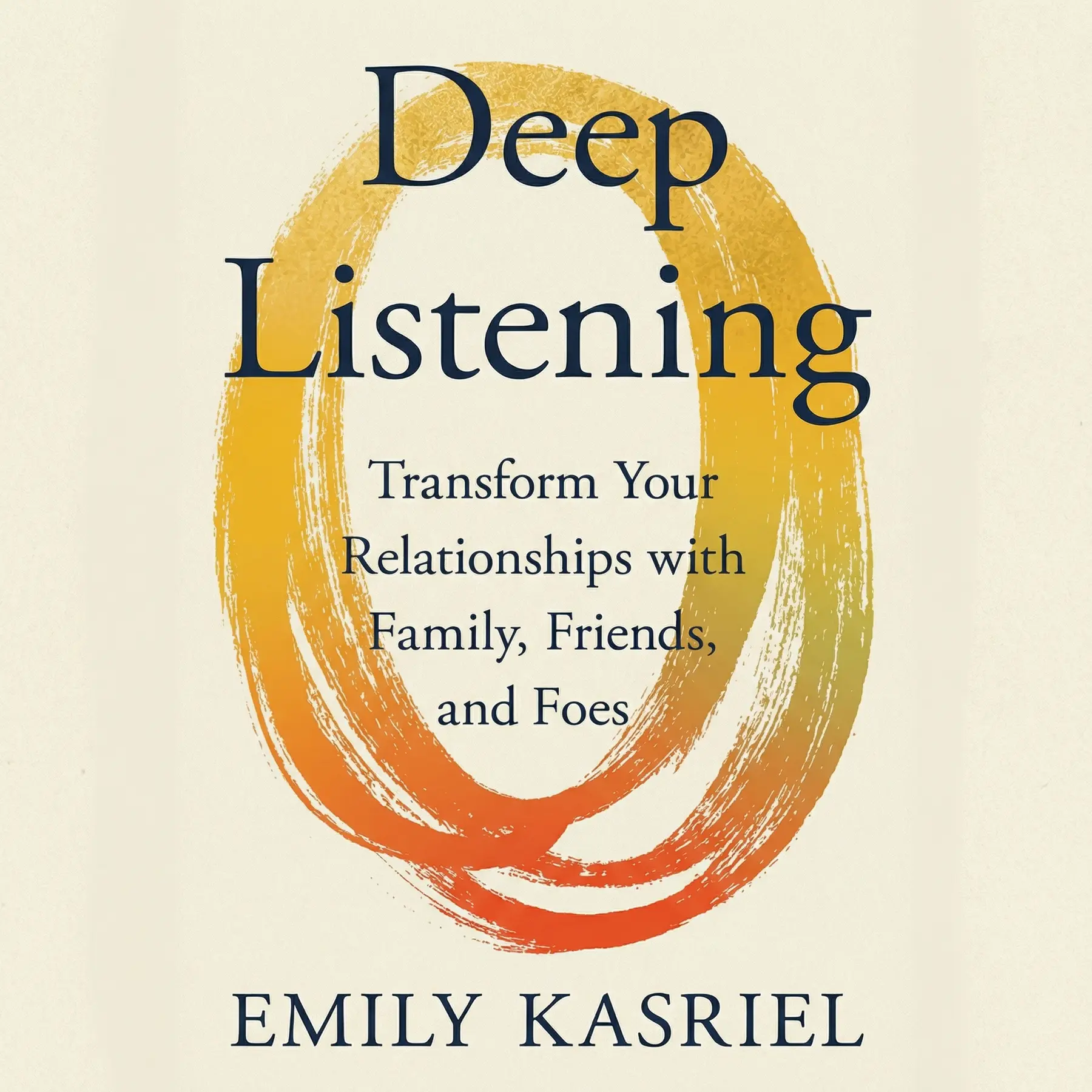
Deep Listening: Transform Your Relationships with Family, Friends, and Foes
Deep Listening explores the profound power of attentive hearing. It provides a structured path to bridge divides and foster deeper human connections through empathy, silence, and intentional presence in every conversation.
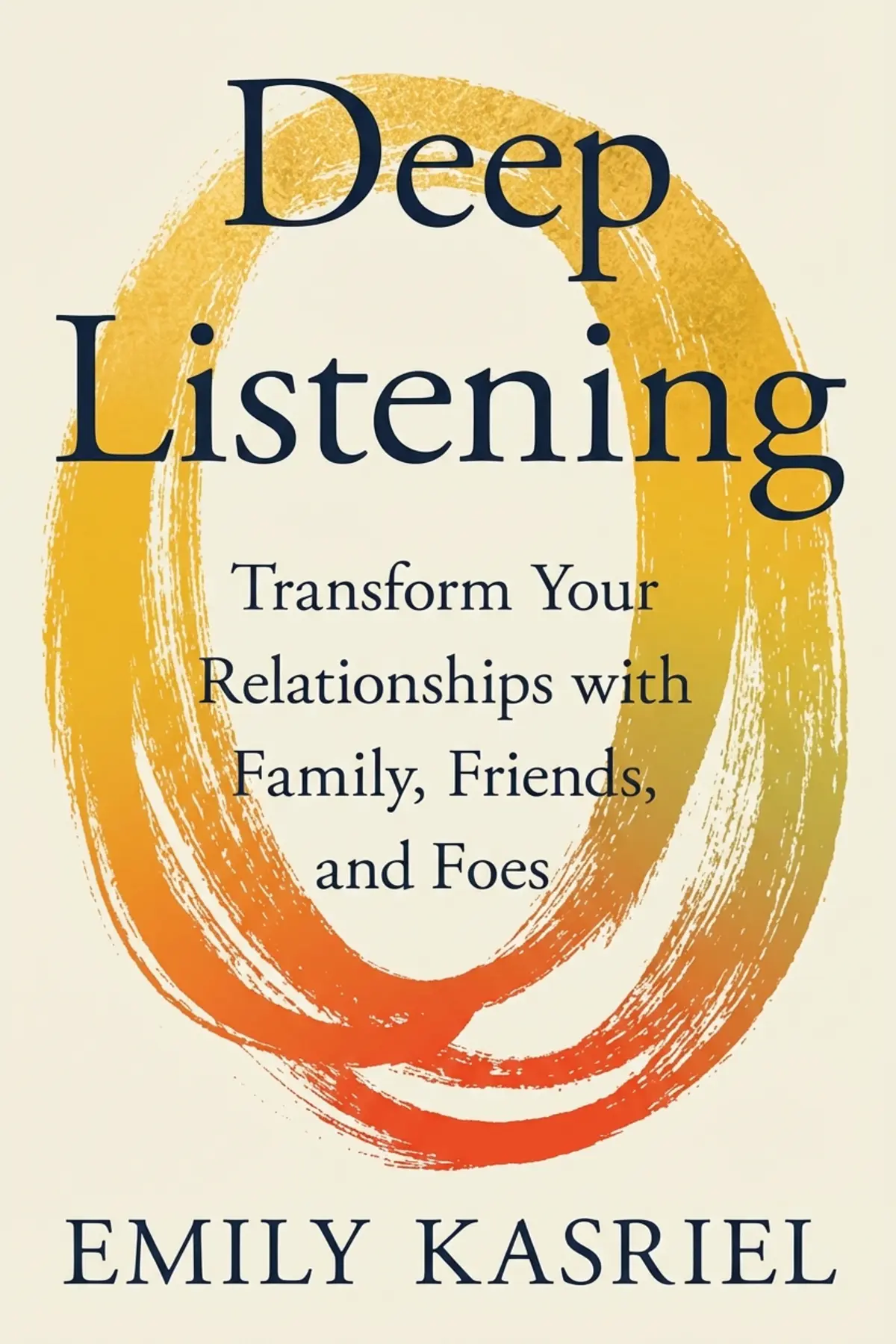
Table of Content
1. Introduction
1 min 54 sec
Imagine a moment of extreme tension during a period of massive political transition in South Africa. A large, frustrated group of former combatants had gathered outside the primary administrative buildings in Pretoria. They felt ignored and abandoned by the changing tides of government, and their anger was reaching a boiling point. The potential for violence was heavy in the air.
Nelson Mandela walked into this volatile scene. He didn’t use a megaphone to demand order or shout over the crowd. Instead, he moved among them with a quiet, steady resolve. He didn’t just talk; he asked questions and, most importantly, he stopped to really hear what the men had to say. As he listened, the temperature of the crowd began to drop. The men felt seen. By the time he finally stood to speak, the atmosphere had shifted from one of potential riot to one of mutual respect. This is the staggering power of listening that goes beneath the surface.
Most of us live under the illusion that we are already competent listeners. After all, we hear the words people say. But true listening—the kind that shifts dynamics and heals relationships—is a rare and deliberate practice. We often fall into the trap of preparing our counter-arguments while the other person is still speaking, or we rush to offer solutions because their pain makes us uncomfortable. We might even finish their sentences, assuming we already know where they’re going.
This discussion will explore the art of deep listening. It’s a method rooted in empathy, designed to bridge the gaps between ourselves and others, whether they are loved ones or total strangers with opposing views. We will look at how to build an internal and external environment that invites honesty, how to stay present when our instincts tell us to check out, and how to use the quiet tools of silence and reflection to transform our interactions. By the end, you’ll see how being a better listener isn’t just a gift you give to others; it’s a way to deepen your own understanding of the world.
2. The Architecture of Attention
2 min 20 sec
Before a single word is spoken, the physical and internal environment you build determines whether a conversation will flourish or fail.
3. Presence as an Active Choice
2 min 16 sec
Staying truly present requires more than just silence; it involves a conscious effort to ground yourself and approach the other person with genuine wonder.
4. The Power of the Gaze and the Silence
2 min 08 sec
Communication happens in the gaps between words; learn to use your eyes and the quiet moments to build trust and depth.
5. Reflecting and Deepening the Narrative
2 min 11 sec
By acting as a gentle mirror, you can help others clarify their own thoughts and reach insights they didn’t know were there.
6. The Ethical Boundaries of Listening
2 min 10 sec
Deep listening is a powerful gift, but it must be practiced with a sense of responsibility and self-care to be sustainable.
7. Conclusion
1 min 23 sec
We’ve explored the eight-step journey of deep listening, from the initial preparation of our physical and mental environments to the nuanced art of holding silence and reflecting meaning. What binds all these steps together is a commitment to the humanity of the person in front of us. Whether you are dealing with a difficult colleague, a distant teenager, or a stranger with radically different political views, the act of listening deeply offers a path toward a shared understanding that is often lost in our noisy world.
Deep listening isn’t about winning an argument or even necessarily reaching an agreement. It’s about ensuring that another human being feels seen and heard in their fullest complexity. This simple yet profound shift can de-escalate conflicts, spark creativity, and build a sense of community where there was once only isolation.
As you move forward, try starting small. Pick one conversation today where you decide to be fully present. Leave your phone in another room. When the other person finishes a sentence, count to three before you respond. Notice how that small bit of silence changes the rhythm of the talk. Notice if they share something they wouldn’t have otherwise. Deep listening is a muscle that grows stronger with use. Each time you choose curiosity over judgment and presence over distraction, you are helping to build a more empathetic and connected world—one conversation at a time.
About this book
What is this book about?
This summary explores a transformative approach to communication that goes beyond simply hearing words. In an era of increasing polarization and digital distraction, the ability to truly connect with others has become a rare and vital skill. The book introduces a framework designed to help individuals navigate high-stakes conversations with family, friends, and even those they consider adversaries. Readers will learn how to create safe environments for open dialogue, manage their own internal emotional triggers, and use techniques like reflective mirroring and intentional silence to unlock deeper insights. By shifting from a mindset of judgment and reaction to one of curiosity and presence, you can help others feel safe enough to share their truest thoughts. Ultimately, this approach promises to enhance emotional well-being, strengthen professional relationships, and provide the tools necessary to foster understanding in a divided world.
Book Information
About the Author
Emily Kasriel
Emily Kasriel is an accomplished journalist and former senior BBC executive with a career spanning over two decades and five continents. She refined her deep listening methodology during her tenure as a Senior Visiting Research Fellow at King’s College Policy Institute. Her expertise is further informed by her roles as an accredited executive coach and workplace mediator. Kasriel has held prestigious fellowships at the London School of Economics and Oxford’s Saïd Business School and currently contributes to the field as a visiting scholar at Columbia University.
Ratings & Reviews
Ratings at a glance
What people think
Listeners view Deep Listening as an applicable and current manual for developing deep relationships across personal and professional environments. Even though some find certain sections repetitive or overly simple, they value the concrete eight-step system created to transform passive hearing into active engagement. They also point to the beneficial chapter summaries and activities, with one listener remarking that the guide serves as a handy "toolbox" for handling challenging interactions. Furthermore, listeners appreciate the wide range of stories showing how being still and staying curious can mend friction and encourage empathy.
Top reviews
Cameron
Ever wonder why some people just seem to command a room without saying much at all? Kasriel opens with a powerful anecdote about Nelson Mandela that perfectly illustrates the concept of "quiet power." This book completely shifted my perspective on what it means to be an active participant in a conversation. It’s not about having the perfect rebuttal or even being the smartest person in the room; it’s about creating a "holding space" for others, a concept that feels increasingly rare in our distracted, digital age. I loved the emphasis on stillness. The idea that silence isn't a void to be filled, but a tool to be used, is profound. The scripts provided really helped me find my "listening sea legs" during a particularly difficult family gathering last week. It’s a beautiful, timely reminder that empathy is a discipline that requires constant practice and a humble heart.
Show moreRafael
As a manager struggling to bridge the gap between conflicting departments, I found this to be an essential read for modern leadership. Kasriel’s focus on curiosity over judgment is exactly what is missing from most workplace cultures today. The book doesn't just tell you to listen; it gives you a structured eight-step framework to follow, which is vital when you're in the heat of a disagreement. I was particularly struck by the section on boundaries and the realization that listening isn't a limitless duty. You have to take care of your own capacity first, or you’ll just end up drained and resentful. This balanced approach makes the advice feel much more sustainable and realistic than other books on communication. It’s transformed the way I approach one-on-ones with my staff. Truly great stuff.
Show moreSue
Not what I expected, but exactly what I needed in this polarized political climate where everyone seems to be shouting. Kasriel makes a compelling case for listening as a social necessity and a way to counteract the "noisy" world we live in. I was fascinated by the idea of "internal space" and how our own suppressed resentments can hijack our ability to hear others. The eight steps are easy to remember and provide a clear path forward when you find yourself in a defensive headspace. By offering our full attention without rushing to judge, we create these rare pockets of understanding that are so lacking today. This isn't just a book about being "nice"; it's about the discipline required to build a more cohesive society. Truly a heartfelt and necessary appeal that I will be recommending to everyone.
Show moreZoe
Finally got around to reading this, and I’m so glad I did because it has already improved my relationship with my teenage daughter. I realized that my "listening" was actually just me waiting for her to stop talking so I could give her advice she didn't ask for. Kasriel’s suggestion to value silence and allow for pauses has been a game-changer for our evening chats. The reflection prompts—like saying "I sense that..."—felt a bit forced at first, but they really do help clarify the underlying emotions. It’s a richly detailed primer that balances theory with very practical scripts and exercises. Even though it's a bit repetitive in the middle, the core message is so vital that it’s worth the read. I’d recommend it to anyone who feels like they’re losing touch with the people they care about most.
Show moreSurasit
This book offers a very practical "toolbox" for anyone looking to navigate those tricky, high-stakes conversations that we all dread. Emily Kasriel breaks her method down into eight distinct steps, which makes what could be an abstract concept feel grounded and achievable. I particularly appreciated the summaries and exercises at the end of each chapter because they allow for immediate practice rather than just theoretical understanding. While some of the advice regarding putting your phone away feels a bit obvious for a modern audience, the focus on curiosity and presence is genuinely insightful. We often forget that listening is a physical act that requires stillness and a quiet mind to be truly effective. It’s a solid resource for improving personal connections, even if it feels a little repetitive in the middle sections. Truth is, most of us are just waiting for our turn to speak, and this serves as a much-needed course correction.
Show morePisit
The chapter on stillness was the standout for me, specifically the idea of holding a "gentle gaze" rather than an interrogative stare. As someone who works in a high-pressure corporate environment, the application of these eight steps to professional life is incredibly clear. Kasriel argues that deep listening fosters trust and better decision-making, and I’ve already seen a shift in my team meetings by applying her reflection techniques. Frankly, echoing back what someone has said feels a bit awkward at first, but it really does open up new layers of thought. The book does a great job of explaining how to acknowledge your own internal "shadows" and biases before entering a dialogue. It’s a useful guide, though I do agree with other reviewers that it can feel a bit transactional at times. Still, the practical takeaways far outweigh the few moments of repetitive prose.
Show moreOtt
Picked this up during a giveaway, and while it started strong, it definitely struggled to maintain my attention throughout the entire second half. There is a lot of helpful information here, but much of it felt like common sense repackaged in a very "worthy" and slightly over-egged tone. I appreciated the grounding techniques, like planting your feet on the floor, which were practical additions to the theory. However, the book tends to reiterate the same three or four points in slightly different forms, which made the reading experience feel a bit circular. It’s a good primer for someone who has never thought about their communication style, but seasoned readers of self-help might find it a bit thin. In my experience, the exercises are the most valuable part, so don't skip those if you decide to dive in.
Show morePla
Look, Kasriel clearly knows her stuff, but if you’ve already read David Brooks or Charles Duhigg this year, you might feel a sense of déjà vu. I happened to be reading a book on the "attention economy" at the same time, and the overlap in studies and references to Carl Rogers was almost constant. While this book is more specifically focused on the how-to of listening, it does feel a bit "thin" when compared to more academic or research-heavy texts. The eight steps are logical and the chapter summaries are helpful for quick reference, but the writing style can be a bit dry in places. It’s a solid 3-star read—perfectly functional and informative, but perhaps not as groundbreaking as the marketing would have you believe. It works better as a refresher than as a primary text on the subject.
Show moreEarn
To be fair, I expected something much deeper given the title and the ambitious premise of healing societal divides. Instead, what I found was another one of those "should-have-been-a-blogpost" books that stretches a few simple ideas across far too many pages. The eight-step method is fine, I suppose, but it really boils down to basics like "be present" and "don’t interrupt," which didn't feel revolutionary. At times, the tone felt overly idealistic and almost romanticized the act of listening as if it were a magical cure-all for deep-seated structural conflicts. The repetition became a real slog by the halfway point, and I found myself skimming just to get through the redundant anecdotes. It is well-written in a technical sense, but it lacks the instructional depth I was hoping for. It felt more like a collection of polite suggestions than a rigorous manual for change.
Show moreNoppadol
After hearing so much buzz about this title, I was disappointed to find it felt a bit like AI-slop in parts. The prose is "correct" but lacks a certain soul, and the constant repetition of the Mandela story felt like it was trying too hard to be profound. My biggest gripe is that if someone actually used every single one of these techniques on me—the echoing, the "gentle gaze," the long pauses—I would find it incredibly creepy and invasive. It feels less like a natural human connection and more like a calculated psychological tactic. The book completely ignores the reality of power imbalances where just "listening" isn't an option or even a safe choice. It’s too idealistic for the real world, where conversations are often messy and don't follow an eight-step plan. I wanted to like it, but it just felt hollow.
Show moreFeatured in
Readers also enjoyed


AUDIO SUMMARY AVAILABLE
Listen to Deep Listening in 15 minutes
Get the key ideas from Deep Listening by Emily Kasriel, plus 5,000+ more titles in English and Thai.
- 5,000+ titles
- Listen as much as you want
- 7-day free trial
- Cancel anytime







