
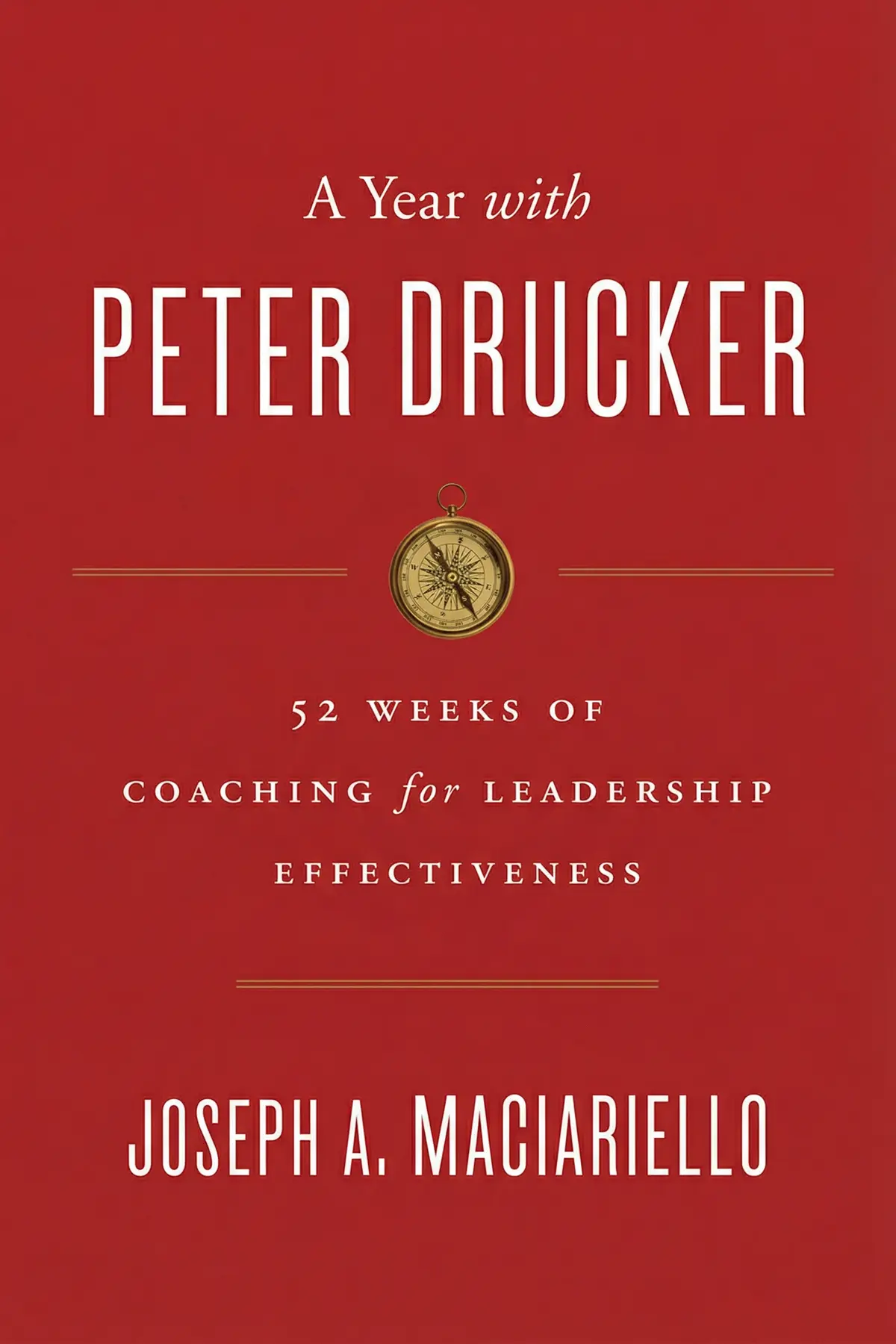
A Year with Peter Drucker: 52 Weeks of Coaching for Leadership Effectiveness
Joseph A. Maciariello
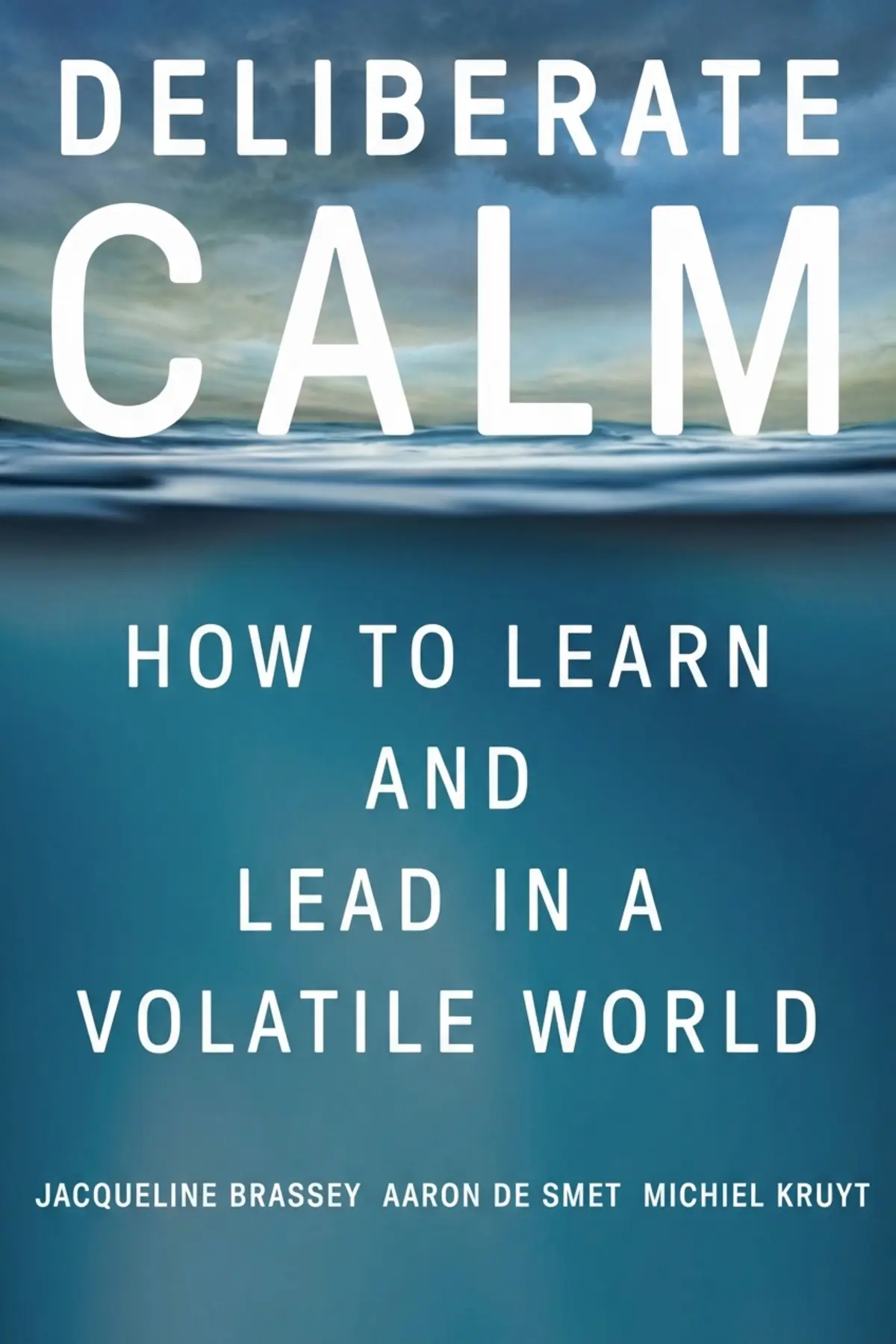
Learn to navigate high-pressure situations by mastering emotional regulation, cognitive reframing, and intentional leadership. This guide explores the neuroscience of staying composed and effective when stakes are highest.
1 min 24 sec
We live in a world that feels increasingly like it is spinning out of control. Markets shift overnight, technology redefines entire industries in months, and the expectations placed on leaders are higher than ever before. In these moments of intense pressure, most of us fall back on what we know. We rely on the skills that made us successful in the past, hoping they will save us in the present. But here is the uncomfortable truth: the very habits that once led us to victory can become our greatest liabilities when the environment changes.
This is where the concept of deliberate calm comes in. It is not just about keeping a cool head; it is a sophisticated cognitive and emotional discipline that allows you to remain effective when everything around you is in flux. It is the ability to choose your response rather than simply reacting to a stimulus. Throughout this summary, we will explore how you can bridge the gap between your biological instincts and your professional intentions.
We will look at why your brain often works against you in high-stakes moments and how you can retrain it to see opportunity where others see only threat. By the time we finish, you will have a new perspective on leadership—one that is grounded in dual awareness, psychological safety, and a deep sense of purpose. This isn’t just about surviving a crisis; it’s about learning to thrive within one. Let’s begin by looking at why our usual way of working often fails us when we need it most.
1 min 54 sec
Discover why your most trusted professional skills can actually hold you back during a crisis and how to identify the moment when you must switch strategies.
1 min 57 sec
Most of what drives your behavior stays hidden—until stress surfaces it. Discover why understanding your internal ninety percent is the key to leading with intention instead of instinct.
1 min 50 sec
Learn a powerful mental technique to detach from your immediate emotional reactions and gain clarity during high-stakes moments.
1 min 54 sec
Explore how the stories we tell ourselves can distort our perception of events and how to challenge these scripts to improve your performance.
1 min 56 sec
Understand how a clear sense of ‘why’ provides the resilience needed to endure difficult transitions and make tough decisions.
1 min 57 sec
Learn why the emotional climate of your team is the single most important factor in whether you can solve complex, adaptive problems.
2 min 05 sec
Discover how to design a sustainable lifestyle that supports long-term peak performance through awareness, purpose, energy, and relationships.
1 min 34 sec
As we reach the end of this exploration into Deliberate Calm, the core message is clear: the most important skill for a modern leader is not expertise, but the ability to learn and adapt in real-time. This requires a profound shift in how we relate to ourselves and our teams. We have seen that our biological instincts often pull us toward protection when we most need to be in a state of learning. By developing dual awareness, we can catch these instincts in the act and choose a different path.
Mastering these concepts isn’t a one-time event; it is a lifelong practice. It starts with the small moments—the frustrating email, the interrupted meeting, the minor setback. These are your training grounds. Every time you pause, breathe, and look down from the ‘skylight’ of your own mind, you are strengthening your capacity for deliberate calm. You are moving from being a passenger in your life to being the pilot.
Remember that you don’t have to do this alone. By fostering psychological safety and connecting with a deeper purpose, you create an environment where everyone can thrive. You transform leadership from a burden of having all the answers into a shared journey of discovery. In a world of constant change, the only true security is your ability to stay calm, stay curious, and keep learning. Start today by noticing one internal narrative that might be holding you back, and give yourself the space to write a new one. The path to effective leadership in a volatile world begins within.
In an era defined by volatility and rapid change, traditional leadership often fails because our biological instincts push us toward old habits during new crises. Deliberate Calm offers a framework for overcoming these reactionary patterns. It introduces the concept of the Adaptive Zone—a space where familiar solutions no longer work and learning becomes the priority. By combining insights from neuroscience and organizational psychology, the book provides a roadmap for developing dual awareness, which allows leaders to observe their internal reactions while managing external events. Readers will discover how to rewrite self-limiting narratives, build psychological safety within teams, and align their daily actions with a deeper sense of purpose. The promise is a more resilient, effective way of leading that transforms stress into a catalyst for innovation and growth.
Michiel Kruyt is the CEO of Imagine.one, focused on helping business leaders drive sustainable transformation. Previously a partner at McKinsey & Company and cofounder of Aberkyn, he began his career at Unilever and serves on the board of the Urban Consciousness Center in Amsterdam. Jacqueline Brassey, PhD, serves as McKinsey's chief scientist and director of research science for People and Organizational Performance. In addition to her role at McKinsey, she holds academic positions at Vrije Universiteit Amsterdam and IE University in Madrid. Aaron De Smet, a senior partner at McKinsey & Company, has spent 25 years helping organizations improve performance and organizational health. He joined McKinsey in 2003 after earning his PhD in social and organizational psychology from Columbia University.
Listeners consider the authors' model for navigating uncertainty to be thought-provoking, although perspectives differ regarding the thoroughness of the included data. A large number of people value the hands-on guidance for managing emotions, emphasizing that methods for pausing before taking action assist in staying productive and receptive during stressful moments. Furthermore, the content receives praise for its unique outlooks, and one listener points out that the concluding workbook portion is particularly valuable for immediate implementation. They also suggest that the straightforward suggestions transform the book into a beneficial tool for any professional dealing with intricate office environments.
Ever wonder why you snap at your team when things go sideways during a major project? This book provides a clear answer and, more importantly, a way out of that reactive cycle. I loved the focus on recognizing internal narratives and ensuring we don't project our own stress onto those around us. It’s a refreshing change from the decades-old leadership tactics you usually find in standard management literature. The concepts are easy to understand and the advice on emotional regulation feels genuinely actionable for any professional. By remaining open and aware, we can change the entire temperature of our team. Highly recommended for those in high-stress roles.
Show moreWow, I didn't expect a business book to be this transformative for my daily mental health at the office. I learned a lot about the importance of 'charging myself' properly so I can lead others with more clarity and less friction. Recognizing my ultimate goals and aligning my emotional state with them has already made a noticeable difference in my productivity. The perspectives shared here are a refreshing change from the usual command-and-control theories. It’s a strong guide for anyone who wants to improve their teamwork and personal well-being simultaneously. Truly an excellent resource for modern leaders facing complex challenges.
Show moreFinally got around to finishing this, and I have to say, the practical nature of the final chapters really redeemed the slower start. If you’re a leader navigating an increasingly complex and volatile work environment, this framework offers a refreshing path forward. The authors emphasize emotional self-regulation, teaching you how to pause before reacting to high-pressure situations. Truth is, the dialogue-heavy examples became a bit tiresome toward the middle of the book. However, the workbook section at the end is incredibly helpful for immediate application. It’s a solid resource for anyone trying to maintain an effective presence when things get chaotic and uncertain.
Show moreThe chapter on intention-setting really shifted my perspective on how I approach my morning meetings. Instead of just diving into the chaos, the authors suggest a framework for maintaining a composed presence under pressure. I’ve read plenty of leadership books, but the way this links emotional self-regulation to actual business outcomes felt quite new. Not gonna lie, some of the dialogue-driven examples felt a bit forced and artificial after a while. Even so, the workbook section is a goldmine for anyone who prefers learning by doing. It’s a useful resource for navigating the messy dynamics of the modern workplace without losing your cool.
Show moreLook, the business world is getting more volatile by the second, and this book addresses that head-on with some great nuggets of wisdom. The authors provide a practical framework for leading through uncertainty that feels both modern and necessary. I appreciated the reminder to be careful with the stories we tell ourselves, as those narratives often dictate our reactions to stress. While I wish there were more charts and hard data to support the claims, the qualitative advice is very solid. It’s a good reminder to think through our actions before we bring our baggage to the team. Definitely worth a look for new managers.
Show moreAfter hearing about this through a colleague, I decided to dive in to see if it could help with my current workplace stress. The book is very easy to follow and filled with new ideas that I haven't seen in other management guides. I especially appreciated the specific advice on how to remain open and curious even when feeling threatened by external circumstances. My main qualm was the length of the dialogue examples, which felt a bit like filler after a while. Still, the workbook at the end makes it easy to apply these concepts immediately. It's a solid 4-star read for any professional navigating complex dynamics.
Show moreIt isn't every day you find a management guide that actually focuses on the internal state of the leader rather than just external KPIs. The focus on 'deliberate calm' as a skill to be practiced is incredibly relevant for today’s uncertain climate. I found the sections on emotional self-regulation particularly insightful for maintaining a presence that encourages others to stay open as well. While some of the advice leans heavily into the 'mindfulness' space, it's presented in a way that feels professional and applicable. The final portion of the book serves as a great tool for anyone facing a volatile environment. Overall, a very useful guide.
Show moreAs someone who navigates high-stakes corporate environments daily, I was intrigued by the premise of leading through uncertainty. The book offers a thorough insight into developing the capabilities needed to thrive when things are unpredictable. I particularly liked the 'pause and think' method for managing one's own feelings. My only gripe is that the women characters in the examples seemed to be the ones always needing 'work' or self-correction. To be fair, the tips are easy to apply and the overall message is quite strong. It’s an eye-opening piece for those looking to improve their professional presence, even if the case studies felt slightly unbalanced.
Show moreTo be fair, I appreciate the effort to ground leadership practice in the reality of our current complex environment. The core idea—staying calm intentionally rather than just reacting—is something every professional should master. However, I found the middle section of the book a bit repetitive and slow-paced. It felt like the authors were stretching a few good ideas into a full-length novel. The end of each chapter does provide helpful tips, which I found to be the most valuable part of the experience. It’s a decent book for self-reflection, even if it feels a bit thin on actual data at times. Good, but not groundbreaking.
Show moreThis felt like a missed opportunity given the high-profile expertise of the authors involved. While the premise of 'deliberate calm' is fascinating, the content often feels like a lot of fluff without enough concrete data to back it up. I was looking for deeper insights into the neurological science, but it mostly felt like a repackaged version of basic mindfulness techniques. Frankly, if you’ve used apps like Headspace or practiced basic meditation, you’ve heard much of this before. It’s not a bad read, but it didn't quite live up to the hype for me personally. The framework is okay, just lacking the depth I expected for a business book.
Show moreJoseph A. Maciariello
Andrew D. Thompson

Deepak Chopra
Deborah Gruenfeld
Mike Michalowicz
AUDIO SUMMARY AVAILABLE
Get the key ideas from Deliberate Calm by Jacqueline Brassey, plus 5,000+ more titles in English and Thai.







