
16 min 39 sec
Die with Zero: Getting All You Can from Your Money and Your Life
By Bill Perkins
Die with Zero challenges traditional financial wisdom, urging readers to prioritize life experiences over wealth accumulation. It provides a blueprint for maximizing fulfillment by strategically spending money while health and time allow.
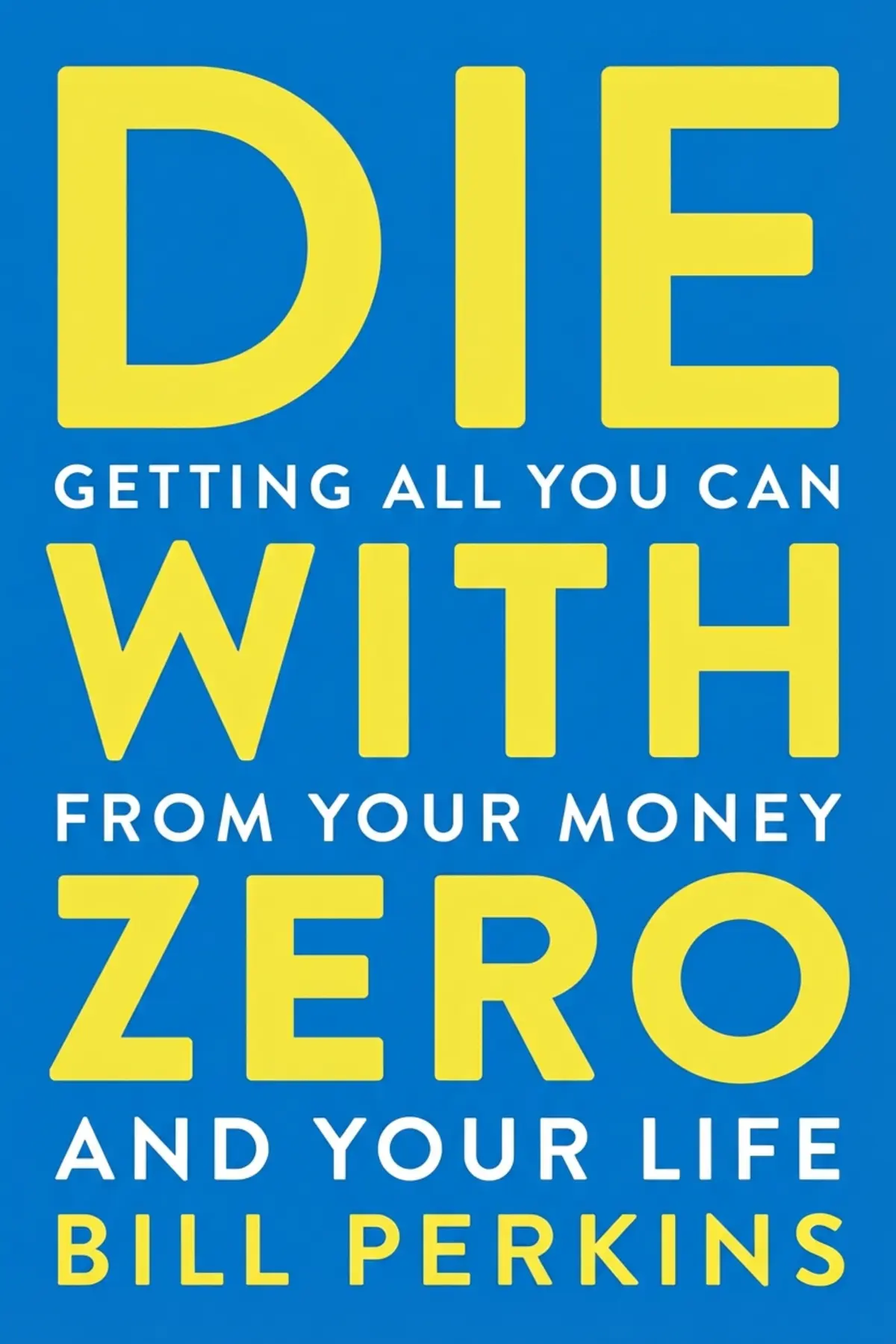
Table of Content
1. Introduction
1 min 40 sec
We are often told that the responsible way to live is to work hard, save diligently, and delay our happiness until some far-off date called retirement. We’re encouraged to behave like the ant in the famous fable—toiling away during the summer of our lives so that we can survive the winter. But there is a fundamental flaw in this logic that most financial advisors never mention. While money can be earned, saved, and invested, time is a strictly non-renewable resource. Every day you spend working for money you won’t eventually use is, quite literally, a day of your life you have given away for free.
In this summary of Die with Zero by Bill Perkins, we are going to look at why the conventional wisdom about wealth is often a recipe for a life of regret. Perkins argues that the real objective of life isn’t to accumulate the largest possible pile of cash, but to maximize your total life fulfillment. To do that, you have to rethink everything you know about spending, giving, and the relationship between your bank account and your physical health.
We’ll explore how to view your life as a series of distinct phases, each with its own unique opportunities that money can only unlock if spent at the right time. We’ll look at why leaving a massive inheritance after you’re gone might actually be a disservice to your children, and how to calculate the exact moment you should stop focusing on earning and start focusing on living. This isn’t just a book about money; it’s a manual for how to navigate the finite nature of human existence. The throughline here is simple but profound: your wealth is a tool to be used, not a score to be kept. If you end your life with millions in the bank, you haven’t won the game—you’ve simply left a lot of potential life on the table. Let’s dive into how you can make sure you get every bit of value out of your journey.
2. The Finite Nature of Time and Health
1 min 54 sec
Money can be replenished, but the window of opportunity to enjoy it closes a little more every day as our health inevitably shifts.
3. The Power of Memory Dividends
2 min 05 sec
Every meaningful experience you have today pays a dividend of joy that you get to collect for the rest of your life.
4. The Hidden Cost of Unspent Wealth
1 min 53 sec
Your six-figure nest egg might represent two years of your life spent working for nothing. Discover why dying with money in the bank is the real financial failure.
5. Giving to Others When it Matters Most
1 min 48 sec
Leaving an inheritance after you die is often the least effective way to help the people you love.
6. Categorizing Life into Time Buckets
1 min 52 sec
A bucket list is a start, but without a timeline based on your physical health, your dreams are likely to stay unfulfilled.
7. Finding Your Peak Net Worth
1 min 52 sec
There is a specific point where your wealth provides maximum benefit; beyond that, every extra dollar you earn actually costs you life.
8. The Rationality of Early Risk
2 min 01 sec
Taking big swings when you are young is a mathematically sound strategy because the cost of failure is at its lowest.
9. Conclusion
1 min 34 sec
As we reach the end of this journey through the ‘Die with Zero’ philosophy, the core message should be clear: life is a collection of experiences, and money is simply the fuel we use to power them. The goal of a well-lived life isn’t to leave behind a massive estate, but to ensure that you have fully utilized your time, your health, and your wealth while you had the chance. We’ve seen how memories act as dividends that pay us back for a lifetime, and why the ‘ant and grasshopper’ approach to saving can lead to a surplus of cash and a deficit of joy.
If there is one thing to take away, it is to reconsider what you call your ‘golden years.’ We are taught that these years happen after 65, but in reality, the true golden years are usually between 50 and 65. This is the window where you likely have the most money you’ve ever had, but you still possess the physical vitality to use it. Don’t wait for a traditional retirement to start checking things off your list. Look at your ‘time buckets’ today and ask yourself: what am I delaying that I might not be able to do in ten years?
Your homework is to calculate your net worth and start thinking about your peak. Are you already working for free? Are you holding onto money that would change your children’s lives right now? Remember, you only get one trip around this track. Every dollar left in your bank account when the race is over is a piece of life you didn’t live. So, be bold, be intentional, and aim to cross the finish line with your heart full and your account empty. That is the true definition of a life well-spent.
About this book
What is this book about?
Most financial advice focuses on the virtues of saving as much as possible for a distant retirement. In this summary, we explore a radically different philosophy: the idea that the goal of life should be to maximize your experiences and die with a net worth of zero. By holding onto wealth until the end of your life, you are essentially trading your most precious resource—time—for money you will never use. This guide breaks down how to balance your health, your wealth, and your time across different stages of adulthood. It introduces concepts like memory dividends, where early investments in experiences pay off for decades, and the importance of giving to heirs when it actually benefits them most. You will learn how to identify your peak net worth and why taking bold risks early in life is the most rational financial decision you can make.
Book Information
About the Author
Bill Perkins
Bill Perkins is a hedge-fund manager and film producer. He specializes in venture capital and energy markets.
Ratings & Reviews
Ratings at a glance
What people think
Listeners find this book to be an accessible and stimulating guide that provides new insights into managing finances and planning for the future. It offers practical tips for getting the most out of life's moments and utilizing one's income, assisting listeners with financial preparation while shifting their mindset toward investing in experiences. Listeners value the intriguing ideas presented and the book's ability to encourage living a more meaningful life.
Top reviews
Violet
Picked this up during a vacation and it completely reframed how I view my itinerary. Instead of worrying about the cost of a guided tour, I started thinking about the 'memory dividends' that Perkins describes. It’s a powerful shift. We spend so much energy stacking cash for a future version of ourselves that might be too frail to enjoy it. To be fair, the author lives in a different financial stratosphere than most, but the logic remains sound. Why die with a million dollars in the bank when that money could have bought a lifetime of stories? This is a wake-up call for anyone obsessed with their 401k.
Show moreChai
As a chronic over-saver, Perkins' philosophy hit me like a ton of bricks. I’ve been so focused on the 'number' that I forgot what the money was actually for. The breakdown of the 'go-go,' 'slow-go,' and 'no-go' years is a sobering reminder that our health is a finite resource. It’s not just about spending; it’s about optimizing your life's energy. I’ve already started planning a trip with my parents that I previously put off until 'someday.' This book gave me the permission I didn't know I needed to stop living for a hypothetical future and start investing in my present self.
Show moreGame
The concept of giving to your children while you're alive instead of leaving an inheritance at 90 is worth the price of the book alone. My kids need help with a down payment now, not a windfall when they are already retirees themselves! Perkins turns traditional estate planning on its head in a way that is both logical and deeply compassionate. It’s about maximizing the impact of your wealth when it matters most. Not every chapter applied to my middle-class lifestyle, but the sections on timing and 'peak utility' are universal. It is easily the most thought-provoking financial book I have read in a decade.
Show moreKenji
Bill Perkins is clearly playing a different game than most of us, but his rules are surprisingly applicable if you look past the wealth. I loved the idea that our lives are the sum of our experiences. We often treat money as the goal rather than the fuel. Since reading this, I’ve stopped feeling guilty about spending on things that create lasting memories with my family. The math is simple: you can't take it with you. If you finish the race with a full tank of gas, you didn't win; you just didn't drive far enough. This is essential reading for anyone feeling burnt out by the grind.
Show moreKiattisak
After years of following traditional FIRE advice, I found this to be a necessary corrective to my mindset. I’ve been so afraid of 'squandering' money that I’ve been squandering my youth instead. Perkins highlights the tragedy of the 'no-go' years, where you finally have the funds but no longer have the health to use them. I kept thinking about the friend he mentioned who missed out on a European hostel trip in his 20s. You can’t recreate those specific memories at 60, no matter how much money you have. This book is a reminder that time, not money, is our most precious non-renewable resource.
Show moreAnthony
Ever wonder why we spend our healthiest years hoarding cash we won't be able to enjoy at eighty? Bill Perkins offers a radical alternative to the typical retirement grind. While some of the examples involving private jets and Caribbean islands feel like they belong in a different universe, the underlying math about declining utility is hard to ignore. I particularly liked the section on 'bucket groups'—sorting activities by the age ranges where you can actually physically do them. It’s not a perfect guide, and the tone can be a bit boisterous, but it forced me to have some very necessary conversations with my spouse about our future.
Show moreZanya
Finally got around to reading this after hearing my financial advisor mention the 'Die with Zero' concept. It’s a fast, engaging read that challenges the 'work until you drop' mentality prevalent in our culture. The writing style is casual, almost like having a beer with a very wealthy, very opinionated friend. You have to filter out the high-roller anecdotes, but the core message is vital: money is just a tool for fulfillment. My only gripe is that it ignores the psychological security that a large 'safety net' provides for some people. Still, it’s a necessary counter-balance to the extreme frugality movement.
Show moreFatima
Stop thinking of your bank balance as the scoreboard for your life. That’s the main takeaway here, and it’s a good one. However, the book feels quite repetitive by the halfway mark. To be fair, the author admits he isn't a financial advisor, and it shows in some of the more 'laissez-faire' suggestions regarding insurance and annuities. I appreciated the statistics on how much retirees actually spend (or don't spend), but I wish there was more practical advice for people who aren't energy traders. It’s an interesting philosophical exercise, but it lacks the groundedness of other personal finance classics. Worth a skim.
Show moreOksana
This book is the definition of a great concept stretched far too thin. I agree that we shouldn't sit on our money like Smaug, but did this really need to be 200 pages? It reads like a blog post that got out of control. The author repeats the same three points—buy experiences, you’re getting older, and don't die rich—over and over again. Look, if you’ve ever thought about personal finance for more than five minutes, you probably already understand the core of this. It’s an easy read, but I honestly felt like I was wasting the very time he tells me to value.
Show moreChatri
Wow, talk about a lack of perspective. While the basic premise of 'don't be a miser' is fine, the actual advice in this book is bordering on dangerous for the average person. Perkins suggests taking out loans in your twenties to fund 'experiences' because your future self will be richer. Frankly, that is some of the most irresponsible financial guidance I have ever encountered. Most people I know are struggling with existing debt, not looking for more. He also spends way too much time bragging about his 45th birthday bash. It’s hard to take life lessons from a multi-millionaire who thinks flying out a rock star for a private party is a relatable example.
Show moreReaders also enjoyed
AUDIO SUMMARY AVAILABLE
Listen to Die with Zero in 15 minutes
Get the key ideas from Die with Zero by Bill Perkins, plus 5,000+ more titles in English and Thai.
- 5,000+ titles
- Listen as much as you want
- 7-day free trial
- Cancel anytime







