
15 min 32 sec
Available in:English
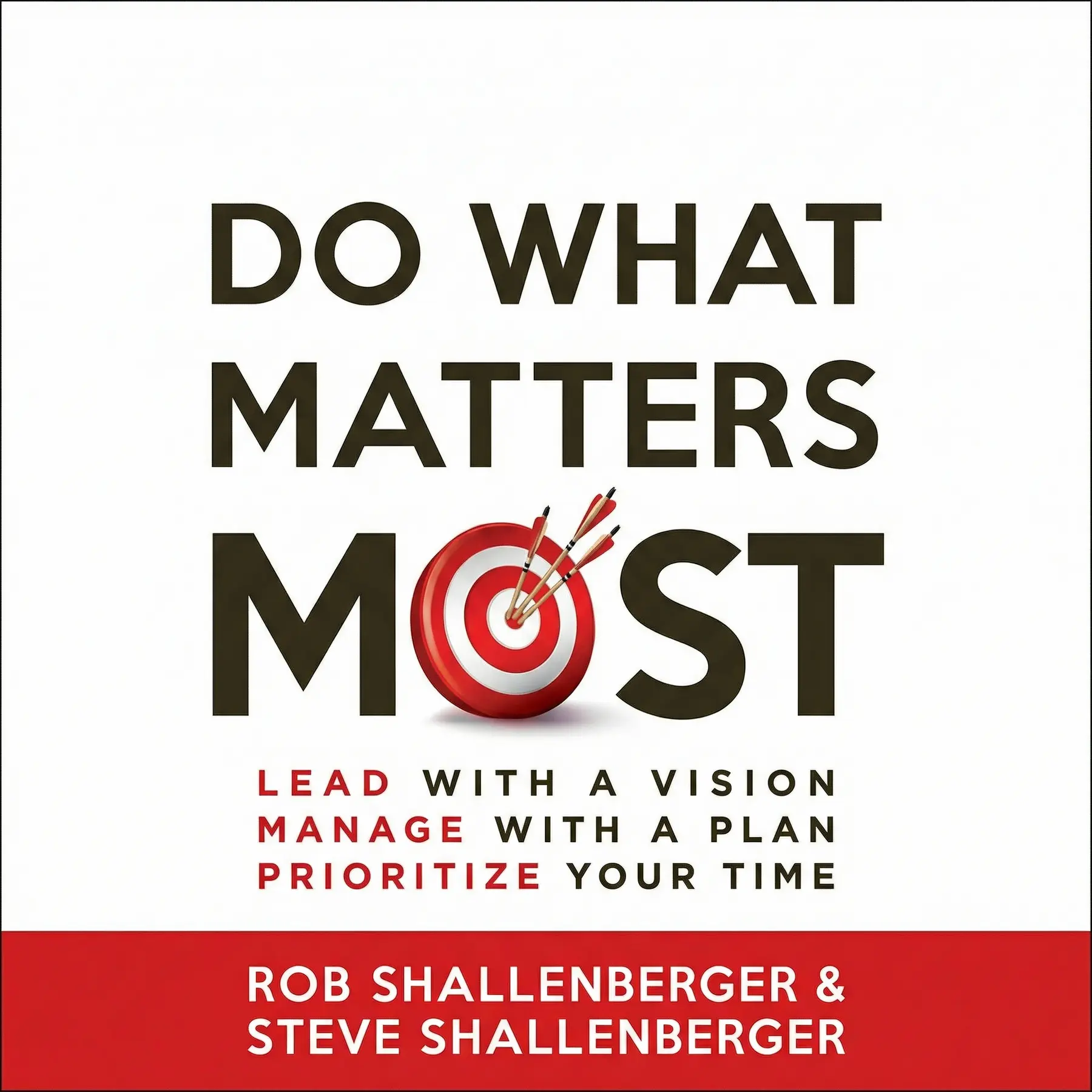
Do What Matters Most: Lead with a Vision, Manage with a Plan, Prioritize Your Time
Do What Matters Most presents a powerful three-step framework to escape the trap of busyness. Learn to align your daily actions with your life’s vision through disciplined weekly planning and goal-setting.
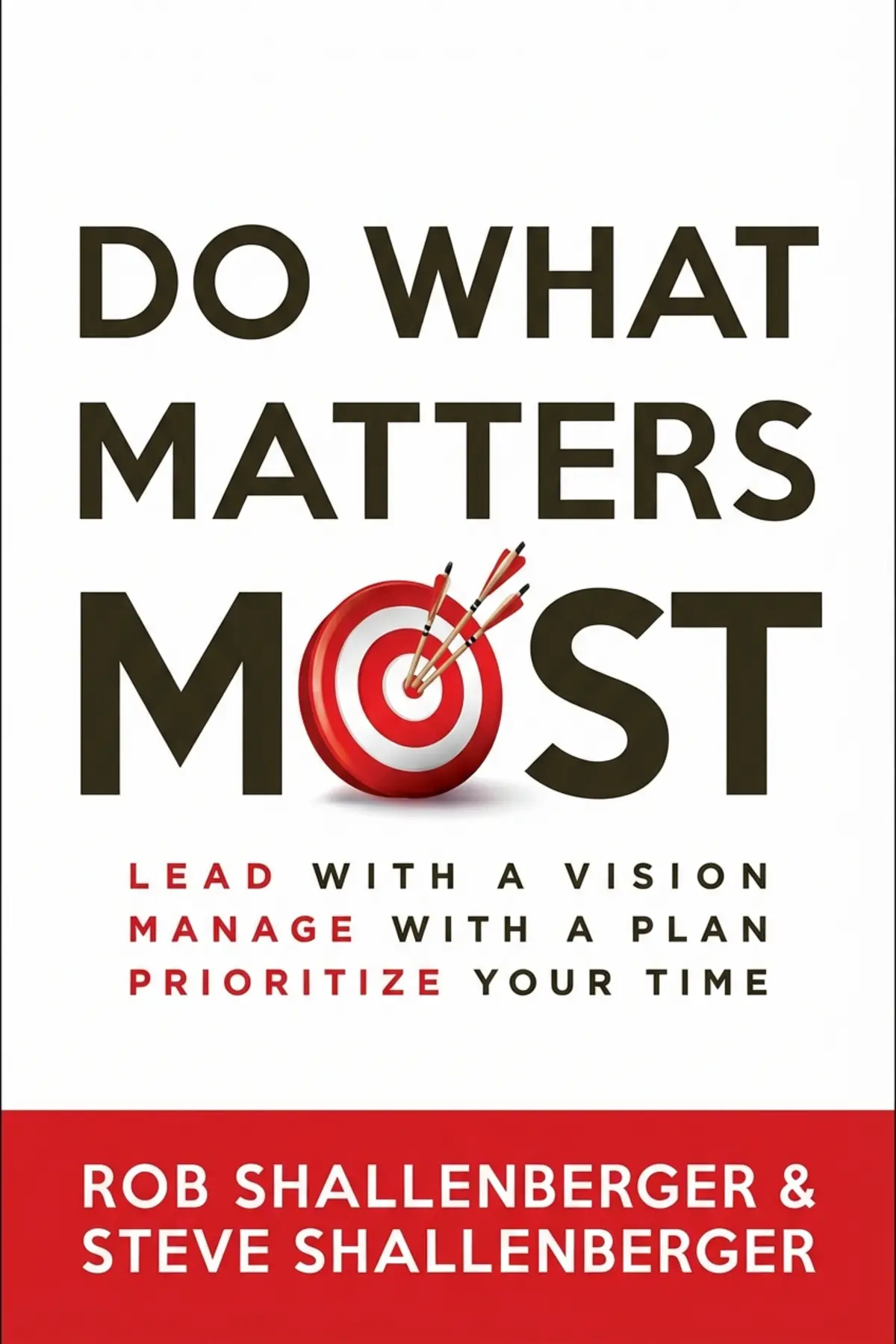
Table of Content
1. Introduction
1 min 54 sec
We have all been there: staring at a calendar that looks like a game of Tetris played at double speed, or feeling that sinking sensation when the sun goes down and you realize your most important task is still untouched. It is a common struggle in the modern world. We are often busy, but are we being effective? Many of us operate in a state of constant reaction, jumping from one emergency to the next like a firefighter who never gets a chance to look at the map. This is what the authors call task saturation, a phenomenon where the brain simply cannot process any more incoming data because it is already red-lining.
In the pages that follow, we are going to explore a different way of living and working. This is the throughline of the Do What Matters Most philosophy: the idea that productivity is not about doing more things, but about doing the *right* things. It is about moving away from the high-stress adrenaline of the last minute and toward a calm, intentional way of managing your life. We will look at how high-performance individuals, from fighter pilots to top-tier executives, use a specific set of habits to keep their eyes on the horizon while their feet are on the ground.
Through three main pillars—vision, goal-setting, and weekly planning—you will learn how to reclaim roughly eighty percent of your time for the things that actually move the needle in your career and your personal relationships. This isn’t just about a to-do list; it’s about a lifestyle shift that ensures your daily actions are in total alignment with the person you want to become. Let’s dive into how we can stop just being busy and start doing what truly matters.
2. The Danger of Task Saturation
2 min 06 sec
Discover how a near-miss at a thousand miles per hour illustrates the mental blindness that happens when we are overwhelmed by too many responsibilities at once.
3. Navigating the Priority Matrix
2 min 01 sec
Explore a four-part framework that helps you distinguish between high-stress firefighting and the low-stress productivity zone where real progress happens.
4. Defining Your Vision Through Roles
1 min 59 sec
Learn why setting a direction for every version of yourself—from professional to partner—is the essential first step toward meaningful achievement.
5. The Art of Measurable Goal-Setting
1 min 59 sec
Bridge the gap between your abstract dreams and daily reality by creating annual targets that are both ambitious and quantifiable.
6. Mastering the Pre-Weekly Planning Ritual
1 min 44 sec
Discover the ‘secret sauce’ of high performance: a twenty-minute habit that ensures your schedule reflects your priorities before the week even begins.
7. The Power of Specificity and Scheduling
2 min 04 sec
Understand why a goal only becomes real once it has a date and a time, and how this simple act can transform your most important relationships.
8. Conclusion
1 min 45 sec
As we wrap up, it’s worth reflecting on the core message: your life is the sum of your priorities, and your priorities are defined by where you spend your time. We have explored the dangers of task saturation and the ‘pilot’s approach’ to focusing on primary instruments. We have seen how the priority matrix can move us from the high-stress adrenaline of firefighting into a calm, proactive zone of high productivity. By defining our roles, setting SMART goals, and mastering the ritual of pre-weekly planning, we create a life that is directed by vision rather than by circumstance.
The transformation doesn’t happen overnight, but it does happen through the accumulation of small, disciplined choices. One of the most immediate ways to start is by implementing a morning review. Before you get caught up in the emails and notifications of the day, spend just a few minutes looking at the priorities you scheduled during your pre-weekly planning. Identify the two or three most critical tasks for the day and commit to them.
When you lead with a vision and manage with a plan, you stop being a victim of your schedule. You gain the clarity to see what truly matters and the courage to say no to the things that don’t. Start today by looking at your roles, imagining the best version of yourself in each one, and taking that first step toward scheduling the actions that will get you there. You have the tools to do what matters most—now it’s time to put them into practice.
About this book
What is this book about?
Do you feel like your life is a constant race against a clock you can never beat? Do What Matters Most addresses the modern epidemic of task saturation, where the sheer volume of daily responsibilities blinds us to our most important long-term objectives. The authors introduce a principle-centered approach designed to move individuals from a state of reactive firefighting to proactive management. The book promises a path toward a higher quality of life by focusing on three core habits: developing a personal vision, setting measurable annual goals, and engaging in rigorous pre-weekly planning. By categorizing tasks based on stress and priority, it offers a roadmap to spend seventy percent of your time in a high-productivity, low-stress zone. Whether you are an executive struggling with professional balance or an individual seeking more meaningful personal relationships, this guide provides the tools to ensure that your schedule reflects your deepest values.
Book Information
About the Author
Rob Shallenberger
Steve Shallenberger is the visionary founder and chairman of Becoming Your Best Global Leadership, an organization dedicated to world-class training. His extensive background in leadership includes a significant role in the creation of the Stephen R. Covey Leadership Center. Joining him is Rob Shallenberger, the current CEO of Becoming Your Best Global Leadership. Rob brings a unique perspective to time management and precision, having served as a pilot flying F-16s for the United States Air Force and working within the elite ranks of the Secret Service before transitioning into his career as a leadership coach and executive.
Ratings & Reviews
Ratings at a glance
What people think
Listeners find the writing accessible and appreciate its hands-on methods for organization, with one listener mentioning how it helped refine their daily planning. The book examines life lessons while offering actionable steps, leading one listener to report massive efficiency improvements in their business. The high caliber of information is praised; one listener highlighted the latest research, while another noted it helped rekindle their passion for life. Feedback consistently highlights its readability, with one listener suggesting it is a must-read for busy people.
Top reviews
Logan
After hearing a lot about the Shallenberger brothers, I finally dove into this and it rekindled my passion for my career and personal growth. I used to feel like I was just reacting to emergencies all day, but the pre-week planning method shifted me into a proactive mindset. The book is incredibly easy to read and the actionable steps are laid out so clearly that you can start implementing them the same afternoon. I particularly loved the focus on the Big Three—vision, goals, and planning. It’s not just about getting more done; it’s about doing the things that actually move the needle in your life. My business efficiency has skyrocketed since I started using their templates. This is a must-read for busy people who feel lost in the weeds and need to regain control.
Show moreOmar
Wow, what a refreshing take on the classic principles of organization and leadership. I’ve struggled with professional development books in the past because they often feel too theoretical, but this one is pure application. The Shallenbergers have distilled high-performance habits into a system that is easy to digest and even easier to use. I feel significantly more in control of my schedule now that I’m prioritizing based on my roles rather than just a massive to-do list. The latest research they cite regarding goal-setting and written visions is compelling and actually motivated me to start my first vision statement. It’s an entry-level book, sure, but sometimes the basics are exactly what we need to get back on track. Highly recommended for anyone feeling burnt out by their current routine.
Show moreNiramai
The chapter on pre-week planning alone makes this worth the price of admission for anyone struggling with a chaotic calendar. While I’ve seen versions of the Eisenhower Method before, the way the authors integrate it into a role-based vision system feels very intuitive. It’s a decent book that focuses on classic, evergreen basics rather than trying to be 'disruptive' like some modern productivity gurus. I appreciated the Personality Productivity Assessment; it gave me a bit of insight into why I procrastinate on high-impact tasks. My only gripe is the repetitive nature of the writing—they really hammer home the same points over and over again. Still, for a beginner or someone needing a refresher on intentional living, it provides a solid, actionable framework that actually works.
Show moreTippawan
As a small business owner, I'm constantly fighting fires instead of making real progress on my long-term goals. This book helped me realize that my 'urgent' tasks were actually just 'stressful' distractions that didn't align with my core values. The authors do a great job of breaking down how to create a vision for different roles in your life, like being a parent or a manager. Not gonna lie, it does feel a bit like a sales pitch at times, and the success stories can be a bit over-the-top for my taste. But the core principles are undeniably effective if you actually do the work. The templates provided are helpful for turning vague goals into manageable steps. It's a practical guide that focuses on living with purpose rather than just busywork.
Show moreWoramet
Gotta say, the way they break down your life into specific roles before setting goals is a game changer for my work-life balance. Most systems just focus on the career aspect, but this encourages you to be intentional about your health and relationships too. The book is very readable and fast-paced, which I appreciated given my tight schedule. I did find the constant mentions of their 'Becoming Your Best' training a little tiresome after a while. It’s clear they want you to sign up for more. However, the actual advice regarding the Big Three habits is solid gold for anyone who hasn't mastered their weekly routine. It helped me move from a reactive state to a proactive one, and for that alone, it’s a success in my eyes.
Show moreAva
Ever wonder why most time management systems fail within the first two weeks? It’s usually because they lack a connection to a deeper vision, and that is exactly what this book addresses. By forcing you to write down a vision for each role you play, the Shallenbergers create a 'why' behind the 'what.' I found the pre-week planning ritual to be the most impactful part of the whole system. It’s not a revolutionary concept, but the way they package it with specific action points makes it very easy to implement immediately. I gave it four stars instead of five because the authors tend to ramble and repeat themselves to fill the pages. If you can skim the fluff, the actual system is very robust and helpful.
Show moreOwen
Finally got around to finishing this, and while it borrows heavily from Covey, the modern application is much smoother. The core idea is simple: focus on what truly matters and take intentional action towards it. I really liked the 'Doing' chapters that provided specific guide points for implementing the habits. I initially struggled with the digital version, but once I started using the physical templates, everything clicked. It’s a very practical book that doesn't get bogged down in too much theory. My only real complaint is that it ignores the complexities of modern digital distractions in favor of 'simple steps' stories. Nevertheless, it's a great tool for anyone looking to structure their life around their values rather than their inbox. It definitely helps clarify your priorities.
Show moreWatcharee
To be fair, the 'Big Three' habits presented here are solid foundations for anyone feeling overwhelmed by their daily schedule. Rob and Steve Shallenberger provide a clear roadmap involving vision, roles, and pre-week planning that is undeniably practical. However, it’s hard to ignore that a huge chunk of the book feels like a repetitive sales pitch for their consulting firm. They spend a lot of time convincing you that the system works instead of just letting the system speak for itself. If you can look past the promotional tone and the common analogies like the 'rocks and sand,' there is real value here. It’s an easy read that might help you refine your daily planning, but don’t expect a revolution if you’ve already read the classics like '7 Habits'. This is a decent enough primer for those who need a push towards intentionality.
Show moreArthit
Look, I appreciate the research that went into this, but the constant promotion for their coaching business got exhausting. I was looking for a meatier discussion on the challenges of time management, but instead, I got a lot of 'you can do it' stories that felt a bit shallow. To be fair, the section on overcoming obstacles like fear and procrastination was helpful, even if it didn't go deep enough into the psychology. The book borrows heavily from '7 Habits,' calling the quadrants 'stressful vs urgent' instead of the usual terminology. It’s a decent introductory text for someone who is completely new to the world of productivity, but seasoned readers won't find anything revolutionary here. It’s okay, just a bit light on new substance for the price.
Show moreOlivia
Pick this up only if you have never read a single productivity book in your entire life. Frankly, it’s a bit nonsensical to write a book about time management that wastes so much of the reader's time with fluff and self-promotion. Most of the 'innovative' ideas are just renamed versions of the Eisenhower Matrix or concepts popularized by Stephen Covey decades ago. They present universal truths as if they’ve discovered some secret methodology, which feels quite disingenuous. The anecdotes about people achieving impossible things in three simple steps felt like click-bait and lacked any discussion of real-world obstacles. I was expecting a deep dive into efficiency, but instead, I got a long-winded brochure for their coaching business. There are definitely better ways to learn about prioritizing what matters without the filler.
Show moreReaders also enjoyed
AUDIO SUMMARY AVAILABLE
Listen to Do What Matters Most in 15 minutes
Get the key ideas from Do What Matters Most by Rob Shallenberger, plus 5,000+ more titles in English and Thai.
- 5,000+ titles
- Listen as much as you want
- 7-day free trial
- Cancel anytime







