
27 min 38 sec
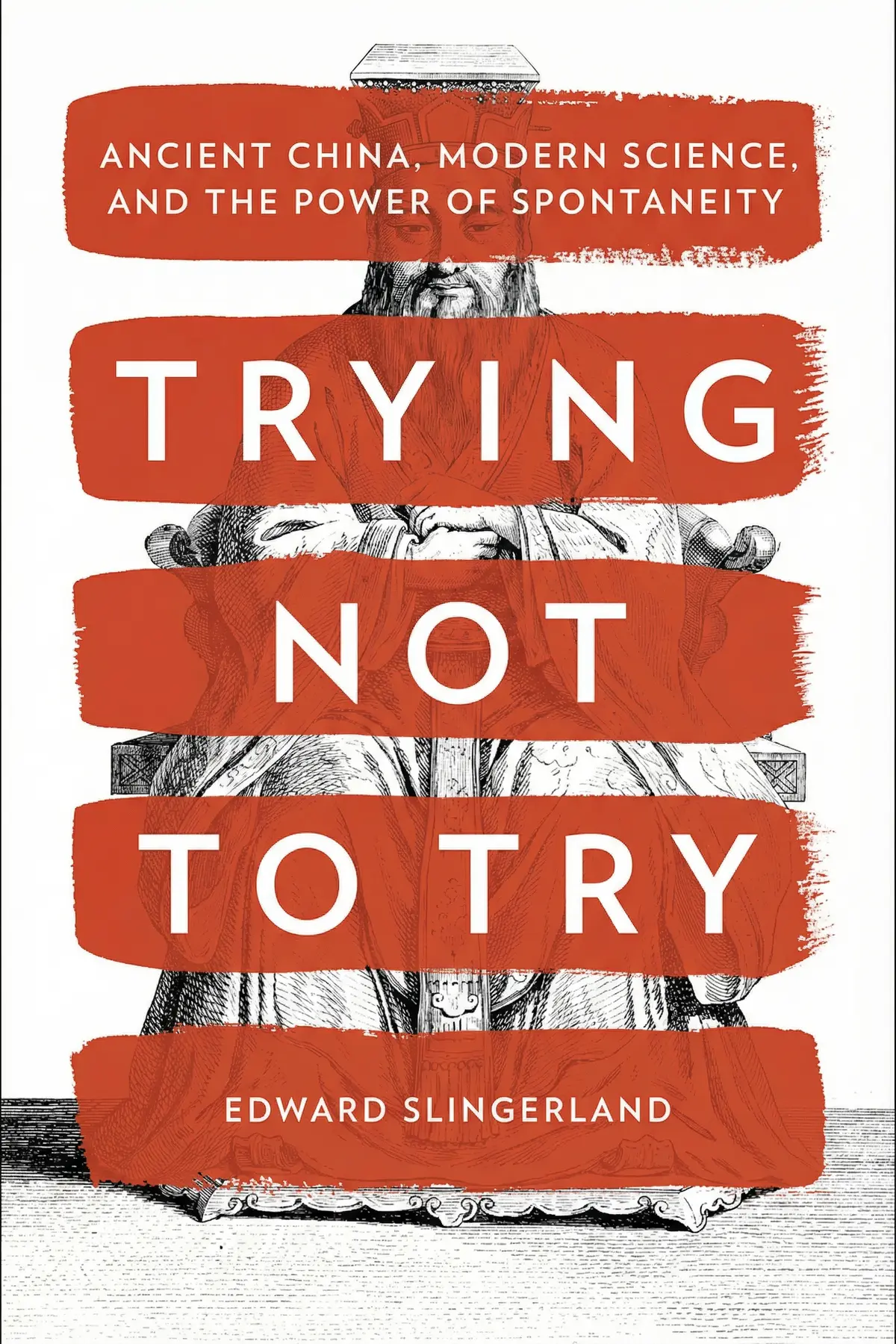
Drunk: How We Sipped, Danced, and Stumbled Our Way to Civilization
Drunk examines the deep evolutionary roots of our relationship with alcohol. It argues that intoxication isn't a biological mistake, but a vital tool that fostered the creativity and cooperation necessary for human civilization.
Table of Content
1. Introduction
1 min 49 sec
Imagine a practice so widespread that it spans almost every culture on the planet, reaching back into the deepest mists of our ancestral past. Across every continent and through every era, human beings have dedicated an incredible amount of energy, money, and time to the pursuit of getting wasted. Whether we call it being tipsy, hammered, or plastered, the goal remains the same: a deliberate alteration of our consciousness through fermented liquid. On the surface, this behavior seems like a massive evolutionary blunder. Alcohol can lead to aggression, poor decision-making, health catastrophes, and social devastation. It costs us our safety, our productivity, and sometimes our lives.
Yet, despite these glaring downsides, we haven’t stopped. This raises a profound question that goes to the heart of what it means to be human: Why? If drinking is so dangerous, why has nature allowed this habit to persist for thousands of years? Most of us view alcohol as a vice or a guilty pleasure, but what if it was actually a primary engine of our success as a species?
In this exploration of Edward Slingerland’s work, we are going to look at the evolutionary and cultural origins of our relationship with booze. We will move past the simple idea that drinking is just a fun way to relax and instead look at it as a sophisticated cultural technology. We will examine how impairing our most advanced brain functions actually makes us better at working together and more creative in our problem-solving. We will also discover the surprising possibility that we didn’t start farming because we were hungry for bread, but because we were thirsty for beer. By the end of this journey, you’ll see that the story of human civilization is, in many ways, the story of how we sipped and stumbled our way toward progress. Let’s dive into the fascinating, complex, and often messy history of why we get drunk.
2. The Evolutionary Mystery of Intoxication
1 min 31 sec
Humans have spent millennia consuming a substance that can be both social and destructive. Why has such a risky habit survived the harsh process of natural selection?
3. Identifying Biological Hijacks and Hangovers
1 min 54 sec
Could our love for alcohol be a simple case of our brains being tricked, or is it a leftover trait from a very different era of human history?
4. Debunking the Drunken Monkey Theory
1 min 34 sec
One popular idea suggests we drink because our ancestors were searching for calories in fermented fruit. But there’s a big problem with this caloric explanation.
5. The Power of our Cultural Niche
1 min 40 sec
Humans occupy a unique place in the animal kingdom, relying on culture rather than just instinct. This dependency changes everything about how we survive.
6. The Prefrontal Cortex: The Adult in the Room
1 min 44 sec
Our most advanced brain region is the key to our intelligence, but it can also be a major roadblock to creativity and social bonding.
7. Apollo vs. Dionysus: Balancing Order and Chaos
1 min 36 sec
The ancient Greeks understood the human struggle between logic and emotion, and they saw wine as a vital bridge between these two worlds.
8. Solving the Trust Problem with Intoxication
1 min 42 sec
In a world of strangers, how can we be sure who to trust? Alcohol provides a unique ‘truth serum’ that helps us build social bridges.
9. Why Alcohol Beats Other Intoxicants
1 min 43 sec
From cannabis to kava, humans have many ways to alter their minds. Yet alcohol remains the global favorite for social engineering.
10. Tapping into the Childlike Brain
1 min 32 sec
Children are naturally creative and trusting because their brains haven’t finished growing. Alcohol allows adults to temporarily return to that state.
11. Beer Before Bread: The Origins of Agriculture
1 min 29 sec
We usually think farming was invented to prevent hunger. But evidence suggests it might have been invented to keep the party going.
12. The Dangers of Distilled Spirits
1 min 36 sec
Our ancestors mostly drank low-alcohol brews. The invention of hard liquor changed our biological relationship with booze in a dangerous way.
13. The Impact of Drinking Cultures
1 min 36 sec
How we drink is often more important than how much we drink. Exploring the difference between ‘Northern’ and ‘Southern’ styles.
14. Alcoholism and the Modern Environment
1 min 23 sec
The rise of suburban living and individualism has created a perfect storm for alcohol abuse. Can we fix our environment to fix our drinking?
15. Finding Alternatives for the PFC
1 min 26 sec
In an age of health-consciousness, can we find other ways to silence our inner critics without the physical toll of alcohol?
16. The Future of Getting Drunk
1 min 26 sec
To thrive as a species, we must balance our need for rational order with our need for Dionysian release. What does a mindful future look like?
17. Conclusion
1 min 57 sec
We’ve traveled a long way from those first accidental encounters with fermented fruit to the sophisticated wine cellars and craft breweries of today. What we’ve discovered is that our history with alcohol is far more than a tale of overindulgence or a biological glitch. It is a fundamental part of the human story. By temporarily quieting the prefrontal cortex, alcohol served as the chemical catalyst for the ‘Three C’s’—the creativity, community, and culture that allowed our ancestors to transition from small, wary bands of hunters into the massive, cooperative societies we live in today.
But this ancient tool comes with a modern warning. The very power that allowed us to build civilizations can also tear them apart when used without care. The invention of high-proof spirits and the rise of isolated, binge-style drinking have transformed a social lubricant into a potential social poison. As we move forward, the challenge is to reclaim the positive, communal aspects of drinking while shedding the destructive habits of the modern age.
The throughline of this journey is balance. We need our rational, Apollonian minds to navigate the complexities of the modern world, but we also need our emotional, Dionysian moments to keep our spirits alive and our bonds strong. Whether you choose to drink or not, the lesson is the same: we are a species that thrives on shared vulnerability and creative play. By acknowledging the deep-seated needs that alcohol has traditionally met, we can find more mindful ways to fulfill them. So, the next time you find yourself at a social gathering with a drink in hand, remember that you aren’t just having a cocktail—you are participating in a 14,000-year-old ritual that helped make us who we are. Drink mindfully, stay connected, and never forget the importance of letting your inner child come out to play once in a while.
About this book
What is this book about?
For thousands of years, humans have gone to great lengths to reach states of intoxication, despite the obvious physical and social costs. In this summary of Drunk, we look beyond the hangovers and health risks to ask a fundamental question: Why do we do it? We explore the theory that our love for the bottle isn't an evolutionary accident or a primitive leftover, but a functional adaptation. The book suggests that alcohol acts as a shortcut to what the author calls the Three C's: Creativity, Community, and Culture. By temporarily quieting the hyper-rational part of our brains—the prefrontal cortex—alcohol allows us to trust strangers, collaborate on complex tasks, and think outside the box. From the ancient feasts that predated the first farms to the modern-day office happy hour, we see how shared vulnerability through drinking helped build the foundations of society. This summary provides a balanced perspective on our complex history with alcohol, exploring both its civilizing benefits and its devastating potential for harm, ultimately arguing for a more mindful and socially integrated approach to consumption.
Book Information
About the Author
Edward Slingerland
Edward Slingerland is a distinguished Canadian-American scholar specializing in sinology and philosophy. He currently serves as a professor at the University of British Columbia. Slingerland is known for his interdisciplinary approach, blending ancient wisdom with modern cognitive science to analyze human behavior. His previous literary contributions include Trying Not To Try: The Art and Science of Spontaneity, where he explores the concept of effortless action and its importance in everyday life. His work often bridges the gap between the humanities and evolutionary biology to explain why we act the way we do.
Ratings & Reviews
Ratings at a glance
What people think
Listeners find the work highly informative and well-researched, with one listener noting that it delivers a thought-provoking reexamination of societal development. The book also garners praise for being easy to digest, as listeners characterize it as a blast to read, and one listener commends its balanced approach to alcohol's place in society. Furthermore, listeners value the content, with one mentioning how it balances personal and societal costs of drinking. Conversely, reactions to the humor are split, as some find it funny while others disagree.
Top reviews
Gung
Finally, a scholar who treats our love for intoxicants as a vital feature of civilization rather than just a bug in our biology. This book is an absolute blast to read, blending humor with serious research into how alcohol facilitates the 'three Cs': creativity, cultural learning, and cooperation. Slingerland argues that by temporarily shutting down our overly-analytical prefrontal cortex, we become the hyper-social primates we need to be to survive in large groups. His writing style is chatty and accessible, making complex neurobiological concepts easy to grasp for a general audience. Even when he’s citing obscure historians or psychologists, the prose never feels dry or academic. It provides excellent value for money by totally reframing how you view every happy hour or toast. This is easily one of the most informative and enjoyable non-fiction books I’ve picked up this year.
Show moreDimitri
Wow, what a refreshing and bold perspective on a topic that is usually shrouded in moralizing or medical jargon. Slingerland’s 'Drunk' is a wide-ranging exploration of why humans everywhere have always sought out intoxication. He successfully argues that alcohol is not just a 'hijacking' of our reward systems, but a tool for creating social solidarity and enhancing group creativity. The book is packed with humor and fascinating historical deep-dives, from ancient brewing to modern office culture. I appreciated how he balanced the evolutionary benefits against the 'poisonous neurotoxin' reality, though he clearly falls on the side of it being a net positive for the species. If you enjoy evolutionary psychology or just want to understand human nature better, this is a must-read. It’s rare to find a book this informative that is also such a page-turner.
Show moreMoo
Just when I thought I’d read everything on the social costs of alcohol, this book comes along to show the other side of the ledger. Slingerland uses his expertise in the history of religion and early Chinese thought to show that intoxication is a human universal for a reason. He argues that the very thing that makes alcohol dangerous—the impairment of our judgment—is exactly what makes it useful for building trust among strangers. The writing is upbeat and energetic, making the dense psychological stats feel light and interesting. It really changed how I think about the role of 'the pub' or 'the lounge' in professional and creative circles. It’s a bold defense of a much-maligned pastime that acknowledges the dark side without letting it drown out the benefits. Absolutely worth the cover price for the education alone.
Show moreWanida
Ever wonder why business deals happen over drinks or why every culture has a 'Cheers'? This book gives you the answers in a way that is both intellectually satisfying and genuinely funny. Slingerland’s argument about the downregulation of the prefrontal cortex being a 'feature, not a bug' is brilliant. It explains so much about human creativity and why we need to occasionally 'shut off' our adult brains to connect with others. The book is a perfect blend of anthropology and science, providing a coherent evolutionary explanation for a behavior that usually baffles biologists. Some might find it a bit repetitive toward the end, but the anecdotes about Viking kings and ancient rituals kept me entertained throughout. It’s a brave piece of scholarship that isn't afraid to challenge the modern 'temperance' movement with actual data.
Show moreEthan
Picked this up because I wanted something deeper than a lifestyle blog about drinking, and Slingerland delivers a fascinating dive into evolutionary history. The core premise—that our love for booze isn't just an evolutionary mistake—is handled with a surprising amount of scientific rigor. He explains how down-regulating the prefrontal cortex allows for the kind of lateral thinking and social bonding that actually built our civilizations. I found the sections on Göbekli Tepe and the historical 'rituals of trust' particularly enlightening for understanding societal development. To be fair, the middle section gets quite repetitive as he hammers the same point home through different lenses. However, the writing remains witty and engaging throughout the 300-odd pages. It’s a thought-provoking reexamination of a substance we often view through a purely negative lens.
Show moreTakeshi
Frankly, I wasn't sure if a book about being drunk could be truly academic, yet the blend of anthropology and neuroscience here is genuinely impressive. Slingerland makes a compelling case for alcohol as a 'social lubricant' that helped our ancestors move from small bands to massive cities. I loved the specific details about Beowulf and how different cultures used mandatory intoxication to ensure honesty in negotiations. My only real gripe is that the book is very repetitive, often recycling the same 'PFC down-regulation' explanation for every single human achievement. That said, the stats he provides are fascinating and provided plenty of conversation starters for my own social circles. It’s a balanced approach to alcohol’s place in society that doesn't just preach abstinence or ignore the heavy personal costs involved.
Show moreMaya
Slingerland provides a fascinating reexamination of why we value 'lateral thinking' and how alcohol facilitates that by shutting down our internal censors. The book is well-researched and bridges the gap between the humanities and the hard sciences effectively. I especially liked the discussion on how the invention of beer might have actually preceded the invention of agriculture. It’s a provocative thought that our desire to get buzzed is what actually settled us into farming communities. While I do agree with other reviewers that the book is quite repetitive in its phrasing, the quality of the insights kept me engaged. He makes some pretty good points about how our current 'at-home' drinking culture is a dangerous departure from the social rituals of the past. Definitely worth a read for the perspective shift alone.
Show moreArnav
After hearing the author on a podcast, I was intrigued by the idea that intoxicants might be essential to human cooperation. Slingerland is a likable narrator, and his background in early Chinese thought adds a unique flavor to the anthropology. He spends a significant amount of time trying to discredit the 2018 Lancet study about 'no safe level' of alcohol, which felt a bit like a stretch to me. While his arguments for 'loosening the ego' are compelling, the book downplays the catastrophic social costs of addiction until the very end. The final chapters on the 'dark side' felt like a necessary hedge against criticism rather than a fully integrated part of his thesis. It’s a well-written book with fascinating stats, but it feels a bit irresponsible in how it glosses over the abject misery alcohol causes for millions.
Show moreViolet
To be fair, the author has some genuinely witty lines that made me chuckle out loud during the first few chapters. But honestly, the entire book could have been a long-form magazine article rather than a full-length volume. Slingerland has exactly one point: alcohol makes us more creative and helps us bond. He then proceeds to make this exact argument over and over (and over) again for the rest of the book. It felt like reading a graduate thesis that was padded to meet a page count. While the historical anecdotes about Vikings and Japanese salarymen were interesting at first, they eventually felt like they were just piled higher and deeper to fill space. If you’ve read the introduction, you’ve basically read the book. I really wanted to like this more, but the repetition was just exhausting.
Show morePing
The core argument of this book is hammered in so relentlessly that I felt like I was trapped in a 300-page lecture I didn't sign up for. Unless you want to read what feels like an overstuffed graduate thesis for fun, give this a miss. Slingerland's bloviating on the social benefits of drinking felt incredibly tone-deaf to me. As someone who has seen the health consequences of alcohol up close, his dismissal of modern medical consensus felt arrogant and outdated. He spends hundreds of pages essentially saying 'it's fun and helps us make friends,' which isn't exactly a revolutionary insight. The book is incredibly light on actual argument and heavy on 'up-cycled' anecdotes that don't justify the length. It was a total waste of my time.
Show moreFeatured in
Readers also enjoyed
A Spy Among Friends: Philby and the Great Betrayal
Ben Macintyre

A Year in the Life of William Shakespeare: 1599
James Shapiro
1491: New Revelations of the Americas Before Columbus
Charles C. Mann
Age of Anger: A History of the Present
Pankaj Mishra
AUDIO SUMMARY AVAILABLE
Listen to Drunk in 15 minutes
Get the key ideas from Drunk by Edward Slingerland, plus 5,000+ more titles in English and Thai.
- 5,000+ titles
- Listen as much as you want
- 7-day free trial
- Cancel anytime







