
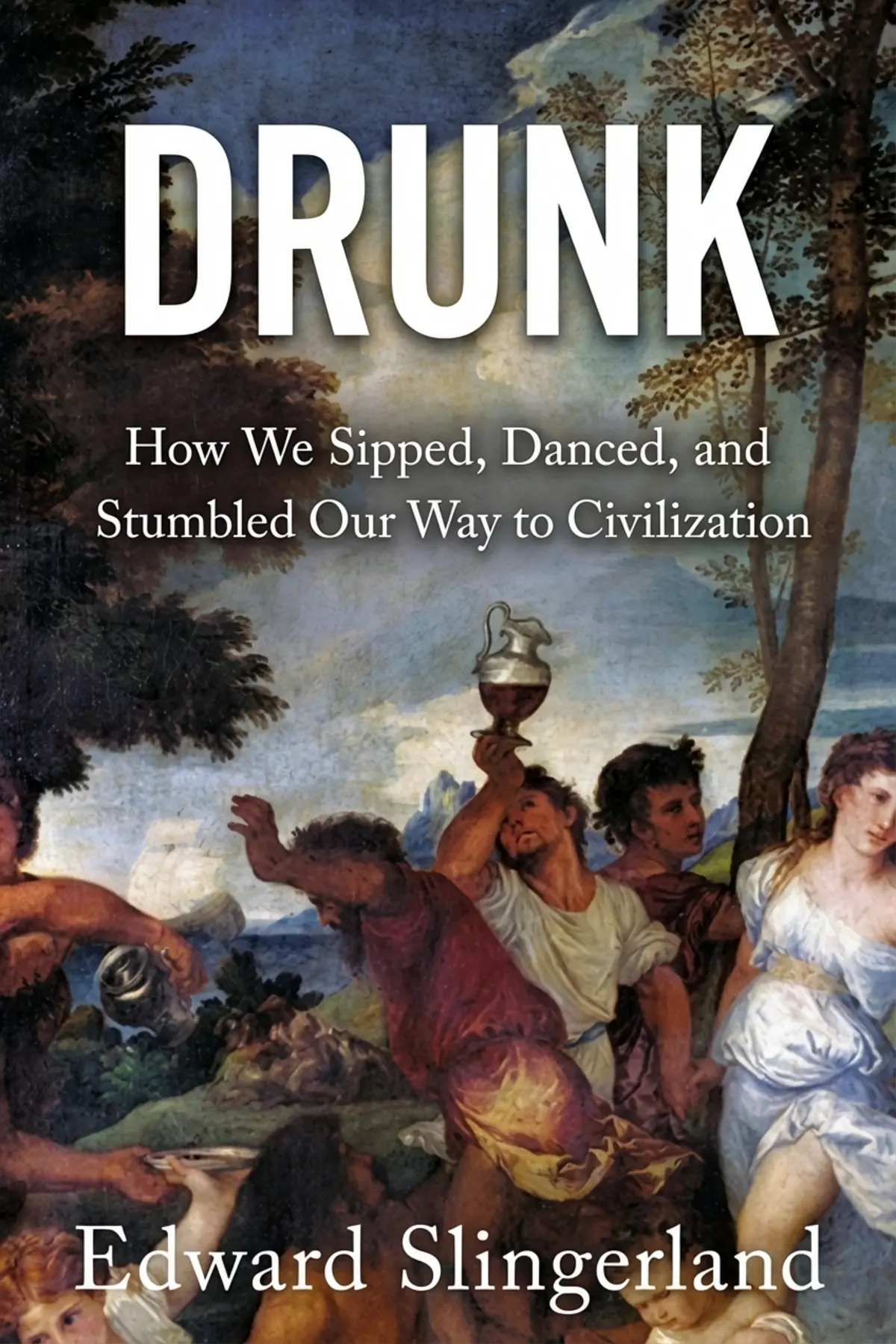
Drunk: How We Sipped, Danced, and Stumbled Our Way to Civilization
Edward Slingerland
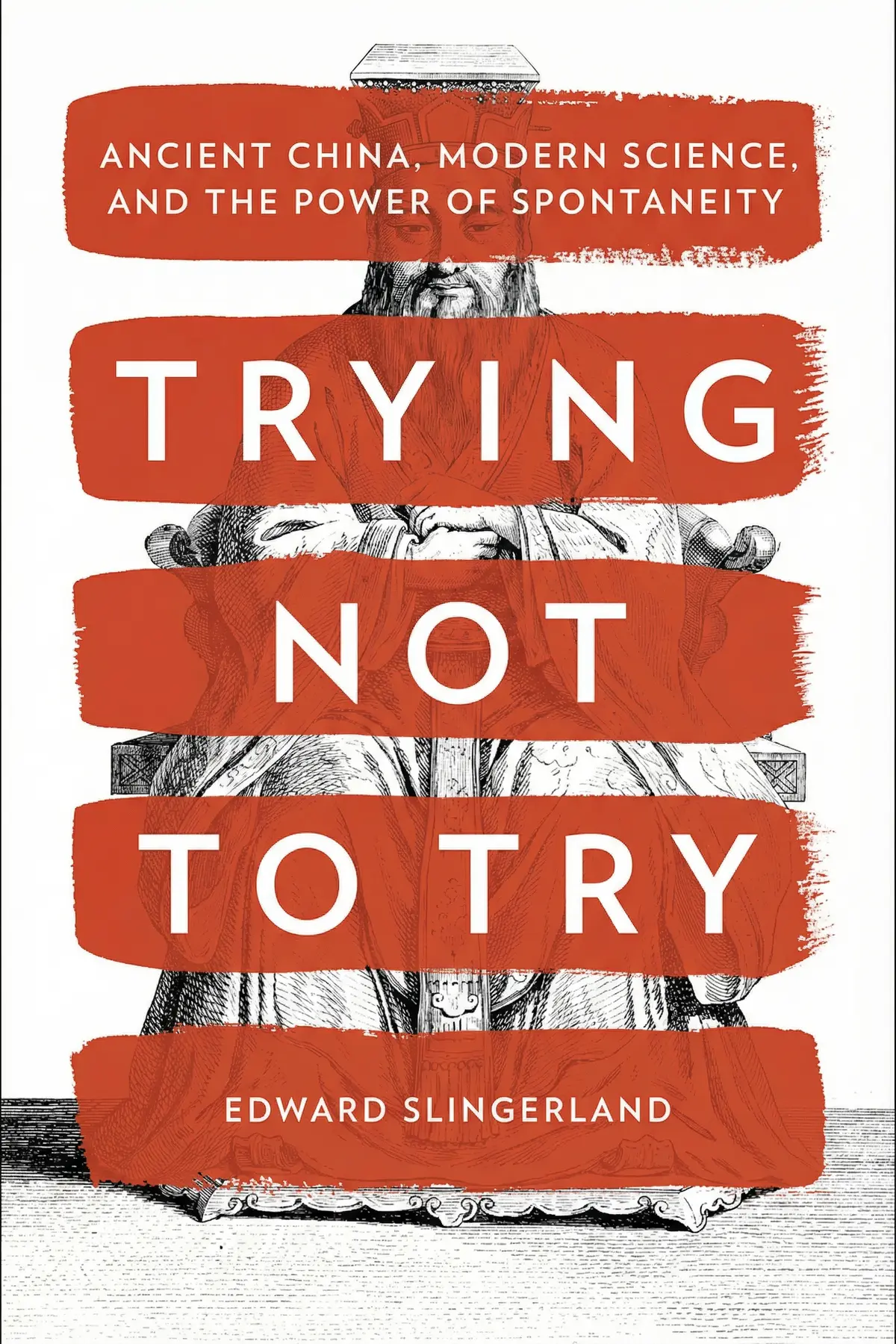
Explore the ancient Chinese philosophy of wu-wei to find balance between effort and ease. This summary bridges cognitive science and Eastern wisdom to help you achieve a more spontaneous, fulfilling life.
1 min 58 sec
In our fast-paced, high-pressure modern world, many of us feel caught in a never-ending cycle of striving. We are told that if we just work harder, plan better, and exert more willpower, we will eventually reach a state of happiness and success. Yet, for many, this constant effort leads only to burnout, anxiety, and a sense of being disconnected from what truly matters. We spend our days in jobs that drain us, our nights worrying about the future, and our few moments of leisure feeling restless. What if the secret to a better life wasn’t about trying harder, but about learning how to stop trying so much?
This is the central mystery explored in the work of Edward Slingerland. He invites us to look back thousands of years to ancient China, where philosophers wrestled with these exact same problems. These thinkers developed a concept called wu-wei, a state of ‘effortless action’ where the self vanishes and we become perfectly aligned with the world around us. It is that elusive ‘flow’ state we experience when we are so absorbed in a task that time seems to disappear.
In this summary, we are going to explore the throughline of Slingerland’s research: the idea that spontaneity is a skill that can be cultivated. We will see how different schools of thought—from the rigid rituals of Confucianism to the radical let-it-be attitude of Taoism—offer different maps to the same destination. We’ll learn why our ‘conscious’ mind is often an obstacle and how we can train our ‘unconscious’ mind to take the lead. By bridging ancient wisdom with modern cognitive science, we can discover a path to a more meaningful, charismatic, and effective way of being in the world. Get ready to discover why sometimes, the best way to get where you’re going is to stop pushing and start flowing.
2 min 15 sec
What if your most productive moments came from not thinking at all? Discover the ancient concept of wu-wei and how it merges the mind and body.
2 min 23 sec
Learn how achieving a state of flow doesn’t just make you more efficient—it actually makes you more attractive and influential to those around you.
2 min 20 sec
Can you actually practice being spontaneous? Explore the Confucian approach to training the mind through discipline and social habit.
2 min 17 sec
Forget everything you think you know. Discover why the Taoists believed that the only way to find the truth is to stop looking for it.
2 min 09 sec
Is there a middle ground between strict rules and total abandonment? Learn how to cultivate your innate goodness through the power of imagination.
2 min 38 sec
As we reach the end of our journey through the ancient Chinese art of spontaneity, one final question remains: how do we apply these seemingly contradictory lessons to our own lives? Should we follow strict routines like the Confucians, or should we let everything go like the Taoists? The truth is that both paths lead to the same mountain peak, and the best choice often depends on where you are starting from. If you feel chaotic and undisciplined, the structure of ritual might be exactly what you need to build the foundation for future ease. If you feel burnt out and over-controlled, the Taoist path of unlearning may be your salvation.
However, there is one non-negotiable requirement for any path you choose: sincerity. Slingerland emphasizes that you cannot fake wu-wei. If you are ‘acting’ generous just because you think you should, your unconscious mind will know, and others will sense the lack of ‘de.’ To truly reach the state of flow, you must find a purpose that goes deeper than just the desire for success or approval. You must truly love the process itself. Whether you are practicing a craft, navigating a social situation, or simply trying to be a better person, you must dedicate yourself to it wholeheartedly.
Think about your next social encounter—perhaps a first date or an important meeting. Instead of trying to ‘perform’ the perfect version of yourself, try to direct your focus entirely to the present moment. Notice the small details of the room, listen intently to the other person, and stop evaluating your own responses. This is the practical application of ‘trying not to try.’ By shifting your attention away from your ego and toward the world around you, you create the space for wu-wei to appear.
Ultimately, the early Chinese philosophers were practical people. They knew that we are built to do, not just to think. By combining their ancient techniques—meditation, visualization, and mindful habit—with what we now know about the brain, we can find a way to live that feels both effective and effortless. You don’t have to choose between working hard and being happy. By cultivating the power of spontaneity, you can find a way to do both. You can move through life with the grace of the woodcarver, the charisma of the sage, and the pure, uncomplicated joy of someone who has finally found their way home.
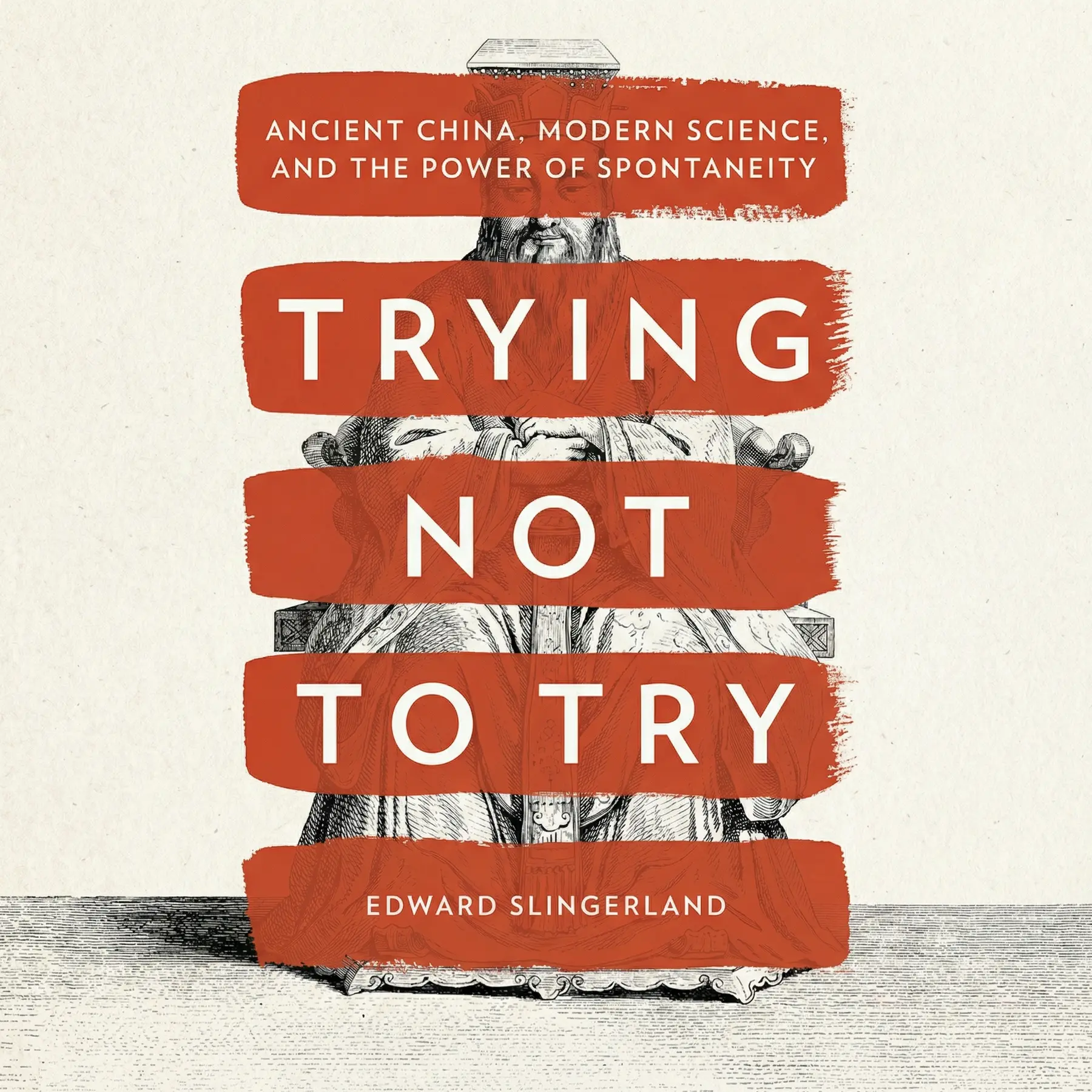
Have you ever wondered why the harder you try to relax, the more stressed you feel? Or why the best ideas often come when you aren’t thinking about work at all? Trying Not to Try dives into the fascinating paradox of spontaneity. Drawing on the works of ancient Chinese thinkers like Confucius and Laozi, author Edward Slingerland introduces the concept of wu-wei, or effortless action. This isn't just about being lazy; it's about reaching a state where your body and mind work in perfect harmony, allowing you to move through life with grace and effectiveness. The book promises a deep look at how modern cognitive science supports these ancient insights. You will learn how to navigate the tension between conscious effort and natural instinct. By the end, you’ll understand how to cultivate 'de'—a form of charismatic power that draws others to you—and how to align yourself with 'The Way' to find true purpose. It is a guide for anyone looking to escape the burnout of modern striving and rediscover the joy of authentic, spontaneous living.
Edward Slingerland is a distinguished academic and author who bridges the gap between the ancient world and modern research. He serves as a professor with a specialized focus on both cognitive science and Chinese thought. Slingerland is well-regarded for his ability to translate complex philosophical concepts into accessible insights for a contemporary audience. In addition to this work, he has authored What Science Offers the Humanities, further establishing his expertise in integrating empirical science with the rich traditions of humanistic study.
Edward Slingerland
Listeners find the content highly stimulating, particularly for its daring links between modern cognitive science, psychology, and ancient Chinese philosophy. The book is also considered very accessible, with one listener noting the clear and relatable examples, and listeners describe the experience as both engaging and educational. However, the prose style receives varied reactions, and listeners are divided concerning the actual utility of the advice offered.
As a long-time student of philosophy, I found Slingerland’s ability to bridge the gap between ancient Eastern thought and modern neurobiology absolutely refreshing. He manages to take the nebulous concept of 'wu-wei' and ground it in the tangible reality of 'hot' and 'cold' cognition, making the wisdom of Laozi and Confucius feel remarkably relevant to our current burnout culture. The prose is jaunty and often humorous, avoiding the stilted academic tone that usually plagues these kinds of interdisciplinary deep dives. I particularly loved the exploration of 'de' or charismatic power, as it explains that magnetic quality some people possess without ever seeming to try. While the central paradox of the book—trying not to try—is never fully 'solved,' that is exactly the point the author is making. It is a brilliant, thought-provoking read that stays with you long after the final chapter on Zhuangzi. Truly, this is the most accessible treatment of Chinese philosophy I have encountered in years.
Show moreThis book changed the way I think about productivity and social anxiety in one fell swoop. I used to think that 'trying harder' was the answer to every problem, but Slingerland shows that for the most important things in life—like love, art, and leadership—effort is actually the enemy. His explanation of how our conscious mind is a slow, clunky processor compared to the lightning-fast systems of our 'hot' cognition was a total lightbulb moment for me. I loved the stories about the ancient masters and how they navigated the world with such effortless grace. It is rare to find a book that is this intellectually rigorous while still being genuinely fun to read. The author’s personal interjections and humor keep the energy high even when the subject matter gets a little deep. If you’ve ever felt like you were 'trying too hard' and failing because of it, you need to read this.
Show moreRarely do you find a book that manages to marry neurobiology with the teachings of Laozi so seamlessly. Slingerland has a gift for taking these extremely 'arcane' ideas and making them feel like something you could discuss over a beer. I was particularly struck by the discussion on 'de' and how it acts as a social signal of trustworthiness; it explains so much about human attraction and professional success. The book manages to be both a great introduction to Chinese thought and a legitimate contribution to the study of human cognition. I found the author's voice to be witty and engaging, which helped me stay focused even during the more complex philosophical arguments. It isn't just a book about 'not trying,' it's a book about how to be a more integrated, authentic human being. I’ve already recommended it to several friends who are interested in the intersection of science and spirituality.
Show moreEver wonder why you perform best when you stop obsessing over the outcome? Slingerland tackles this mystery by weaving together the 'uncarved block' of Daoism with current psychological research into the subconscious mind. It is a fascinating look at why our prefrontal cortex often gets in our own way during high-pressure moments or social interactions. The author’s breakdown of the different approaches to spontaneity—from the rigorous self-cultivation of Confucius to the 'let it go' attitude of Laozi—provides a great framework for understanding human behavior. I appreciated how he didn't try to offer a simple 'five-step plan' to achieving flow, recognizing instead that it is an inherent paradox. My only minor complaint is that some of the chapters on Mencius felt a bit long-winded compared to the rest. Still, the connection between ancient virtue and modern charisma is a concept that will stick with me for a long time.
Show moreFinally got around to reading this after it sat on my shelf for months, and I was pleasantly surprised by how readable it actually was. Slingerland has a great voice; he’s insightful and playful, making even the densest parts of the 'Zhuangzi' feel approachable to a layperson like me. The way he contrasts the 'carving and polishing' of the Confucians against the Daoist desire to return to a natural state is just brilliant. It really helped me understand why my own attempts at being 'mindful' often feel so forced and counterproductive. Look, this isn't your typical self-help book where everything is wrapped up in a neat bow, but that’s why it feels more authentic than most. There are some repetitive bits in the middle where he circles back to the same paradoxes, but the overall journey is well worth the effort. It's a great pick for anyone who feels stuck in their own head.
Show moreSlingerland’s breakdown of the different 'flavors' of spontaneity is what makes this book stand out from the crowd. Most people just lump all Eastern philosophy together, but he shows the heated debates that happened between the Confucians and the Daoists over how to best live a natural life. The concept of 'trying but not forcing it' from Mencius was a highlight for me, as it offers a middle ground that feels much more achievable than just 'doing nothing.' The book is filled with great examples, ranging from jazz musicians to professional athletes, which helps illustrate how these ancient ideas look in the 21st century. It’s a challenging read at times because it forces you to sit with uncomfortable paradoxes, but that’s where the growth happens. I’d recommend it to anyone who enjoys books by people like Daniel Kahneman or Mihaly Csikszentmihalyi.
Show moreThe concept of 'wu-wei' is undeniably fascinating, and I think the author does a solid job explaining why we value authenticity so much in others. However, the book struggles with its own identity, oscillating between a popular science book and a scholarly text on the Analects. Some sections are incredibly light and funny, while others require you to re-read sentences three times just to keep the various philosophers straight in your head. I enjoyed the parts about how our brains process 'cold cognition' versus 'hot cognition,' as that gave some scientific weight to the old stories. But by the time I reached the end, I felt like I had learned a lot of history without gaining much insight into how to actually apply these ideas to my life. It is an interesting intellectual exercise, but as a guide for finding spontaneity, it left me feeling a bit more confused than when I started.
Show moreTo be fair, Slingerland does an admirable job of making ancient Chinese philosophy feel fresh and exciting for a modern audience. The book is packed with interesting anecdotes and scientific studies that illustrate the power of the unconscious mind and the limits of willpower. I found the discussion of 'de' particularly enlightening, especially the idea that we can sense when someone is faking their spontaneity. That said, the book often feels like it's repeating the same core message in every chapter just with a different historical figure. Once you understand the basic conflict between effort and ease, the later chapters start to feel a bit redundant. I also thought the scientific links were a little thin in places, occasionally feeling like they were tacked on to justify the philosophical discussion. It’s a good book, but it probably could have been about fifty pages shorter without losing much impact.
Show moreI really wanted to like this after hearing a glowing interview on the radio, but I found the actual reading experience to be incredibly sluggish and dry. The book promises a look at the science of spontaneity, yet it spends what feels like eighty percent of its time bogged down in the minutiae of ancient history and warring states philosophy. I was hoping for more practical takeaways or a deeper exploration of 'flow' in the modern sense, but instead, I got a history lesson that felt repetitive and dense. To be fair, Slingerland is clearly an expert, but his writing style didn't keep me engaged enough to push through the more academic middle sections. It felt like I was back in a college lecture hall, checking the clock every five minutes to see if we were done yet. If you aren't already obsessed with Chinese religious history, you might find this one a bit of a slog.
Show morePicked this up thinking it was a modern self-help guide on achieving flow states, but it turned out to be mostly a history book. While I don't mind learning about ancient cultures, the way this was marketed felt a bit misleading to me. The author goes into agonizing detail about the differences between various schools of Chinese thought, which might be great for a student of Asian studies, but it was too much for what I was looking for. I found the writing style to be a bit inconsistent; sometimes it's very casual and then it suddenly dives into heavy academic jargon. I struggled to find the 'science' part of the book particularly useful, as it mostly just confirmed things that seem like common sense. Honestly, I found myself skimming large sections just to get to the conclusion, which ultimately tells you that there's no easy way to achieve wu-wei anyway.
Show more
Anthony Pratkanis
William B. Irvine
Richard Wiseman
AUDIO SUMMARY AVAILABLE
Get the key ideas from Trying Not to Try by Edward Slingerland, plus 5,000+ more titles in English and Thai.







