
19 min 01 sec
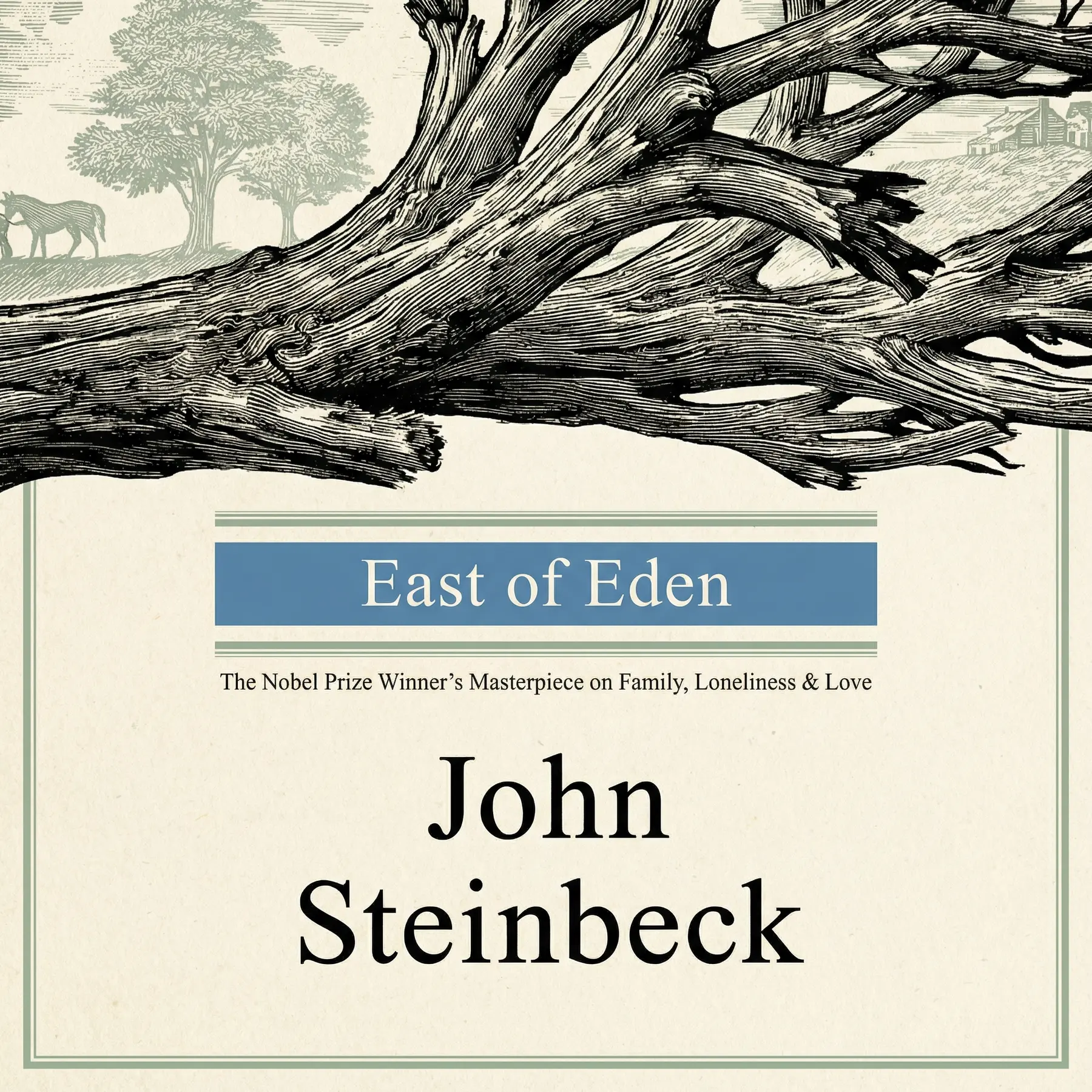
East of Eden: The Nobel Prize Winner’s Masterpiece on Family, Loneliness & Love
By John Steinbeck
A sweeping multi-generational saga exploring the inherent struggle between good and evil, the depths of sibling rivalry, and the transformative power of free will as two families navigate love and betrayal in California’s Salinas Valley.
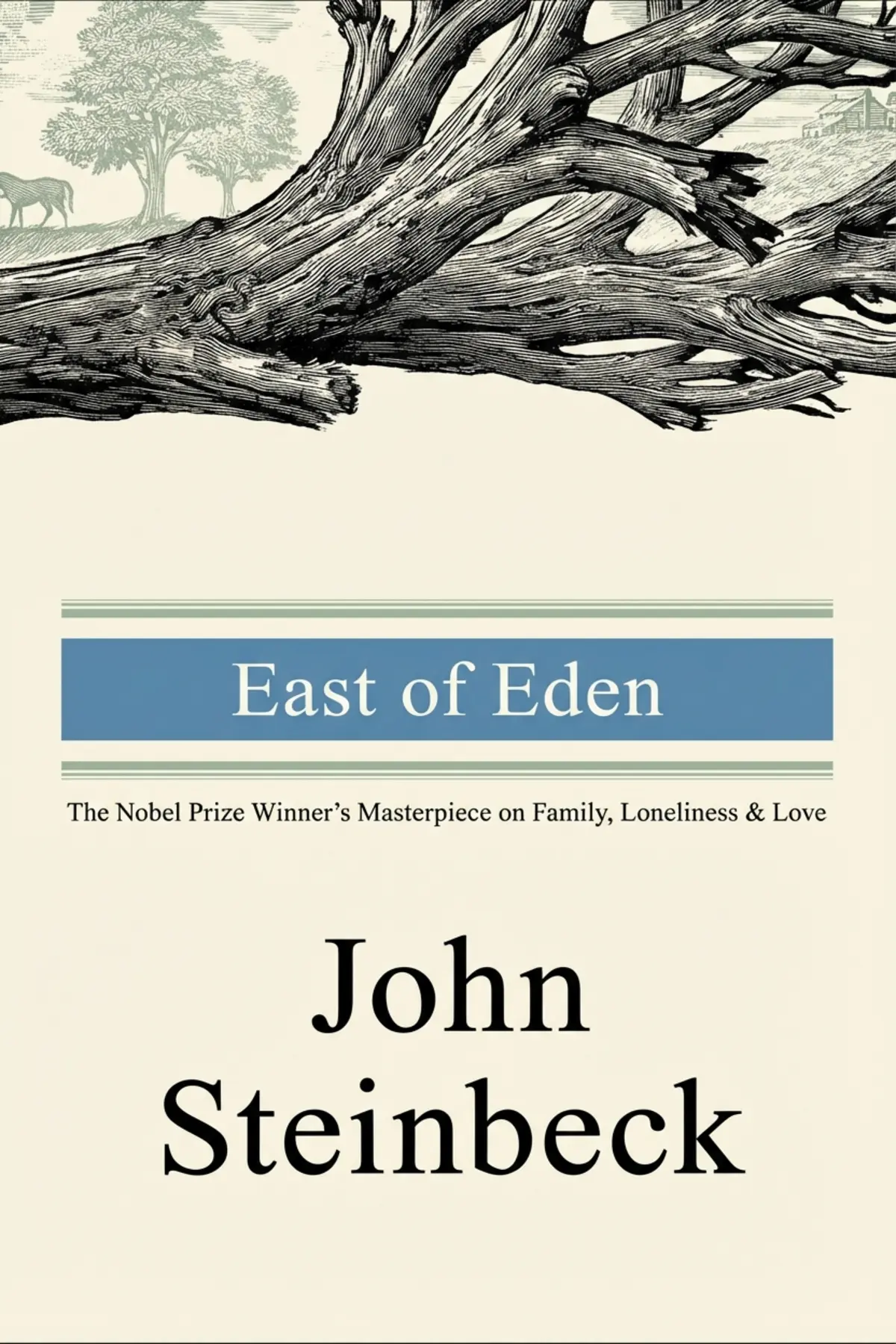
Table of Content
1. Introduction
1 min 36 sec
Imagine a landscape that is both beautiful and brutal, where the fertile soil of a valley mirrors the complicated growth of the human soul. This is the setting for a story that has captivated readers for decades, serving as a mirror to our own deepest struggles and highest aspirations. When this narrative first arrived in the mid-twentieth century, it sparked intense debate and even faced bans because it refused to look away from the darker corners of the human experience. It is a family drama of the highest order, but it is also much more than that. It is an exploration of the ancient archetypes that define our existence.
At its heart, this is a retelling of the first human conflict—the story of Cain and Abel. By placing this biblical framework within the rugged expansion of the American West, the narrative reveals something fundamental about the way we relate to one another. We see how the thirst for love can turn into the poison of jealousy when it is left unquenched. We witness the way families can become tangled in cycles of dysfunction, passing down traumas like heirlooms from one generation to the next.
Through the eyes of the Trask family, we will encounter fraudulent heroes, calculating villains, and seekers of truth. We will explore the idea that our destiny is not something written in the stars or dictated by our bloodlines, but something we forge with every choice we make. As we move through this journey, keep one question in mind: are we truly prisoners of our past, or do we have the power to break free? Let’s begin our exploration by traveling back to a modest farm in Connecticut, where the seeds of this epic conflict were first sown.
2. The Weight of a Fabricated Legacy
2 min 12 sec
Discover how a father’s tall tales and a legacy of deceit set two brothers on a collision course, proving that the stories we tell can be as damaging as the secrets we keep.
3. The Ancient Echo of the First Brothers
2 min 04 sec
Explore the deep psychological parallels between the Trask brothers and the biblical figures of Cain and Abel, where a single rejected gift sparks a lifetime of resentment.
4. The Arrival of a Pure Malevolence
1 min 58 sec
Witness the entrance of Cathy Ames, a character who challenges our understanding of human nature and acts as a catalyst for the Trask family’s most difficult trials.
5. The Valley of Broken Dreams
1 min 57 sec
Follow Adam to the Salinas Valley, where his idealistic vision of a family paradise is shattered by reality and a single, violent act of abandonment.
6. The Philosophical Core: Timshel
1 min 57 sec
Dive into the profound conversation between a neighbor and a servant that reveals the book’s central theme: the power of individual choice over destiny.
7. A New Generation and the Return of the Shadow
1 min 55 sec
See the sibling rivalry reborn in Adam’s twin sons, Cal and Aron, as they struggle to find their own identities under the weight of their father’s preferences.
8. The Gift Rejected and the Revenge of the Spurned
2 min 01 sec
Witness the heartbreaking moment when a son’s attempt to buy love leads to a betrayal that shatters the family’s remaining fragile peace.
9. The Final Act of Grace
1 min 45 sec
Experience the powerful conclusion where a single word provides the key to breaking a multi-generational cycle of guilt and despair.
10. Conclusion
1 min 36 sec
As we reach the end of this journey through the Salinas Valley, we are left to contemplate the massive weight of the choices we make every day. The saga of the Trasks and the Hamiltons is more than just a historical fiction; it is a profound meditation on the human condition. We have seen how the simple absence of love can trigger a chain reaction of pain that lasts for decades, and how the secrets we keep can become the very walls that imprison us. Yet, through the wreckage of these lives, a singular truth emerges: our origins do not have to be our end.
The throughline of this entire narrative is the rejection of fatalism. It challenges the idea that we are merely products of our biology or our upbringing. Whether you identify with the gentle Adam, the embittered Charles, the searching Cal, or the idealistic Aron, the lesson remains the same. You are the architect of your own character. The word ‘Timshel’ serves as a beacon of light, reminding us that at any given moment, we can choose to turn away from the shadows and toward the light.
Take this lesson with you as you navigate your own relationships and your own internal struggles. When you feel the pull of old resentments or the weight of your family’s expectations, remember that you have the power to decide. You may choose to be kind when you feel like being cruel. You may choose to be honest when it is easier to lie. You may choose to love, even when you have been rejected. In the grand tapestry of life, your individual will is the thread that determines the final pattern. The door is open, the choice is yours, and as the story reminds us—thou mayest.
About this book
What is this book about?
This narrative explores the complex moral landscape of the human heart through the interconnected lives of the Trask and Hamilton families. Set against the backdrop of the American West, it reimagines the biblical story of Cain and Abel, stripping away ancient myths to reveal the raw, timeless reality of human jealousy and the desperate need for paternal validation. It is a story that asks whether we are destined to repeat the sins of our ancestors or if we possess the internal strength to chart a new course. The promise of this work lies in its profound philosophical inquiry into the nature of choice. By following the lives of brothers who are constantly at odds and a woman whose capacity for darkness seems limitless, the story illustrates how the impulse for evil is often rooted in the absence of love. Yet, it ultimately offers a message of profound hope. It suggests that while we are all descendants of a flawed legacy, the capacity for redemption is a gift we can claim at any moment through the exercise of our own will.
Book Information
About the Author
John Steinbeck
John Steinbeck is widely considered one of the most influential novelists in American history. He won the Nobel Prize for Literature in 1962 for his realistic and imaginative writings, combining as they do sympathetic humor and keen social perception. His other books include The Grapes of Wrath, Of Mice and Men, and Tortilla Flat.
Ratings & Reviews
Ratings at a glance
What people think
Listeners find this book to be a top favorite, praising its enchanting prose and immersive storytelling. Beyond that, the story offers deeply interesting characters and delivers constant, gripping momentum. Listeners also value the highly reflective content, with one listener pointing out the way it investigates both the light and dark sides of human nature.
Top reviews
Nim
Picked this up after years of avoiding Steinbeck because of high school trauma involving dusty ranch hands. I was wrong to wait. This isn't just a book; it’s a visceral exploration of the human soul and the weight of inherited sin. The Salinas Valley breathes on the page, almost a character itself, providing a backdrop for the Trask and Hamilton families. Steinbeck’s prose is surprisingly accessible for such a 'heavy' classic, making the multi-generational drama feel immediate. While the introduction felt a bit slow, the arrival of Cathy changed everything. She is perhaps the most chillingly realized villain in literature, a void of empathy that forces everyone around her to choose their path. The concept of timshel—the idea that we have a choice over our nature—is a revelation. It’s a massive, sprawling masterpiece that manages to be both a philosophical treatise and a total page-turner. I’m still thinking about Lee and his quiet wisdom weeks later.
Show moreZoey
Wow, this book lived up to every bit of the hype and then some. I expected a dry, difficult classic but what I got was a gripping family epic that I couldn't put down. The writing is incredibly vivid, making you feel the heat of the valley and the tension in every room. Cathy is a terrifying force of nature, and her interactions with Adam are some of the most stressful scenes I’ve ever read. Steinbeck has this way of making even the smallest character feel like a whole person with a complex history. Personally, I think the way he handles the theme of free will is what makes this a five-star read. It doesn't just tell you that you can change; it shows you the agonizing work required to do so. It’s a long journey, but every single page feels essential to the final, crushing conclusion.
Show moreBua
The chapter on Olive Hamilton is perhaps one of the most charming things I have ever read in my life. While the Trask family provides the dark, biblical tension, the Hamiltons offer the warmth and light that makes this book feel balanced. Steinbeck’s love for his own ancestors shines through in every word, creating a tapestry of early modern America that feels authentic and lived-in. I loved the way the two families eventually intertwined, showing how different lineages handle the struggle of survival. Cal Trask broke my heart repeatedly as he fought against the shadow of his mother. Look, it’s a long book, and you have to be in the right headspace for the slow-build storytelling. But if you give it the time, it rewards you with insights into human nature that few other authors can match. It’s a beautiful, dusty, and ultimately hopeful story about the choices we make.
Show morePui
Finally got around to this after hearing people rave about it for years. It is rare that a 'must-read' actually delivers on the promise of being life-changing, but East of Eden truly is. The way Steinbeck explores the dual nature of man—the capacity for great sin and even greater redemption—is masterfully done. I felt like I was living in the Salinas Valley alongside these characters, experiencing their failures and small victories personally. The relationship between the brothers, both in the first and second generations, is such a poignant look at the need for parental love. 'Thou mayest' is a phrase that will stick with me forever now. It’s a dense book, but the prose flows so easily that it never feels like a slog. Even the minor characters feel like they have a soul and a purpose in the narrative. It’s easily one of my new favorites.
Show moreDream
Direct and uncompromising, this novel doesn't pull any punches when it comes to the darker side of our nature. Steinbeck’s retelling of the Cain and Abel story is more than just a literary gimmick; it’s a profound look at human jealousy and the search for acceptance. I found myself obsessing over Lee’s character, as he represents the intellectual heart of the entire story. His quest to translate the Hebrew text and find the true meaning of timshel is the most moving subplot in the book. Not gonna lie, I was tearing up by the time I reached the final chapter. The way the themes of inheritance and free will come together is absolutely genius. It’s a sprawling, epic family saga that makes you reflect on your own family history and the choices that shaped you. If you’re looking for a book that is both an exciting pageturner and a deep thinker, this is the one.
Show moreHiroshi
After finishing the last page, I just sat there staring at the wall for ten minutes. This book is a literal masterpiece that feels like it contains the entirety of human experience within its covers. The atmosphere of the Salinas Valley is so thick you can almost taste the dust and smell the sage. Every character, from the main Trask line to the eccentric Hamiltons, feels vital and necessary to the story’s architecture. I loved the way the narrative shifted between different generations, showing how the same mistakes are made and sometimes corrected. Personally, I think the writing style is perfect—unpretentious yet deeply poetic in its observations of the land and the people. It explores the light and dark within us all without being overly preachy or judgmental. It is a massive, emotional, and thought-provoking achievement. Steinbeck was right to call this his greatest work.
Show morePrayoon
How do you even begin to describe a story this massive? Steinbeck takes the Biblical foundation of Cain and Abel and stretches it across the California landscape with surgical precision. The parallel between the brothers is obvious but executed with such heart that you can’t help but root for the 'bad' ones. I found myself deeply invested in Cal's struggle to be better than the blood in his veins. Lee is easily the best character, acting as the intellectual glue holding the Trask household together. To be fair, the Hamilton sections occasionally felt like a different book entirely, slowing down the central momentum of the Trask drama. Some might find the philosophical tangents a bit self-indulgent or preachy in parts. However, the emotional payoff in those final chapters is absolutely devastating. It’s a gorgeous, flawed, and deeply human achievement that explores our capacity for both cruelty and kindness.
Show moreLevi
Is it possible for a book to be both a fast-paced thriller and a deep philosophical meditation? Apparently, yes, because Steinbeck managed it here. The sections involving Cathy are genuinely pulse-pounding, reading like a modern psychological drama despite the historical setting. She is a fascinating, repulsive creature that keeps you turning pages just to see what damage she’ll do next. On the other hand, the conversations between Lee and Samuel Hamilton are slow, thoughtful, and full of profound wisdom. Truth is, I preferred the Lee and Samuel scenes to the actual plot sometimes because their dialogue was so rich. My only gripe is that the ending felt a bit rushed compared to the slow burn of the first four hundred pages. Also, Adam Trask can be frustratingly passive at times, which makes it hard to sympathize with his perpetual misery. Still, the overall experience is incredible.
Show moreLily
As someone who usually finds 'classics' a bit dry, I was pleasantly surprised by how readable this was. Steinbeck has a gift for simple, direct language that still manages to convey massive emotional weight. You don't need a PhD to understand what he's trying to say about the choices we make and the legacies we leave behind. The characters bounding off the page are so well-drawn that they feel like real people you've known your whole life. Gotta say, though, the depiction of women is a bit polarized between the 'saint' and the 'monster' archetypes. Cathy is a great villain, but she’s essentially the only significant female presence for large chunks of the book. I wish there had been more characters like Abra earlier on to balance the scales. Despite that, the story is a powerhouse of American literature. It’s a compelling, emotional journey that I think everyone should experience at least once.
Show moreConnor
Not what I expected, and frankly, I don't get the worship surrounding this novel. It feels incredibly bloated and full of its own importance, like Steinbeck was trying way too hard to write 'The Great American Novel.' The characters are either unnaturally saintly or cartoonishly evil, leaving very little room for actual nuance in their behavior. I found the endless descriptions of the California landscape to be a chore to get through. Does every single hill need a three-page backstory before we can get to the plot? The whole timshel discussion felt like a forced philosophy lesson rather than a natural part of the story. It’s a ponderous, melodramatic mess that could have been half the length and twice as effective. I know it's a classic, but it just felt self-satisfied and dated to me. Maybe I'm missing something, but I was bored for eighty percent of the time.
Show moreReaders also enjoyed
AUDIO SUMMARY AVAILABLE
Listen to East of Eden in 15 minutes
Get the key ideas from East of Eden by John Steinbeck — plus 5,000+ more titles. In English and Thai.
✓ 5,000+ titles
✓ Listen as much as you want
✓ English & Thai
✓ Cancel anytime







