
15 min 50 sec
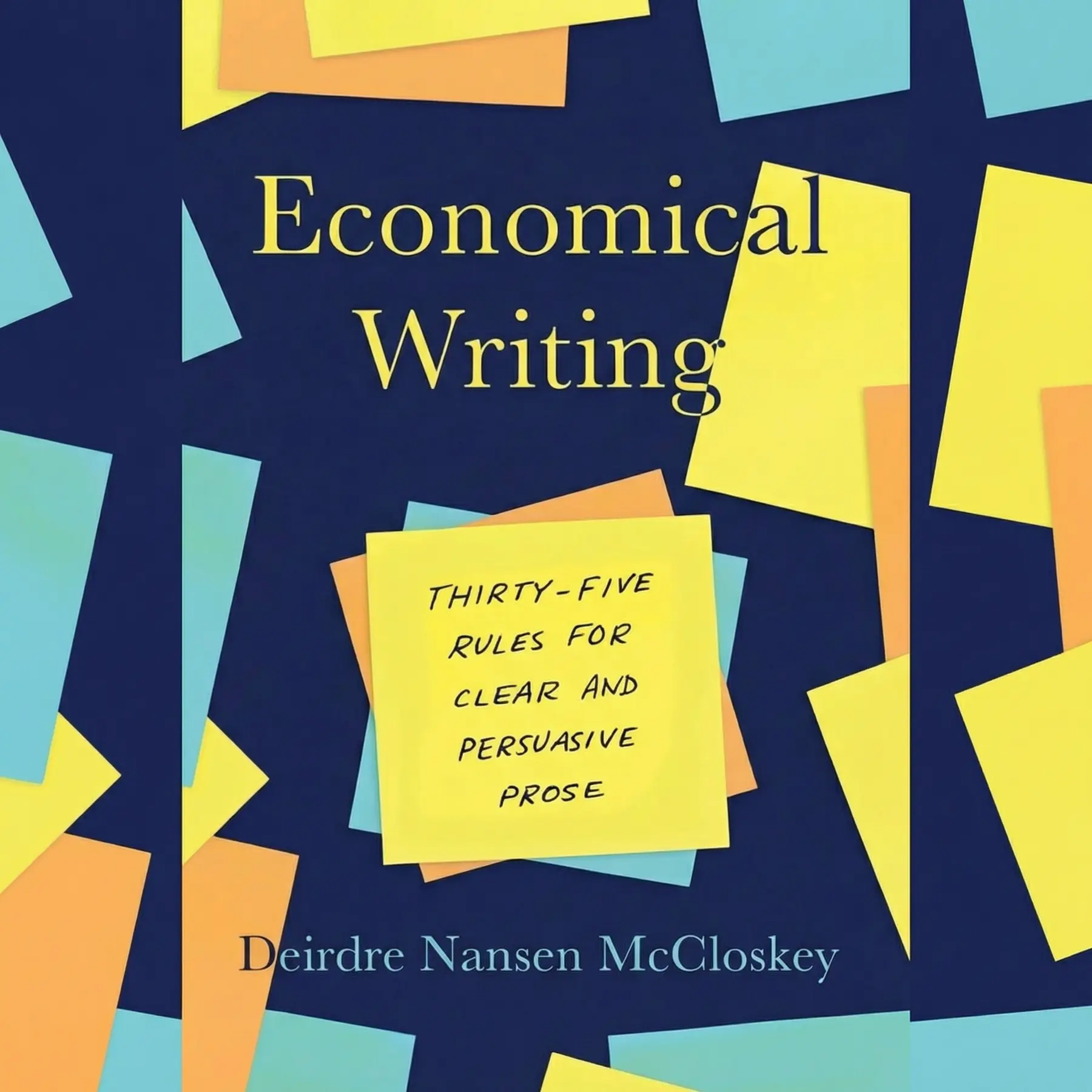
Economical Writing: Thirty-Five Rules for Clear and Persuasive Prose
Economical Writing provides a practical roadmap for achieving clarity and persuasion. Learn how to refine your prose by cutting clutter, choosing precise language, and treating writing as a vital tool for critical thinking.
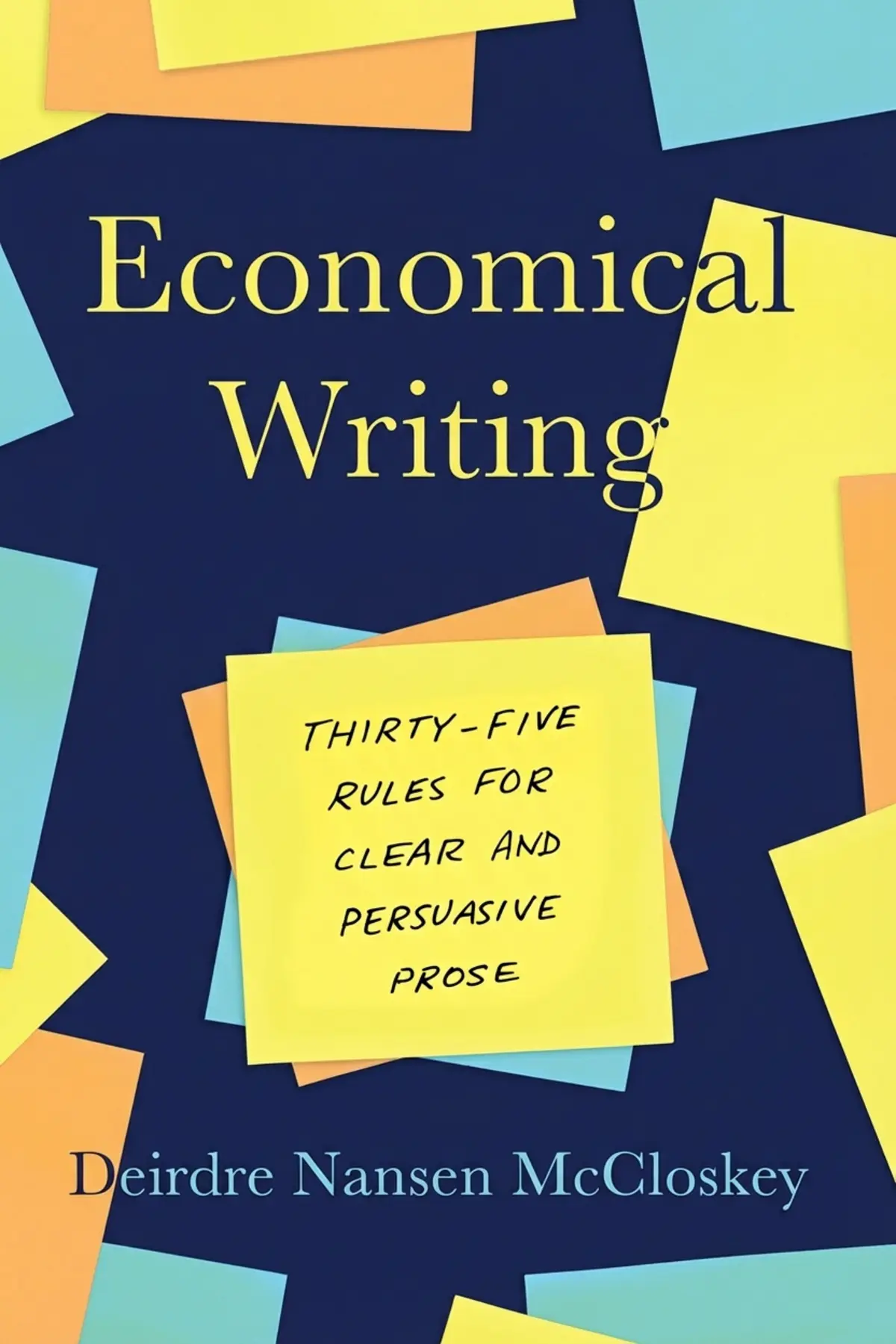
Table of Content
1. Introduction
1 min 34 sec
Think about the last time you had to read a dense professional report or a complex academic paper. Did the ideas jump off the page, or did you find yourself reading the same paragraph three times just to grasp the basic point? Most of us have been there, lost in a sea of unnecessary words and confusing jargon. This is precisely the problem addressed in Economical Writing. At its heart, this is a book about efficiency—not just the efficiency of the writing process itself, but the efficiency of communication. It suggests that clear writing is actually a form of clear thinking, and that by cleaning up our prose, we are actually sharpening our minds.
Throughout this exploration, we are going to look at writing as a craft that is never truly finished. We often think of writing as something that happens at the end of a project, a way to record what we’ve already discovered. But as we’ll see, writing is actually the laboratory where the discovery happens. It is a lifelong practice, much like a musician practicing scales or an athlete refining their form.
We will walk through the fundamental principles of clarity, the importance of choosing the right words, and the technical nuances that separate amateur prose from professional work. We’ll look at why active verbs are your best friends and why abstract nouns are often your worst enemies. By the time we’re done, you’ll have a new perspective on how to approach the blank page—not as a daunting chore, but as an opportunity to build a bridge between your ideas and your reader’s mind. Let’s explore how to make your words work harder so you don’t have to.
2. The Infinite Nature of the Writing Craft
2 min 04 sec
Writing is not a one-time task but a continuous professional duty. Discover why the work of communication never truly ends and how it shapes your professional identity.
3. Writing as an Engine of Thought
1 min 40 sec
Don’t wait for the perfect idea to strike before you start typing. Learn how the process of putting words on paper actually helps you discover what you truly believe.
4. The Foundations of Clarity and Economy
1 min 51 sec
Every word in your sentence should have a job to do. Explore the principles of making your prose more efficient and avoiding the trap of ‘elegant variation.’
5. Leveraging Classical Rhetoric for Modern Writing
1 min 48 sec
The ancient Greeks knew a thing or two about persuasion. Learn how the concepts of invention, arrangement, and style still apply to your work today.
6. Choosing Vigor and Specificity
1 min 54 sec
Abstract language can kill a good argument. Find out why active verbs and concrete nouns like ‘sheep and wheat’ are the secrets to powerful prose.
7. The Reader as a Conversation Partner
1 min 53 sec
Your writing shouldn’t feel like a lecture; it should feel like a dialogue. Learn how to develop an approachable tone and why reading aloud is a vital check.
8. Mastering the Details of Punctuation and Tone
1 min 53 sec
Small marks like commas and semicolons can have a big impact. Discover how to use punctuation to guide your reader’s attention and maintain a confident style.
9. Conclusion
1 min 13 sec
As we wrap up our journey through the principles of Economical Writing, the most important takeaway is that your writing is a reflection of your thinking. There is no such thing as a ‘good idea poorly expressed.’ If the expression is poor, the idea remains incomplete. We have seen that writing is a lifelong craft, a tool for discovery, and a disciplined exercise in clarity and economy.
By choosing active verbs, concrete nouns, and a conversational tone, you can transform your prose from a dense thicket into a clear path. Remember the importance of beginning early, revising often, and reading your work aloud to ensure it has a natural rhythm. Be kind to your reader by keeping your terminology consistent and your structure logical.
Effective writing doesn’t happen by accident; it is the result of conscious choices and a respect for the power of language. Whether you are writing a brief email or a three-hundred-page book, the same rules apply. Every time you cut a redundant word or clarify a confusing sentence, you are becoming a more persuasive and more professional communicator. Take these rules into your daily work, embrace the process of constant refinement, and enjoy the clarity that comes when you finally make your words work as hard as you do.
About this book
What is this book about?
Economical Writing is a guide designed to transform the way professionals and students approach the written word. It moves beyond basic grammar to explore the deep connection between clear expression and clear thinking. The book promises to help you strip away the dense, jargon-heavy layers of traditional academic or professional prose, replacing them with directness, vigor, and grace. By following thirty-five practical rules, readers learn to navigate the complexities of sentence structure, word choice, and tone. The core promise is that by making your writing more economical—meaning more efficient and less wasteful—you actually make your arguments more powerful. Whether you are drafting a technical report, an academic paper, or a business proposal, these principles serve as a toolkit for building a stronger connection with your audience and ensuring your ideas are not just seen, but understood and remembered.
Book Information
About the Author
Deirdre Nansen McCloskey
Deirdre Nansen McCloskey is a senior fellow at the Cato Institute and Emerita Distinguished Professor at the University of Illinois at Chicago, with a distinguished career spanning economics, history, English, and communication. Known for her interdisciplinary work, she’s authored over 25 books and 500 articles on a wide range of topics, from economic history to rhetoric and feminism. Among her best-known works are The Rhetoric of Economics, Crossing, and the Bourgeois Era trilogy, which explores the economic and social history behind the modern world’s prosperity.
Ratings & Reviews
Ratings at a glance
What people think
Listeners find the book remarkably helpful, and one listener labels it a necessary desk reference. They also value its easy readability and brisk pacing. However, the standard of the writing itself draws varied reactions.
Top reviews
Ladawan
Finally got around to reading McCloskey’s classic, and it’s essentially the Strunk and White for anyone dealing with data. The core message that writing is an instrument of thought—not just a way to record it—hit me like a ton of bricks. If you cannot express your economic argument clearly, you probably don't understand the underlying math as well as you think you do. It’s a slim volume, yet it packs 35 rules that slash through the dense, jargon-heavy fog of typical academic prose. I especially appreciated the push to avoid 'elegant variation' and the reminder to write so you cannot be misunderstood. Keeping this as a permanent desk reference from now on.
Show moreRose
As someone who spends hours every day drafting reports, this book is a revelation. The truth is that most of us are taught to write 'academically,' which usually just means writing badly to sound smart. McCloskey flips the script. She emphasizes that good writing requires honesty and brutal self-criticism. The idea that style and content are inseparable is a game-changer. I’ve started applying the rule of 'heavy revision' to my weekly memos, and the difference in how my team responds is palpable. It isn't just a book for economists; it’s a book for anyone who wants their ideas to actually land. Highly recommended.
Show moreNang
This book changed how I view my keyboard. McCloskey manages to turn the chore of editing into a creative challenge. The 35 rules for clear and persuasive prose are presented with a touch of humor that makes the medicine go down easily. I particularly liked the focus on 'invention' and 'arrangement'—concepts from classical rhetoric that we’ve sadly lost in modern education. Writing is thinking, and this book provides the whetstone to sharpen those thoughts. It’s tiny enough to fit in a laptop bag, and you should keep it there. Every page is a reminder that being understood is a professional duty.
Show moreSienna
Ever wonder why most economic papers are so agonizing to get through? McCloskey identifies the disease: a lack of care for the reader. This book is the cure. By focusing on 'Economical Writing,' she shows us how to strip away the fluff that hides our best ideas. I loved the section on why we shouldn't use initials for everything—it’s like an alphabet soup out there! The pacing of the book is excellent, and the short chapters make it easy to digest one rule at a time. Whether you're an undergrad or a tenured professor, your prose will improve after reading this. It’s a gem.
Show moreLars
Short, punchy, and surprisingly funny for what is ostensibly a manual for social scientists. McCloskey has a gift for simple readability, making complex rhetorical concepts accessible to those of us who haven't touched a liberal arts syllabus in a decade. I loved the chapters on avoiding the passive voice and the 'Latinate' plague that infects so much business writing. To be fair, she does get a bit 'preachy' toward the end, but the pacing is so quick that you’re through the annoying bits before they can truly grate on your nerves. It’s a solid, practical guide for sharpening your professional voice.
Show moreGai
Look, I appreciate the push for clarity, but the section on 'folk economics' really jumped off the rails for me. Sneering at words like 'skyrocketing' or 'just' seems like an attempt to strip the humanity out of the discipline under the guise of being 'scientific.' However, if you ignore the weirdly aggressive stance on common metaphors, the actual writing advice is gold. The 31 short chapters move at a lightning pace. She forces you to confront your own laziness, particularly when it comes to overusing acronyms and initials. It is an effective, albeit opinionated, toolkit for anyone looking to stop boring their readers to death.
Show moreAkosua
To be fair, I initially picked this up just because it was a required text for my graduate seminar. I expected a dry list of 'thou shalt nots,' but I found a witty, sharp, and deeply useful companion. The advice to 'visualize your target audience' sounds basic, yet so few people actually do it. My only real gripe is that as a non-native English speaker, some of the very specific linguistic prohibitions don't translate well to how we communicate in international contexts. Still, the underlying principles of brevity and precision are universal. It is easily the most readable book on writing I've encountered in years.
Show moreFord
Why did no one tell me that writing advice could be this snarky? McCloskey's disdain for the way modern economists write is palpable, and frankly, it's hilarious. She takes aim at the 'sesquipedalian' vocabulary—five-dollar words used to mask two-cent ideas—and hits the bullseye every time. While I think her total ban on Latinate words is a bridge too far for technical papers, her point about clarity is undeniable. The book is short enough to read in a single sitting, but you’ll want to go back to it every time you start a new project. A must-have for the social science shelf.
Show moreManika
Is it a bit ironic that a book about prose style occasionally feels like a lecture from a very grumpy relative? While the focus on clarity is noble, McCloskey’s rigid stance on certain things feels increasingly dated in the digital age. For instance, the demand that we write out numbers as words regardless of complexity is just bizarre to a modern reader. And don't get me started on the advice regarding spacing; suggesting two spaces after a comma feels like a barbaric relic of the typewriter era. There are certainly gems here about revision and knowing your audience, but you have to sift through a lot of curmudgeonly posturing to find them.
Show moreBunyarit
Frankly, the irony here is thick enough to cut with a knife. For a book titled 'Economical Writing,' it spends a surprising amount of time on repetitive anecdotes and sneering at 'millennial' habits. I agree that passive voice is a problem, and yes, we should all revise more. But do we really need a lecture on why 'skyrocketing' is a bad word while the author uses endless scare quotes? The advice is often contradictory. One page tells you to be brief, and the next is a rambling story about 19th-century historians. It’s useful, but it’s definitely not the masterpiece some of my professors claimed it was.
Show moreReaders also enjoyed
AUDIO SUMMARY AVAILABLE
Listen to Economical Writing in 15 minutes
Get the key ideas from Economical Writing by Deirdre Nansen McCloskey, plus 5,000+ more titles in English and Thai.
- 5,000+ titles
- Listen as much as you want
- 7-day free trial
- Cancel anytime







