
30 min 05 sec
Economics for the Common Good
By Jean Tirole
Nobel laureate Jean Tirole explores how economic principles can be harnessed to promote the public interest, addressing issues from climate change and financial regulation to the challenges of the digital age.
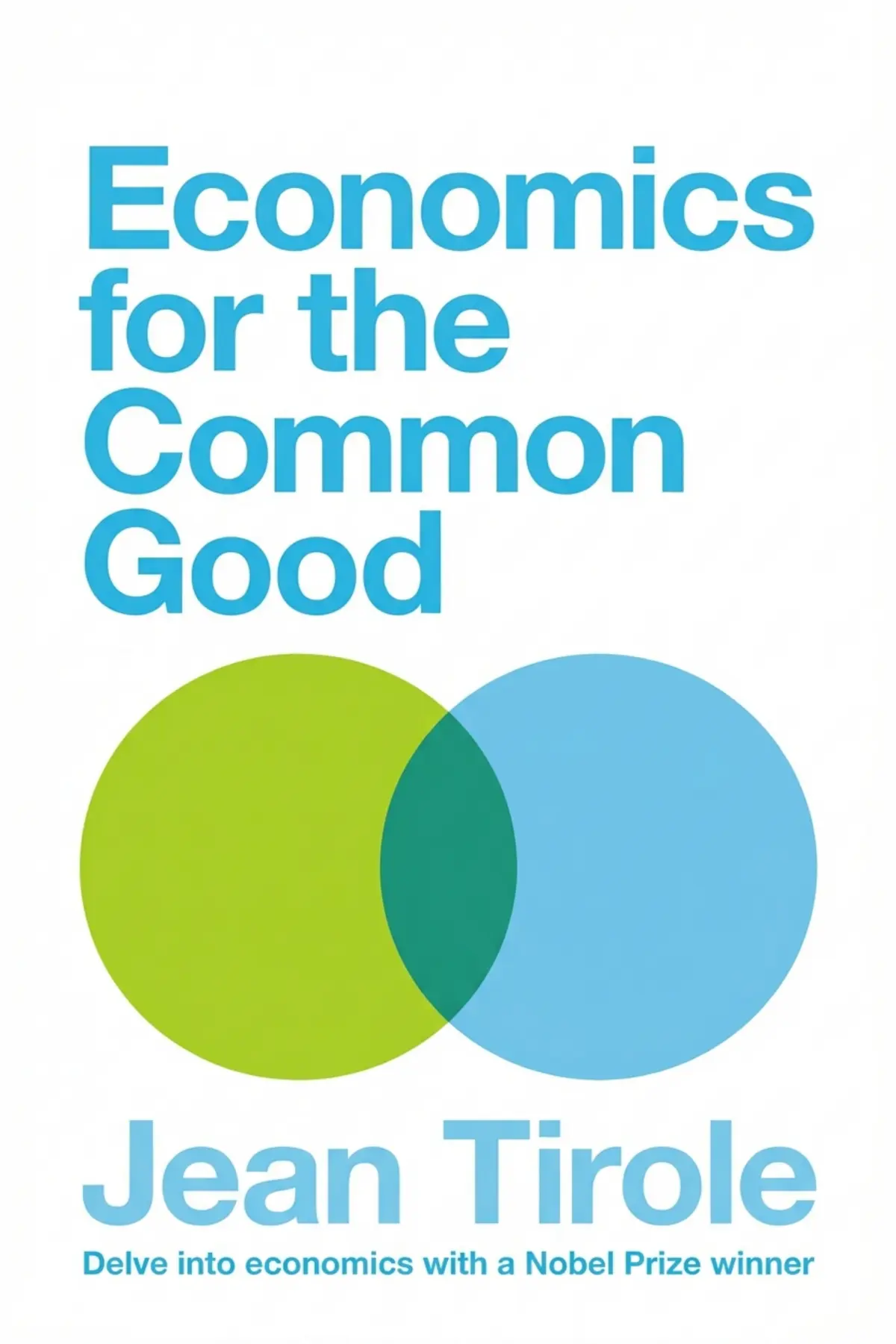
Table of Content
1. Introduction
1 min 44 sec
It’s a phrase we’ve all heard: economics is the “dismal science.” This label suggests a world of cold numbers, dry statistics, and a complete lack of human warmth. But if you look closer, through the eyes of a Nobel Prize winner like Jean Tirole, you’ll see that economics is actually one of the most vibrant and essential tools we have for making the world a better place. It is the study of how we live together, how we share resources, and how we can align our individual desires with the needs of the community.
In this exploration of Jean Tirole’s work, we are going to pull back the curtain on the big topics that define our modern era. We often think of the market and the state as two boxers in a ring, constantly fighting for control. But the reality is far more nuanced. We will see how these two forces actually rely on one another to function. We’ll also investigate why it’s so difficult for the world to come together on climate change, and how economic logic can explain the strange outcomes of the 2008 financial crisis.
One of the most fascinating aspects of Tirole’s perspective is how it often leads to conclusions that seem, at first glance, totally backward. For example, why would a group dedicated to saving elephants ever consider selling ivory? Or why might a free market actually require more, not less, government interference to remain truly free? By the end of this journey, you’ll have a new lens through which to view the news, the environment, and the digital platforms you use every day. We’re moving beyond the simple equations of a textbook to see how economics serves the common good.
2. The Influence of Cognitive Biases on Economic Thinking
2 min 39 sec
Discover why our brains often lead us to favor comforting beliefs over hard data, and how this psychological tendency can derail sound economic policy.
3. The Dual Role of the Modern Economist
2 min 27 sec
Economists occupy a unique space between the quiet halls of academia and the high-stakes world of public policy, serving as both researchers and advisors.
4. Why Economics Needs the Humanities
2 min 32 sec
Traditional economics often relies on the idea of a perfectly rational human, but real life is far more complex and emotional.
5. The Interdependence of the State and the Market
2 min 33 sec
Rather than being rivals, the government and the free market are two sides of the same coin, each requiring the other to survive.
6. Economic Strategies for the Climate Crisis
2 min 47 sec
Learn why the global struggle against climate change is a classic ‘tragedy of the commons’ and how market-based solutions could offer a way out.
7. Stability and Volatility in the Financial Sector
2 min 44 sec
Finance is often blamed for economic ruin, but it remains an essential pillar of modern life, provided it is properly regulated.
8. Challenges of Labor and Debt in Southern Europe
2 min 45 sec
Explore the structural hurdles facing countries like Greece and France, from high youth unemployment to the constraints of a shared currency.
9. The State as a Participant and Referee
2 min 29 sec
The government does more than just make laws; it is a major economic actor that shapes competition and protects consumers.
10. Navigating the Digital Economy and Data Privacy
2 min 44 sec
The rise of massive digital platforms has transformed how we trade, but it has also created new risks for our personal information.
11. Innovation and the Paradox of Intellectual Property
2 min 50 sec
Protecting new ideas often means granting temporary monopolies, a ‘necessary evil’ that drives long-term progress.
12. Conclusion
1 min 51 sec
We have traveled through a landscape that is often described as dry and technical, but as Jean Tirole has shown us, economics is fundamentally about the human heart and the common good. We’ve seen that our own biases can cloud our judgment, making us favor simple moral victories over complex, effective solutions. We’ve explored the toolkit of the modern economist—from game theory to psychology—and seen how these instruments can be used to address everything from the existential threat of climate change to the instability of our financial markets.
The throughline of this journey is balance. A healthy society cannot rely on the market alone, nor can it thrive under the heavy hand of an unchecked state. Instead, we need a dynamic partnership. We need markets that drive innovation and efficiency, and we need a state that acts as a wise referee, protecting the vulnerable and ensuring that the rules of the game are fair for everyone. Whether we are talking about the digital platforms that store our data or the labor markets that determine our livelihoods, the goal remains the same: to align our individual incentives with the well-being of the collective.
As you move forward, remember that economics isn’t just for academics in ivory towers or politicians on the campaign trail. It is a way of thinking that helps us navigate the trade-offs of modern life. When you hear about a new tax, a climate treaty, or a financial regulation, ask yourself: How does this affect the common good? Does it account for the hidden costs? Does it encourage innovation while maintaining fairness? By asking these questions, you are participating in the ongoing work of building a more prosperous and just world. Economics, far from being dismal, is the science of hope and the art of the possible.
About this book
What is this book about?
Economics for the Common Good explores the intersection of economic theory and societal well-being. Jean Tirole argues that economics is not just a study of numbers and graphs, but a powerful moral and practical toolkit that can help solve the most pressing problems of our time. From the environmental crisis and the volatility of financial markets to the rise of digital giants and the intricacies of European debt, the book explains how the state and the market must cooperate to foster innovation while protecting the vulnerable. It provides a roadmap for using academic insights to build a fairer, more stable world.
Book Information
About the Author
Jean Tirole
Jean Tirole is a renowned French economist and winner of the 2014 Nobel Prize in Economic Sciences. Besides his prize-winning study of the regulation of utilities, Tirole has authored numerous books including The Theory of Corporate Finance and Financial Crises, Liquidity, and the International Monetary System.
Ratings & Reviews
Ratings at a glance
What people think
Listeners find this book very much worth reading and enjoy its style, with one listener depicting it as an extensive survey. Feedback on the information quality is divided, as some listeners find it deeply informed while others argue it lacks sufficient depth. The narrative also gets mixed reviews, with several listeners noting the absence of a central argument.
Top reviews
Evelyn
The section on the industrial challenge, specifically from page 353 onward, is easily the best 130 pages of economics writing I’ve encountered in years. Tirole completely comes alive when discussing two-sided platforms, the gig economy, and digital intellectual property. He tackles the Uber vs. entrepreneur debate with such clarity that it makes the rest of the book’s slower start totally forgivable. While the earlier chapters on the role of the economist are a bit self-indulgent, the deep dives into climate policy and the 2008 financial crisis provide a masterclass in non-ideological analysis. It’s refreshing to read someone who doesn’t rely on sound-bites or partisan bickering. You’ll need a quiet place to digest this, as the level of detail is intense, but the payoff for your "intellectual investment" is massive. This is serious, research-based examination at its finest.
Show moreWatcharee
It is refreshing to see a Nobel laureate tackle climate change and digital platforms with such a cold-headed, non-ideological lens. In an era of hyper-partisan blather, Tirole offers a serious, analytical look at how economics can actually serve the common good. His chapter on the 2008 crisis is particularly good, clarifying the role of finance without falling into easy demonization. I especially appreciated his insights into corporate social responsibility—he asks the tough questions about whether a company can truly be "responsible" while aggressively avoiding taxes. The book is voluminous and the technical level can be high, but the insights into the future of the European Union are worth the effort alone. It’s the exact opposite of the superficial content we see on social media today. A true intellectual call to arms.
Show moreWittaya
Finally, an economist who isn't afraid to say "I don't know" when the data is inconclusive. Jean Tirole’s humility is the most striking thing about this book, especially given his status as a Nobel winner. He treats the reader with respect, providing the tools for analysis rather than just shouting conclusions. I was particularly fascinated by the discussion on the "common good" and how we often deceive ourselves about the price of a human life in statistical terms. The chapters on innovation and intellectual property are incredibly relevant for anyone working in tech or policy today. It’s a big book, and some parts are definitely more "catnip" for econ nerds than others, but the overall quality of the analysis is top-tier. Highly recommend reading it slowly over several months.
Show moreRotjanee
As someone who appreciates the French intellectual tradition, I found the "spiral" structure of this book quite engaging, though it might frustrate those used to American-style summaries. It loosely explores topics like climate change and labor markets without forcing a single, rigid thesis down your throat. Truth is, the book feels more like a collection of standalone essays than a cohesive manual. Tirole is a theorist at heart, and his chapters on sector regulation are particularly sharp, even if they occasionally feel a bit dry for the casual reader. I loved the way he responds to Michael Sandel’s arguments about market morality—it’s a sophisticated defense of using markets to make trade-offs explicit. However, the first half can feel like a bit of a digression before you get to the meat of the policy analysis. It’s a dense read, but worth it for the nuanced perspective on the EU and digital economies.
Show moreSarocha
To be fair, Tirole warns us in the introduction that these chapters are meant to stand alone, and that’s exactly how they should be approached. If you try to find a single, driving argument, you’ll likely end up frustrated by the book’s scattered nature. I found his analysis of the French labor market and the precarious nature of modern contracting to be incredibly enlightening. He avoids the typical left-vs-right clichés, opting instead for a "on the one hand, on the other hand" approach that feels honest. It’s not a cookbook for fixing the world, and Tirole is refreshingly modest about the limits of his own knowledge. My only real gripe is that the first few parts on the moral foundations of economics felt a bit thin compared to the heavy-hitting policy chapters later on. Definitely a reference book to keep on the shelf.
Show moreMichael
Ever wonder why French intellectual writing feels so different from the Anglo-Saxon tradition? This book is a perfect example: it loosely explores a topic with twists and unexpected insights rather than telling you exactly where it’s going from page one. While I appreciated some of the unexpected "buffet" options, I found the lack of a central thread made it hard to stay motivated. The author is obviously a genius—his peers treat him like a god—but this attempt to write for a "general audience" still feels very academic. The chapter on natural monopolies and network structures was the highlight for me, though it was a bit too brief. Most of the book is standard, cautious economics that doesn't quite go deep enough into Tirole's own path-breaking research. It’s a good survey, but it lacks passion.
Show moreIsabella
After hearing so much about Tirole’s god-like status in the field, I was surprised by how accessible (though still quite dense) this book turned out to be. Gotta say, it’s not your typical "airport bookstore" economics read; it requires real focus and a willingness to engage with theory. I loved the chapters on the digital economy and how big data is changing insurance and social security—those sections felt incredibly urgent and modern. However, the first half of the book, where he tries to define the role of the economist, felt like it was written for his peers rather than the public. It’s a bit of a Herculean task to cover this much ground in one book, and while he doesn't always succeed in keeping the narrative tight, the breadth of topics is impressive. A solid choice for a more nuanced view.
Show moreNattapong
Picked this up hoping for a smooth introduction to modern economic thought, but it felt more like trying to drink from a pressurized firehose. Jean Tirole is clearly a giant in the field, but he isn't a natural-born popularizer like Krugman or Stiglitz. The book is structured like a buffet, which is great if you only care about specific topics like the Eurozone or the digital economy, but it makes for a very choppy cover-to-cover reading experience. To be fair, his defense of independent expert bodies is thought-provoking, even if I don’t entirely buy his conclusions. The translation from French leaves the prose feeling a bit circular at times, and I found myself skimming the more theoretical sections. It’s a valuable public service to have this much expertise in one volume, but it’s definitely hard work for a layman.
Show moreApichat
Look, if you're expecting a cohesive narrative about the "common good," you might be disappointed by how scattered this book actually is. It feels like a collection of lecture notes that have been stitched together, with the first 300 pages acting as a long, often boring digression into the role of the profession. I found the lack of a central argument frustrating; Tirole just describes problems and then offers a few things we "might want to consider." It’s very safe and avoids taking the kind of bold stands you'd expect from a Nobel Prize winner. The translation is also a bit clunky, making an already dry subject even harder to get through. I’d suggest just reading the last 100 pages on digital challenges and skipping the rest.
Show moreBrooklyn
Why does such a brilliant theorist write a book that feels so strangely milquetoast? I picked this up expecting deep insights into Tirole’s pioneering research on industrial organization, but instead, I got a broad, somewhat scattered survey of standard economic problems. The tone is oddly cautious, and he seems to have far too much confidence in the ability of technocrats to fine-tune complex systems. While the chapters can be read independently, this leads to a lot of repetition if you’re trying to get through the whole 500-page tome. Frankly, the narrative lacks a clear "hook," and the writing style—likely due to the translation—feels disjointed. If you want a case-study approach like Al Roth's, you won't find it here. It's a lot of firehose-volume information without enough depth to satisfy those already familiar with the field.
Show moreReaders also enjoyed

Adults in The Room: My Battle With Europe’s Deep Establishment
Yanis Varoufakis
1929: Inside the Greatest Crash in Wall Street History--and How It
Andrew Ross Sorkin
23 Things They Don’t Tell You About Capitalism
Ha-Joon Chang
A Little History of Economics
Niall Kishtainy
AUDIO SUMMARY AVAILABLE
Listen to Economics for the Common Good in 15 minutes
Get the key ideas from Economics for the Common Good by Jean Tirole, plus 5,000+ more titles in English and Thai.
- 5,000+ titles
- Listen as much as you want
- 7-day free trial
- Cancel anytime







