
19 min 03 sec
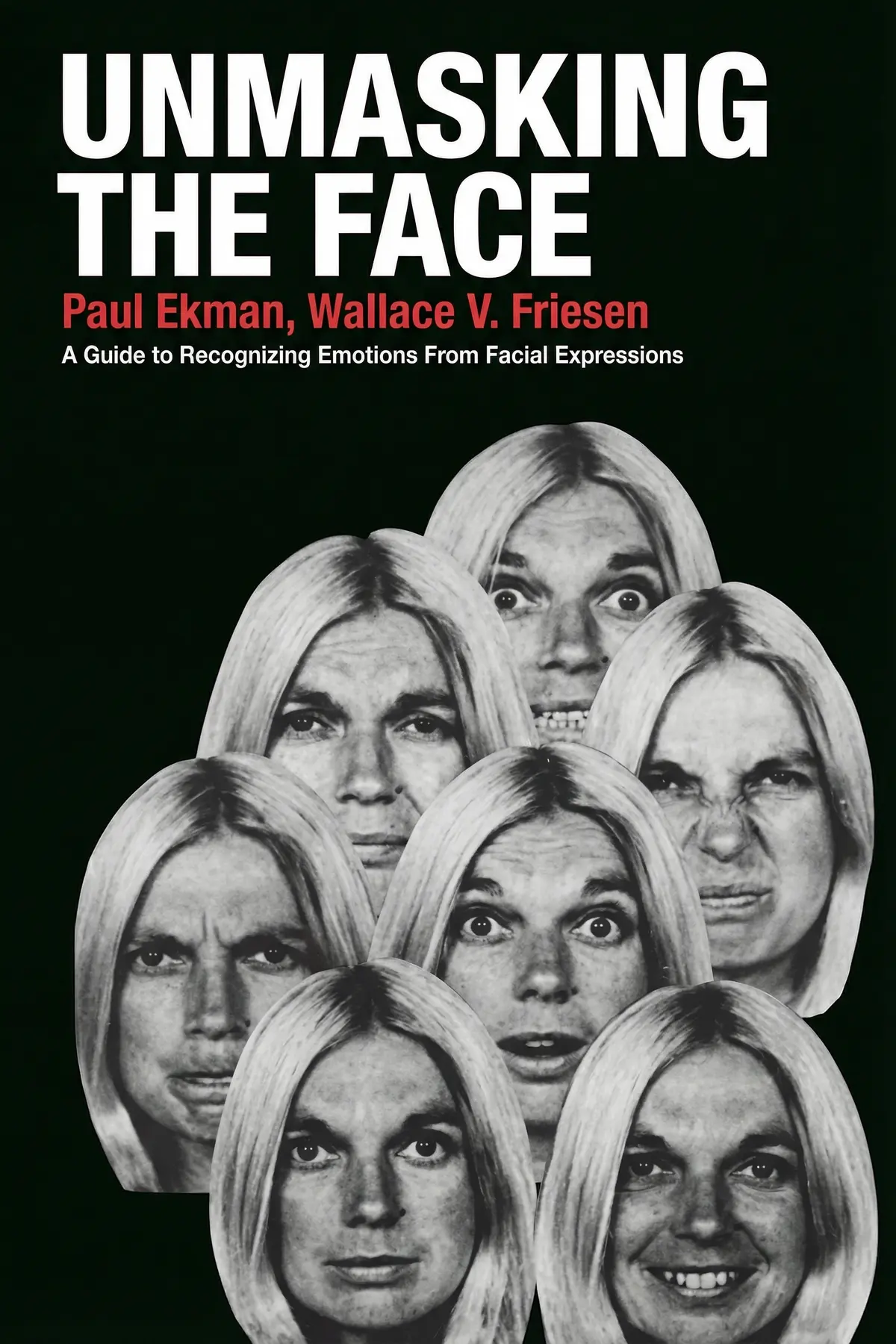
Emotions Revealed: Recognizing Faces and Feelings to Improve Communication and Emotional Life
By Paul Ekman
Emotions Revealed examines the universal nature of human facial expressions. This guide explores the evolutionary roots of our feelings and provides tools to recognize subtle emotional cues in ourselves and others.
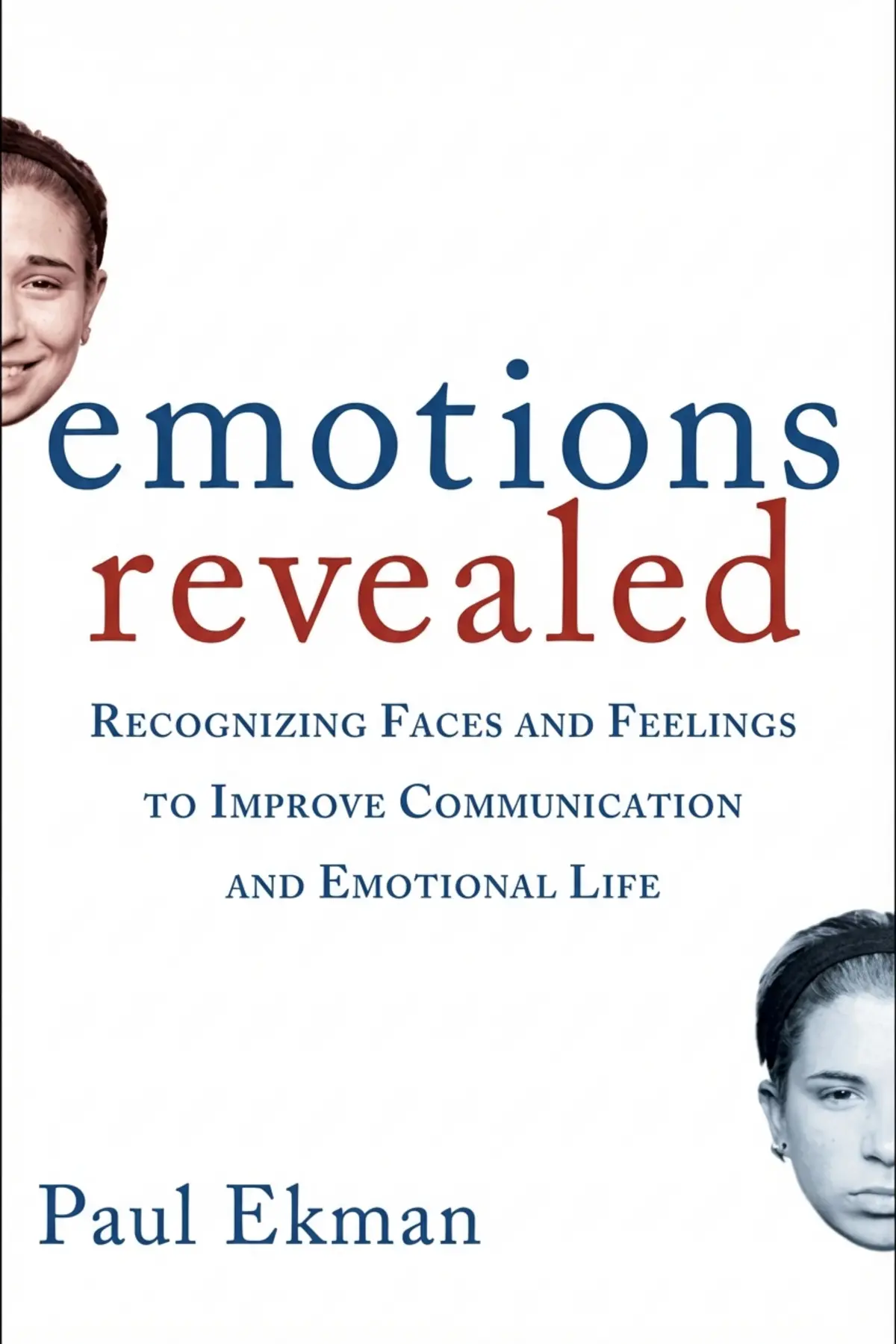
Table of Content
1. Introduction
1 min 35 sec
Every single day, we navigate a world thick with unspoken signals. While we focus heavily on the words people choose, there is another, much older language being spoken right in front of us. It is written in the tightening of a jaw, the lift of an eyebrow, or the subtle thinning of a lip. This is the language of our emotions, and for most of us, it remains a dialect we only partially understand. We might sense that a friend is upset or that a colleague is being less than truthful, but we often lack the specific tools to pinpoint why we feel that way.
This exploration into the human face suggests that our emotional life is not just a personal experience; it is a biological legacy. Long before humans had words to describe their states of mind, they had faces that could broadcast danger, grief, or relief. Understanding these signals is like regaining a lost sense. It allows us to move through our social lives with greater clarity and empathy.
By looking at the work of Paul Ekman, we can begin to see the face as a canvas where evolution has painted our most vital survival mechanisms. We will look at why we fear spiders more than guns, how childhood experiences can rewire our emotional triggers, and how to spot the tiny, involuntary movements that reveal what a person is truly feeling, even when they are trying their hardest to hide it. This journey is about more than just reading others; it is about becoming more attuned to the emotional currents that drive our own lives, enabling us to communicate more effectively and live more consciously.
2. The Evolutionary Purpose of Emotion
2 min 19 sec
Our emotional responses are not random; they are sophisticated survival tools inherited from our ancestors to help us navigate immediate threats.
3. The Lasting Impact of Personal and Primal Trauma
2 min 19 sec
Individual experiences and ancestral history combine to create emotional triggers that can lead to surprisingly intense and irrational reactions.
4. Recognizing the True Face of Sadness
2 min 04 sec
Sadness leaves specific markers on the face, particularly in the eyebrows and cheeks, that are nearly impossible to fake.
5. The Physicality and Cultural Nuance of Anger
2 min 04 sec
Anger is signaled by a distinct scowl and thinning lips, though the way we express it can vary based on cultural norms.
6. Distinguishing Fear from Surprise
2 min 04 sec
Though they look similar at first glance, fear and surprise are distinct emotions that can be identified by the specific tension in the eyelids.
7. The Anatomy of a Genuine Smile
2 min 20 sec
True happiness involves more than just the mouth; it requires the involuntary engagement of muscles around the eyes.
8. The Hidden Truth in Micro-expressions
2 min 24 sec
When people try to conceal their emotions, the truth often ‘leaks’ out in flashes lasting only a fraction of a second.
9. Conclusion
1 min 54 sec
Mastering the science of facial expressions is about much more than just becoming a human lie detector. It is about deepening our connection to the shared human experience. Throughout this journey, we have seen that our emotions are not random or irrational; they are a sophisticated language of survival and connection that we all carry within us. From the ancient fears that still trigger our nervous systems to the micro-expressions that reveal our hidden grief, our faces are a testament to our history and our humanity.
By learning to recognize the specific markers of sadness, anger, fear, and joy, we gain the ability to see past the masks that people often wear. We learn that a thinning lip might be the first sign of a conflict we can still avoid, or that a crinkle around the eyes is the only sure sign of a shared moment of true happiness. This knowledge allows us to respond to others with greater precision and compassion. Instead of reacting to someone’s outward behavior, we can begin to respond to the underlying emotion they are actually feeling.
As you move forward, remember that this skill also applies to your own internal life. We often spend a great deal of energy trying to suppress our own emotions, but those feelings are there for a reason. A powerful way to start integrating this knowledge is to practice ‘mirroring’—literally standing in front of a mirror and trying to recreate the facial expressions we’ve discussed. By physically forming the look of sadness or anger, you may find that you can more easily tap into and understand those feelings within yourself. The goal isn’t to become an expert at hiding your emotions, but rather to become an expert at listening to them. When we understand the messages our faces are sending, we can live more authentically, communicate more clearly, and navigate the complex world of human relationships with a new sense of insight and empathy.
About this book
What is this book about?
The way we move our facial muscles says more about our internal state than any word we might speak. Emotions Revealed dives into the deep science of non-verbal communication, explaining how our faces serve as a constant broadcast system for our innermost feelings. By understanding the biological and evolutionary foundations of emotion, we can learn to spot the difference between a polite smile and true joy, or distinguish the fleeting look of fear from a simple expression of surprise. The book promises to sharpen your emotional intelligence by detailing the specific physical indicators of sadness, anger, fear, and happiness. It moves beyond just theory, providing a framework for identifying micro-expressions—those lightning-fast flashes of truth that occur even when someone is trying to hide their feelings. Through the expertise of Paul Ekman, you will gain a new perspective on social interactions, improving your ability to empathize with others and manage your own emotional responses more effectively.
Book Information
About the Author
Paul Ekman
Paul Ekman is a highly respected expert in the field of psychology, specializing in the study of emotions and their physical manifestations. He frequently serves as a consultant for high-stakes organizations, including police departments and security agencies, helping them interpret non-verbal cues. His influence extends into the world of entertainment and technology as well; notably, he worked with Pixar Studios to ensure their animated characters displayed authentic emotional expressions, lending his scientific rigor to the art of storytelling.
Ratings & Reviews
Ratings at a glance
What people think
Listeners find the material highly educational, as it breaks down different human emotions and provides images for each, serving as a valuable asset for both school and personal life. The writing itself earns positive marks, and one listener mentions the author is a former FBI agent. Perspectives on readability and accessibility are split, with listeners labeling it both a challenging read and easy to grasp. Impressions of the visual content are also varied, with several listeners remarking that the book features few illustrations.
Top reviews
Soontorn
Ever wonder why you can't help but feel a certain way when someone scowls at you? Paul Ekman’s 'Emotions Revealed' is a masterclass in decoding the silent language of the face. After seeing the show 'Lie to Me,' I expected something sensationalized, but this is grounded in decades of rigorous field research. The section on micro-expressions is absolutely fascinating, though you really have to pay attention to the subtle cues. Truth is, the book changes how you look at every person in the grocery store or the boardroom. I loved the photographic examples, even if some of the poses by his daughter felt a bit exaggerated or 'hammy' as some reviewers say. It’s an essential guide for anyone wanting to improve their emotional intelligence and understand the universal nature of human feeling. Highly recommended for those who aren't afraid of a slightly technical read.
Show morePot
After hearing so much about the real-life 'Cal Lightman,' I finally got around to reading the source material. This is deep, insightful, and incredibly thorough. Ekman doesn't just tell you what an emotion looks like; he explains the evolutionary utility behind why our eyebrows move the way they do when we're sad or scared. The New Guinea study is legendary for a reason, and seeing the data behind universal expressions is a thrill for any science nerd. Look, it’s not a light 'beach read' by any means. It’s dense, technical, and requires you to actually look in a mirror and practice the movements. But if you want to understand the mechanics of the human face, there is simply no better authority. It’s transformed how I handle difficult conversations at work and with my family.
Show moreWichai
Finally, a book that actually explains why we feel what we feel. I’ve read a lot of body language books, but most of them are just guesswork and 'pop' psych. Ekman brings the real science. From his work with the Dalai Lama to his adventures in New Guinea, his life’s work is summarized here in a way that feels both authoritative and deeply human. Gotta say, the tips on recognizing the subtle signs of contempt helped me navigate a very tricky situation at work last week. It’s not just about lie detection; it’s about understanding the suffering and joy of the people around you. Some might find the prose a bit stiff, but the content is so valuable that I can easily overlook the academic dry spells.
Show moreKung
Picked this up to better understand my coworkers, and it’s been eye-opening. Ekman does a great job explaining how emotions aren't just things that happen to us; they are evolved responses with specific triggers. The chapter on anger was particularly helpful, especially the concept of the 'Othello Error'—the danger of misinterpreting someone's fear as guilt. Personally, I found the inclusion of the Dalai Lama's perspectives to be a refreshing touch, even if it felt a bit out of place with the hard science at times. The photos are helpful, though I wish there were more of them to illustrate the subtle differences in the 'partial' expressions he mentions. It’s a bit of a dense read, so don't expect to fly through it in one sitting. Still, the practical value for everyday interactions makes it worth the effort.
Show moreElena
The chapter on 'the' emotions—anger, sadness, fear, and the rest—is worth the price of admission alone. Ekman breaks down how these states are brief, involuntary, and universal across all human groups. I found the distinction between moods and emotions to be particularly useful for managing my own reactions. In my experience, most people think they’re good at hiding their feelings, but this book proves how much we 'leak' through micro-expressions. My only gripe is that the book can be a bit repetitive, and some of the stories about his travels felt like filler content to justify the page count. However, the core message is powerful and the advice on how to respond when you detect a hidden emotion is incredibly mature and wise. It’s about building empathy, not just 'catching' people.
Show moreNarong
Wow. This was a lot more academic than I anticipated, but in a way that felt authoritative rather than just boring. As someone who enjoys psychology, I appreciated the depth, but the tone frequently shifted between a self-help book and a cold research paper. One moment he's giving advice on parenting, and the next he's using terminology that feels a bit behind the times. I also struggled with the way he dismissed things like jealousy or love as 'plots' rather than emotions. It felt a bit like he was trying to fit the entire human experience into a very small box that only includes things with a clear facial signal. The photos were helpful for the exercises, but they did look a bit forced. It’s a solid resource for students, but maybe slightly too dry for a casual reader.
Show moreBenjamin
As someone who has always been fascinated by non-verbal communication, I found 'Emotions Revealed' to be a treasure trove of information. Paul Ekman is a legend for a reason, and his work on the universality of facial expressions is foundational to the field. I especially liked the section on 'fiero' and the other sixteen enjoyable emotions that don't always get enough attention in psychological texts. The truth is, most of us are walking around blind to the signals others are sending. This book provides the glasses to finally see them. While it can be a bit of a slog through the middle chapters where he repeats his methodology, the practical application in the final sections is gold. It’s a book that demands you take your time and actually study the faces provided.
Show morePim
Direct opinion: this is an important book that could have used a much better editor. The information on facial cues and the physical triggers of emotion is fascinating, but it’s often buried under mountains of anecdotes and repetitive explanations. I was hoping for more of a 'how-to' guide for spotting micro-expressions in real-time, but instead, I got a lot of stories about people Ekman knows. To be fair, the images are a great addition, even if there aren't as many as I expected from the cover's promises. I also found his rigid definitions of what 'counts' as an emotion to be a bit limiting and occasionally frustrating. It’s a good reference for a psychology class, but for the average person, a summarized version would probably be more effective.
Show moreSophia
This book is definitely a mixed bag for me. While Ekman is clearly a pioneer in the field, the prose is painfully dry and feels like a slog through academic papers rather than a cohesive narrative. To be fair, the information on the seven universal emotions is groundbreaking, and I appreciated the practical tips for recognizing fear versus surprise. However, the pacing is quite slow and the author repeats himself more than necessary. It felt like a 50-page manual stretched out into a full-length book with far too many anecdotes about his colleagues. Not gonna lie, I almost put it down halfway through because the 'Stone Age' terminology and the way he talks about different 'cultures' felt dated and a bit condescending. If you can push through the dense parts, there’s good stuff here, but it requires serious patience.
Show morePongpan
Not what I expected given the hype surrounding Ekman’s work as a supposed ex-FBI agent. Frankly, the writing style is archaic and frustratingly repetitive. He spends chapters building up to points that could have been summarized in a few bullet points. I bought this specifically to learn how to spot lies, but it’s more of a textbook on the philosophy of emotion than a practical guide. The photos provided are low-quality and often feature the same faces, making it hard to see how these expressions translate to real-world diversity. Also, I noticed several factual errors—like the bizarre claim about AIDS not being a virus—which made me question the overall accuracy of the text. It’s a tough read that lacks the 'punch' you’d expect from such a famous social scientist. I’d suggest just watching a few YouTube summaries instead.
Show moreFeatured in
Readers also enjoyed
A Liberated Mind: How to Pivot Toward What Matters
Steven C. Hayes
Acting with Power: Why We Are More Powerful Than We Believe
Deborah Gruenfeld
Age of Propaganda: The Everyday Use and Abuse of Persuasion
Anthony Pratkanis
AUDIO SUMMARY AVAILABLE
Listen to Emotions Revealed in 15 minutes
Get the key ideas from Emotions Revealed by Paul Ekman, plus 5,000+ more titles in English and Thai.
- 5,000+ titles
- Listen as much as you want
- 7-day free trial
- Cancel anytime







