
16 min 58 sec
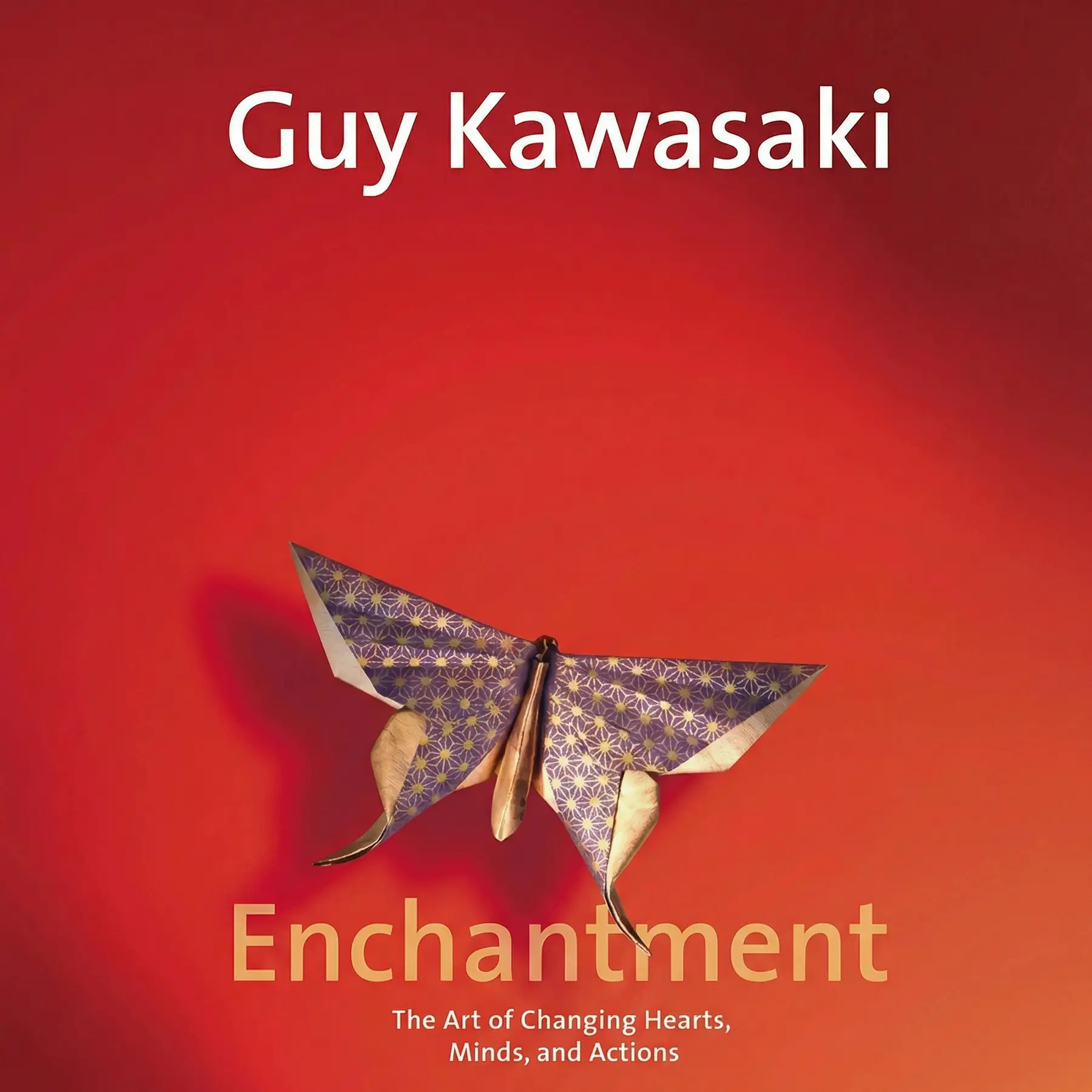
Enchantment: The Art of Changing Hearts, Minds, and Actions
By Guy Kawasaki
Enchantment explores the transformative power of influence, moving beyond simple transactions to create deep, lasting connections. Guy Kawasaki reveals how to win hearts and minds through authenticity, storytelling, and exceptional product design.
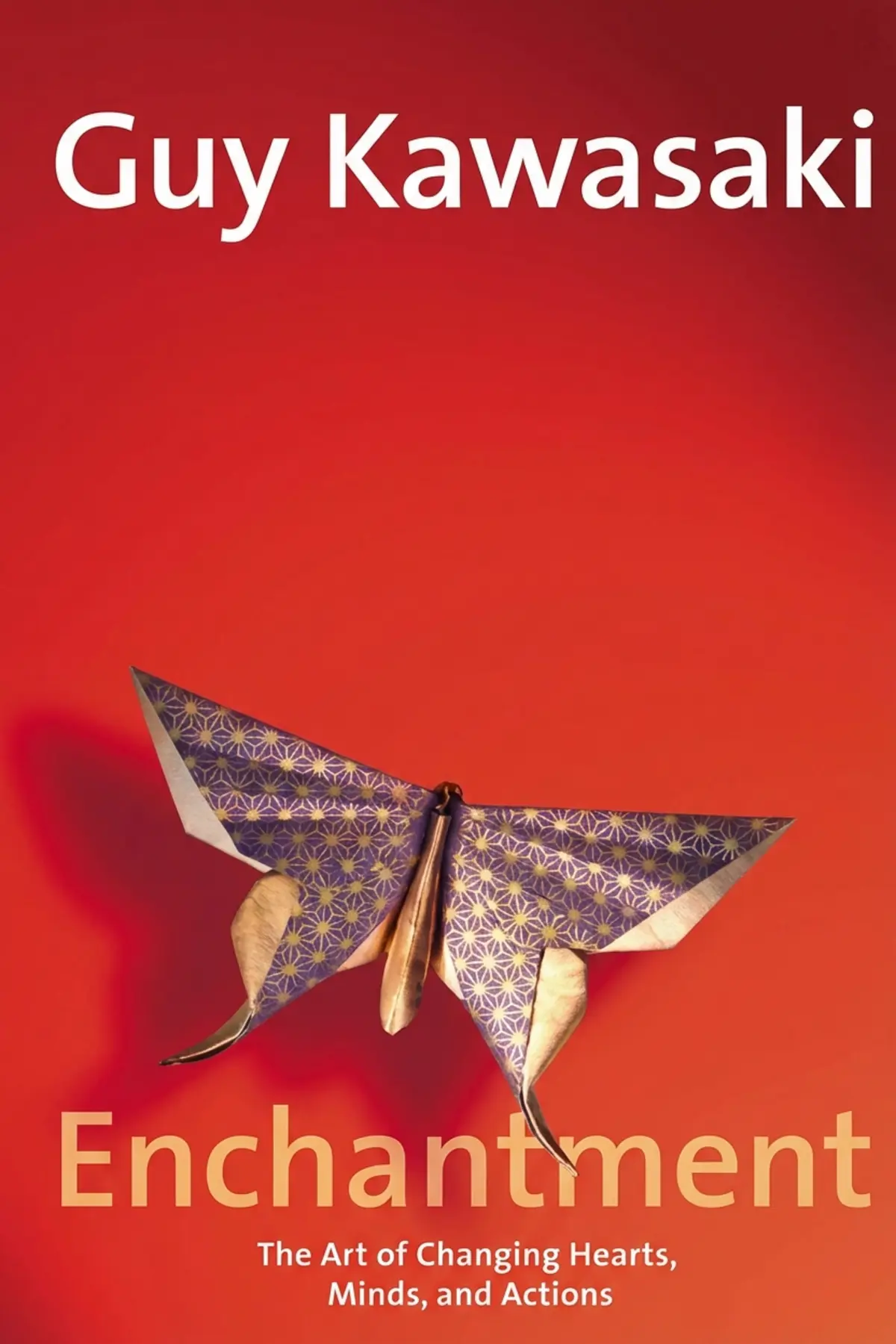
Table of Content
1. Introduction
1 min 38 sec
Imagine standing in a marketplace where everyone is shouting at once. Every brand is clamoring for your attention, every influencer is vying for a second of your time, and every advertisement is begging for your wallet. In this saturated environment, traditional tactics often fall flat. We’ve become desensitized to the hard sell. So, how do you actually get someone to listen, let alone believe in what you’re doing? The answer lies in a concept that goes far beyond marketing or sales. It is the art of enchantment.
Enchantment isn’t about tricking people or finding a clever loophole in their decision-making process. Instead, it’s about transformation. It’s about changing the very fabric of a relationship so that instead of a buyer and a seller, you have two people sharing a common passion. It is the process of filling others with the same excitement and delight that you feel for your cause. When you enchant someone, you don’t just get them to act; you get them to join you.
Guy Kawasaki, who helped pioneer the concept of brand evangelism, argues that enchantment is the most powerful tool for anyone trying to launch a product, lead a team, or change the world. Throughout this journey, we will explore why enchantment is more effective than manipulation, how to build the foundation of trust required for true connection, and the specific ways you can design your offerings and your communications to captivate an audience. We’ll look at how technology can amplify your reach and how the right internal culture can turn employees into your most powerful advocates. Most importantly, we’ll see that enchantment is a long-term game—a commitment to bringing something of genuine value into the lives of others.
2. The Core of Enchantment
1 min 36 sec
Moving beyond mere manipulation, true enchantment relies on emotional resonance and a genuine desire to improve the lives of others through a shared vision.
3. The Foundation of Likability and Trust
1 min 40 sec
Enchantment is impossible without a bedrock of mutual respect and transparency, requiring you to be a ‘mensch’ in all your interactions.
4. Crafting the Enchanting Product
1 min 36 sec
To truly captivate an audience, your offering must embody five specific qualities: depth, intelligence, completeness, empowerment, and elegance.
5. The Art of the Enchanting Launch
1 min 37 sec
Successful launches depend on moving beyond information to create faith through personal storytelling and frictionless trials.
6. Psychology and the Barriers to Change
1 min 23 sec
Overcome the natural resistance to new ideas by leveraging the psychological principles of social proof and scarcity.
7. Building a Lasting Ecosystem
1 min 23 sec
Enchantment is a long-term process sustained by creating vibrant communities and fostering genuine brand loyalty through meaningful participation.
8. Mastering Digital Enchantment
1 min 42 sec
Utilize push and pull technologies effectively by providing immediate value, maintaining brevity, and prioritizing aesthetic clarity.
9. Internal Enchantment and the Workplace
1 min 25 sec
Motivate your team by providing mastery, autonomy, and purpose, ensuring that enchantment starts from within the organization.
10. The Shield Against Dubious Influence
1 min 31 sec
Protect yourself from deceptive persuasion by using structured checklists and pausing to reflect on the long-term consequences of your choices.
11. Conclusion
1 min 27 sec
Enchantment is a powerful and necessary art in a world that is increasingly skeptical of traditional marketing. It is the process of building deep, meaningful relationships by being a person of integrity, creating products of real value, and sharing a vision for a better future. Throughout this exploration, we’ve seen that it begins with likability and trust—being a ‘mensch’—and continues through the careful design of products that empower and delight. We’ve learned how to launch with stories and trials, how to overcome the psychological barriers to change, and how to use digital tools to build a lasting community.
We also recognized that enchantment must start from within, by providing teams with mastery, autonomy, and purpose. And finally, we acknowledged the importance of protecting ourselves from those who would use these same techniques for deceptive ends. The throughline of all these ideas is the importance of passion and authenticity. If you truly care about your cause and the people you serve, enchantment will follow naturally.
As you move forward, remember to cast a wide net. Don’t limit your efforts to just the people you think have the most influence. In our modern, hyper-connected world, every person has the potential to become a passionate advocate for your dream. Treat every interaction as an opportunity to delight someone, and you will find that the art of enchantment not only helps you achieve your goals but also makes the journey far more rewarding for everyone involved.
About this book
What is this book about?
In an era of endless noise and digital distraction, simple marketing no longer suffices to move people. Enchantment presents a roadmap for shifting from mere persuasion to building enduring relationships based on delight and mutual trust. It’s not about manipulation; it’s about a fundamental change in how you interact with customers, employees, and the world at large. By examining the psychological triggers of social proof and scarcity, and the technical applications of digital tools, the book promises to help you turn a cause into a movement. You will learn how to design products that empower users, lead teams through intrinsic motivation, and build an ecosystem where followers become passionate advocates for your vision.
Book Information
About the Author
Guy Kawasaki
Guy Kawasaki is the bestselling author of numerous books, including The Art of the Start and The Macintosh Way. In addition, he was chief-evangelist for Apple as well as an advisor to the Motorola business unit of Google, and today works as chief-evangelist for Canva, a graphics-design online service.


Ratings & Reviews
Ratings at a glance
What people think
Listeners find this book to be a superb listen that is easy to follow and well-crafted, featuring captivating stories and actionable insights. They value its power to motivate and influence perspectives, and one listener mentions that it offers great pointers backed by research. The material is especially strong on communication, social networking, and business building, with one review emphasizing how it changes both situations and relationships.
Top reviews
Daranee
Picked this up after seeing Guy Kawasaki speak online, and it truly changed how I view business networking. Instead of the usual predatory sales tactics, the author emphasizes becoming a 'mensch'—someone who acts with honesty and helps others without expecting a return. I found the MAP (Mastery, Autonomy, and Purpose) framework particularly useful for managing my current team. While some might find the advice on smiling and handshakes a bit basic, to be fair, most professionals still get these things wrong. The book is well-written and serves as a motivational guide for changing hearts and minds rather than just closing deals. It’s the kind of research-backed advice that stays with you long after you close the cover. This isn't just for Apple fans; it’s for anyone wanting to build relationships that actually last.
Show moreHannah
Wow, this was exactly the kick in the pants I needed for my current startup launch. The chapter on overcoming resistance alone makes this worth the price of admission for any founder. Kawasaki explains how to provide 'social proof' and create the perception of ubiquity in a way that is both practical and inspiring. Not gonna lie, I was an Apple skeptic before, but reading about the philosophy behind their 'enchantment' changed my perspective on branding. The book is simple to understand and well-written, with engaging stories that make the lessons stick. It’s about more than just business; it’s about how to change minds by being a person worth following. If you want to transform your relationships and your career, this is a must-read. Be a mensch and buy this book.
Show moreAim
How do you stand out in a world full of noise? Kawasaki suggests it’s through 'enchantment,' and his breakdown of how to achieve likability and trustworthiness is quite compelling. I particularly appreciated the specific pointers on email etiquette, like the six-sentence rule, which I’ve already started implementing with great success. Truth is, the book excels in the realm of communication and entrepreneurship. However, I will say that the chapters on social media technology feel a bit dated now, which is expected with tech-focused books. Even so, the core message about building a 'bigger pie' where everyone can win is timeless. It’s a refreshing, quick read that keeps you thinking about your personal brand for weeks. It’s certainly a great refresher for anyone feeling stuck in their professional growth.
Show moreAiden
As an entrepreneur, I'm always looking for ways to build deeper connections with my customer base, and this book provided a solid roadmap. The 'pre-mortem' concept—assuming a project has failed and working backward—is a brilliant strategy that my team is adopting immediately. Kawasaki’s writing style is punchy and accessible, making it easy to digest the Japanese philosophies like Kanso and Shibui that he weaves throughout the text. Frankly, I think the criticism that this is just a copy of Dale Carnegie is a bit unfair. While there are similarities, Guy’s focus on the tech ecosystem and 'push/pull' technology adds a modern layer that Carnegie obviously couldn't provide. It transforms mundane business interactions into something more meaningful. A few sections felt a bit like a collection of blog posts, but the overall value is undeniable.
Show moreSakura
Guy Kawasaki has a way of making complex social dynamics feel approachable and actionable for the average person. I loved the section on 'enchanting your boss' because it goes beyond the usual brown-nosed advice to focus on making your superior look good through actual results. The book is a remarkable blend of empathy and sharp intelligence. I did find the advice on swearing for effect to be a bit strange and probably not something I’ll use in the boardroom. Still, the emphasis on removing 'fences' or barriers to entry for your product is pure gold for anyone in marketing. It’s a simple, engaging read that provides great pointers backed by years of experience at the highest levels of tech. Definitely worth the time if you want to improve your interpersonal influence.
Show moreGung
The truth is that most business books are a chore to get through, but Enchantment is a genuine exception. It is refreshing, quick, and keeps you thinking about your own approach to leadership long after you've finished. I loved the focus on 'intrinsic' methods of motivation—showing that payment alone doesn't change people's hearts. While I agree with some critics that it covers a lot of ground without going super deep, the breadth is actually helpful for a general overview of professional influence. The tips on using 'pull technology' like websites and blogs to foster discovery were particularly insightful for my current project. It’s a well-rounded guide that excels in teaching you how to build lasting ecosystems. A few chapters are a bit light, but the 'Good Boss Manifesto' at the end is worth the read alone.
Show moreArt
Honestly, I expected a bit more depth given Guy’s history at Apple and his reputation in the valley. There is useful content here, but much of it relies upon sheer common sense and feels like a collection of stories squeezed into a vague theme. I found myself nodding along to things I already knew, like the importance of eye contact and dressing like a peer. To be fair, the book is broad but not very deep. It tries to cover employees, customers, and bosses all at once, which makes some chapters feel rushed. I did enjoy the inside stories about the Macintosh launch, though they felt a bit like nostalgic filler at times. It’s not a bad book, but if you’ve read any modern leadership guides, you won’t find many original thoughts here.
Show moreScarlett
Wait, do I really need a book to tell me how to have a firm handshake and make a 'Duchenne' smile? At times, Enchantment felt like a manual for people who have never interacted with another human being. Chapter 2 was a bit of a turn-off for me because it felt like the author was advocating for a calculated, fake shell of likability. If you have to follow a checklist to appear trustworthy, are you actually being trustworthy? Look, there are definitely some bright spots, like the advice on 'baking a bigger pie' and the 10-20-30 rule for presentations. However, the 'mensch' philosophy feels a bit at odds with the tactical, almost manipulative social media advice later in the book. It’s a decent primer for young professionals, but seasoned vets might find it a bit shallow.
Show moreNook
Finally got around to reading this, and I'm left feeling a bit conflicted about the overall message. On one hand, the author encourages us to be genuine and act with goodwill, which is great. On the other hand, he gives very specific 'rules' on how to swear and how to craft a perfect, six-sentence sucking-up email. Personally, the whole thing left me with a slightly skeezy feeling, as if enchantment is just another word for high-level persuasion. The layout is great and it’s an easy read, but I wish it went deeper into the psychology of why these things work. It’s a bit like a Cliff’s Notes version of a much better marketing book. I’d recommend it to someone just starting their career, but not to anyone who has already read Carnegie.
Show moreSiriporn
I've been a fan of Guy's work for a long time, but this one really missed the mark for me. It feels like he collected a bunch of Alltop blog posts, slapped a catchy title on it, and called it a book. There is almost no original thought here that hasn't been said better in 'How to Win Friends and Influence People' decades ago. The advice ranges from the blindingly obvious to the strangely specific, like his 'special rules' for euphemisms. Frankly, the whole thing comes across as a bit self-impressed. Without the Apple nostalgia, I don’t think this book would have much to offer. If you’re looking for deep insights into the human condition or revolutionary marketing strategies, you should probably look elsewhere. It’s just too shallow to be truly enchanting.
Show moreReaders also enjoyed




AUDIO SUMMARY AVAILABLE
Listen to Enchantment in 15 minutes
Get the key ideas from Enchantment by Guy Kawasaki, plus 5,000+ more titles in English and Thai.
- 5,000+ titles
- Listen as much as you want
- 7-day free trial
- Cancel anytime







