

A Bigger Prize: How We Can Do Better Than the Competition
Margaret Heffernan
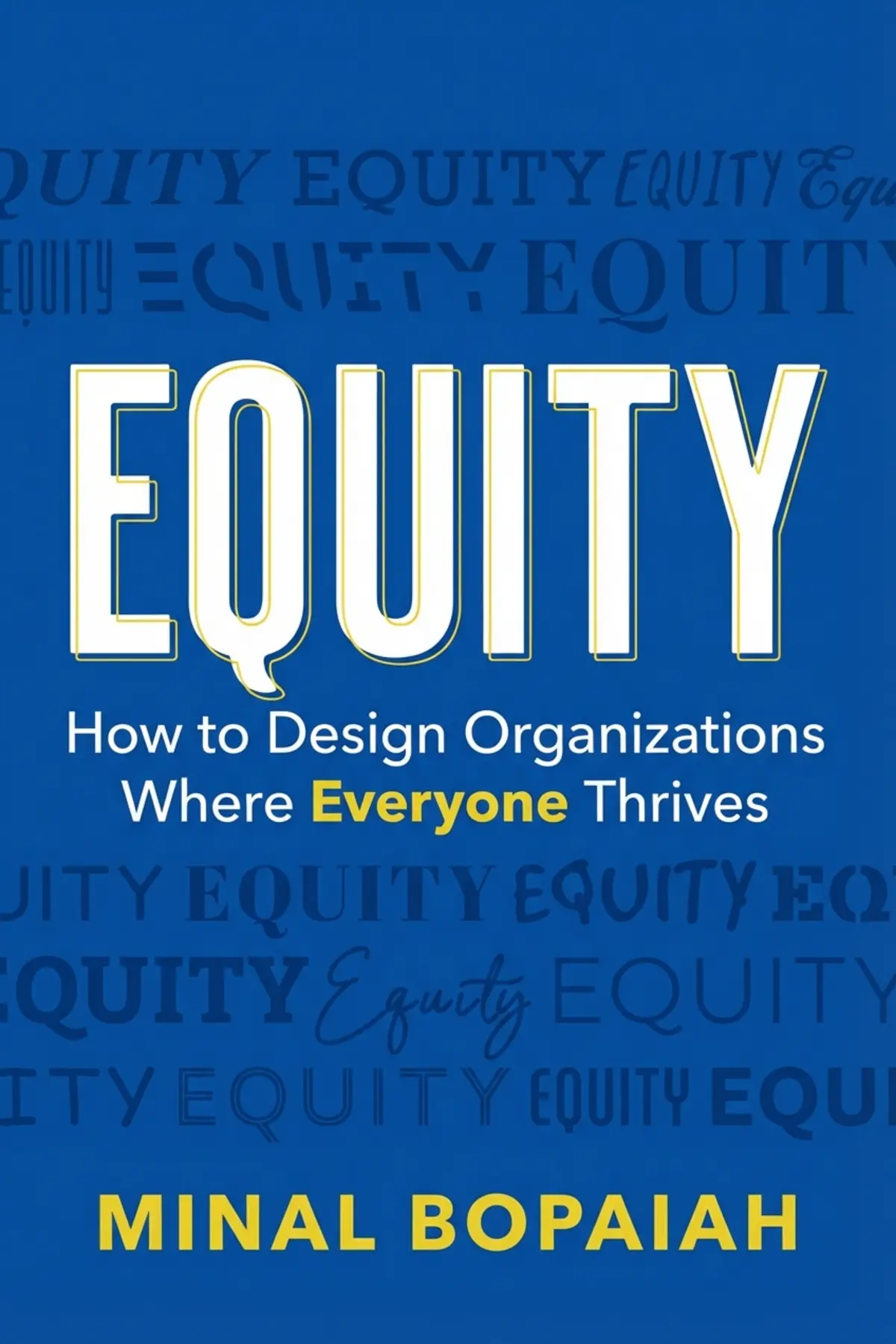
A transformative guide to organizational design, this summary explores how to move beyond basic diversity initiatives to build truly equitable systems where every individual has the specific tools they need to succeed.
2 min 08 sec
In recent years, the corporate landscape has been flooded with three-letter acronyms, the most prominent being DEI—Diversity, Equity, and Inclusion. We see these words on mission statements, job postings, and corporate websites. Leaders are working harder than ever to diversify their teams and ensure that people from all walks of life feel like they belong. But if you look closely at these efforts, you might notice a recurring pattern: the first and last letters, Diversity and Inclusion, get all the attention. The middle child of the group—Equity—is frequently glossed over or misunderstood. This is more than just a linguistic oversight; it is a fundamental flaw in how we think about social progress in the workplace.
Without equity, diversity is just a numbers game, and inclusion is often a temporary feeling rather than a permanent state. This summary explores the profound work of Minal Bopaiah, who argues that the reason our efforts toward justice often stall is that we haven’t properly designed the systems themselves. It’s not enough to simply bring different people into an old, rigid structure. We have to redesign the structure so that it can actually accommodate those different people. This is the throughline we will follow: the shift from viewing social justice as a matter of individual hearts and minds to viewing it as a deliberate challenge of organizational design.
Over the next few minutes, we will unpack how the principles of design can be applied to human systems. We’ll look at why our common definitions of fairness might actually be holding us back, and why some of our most deeply held beliefs about success are based on myths that obscure systemic reality. Whether you are an executive with the power to change company policy or an employee looking to advocate for a better culture, you will learn how to spot the invisible barriers that prevent people from thriving and, more importantly, how to dismantle them. We are moving toward a future where everyone has exactly what they need to succeed—not just the same thing as everyone else, but the specific support required for their unique journey.
2 min 58 sec
Discover why treating everyone the same can actually be unfair and how shifting to a design-based approach to equity allows individuals to flourish on their own terms.
3 min 06 sec
Learn how to move beyond the ‘default’ human profile by adopting design practices that prioritize the diverse needs of real users and employees.
2 min 40 sec
Explore why true leadership for equity requires a blend of specific values, systemic vision, and the courage to acknowledge personal privilege.
2 min 56 sec
Move beyond ‘magical thinking’ and learn how to use nudges and automation to make fair outcomes the natural result of your company’s structure.
2 min 55 sec
Discover how the principles of Behavioral Change Communication can help you frame messages that bypass psychological resistance and drive real progress.
2 min 57 sec
Learn to apply the REACH model to your marketing and media output to ensure your brand contributes to a more inclusive cultural narrative.
2 min 23 sec
As we have seen throughout this exploration of Minal Bopaiah’s work, building an equitable organization is not a one-time event or a simple checklist. It is a fundamental shift in how we approach the very concept of work and community. The throughline of this summary has been clear: equity is a design challenge. When we stop viewing diversity as a problem to be ‘solved’ and start viewing it as a reality to be ‘designed for,’ we unlock a new level of organizational health and innovation. We move from a world of ‘default’ users and systemic barriers to one where every individual has the specific tools they need to flourish.
The stakes for this transition could not be higher. We are currently seeing a massive shift in the workforce, with younger generations demanding that their employers stand for more than just profit. For Gen Z and the generations that follow, issues like sustainability, justice, and equity are not ‘nice-to-haves’—they are mandatory requirements for their talent and their loyalty. Leaders who fail to grasp the importance of equitable design will find it increasingly difficult to attract top talent and maintain a loyal customer base. The decisions made today regarding the ‘plumbing’ of our organizations will determine who wins and who loses in the twenty-first century.
So, where do you begin? The most important takeaway is that you don’t have to be a CEO to start this process. Power exists at every level of an organization. You can start by asking better questions in your next meeting: ‘Who are we designing this for?’ or ‘Whose voice is missing from this decision?’ You can advocate for ‘nudges’ that make your workplace more accessible. And if you find that your leadership isn’t listening, remember that collective action remains a powerful tool. Whether it’s through internal advocacy or more visible protests—like the Wayfair employees who walked out to protest the company’s business practices—you have the agency to demand a better system. Equity is not a gift given by those in power; it is a standard that we must all work together to build, piece by piece, until the system works for everyone.
This summary dives into the core of organizational justice by examining the often-misunderstood concept of equity. While many companies focus on diversity and inclusion, they frequently overlook the structural design required to make those goals sustainable. Through the lens of human-centered design and behavioral science, the book illustrates how systemic bias is often 'baked into' the very foundations of our institutions, from school funding to office layouts. The promise of this work is a practical roadmap for leaders and employees alike to redesign their environments. It covers essential strategies like the REACH model for inclusive marketing and the Three Conditions of Equitable Leadership. By shifting the focus from individual effort to systemic opportunity, it shows how to create a workplace where fairness is the default setting rather than an uphill battle.
Minal Bopaiah is a speaker, author, and strategist motivated by a lifelong passion for creating a more inclusive and equitable world. She is the founder of the strategy and design firm Brevity & Wit, which guides organizations through the process of inserting diversity, accessibility, and fairness into their structures and processes. Bopaiah is regularly invited to speak at conferences and has been a guest on numerous podcasts and radio programs, including the Kojo Nnamdi show.
Listeners find the book to be a fast yet deep read that offers significant perspectives, with one listener noting its connection to real-world examples. They appreciate its utility, with one listener emphasizing its role in building fairer organizations, while another commends the Human-Centered Design Thinking approach. The book earns praise for its tempo, with one listener characterizing it as super direct with the HOWs, and listeners find the content stimulating.
Equity isn't just a buzzword in Bopaiah's world; it is a structural blueprint for the modern era. I was particularly impressed by how the book treats organizational design as a tool for justice. By focusing on the REACH model, the author provides a concrete path for leaders who are tired of vague DEI slogans. It’s a quick read, but the depth of the psychology behind the human-centered design approach is evident. One minor gripe is that I wanted more depth on the 'Accessibility' part of IDEA, as it felt a bit shorter than the rest. Still, the push for system-level change over individual training is the perspective we need right now.
Show moreFinally got around to reading this after seeing it won the Terry McAdam award for nonprofit management support. It lived up to the hype by offering a clear-eyed look at systemic bias. The book uses human-centered design thinking to help readers visualize a positive future where everyone thrives. It’s not just for HR professionals; it’s for anyone who wants to understand why certain people get ahead while others get left behind. I especially liked the graphics and figures, which made complex IDEA principles much easier to digest during my morning commute. It’s a short book, but it packs a significant punch in every chapter.
Show morePicked this up for a grad school project on nonprofit management and found it surprisingly applicable to the private sector as well. The way Bopaiah explains IDEA—Inclusion, Diversity, Equity, and Accessibility—really clarifies how these concepts overlap and where they diverge. It’s a very easy listen if you go the audiobook route, as the pacing is snappy and the tone is conversational. The examples of equity-driven leadership were inspiring and gave me several tools I can use with my own clients. It’s rare to find a book that is this informative while remaining so digestible for a general audience. Definitely a must-read for organizational designers.
Show morePersonally, I think this should be mandatory reading for every executive who still thinks DEI is just about "hiring more diverse people." Bopaiah’s core message is clear: if you design for equity, the diversity will follow naturally as a result of a fair system. The case studies are relevant, the REACH model is actionable, and the focus on human-centered design is brilliant. It’s an essential guide for anyone who wants their organization to remain profitable and ethical in an increasingly socially-conscious market. I’ve already recommended it to my entire management team. This is how you build a workplace where every single individual feels truly empowered and valued.
Show moreAs someone who has sat through countless corporate seminars that felt more like checkboxes than catalysts for change, this was a breath of fresh air. The analogy about "The Office" characters needing this book was spot on. Truth is, we all work with a Michael Scott or two who could benefit from understanding power dynamics better. Bopaiah’s transition from DEI to IDEA—adding that critical 'Accessibility' component—makes the framework feel complete. The book is direct and skips the fluff, which I appreciated given my busy schedule. It really forces you to look at how your own organization's processes might be unintentionally exclusionary.
Show moreWow, Bopaiah manages to distill nearly twenty years of consulting experience into a handbook that feels both urgent and timeless. The emphasis on empathy isn't just soft talk; it's framed as a strategic necessity for twenty-first-century business. I’ve read a lot of books on organizational culture, yet few manage to bridge the gap between "theory" and "action" this effectively. The REACH model alone is worth the price of admission for anyone facilitating these difficult conversations. Look, if you want a roadmap for creating a workplace where diversity is a byproduct of good design, this is the one. It’s smart, concise, and incredibly well-paced.
Show moreEver wonder why diversity initiatives fail even when everyone has the best of intentions? Bopaiah argues it’s because we’re trying to fix people instead of fixing the broken systems they work within. This book shifted my mindset toward systemic change and the need to make these invisible barriers visible to leadership. The moral choices we make today about sustainability and social justice are mandatory for attracting the next generation of talent. I loved the call to action regarding holding higher-ups accountable through collective action. It’s a bold take that acknowledges the real power dynamics at play in modern corporate environments.
Show moreTo be fair, I initially thought this would be another dry business text, but the prose is actually quite engaging and thoughtful. The author’s background in psychology shines through, especially when she discusses confronting uncomfortable truths about power and bias. It provides a much-needed roadmap for building a future where everyone has an equal opportunity to thrive. The focus on strategic empathy was a highlight for me, as it moves beyond simple sympathy into actual understanding. My only real complaint is that I wish the book was twice as long to include more global examples. Still, it’s a solid 4-star read for any leader.
Show moreThe focus on "design" rather than just "hiring" is a vital distinction that most business books miss entirely. I found the actionable advice on putting pressure on higher-ups to be particularly empowering for mid-level managers. Bopaiah doesn't shy away from the moral choices leaders must make to remain profitable and relevant to the younger generation. Frankly, the writing is super direct, providing the "how" in a way that feels achievable rather than overwhelming. I did find a few of the case studies, like the Wayfair walkout, to be a bit brief. I would have loved a deeper dive into the long-term aftermath of those events.
Show moreNot what I expected given the high ratings, as I found the content a bit too high-level for a seasoned IDEA practitioner. To be fair, the book is very accessible and serves as an excellent primer for those new to human-centered design. However, I was looking for more technical data and less anecdotal evidence to support the frameworks. It felt a bit like an expanded version of a Blinkist summary at times. If you're looking for a quick, informative overview to share with a skeptic, this is perfect. But for those deep in the trenches of system change, it might feel like a refresher course rather than a breakthrough.
Show moreMargaret Heffernan

Joseph A. Maciariello

Deborah Gruenfeld
AUDIO SUMMARY AVAILABLE
Get the key ideas from Equity by Minal Bopaiah, plus 5,000+ more titles in English and Thai.







