
21 min 42 sec
Everyone Deserves a Great Manager: The 6 Critical Practices for Leading a Team
Discover the essential practices for modern leadership. This guide helps first-time and seasoned managers shift their focus from individual performance to team success, fostering growth, resilience, and meaningful workplace relationships.
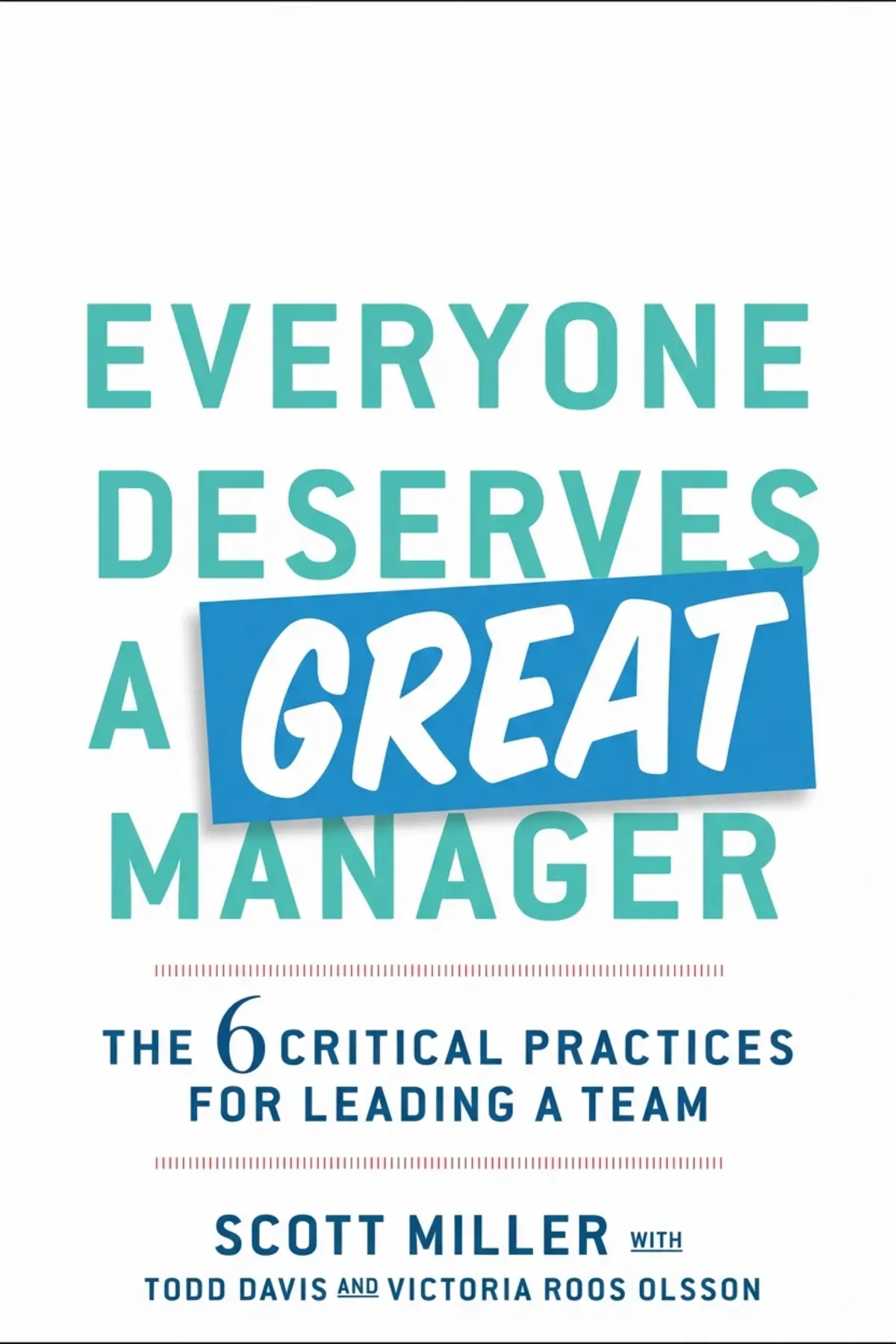
Table of Content
1. Introduction
2 min 01 sec
Think back to the moment you received the news: you were being promoted to management. For many, that moment is a mixture of pure adrenaline and a creeping sense of dread. You’ve likely spent years honing your craft, becoming a top-tier specialist or a star salesperson, and now, suddenly, your success is no longer in your own hands. It’s in the hands of the people you lead. It is a profound shift that most people are completely unprepared for.
The reality is that being a great individual contributor doesn’t automatically make you a great leader. In fact, the very traits that made you a star—your drive to fix things quickly, your focus on your own results, and your desire to be the smartest person in the room—can often be the very things that sabotage you as a manager. This is the paradox of leadership.
We often treat management as a prize for good work rather than a distinct skill set that requires its own rigorous training. Imagine a surgeon being asked to pilot a commercial jet simply because they are good with their hands. It sounds ridiculous, yet this is exactly how many businesses operate. New managers are frequently thrown into the deep end with the expectation that they will simply figure it out. But when a manager struggles, it isn’t just their own career that suffers; it’s the well-being, growth, and daily happiness of every person reporting to them.
The throughline of our exploration today is simple but transformative: every employee deserves a great manager, and becoming one is a journey of unlearning old habits just as much as it is about acquiring new ones. We are going to look at how to move from a mindset of ‘me’ to a mindset of ‘we.’ We’ll explore how to build trust through listening, how to guide a team through the inevitable storms of change, and how to maintain your own energy so you can be the steady hand your team needs. Whether you are a brand-new supervisor or a veteran executive looking to sharpen your approach, these practices provide the foundation for a leadership style that is both effective and deeply human.
2. The Untrained Leader Trap
2 min 34 sec
Moving from a high-performer role to a leadership position often happens without any formal training, leaving new managers to struggle through years of trial and error.
3. Redefining Success Through Others
2 min 26 sec
A manager’s primary job is no longer to be the top achiever, but to facilitate the growth and success of their team members.
4. The Art of the Meaningful One-on-One
2 min 34 sec
Regular individual meetings should focus on the employee as a person and their professional growth, rather than just project status updates.
5. Building Purpose Through Shared Vision
2 min 30 sec
Employees are more motivated when they understand how their daily tasks contribute to the company’s larger goals.
6. Feedback as a Tool for Growth
2 min 33 sec
Effective feedback is not about criticism or fixing someone; it is about providing guidance to help employees reach their full potential.
7. Navigating the Emotional Landscape of Change
2 min 44 sec
Leading through organizational change requires acknowledging and managing the team’s emotional responses at every stage of the process.
8. The Leader's Energy and Time Management
2 min 20 sec
To avoid burnout and lead effectively, managers must learn to align their work with their natural energy levels and prioritize tasks that match their core leadership values.
9. Conclusion
2 min 00 sec
The journey to becoming a great manager is not one that ends with a title or a certificate. It is a continuous process of refinement, reflection, and, most importantly, connection. As we have seen, the most effective leaders are those who realize that their power doesn’t come from their authority, but from their ability to empower others. By shifting your focus from your own individual performance to the collective success of your team, you create an environment where people feel valued, inspired, and capable of doing their best work.
We’ve explored how to bridge the training gap, how to lead through the psychological stages of change, and how to use feedback as a gift rather than a punishment. We’ve also seen that the most valuable thing you can give your team is your time and your attention—whether that’s through a meaningful one-on-one meeting or by helping them see the deeper purpose behind their daily tasks. And perhaps most crucially, we’ve acknowledged that you cannot lead others effectively if you are running on empty. Managing your own energy and setting boundaries is what allows you to show up as the leader your team needs.
As you move forward, remember that every interaction is an opportunity to build trust or to erode it. One simple, actionable way to start today is to pay closer attention to how you recognize your team’s hard work. We often praise people in the way *we* like to be praised, but everyone is different. Some people love a public shout-out in a meeting, while others find it mortifying and would much prefer a quiet, sincere ‘thank you’ in private. Take the time to ask your team members how they prefer to be recognized. This small gesture of individual respect shows that you see them not just as workers, but as people.
Ultimately, the throughline remains: everyone deserves a great manager. By committing to these six practices, you aren’t just improving your department’s metrics; you are improving the lives of the people you lead. That is the true legacy of a great manager.
About this book
What is this book about?
Stepping into a management role is one of the most significant transitions in a professional career, yet many leaders are left to figure it out on their own. This summary breaks down the core philosophies and actionable strategies needed to lead effectively in today’s complex work environment. It explores the psychological shift required when moving from a high-performing contributor to a leader of people, emphasizing that a manager’s success is no longer measured by their own output, but by the flourishing of their team. You will explore six critical practices that range from mastering the art of the one-on-one meeting to navigating the emotional turbulence of organizational change. By focusing on coaching rather than just correcting, and by aligning individual work with a larger company vision, you can transform the workplace experience for your employees. The guide also addresses the vital importance of self-care for leaders, offering strategies to manage energy and time to avoid the widespread epidemic of burnout. Ultimately, the promise of this work is to provide a roadmap for becoming the kind of leader who doesn't just manage tasks, but inspires and develops people.
Book Information
About the Author
Scott Jeffrey Miller
Scott Jeffrey Miller is the executive vice president of thought leadership at FranklinCovey. He is a recognized leadership expert and the host of the weekly radio program Great Life, Great Career with Scott Miller, along with the podcast On Leadership with Scott Miller. Todd Davis serves as the Chief People Officer at FranklinCovey and is the author of the bestseller Get Better: 15 Proven Practices to Build Effective Relationships at Work, supporting development across 160 countries. Victoria Roos Olsson is a senior leadership consultant at FranklinCovey who contributed to the development of The 7 Habits of Highly Effective People. She also hosts the podcast Roos&Shine.
Ratings & Reviews
Ratings at a glance
What people think
Listeners find this guide highly actionable and simple to apply, making it an excellent tool for those stepping into leadership roles for the first time. They value how accessible and well-structured the content is; in fact, one listener mentioned that the book functions as their personal management Bible.
Top reviews
Prinya
Every aspiring supervisor needs to treat this book like their personal management Bible because it cuts through the corporate jargon. I’ve read a lot of leadership fluff, but Miller and his co-authors provide actionable steps that I could use immediately. The chapter on delivering praise in a way that actually resonates with individuals was a massive eye-opener for my team. Frankly, I wish I had this resource five years ago when I first started leading people and making rookie mistakes. It’s organized perfectly for a busy professional who only has twenty minutes a day to spare for professional development. Even though the format is a bit dense with lists, the core message about supporting others' success is absolutely vital. This is the kind of book you keep on your desk for daily reference, not on your bookshelf collecting dust.
Show moreKek
As someone who just stepped into a frontline leadership role, this book felt like a lifesaver thrown into a stormy sea. It focuses heavily on the shift from 'my' success to 'our' success, which is a mindset I was struggling to adopt. The advice is easy to implement and doesn't require a PhD in organizational psychology to understand. I loved the worksheets provided; they helped me map out how to better connect my team’s daily tasks to our broader company vision. Some might find the tone a bit dry or corporate at times, but I prefer that over the usual 'rah-rah' motivational speeches. It’s a very practical manual for anyone who wants to be the boss their team actually deserves. This isn't just about management; it's about being a better human to your colleagues.
Show moreSamart
Picked this up on a whim during a layover and ended up finishing most of it before the plane landed. It’s an incredibly quick read because the layout is so clean and the language is refreshingly direct and professional. The authors don’t waste your time with complex theories; they just give you the tools to be more effective tomorrow morning. I really appreciated the focus on regular check-ins and how they build momentum by creating a sense of progress. Look, it’s not going to change your life overnight, but it will give you a better framework for your daily interactions. My team has already noticed a difference in how I communicate our quarterly goals and expectations. It's a great resource for anyone who wants to stop being a boss and start being a leader.
Show moreKomsan
Wow, this really hit the nail on the head regarding the common pitfalls of first-level leadership and frontline management. I’ve struggled with the temptation to 'save the day' when my team hits a snag, just like the examples mentioned. This book taught me that my job isn't to fix everything, but to provide the support my team needs to grow. The coaching questions are excellent for self-reflection and helped me realize I was focusing too much on my own deliverables. Honestly, the clarity it provides on aligning team goals with the company’s mission is worth the price of admission alone. It's a must-read for anyone who actually cares about their team’s professional happiness and health. I'll be recommending this to every new hire in our leadership development program.
Show moreAnawin
Finally got around to reading this one after my promotion to department lead last month. It’s essentially a toolkit for those of us who weren't naturally born with the 'manager' gene and need a roadmap. The structure is incredibly logical, making it easy to jump back into a specific chapter when a crisis hits your desk. To be fair, I occasionally felt the Franklin Covey branding was a bit heavy-handed throughout the text, which felt like a sales pitch. However, the worksheets and coaching questions at the end of sections are worth their weight in gold for real-world use. Most business books are just fluff, but this stays grounded in the daily reality of a high-pressure office. I appreciated how it broke down the shift from personal results to team success. It’s definitely becoming my go-to reference guide for our weekly check-ins.
Show moreMaya
What struck me most was the emphasis on unlearning the habits that made us successful individual contributors in the first place. The authors do a great job explaining why high performers often struggle when they finally get into leadership roles. I particularly enjoyed the sections on creating deep buy-in by involving the team in goal-setting rather than just dictating orders. Gotta say, the emphasis on holding regular, brief meetings to maintain momentum is a game-changer for my current project. My only real gripe is that some of the coaching questions felt a bit generic or overly academic for a fast-paced environment. Nevertheless, the practical focus on sustainable results makes it a worthwhile investment for any department head. It forces you to rethink your definition of productivity in a healthy way.
Show morePornpimon
Why do we do what we do? That’s the question this book helps you answer for your team by bridging the gap between vision and daily labor. I’ve been managing for two years now, and I still found plenty of new insights regarding accountability and team development. The sections on how to praise different personality types were especially helpful for navigating my diverse group of remote employees. I will admit that some of the specific examples, like the one about Carolyn the salesperson, felt a bit stereotypical for the genre. Regardless, the actionable advice on avoiding the 'swoop and fix' mentality is something every manager needs to hear repeatedly. It’s a solid, readable guide that prioritizes growth over ego and gives you the tools to stay focused.
Show moreTitiluck
After hearing about this from a colleague, I decided to give it a shot to help with my new department. Transitioning from an individual contributor to a manager is a lot harder than people admit, but this guide makes it manageable. It’s packed with tangible examples and key points that you can start incorporating into your workflow the very next morning. Personally, I found the three-author format worked well for providing different perspectives, though it did get a little repetitive in the middle. It’s a great primer for new leaders who need to learn how to let go of their personal success metrics. Highly recommended for young leaders looking to build a foundation of trust and accountability. It definitely fills a gap for those of us on the front lines of leadership.
Show moreSamuel
The truth is that while the advice is solid, the delivery feels somewhat disjointed with three authors. You can tell where one voice ends and another begins, which disrupts the reading flow for me as a reader. I found the 'Carolyn' story about the salesperson-turned-manager very relatable, but the book needs more of those narrative anchors to stay engaging. It spends a significant amount of time pushing other Franklin Covey products rather than expanding on the core concepts presented. In my experience, the information isn't exactly revolutionary if you’ve read any other management literature recently. It’s a decent primer for a first-time lead, but seasoned pros might find it a bit basic for their needs. Still, for a beginner, it covers the essentials of connecting a team to a company vision without much filler.
Show moreKob
Not what I expected given the glowing recommendations I’ve seen on LinkedIn and Amazon recently. I found the three-author structure to be incredibly clunky, and the overall writing lacked the engagement needed to keep me focused. To be fair, the tips on 1-on-1s are okay, but they are buried under layers of Franklin Covey product pitches. It felt more like a long-form marketing brochure for their training courses than a standalone book of leadership wisdom. I was hoping for more deep-dive stories and less bulleted lists of 'to-do' items that feel disconnected from reality. If you are brand new to management, you might get something out of it, but there are much better books available. It feels like a 'lite' version of better leadership philosophies without the necessary depth.
Show more
Readers also enjoyed

A Bigger Prize: How We Can Do Better Than the Competition
Margaret Heffernan

A Year with Peter Drucker: 52 Weeks of Coaching for Leadership Effectiveness
Joseph A. Maciariello



Acting with Power: Why We Are More Powerful Than We Believe
Deborah Gruenfeld
All In: How Great Leaders Build Unstoppable Teams
Mike Michalowicz
AUDIO SUMMARY AVAILABLE
Listen to Everyone Deserves a Great Manager in 15 minutes
Get the key ideas from Everyone Deserves a Great Manager by Scott Jeffrey Miller, plus 5,000+ more titles in English and Thai.
- 5,000+ titles
- Listen as much as you want
- 7-day free trial
- Cancel anytime







