
17 min 19 sec
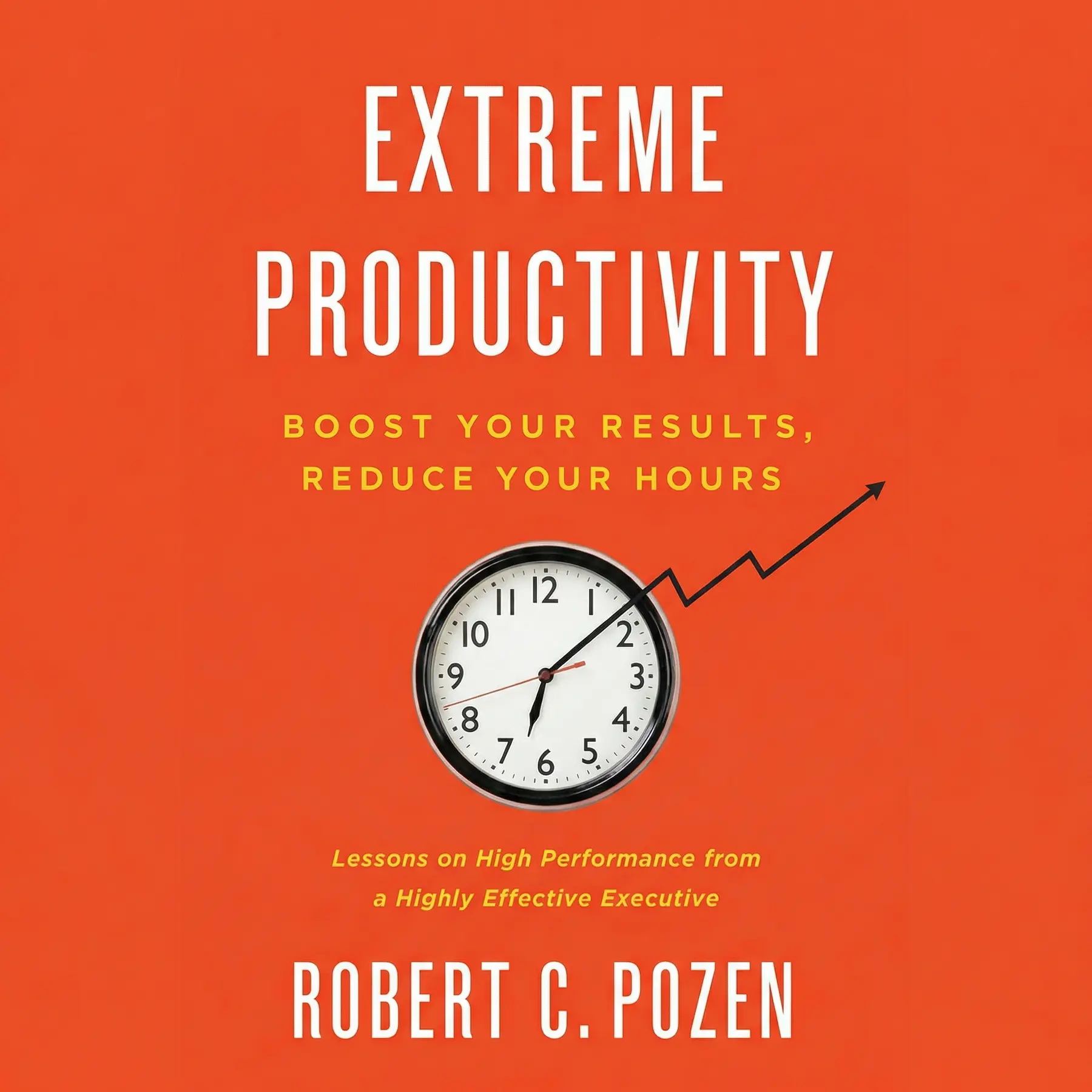
Extreme Productivity: Boost Your Results, Reduce Your Hours
Robert C. Pozen offers a masterclass in efficiency, teaching readers how to maximize their professional output while reclaiming their personal time by focusing on results rather than hours spent at a desk.
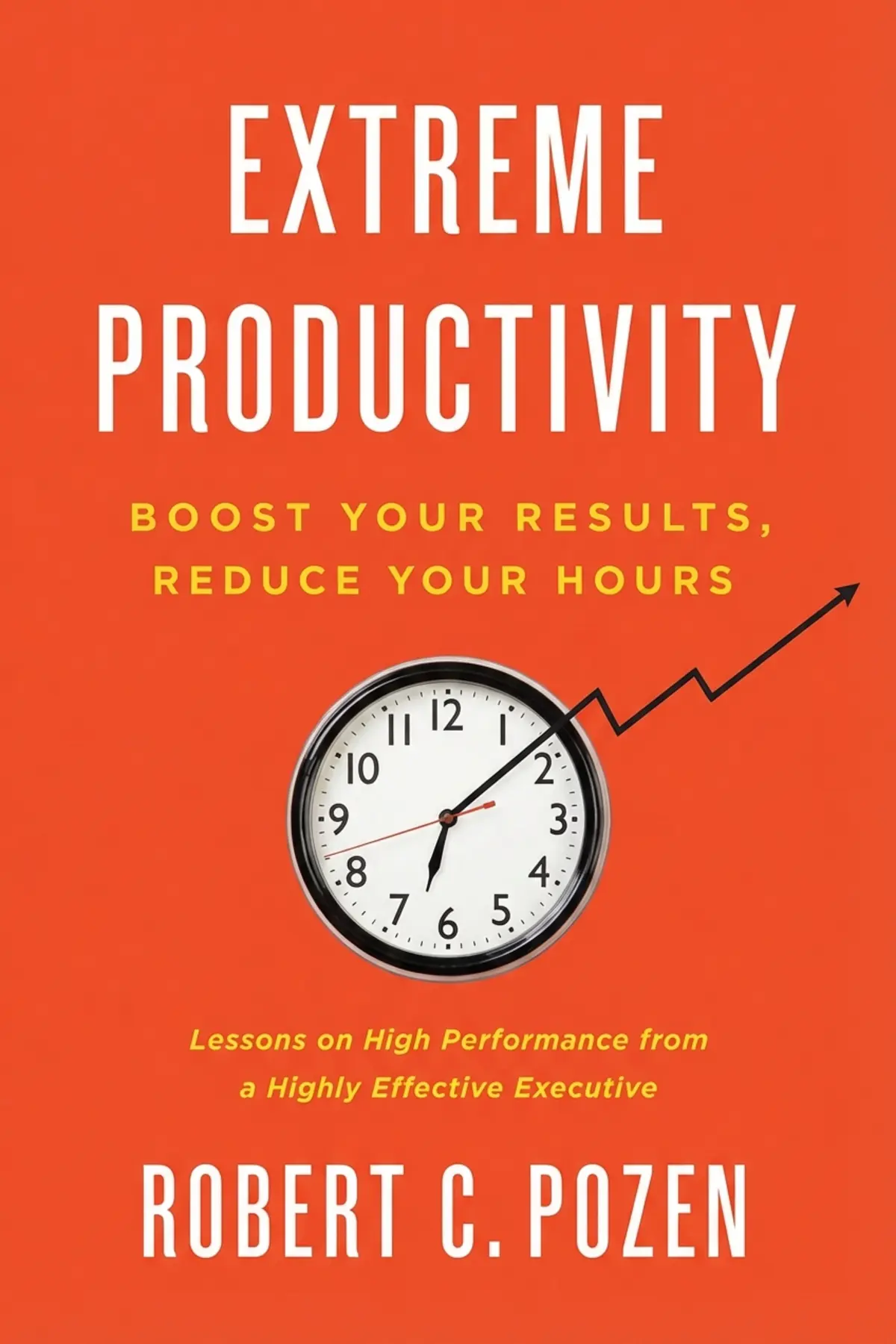
Table of Content
1. Introduction
1 min 37 sec
In our modern world, we often wear our busyness like a badge of honor. We assume that the person staying latest at the office or the colleague with the most frantic schedule must be the most successful. But what if that constant state of exhaustion is actually a sign of inefficiency rather than achievement? Robert C. Pozen suggests that we have the relationship between effort and results all wrong. Many of us fall into the trap of thinking that to reach our biggest ambitions, we have to grind away at full capacity every waking hour. This path leads to burnout, not brilliance.
The real secret to high-level success is what might be called a ‘Zen sense of busyness.’ It is the ability to achieve massive results by exerting the most targeted effort possible. Productivity isn’t about doing more things; it’s about doing the right things in the most streamlined way. When you master this, you don’t just get more work done; you get it done faster. This creates a virtuous cycle: because you finish your work efficiently, you have more time to rest and pursue the activities that truly recharge you. When you return to your desk, you are refreshed and even more capable of high-level performance.
Over the course of this summary, we will explore how to dismantle the habits that hold us back. We will look at how to categorize your life’s work into actionable timelines, how to use the pressure of deadlines to your advantage, and how to stop the ‘perfectionism trap’ from draining your energy on tasks that don’t actually matter. By the end, you’ll see that working less than eight hours a day isn’t just a dream—it’s a viable strategy for those who know how to focus on what counts.
2. Categorizing Tasks by Time and Alignment
2 min 22 sec
Discover how to organize your professional life into three distinct categories to ensure your daily actions are actually moving the needle on your long-term dreams.
3. Mastering the Psychology of Deadlines
2 min 18 sec
Learn how to use intentional pressure to defeat procrastination and turn daunting, large-scale projects into a series of manageable, low-stress victories.
4. Triage and the Principle of Single Handling
2 min 12 sec
Stop letting minor interruptions dictate your day by adopting a ‘handle it once’ mentality and letting go of perfectionism where it doesn’t count.
5. A Structural Approach to Clear Thinking and Writing
2 min 25 sec
Maximize your writing efficiency by separating the creative process from the structural one, allowing you to produce better content in half the time.
6. Valuing Output Over Input
2 min 20 sec
Break free from the ‘culture of hours’ and learn why the quality of your results is the only metric that truly matters in a professional setting.
7. Holistic Productivity and the Art of Information Triage
2 min 31 sec
True productivity extends beyond the office. Discover how to integrate your personal life and use ‘speed-skimming’ to stay informed without being overwhelmed.
8. Conclusion
1 min 34 sec
We often think of productivity as a heavy burden—a set of rules that forces us to work harder and faster until we have nothing left. But Robert C. Pozen has shown us that true productivity is actually the key to freedom. By shifting our focus from the number of hours we sit at a desk to the actual value we produce, we can transform our relationship with work. It starts with the simple act of prioritizing: knowing what matters today, what matters this year, and what matters for your life’s legacy.
Remember the core strategies we’ve discussed. Use the OHIO principle to stop touching the same tasks over and over. Break your daunting projects into mini-deadlines to keep procrastination at bay. Align your personal goals with your employer’s needs to ensure your effort is always valued. And perhaps most importantly, stop apologizing for wanting a life outside of the office. A refreshed mind is a productive mind. When you treat your time as your most precious resource, you stop spending it on perfectionism for minor tasks and start investing it in the big moves that truly define success.
As a final takeaway, try the ‘information triage’ technique tomorrow. When you’re faced with a long report or a dense article, don’t read every word. Read the intro, read the conclusion, and hunt for the meaning. You’ll find that you can grasp the essentials in minutes. Apply that same ‘cut-to-the-chase’ mentality to every meeting and every email. Extreme productivity is within your reach—it just requires the courage to focus on results and the discipline to let the rest go.
About this book
What is this book about?
Extreme Productivity challenges the traditional workplace mindset that associates long hours with high performance. Robert C. Pozen argues that true productivity is about efficiency and achieving specific goals with minimal wasted effort. The book provides a practical framework for prioritizing tasks based on their long-term value, aligning personal objectives with organizational needs, and mastering the art of the 'quick win' for low-priority items. Listeners will learn how to overcome the common pitfalls of procrastination through structured mini-deadlines and public accountability. The summary also dives into specific techniques for efficient writing, effective reading, and navigating corporate culture to favor results over 'face time.' Ultimately, Pozen promises a lifestyle where you can excel in your career without sacrificing your health, family, or personal interests, creating a sustainable cycle of high performance and well-earned rest.
Book Information
About the Author
Robert C. Pozen
Robert C. Pozen is an accomplished professional and educator, currently serving as a senior lecturer at MIT Sloan School of Management. Over his distinguished career, he has authored six books and numerous articles on business and finance. His practical experience includes high-level leadership roles as the chairman and vice chairman of several major financial corporations. Additionally, he contributed his expertise to public service through his work on the Commission to Strengthen Social Security during the Bush administration.
Ratings & Reviews
Ratings at a glance
What people think
Listeners find this productivity guide valuable for its actionable strategies, with one listener mentioning that its scope spans from professional tasks to leisure activities. The content is thorough, and one listener specifically points out the advice on travel and organizing one's schedule. Furthermore, the author's prose is well-liked, and listeners value the book’s efficient and potent approach to managing time. Nevertheless, opinions on accessibility are varied, as some consider the material straightforward while others feel it is overly simplistic.
Top reviews
Julian
Finally got around to reading this, and the chapter on effective writing alone was worth the price of admission. The advice to brainstorm, categorize, and then organize before even touching a keyboard has saved me hours of staring at a blank screen. I’ve read a lot of productivity manuals, but this one feels more grounded in actual professional success rather than just 'hacks.' Pozen covers everything from how to read a newspaper efficiently—which is a skill in itself—to managing long-term career goals. In my experience, the OHIO method is the only way to keep an inbox under control. It’s a comprehensive guide that doesn't just focus on work; it includes travel and personal health too. Highly recommend for anyone looking to maximize their output and actually get home by 7 pm.
Show moreLuckana
As a mid-level manager struggling with a bloated inbox, the 'Only Handle It Once' rule has been a total game-changer for me. I used to open emails, worry about them, and then close them to deal with later. No more. Pozen’s tips on travel organization and time management are incredibly detailed, covering everything from jet lag to packing lists. Look, I know some people think the advice is basic, but sometimes we need to be reminded of the basics to execute them well. I especially appreciated the 'New York Times Test' for ethics—it's a simple, powerful way to keep your integrity in check. The writing style is efficient and gets straight to the point without any fluff. This is a must-read for anyone who feels like they are drowning in daily tasks and losing sight of their bigger career goals.
Show moreSoontorn
Look, I’ve read a lot of productivity manuals, but Pozen actually provides a blueprint for the demand side of your career. Most books focus only on what you want to do, but he forces you to look at what your organization actually needs from you. This shift in perspective changed how I prioritize my weekly tasks. The advice on using OHIO and avoiding pointless meetings has already reclaimed hours of my week. I also loved the suggestion to have a devil's advocate in meetings to avoid groupthink. It covers everything from work to play, including how to maintain a support system at home. While his lifestyle is clearly privileged, the underlying principles of focusing on results rather than hours worked are universal. This is a brilliant, highly effective resource for anyone serious about their professional growth.
Show moreNoah
Pozen's approach to efficiency is refreshingly pragmatic, even if it feels a bit dated in the era of remote work. I appreciated the specific 'Only Handle It Once' rule for emails. It sounds simple, but it really cuts down on the mental load of re-reading the same thread four times without taking action. While some parts felt like a 30,000-foot view of corporate life, the sections on writing and speech-making were genuinely helpful. Truth is, not every chapter will apply to everyone—I skipped the parts about international travel—but the focus on results over 'face time' is a message every boss needs to hear. The book is uncomplicated and effective for those who actually want to implement change. It manages to cover everything from office politics to personal wellness without feeling too scattered.
Show moreRotjanee
The structure of this guide is what sets it apart from the usual fluff you find in the self-help aisle. It’s less of a rigid system like 'Getting Things Done' and more of a toolkit you can dip into when needed. I found the section on the 'narrative fallacy' and the role of luck in our careers to be surprisingly insightful for a business book. It’s not just about doing more; it’s about doing the right things that the 'demand side' actually needs. I did find some of the stuff about business class travel a bit annoying, but the advice on setting mini-deadlines to beat procrastination was spot on. To be fair, it’s a collection of techniques rather than a one-size-fits-all plan. It’s practical, effective, and actually considers your life outside of the office, which is a rare find.
Show moreAhmed
The tips on overcoming procrastination through mini-deadlines were exactly what I needed to stop spinning my wheels on big projects. I’m usually skeptical of these 'secrets of the successful' books, but Pozen is remarkably practical. He doesn't suggest you quit your job; he suggests you do it better so you can go home earlier. The writing style is clear and moves quickly. I think the ease of use is high, though I can see why some might call it basic. Personally, I’d rather have simple, actionable tips than a complex system I'll never follow. The section on writing outlines before drafting is something I’ve started using daily. It's a solid, well-rounded book that balances professional tactics with personal well-being. Definitely a valuable addition to my shelf.
Show moreTum
To be fair, much of the advice here can be found on blogs like Lifehacker for free. Pozen is clearly a brilliant guy, but his 'five newspapers' anecdote feels more like a flex than a strategy. Honestly, if you're looking for a deep philosophical shift, you won't find it here. What you will find is a solid collection of tactics for busy professionals. I particularly liked the section on napping and how exercise is the second-best happiness inducer. However, I found the travel advice about business class lounges to be completely out of touch for the average reader. It’s a decent primer, but don't expect it to reinvent the wheel. It’s a quick read, not a dry one, and that counts for something in this genre. Just be prepared to filter out the high-flyer bias.
Show moreAubrey
Ever wonder how someone manages to chair a major investment firm while teaching at Harvard? This book gives you the answer, though it’s not always relatable. Pozen provides a wealth of practical information on organizing your day, but it’s definitely geared toward the corporate elite. I liked the 'split calendar' idea and the focus on defining your purpose before reading anything. That said, some of the advice is just too basic, like telling readers to exercise or get an education. It’s a bit of a mixed bag. On one hand, you have high-level career planning; on the other, you have tips on buying gifts for your family while traveling. It's a comprehensive look at a very specific type of successful life. Good for a skim, but maybe not worth a deep study.
Show moreWatcharee
Is it really 'extreme productivity' if the secret ingredient is having a stay-at-home spouse to handle every domestic detail? Frankly, I found the tone a bit elitist. Pozen suggests 'slipping into the business lounge' or buying business class tickets to sleep better, which isn't exactly a practical tip for the average worker. It feels written for a very specific demographic: wealthy, high-powered men with a full support system at home. I found myself skimming through the parts about managing personal support because it just isn't my reality. There are a few nuggets about setting mini-deadlines and categorizing thoughts before writing, but they are buried under layers of self-congratulatory fluff. If you aren't a Harvard professor or a Fidelity chairman, you might find the 'daily routine' advice more frustrating than helpful. It’s mostly common sense wrapped in a fancy suit.
Show moreChokdee
This book is essentially a masterclass in how to be a distracted, high-level executive who skims through life. The author claims to 'read' five newspapers a day, but then admits he just skims the headlines and skips most sections. That’s not reading; that’s just glancing at paper. Not gonna lie, the advice to send emails during meetings is actually dangerous for team morale and focus. It prioritizes meaningless metrics over deep work or quality attention. The whole thing reads like a giant humble-brag about how busy and important he is. If 'extreme productivity' means ignoring your colleagues and letting your wife do all the heavy lifting at home, I’ll pass. It’s an outdated perspective that values quantity over quality every single time. Save your time and skip the purchase.
Show moreReaders also enjoyed
AUDIO SUMMARY AVAILABLE
Listen to Extreme Productivity in 15 minutes
Get the key ideas from Extreme Productivity by Robert C. Pozen, plus 5,000+ more titles in English and Thai.
- 5,000+ titles
- Listen as much as you want
- 7-day free trial
- Cancel anytime







