
18 min 15 sec
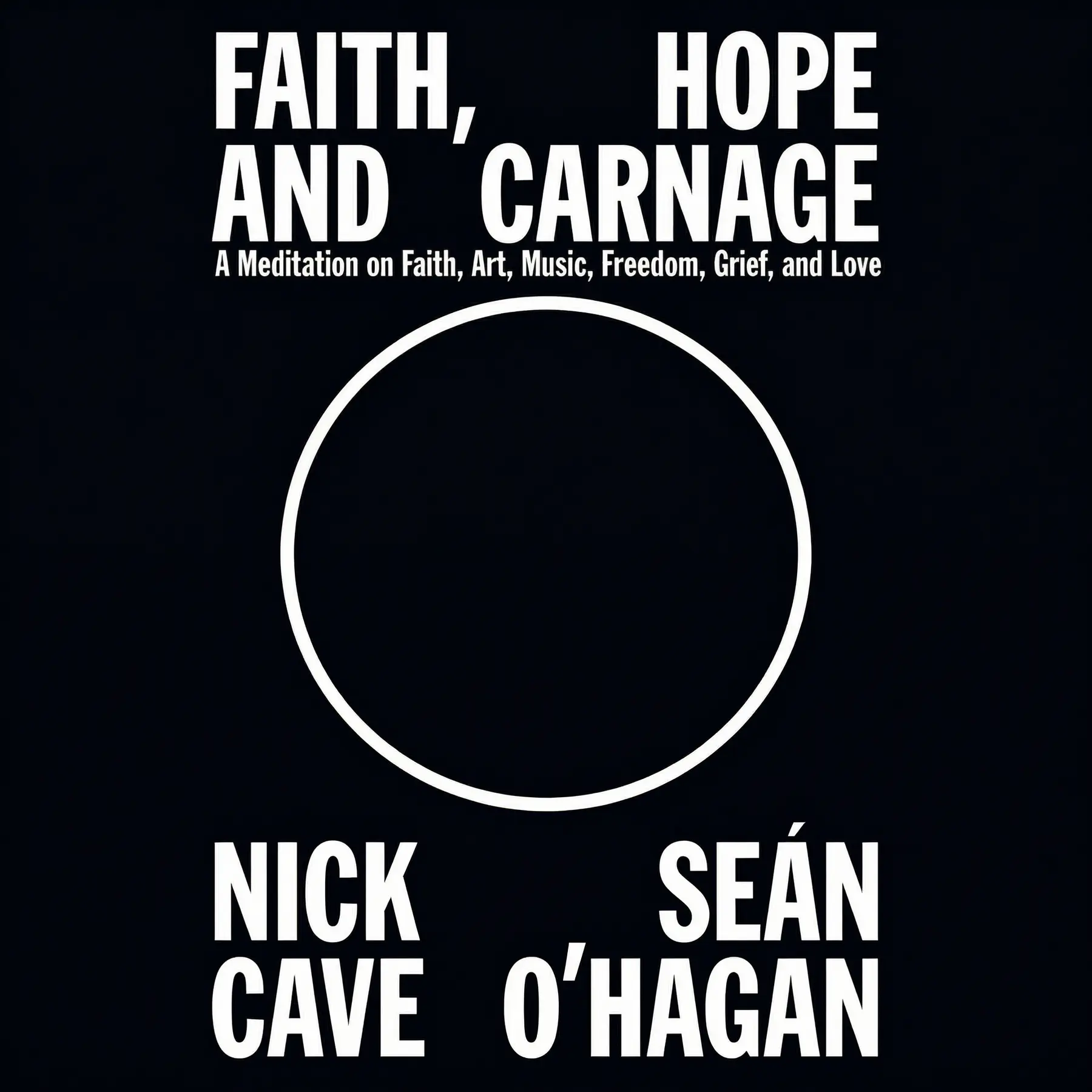
Faith, Hope and Carnage
Explore the profound inner life of legendary musician Nick Cave as he discusses creativity, the transformative power of grief, and finding spiritual meaning through art and connection after personal tragedy.
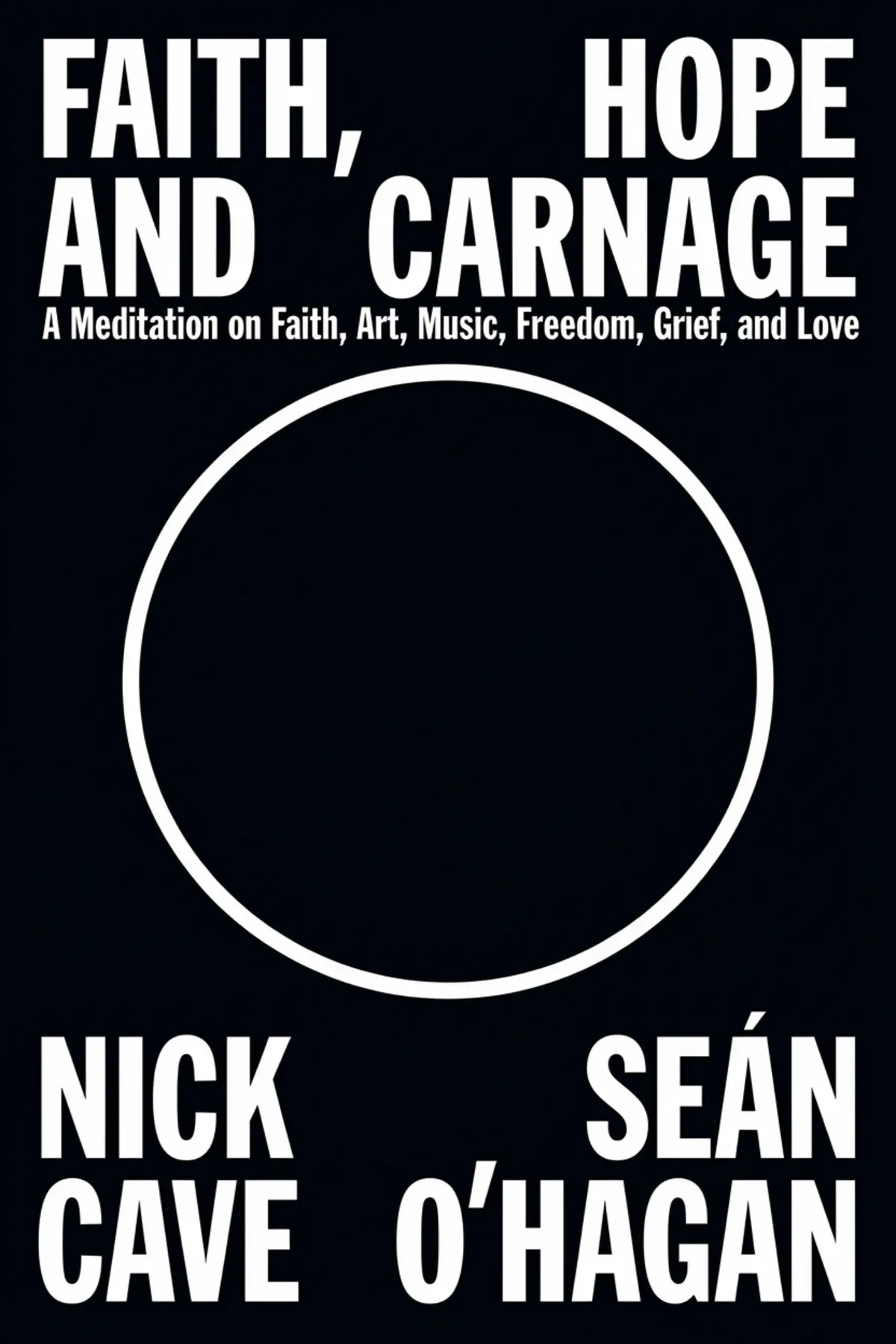
Table of Content
1. Introduction
2 min 10 sec
For decades, the name Nick Cave conjured a very specific set of images: the wild-eyed frontman of the Birthday Party, the brooding poet of the Bad Seeds, a man whose artistic DNA seemed woven from the dark threads of Old Testament violence, gothic romance, and a certain kind of stylish squalor. He was the quintessential outsider, a performer who treated the stage like a sacred, often dangerous, ritual ground. From the chaotic punk scenes of Melbourne to the drug-fueled creative hubs of West Berlin, Cave carefully constructed a persona that was as impenetrable as it was charismatic. He was the dark prince of music, seemingly untouchable in his cool, detached brilliance.
Then, in 2015, the world he had built was shattered by an unimaginable personal tragedy: the sudden and accidental death of his fifteen-year-old son, Arthur. In the wake of such a cataclysmic event, many artists would have retreated into total silence, pulling the curtains shut on their private lives. But Nick Cave did something different. He didn’t just survive his grief; he invited his audience to witness it. He transformed his pain into a bridge, connecting with his fans through the ethereal sounds of the album Ghosteen and the radical transparency of the Red Hand Files, an online space where he answers deeply personal questions from strangers with startling honesty.
This summary explores the conversations between Cave and his long-time friend, journalist Seán O’Hagan. It’s a journey through the wreckage and the rebuilding. We’re going to look at how Cave’s creative process has evolved from a struggle with the blank page into a form of spiritual code-breaking. We’ll see how the love of the women in his life served as a safety net during his darkest years and how the experience of loss changed his very cellular makeup. Finally, we will see how Cave has traded his youthful disdain for a militant kind of optimism, proving that even in the face of total carnage, there is room for faith and hope. This is an invitation to step inside the mind of an artist who has looked into the abyss and decided to sing back to it.
2. The Agony and Ecstasy of the Creative Process
4 min 03 sec
Songwriting is rarely a bolt of lightning for Nick Cave; instead, it is a grueling process of sifting through linguistic debris to find a hidden spark.
3. Love as a Lifeboat Through Addiction and Loss
3 min 31 sec
Beyond the dark imagery of his lyrics, Cave’s life has been sustained by a series of powerful, grounding relationships with the women in his life.
4. The Permanent Landscape of Grief
3 min 28 sec
The loss of a child is not an event one moves past, but a new world one must learn to inhabit, transforming the artist’s soul in the process.
5. The Red Hand Files and Happiness as Rebellion
3 min 21 sec
Through a simple online forum, Cave discovered that addressing the suffering of others was the key to his own continued survival and optimism.
6. Conclusion
1 min 42 sec
Nick Cave’s journey, as chronicled in his conversations with Seán O’Hagan, is a profound testament to the resilience of the human spirit and the transformative power of art. We have seen how Cave moved from a place of performative darkness and addiction into a life defined by deep domestic love and radical transparency. His story suggests that the creative process is not just about making things, but about surviving the world by constantly trying to decode its mysteries. It reminds us that our strongest anchors are often the people who refuse to let us drift away, even when we are at our most difficult.
Perhaps the most important takeaway is Cave’s evolving relationship with grief. By refusing to treat his loss as a private burden and instead turning it into a public bridge, he has shown that vulnerability is a strength, not a weakness. He has moved beyond the cynicism of his youth to embrace a ‘militant optimism’—a belief that choosing to find meaning and joy in the face of inevitable suffering is the most courageous act an artist, or any person, can perform.
As you move forward, consider the ‘mustard seeds’ in your own life. Cave’s experience teaches us that we are never as alone as our pain makes us feel. By opening ourselves up to the collective experience of humanity, we can find the ‘bright phantoms’ that follow even the darkest times. In a world that can often feel like pure carnage, Cave reminds us that faith and hope are not just comforting ideas, but active, necessary choices that allow us to stay enchanted with the world.
About this book
What is this book about?
This summary delves into a series of intimate conversations between musician Nick Cave and journalist Seán O'Hagan. It moves beyond the public persona of the dark prince of post-punk to reveal a man navigating the catastrophic loss of his son, Arthur. The narrative explores how Cave’s approach to songwriting and performance shifted from a place of provocation and disdain to one of radical empathy and spiritual search. Readers will discover Cave’s unique perspectives on the creative process, characterized by the struggle to move past easy ideas to find something truly original. The book also traces the vital roles played by the women in his life—his mother and his wife, Susie—in anchoring him through addiction and mourning. Ultimately, it is a meditation on how suffering can lead to a deeper connection with the world, manifesting in Cave’s online forum, The Red Hand Files, and his belief in happiness as a form of rebellion.
Book Information
About the Author
Nick Cave
Nick Cave is a renowned Australian musician who gained prominence with the post-punk band The Birthday Party before achieving international acclaim with The Bad Seeds. His work is known for its intensity, often exploring themes of religion, violence, and love. Seán O’Hagan is a respected Northern Irish journalist specializing in photography and music.
Ratings & Reviews
Ratings at a glance
What people think
Listeners view this work as an essential read for all humanity, commending its spiritual substance and thorough exploration of somber themes. Beyond that, the writing is lauded for its truthfulness, insight, and elegance, with one listener describing it as one of the best theological books on suffering. Listeners also value the conversational format, with one individual pointing out its meaningful conversations about grief.
Top reviews
Fon
This book feels less like a traditional autobiography and more like a sacred text for the modern, grieving soul. Seán O'Hagan is a brilliant navigator here, steering Nick Cave through the wreckage of the last few years with such grace and precision. Truth is, I haven't read anything this raw since his son’s passing was first explored in the documentary 'One More Time with Feeling'. The way they discuss the 'Skeleton Tree' and 'Ghosteen' eras feels like an invitation into a private chapel. It’s a profound look into how suffering can be transmuted into something luminous and life-affirming. While the religious language might be a hurdle for some, I found his exploration of 'divine possibility' to be incredibly inclusive and moving. It is a stunning ode to human resilience.
Show moreTariq
Picking this up as a casual listener, I didn't expect to be so completely dismantled by the wisdom contained in these pages. The conversation format makes the heavy themes of loss and the 'carnage' of existence feel surprisingly accessible, like sitting in on a late-night talk between two old friends. I loved how Cave refuses to give easy answers to the big questions of faith. He embraces the uncertainty of it all, which feels so much more authentic than dogmatic certainty. The book manages to be both gut-wrenching and surprisingly sweet, showcasing a man who has found a way to remain open to the world despite everything. It’s easily one of the most significant meditations on art and grief I’ve ever encountered. Every chapter offered a new perspective on how we connect through our shared fragility.
Show morePui
The dialogue between Cave and O'Hagan is a masterclass in vulnerability, capturing a period of radical artistic transformation during the global standstill. Look, it’s rare to find an artist of this caliber who is willing to peel back the layers of their persona so completely. They touch on everything from the creative process behind 'Carnage' to the quiet discipline of the 'Red Hand Files' and the messy reality of grief. Cave’s voice is lyrical yet grounded, often self-deprecating and surprisingly funny even when discussing the darkest subjects. The book suggests that love is a transformative power capable of bridging the gap between the living and the dead. It’s a deeply empathetic piece of work that transcends the 'rock star memoir' label entirely. I found myself highlighting passages on almost every single page.
Show moreKaen
After hearing the 'O'Children' scene in Harry Potter years ago, I've always viewed Cave as a sort of dark poet, but this book reveals a man who has transcended that image. This is a genuinely profound and affecting piece of work that offers a template for how to survive the unthinkable. The way he describes grief as something that can be lived 'with' rather than something to 'get over' is life-changing. There is so much beauty in how he describes his late son and the way art keeps that connection alive. In my experience, most celebrity books are shallow, but this is a deep dive into the soul. It feels like a Tim Burton-esque bedtime story for adults who have seen too much. This conversation is an absolute gift to anyone feeling lost in the dark.
Show morePia
Wow, I am still reeling from the sheer intimacy of these conversations. This isn't just a book for fans of the Bad Seeds; it's a must-read for all humanity. Cave and O'Hagan have created something that feels like one of the best theological books on suffering ever written. The vulnerability displayed is brave, showing that even in the midst of 'carnage,' there is room for light and humor. It’s a heartfelt, deep conversation that I didn't want to end. I found it utterly beautiful and an ode to life itself. If you are looking for a book that is both gut-wrenching and wise, this is it. It truly is a gorgeous piece of work that stayed with me long after I closed the back cover.
Show moreAva
As someone who has always struggled with the idea of 'suffering for art,' this book provided a perspective that felt both ancient and entirely new. Nick Cave is so articulate about his flaws and his evolution, moving away from the rock star trope and toward something much more meaningful. The conversations happened when the world was at a stand-still, adding an extra layer of poignancy to their reflections on isolation and connection. I loved the focus on 'hope as optimism with a broken heart,' as it feels like a very realistic way to approach the world. The writing is lyrical, accessible, and deeply sincere throughout the entire three hundred pages. It's a vulnerable and life-affirming book that changed how I think about my own creative impulses. Simply put, it is an essential read for anyone navigating their own grief.
Show moreNew
Finally got around to reading this after hearing so much buzz, and while it's undeniably beautiful, the repetitive nature of the interview format did start to wear on me by the end. To be fair, the insights into the albums 'Ghosteen' and 'Skeleton Tree' are absolutely essential for any fan. Nick speaks about the mystery of the creative process with such reverence that it's hard not to feel inspired yourself. The relationship between the two men is clearly built on deep trust, which allows for some very uncomfortable and necessary questions. However, some of the philosophical tangents felt a bit self-indulgent after a while. It’s still a four-star read for the sheer emotional weight and the gorgeous prose, but I think a slightly tighter edit could have made it even more impactful. A very thoughtful exploration of life’s messiness.
Show moreNatchaya
Ever wonder how a person survives the absolute wreckage of losing a child without losing their mind entirely? This book provides a glimpse into that process, focusing on the transformative power of human connection and the healing nature of art. Got to say, the intimacy here is staggering, especially considering how guarded Cave used to be with the press in the past. O'Hagan asks all the right questions, pushing Cave to articulate things that are usually left unsaid. My only minor gripe is that the pandemic setting makes it feel a bit claustrophobic at times, though that fits the tone. It’s an insightful, empathetic look at what it means to be a human being in a world defined by change. I finished it feeling a strange sense of hope that I didn't have before.
Show morePichaya
To be fair, you probably need a passing familiarity with the 'Red Hand Files' to appreciate the specific rhythm of Nick’s speech here. The book is structured as a series of conversations, which gives it a very organic and live feel, almost like a long-form podcast. It’s a compelling look at the mystery of creativity, specifically how 'Ghosteen' emerged from the ashes of his personal life. While the focus on faith and the divine might be alienating for some, Cave presents it more as a 'longing' than a set of rules. Personally, I found the parts about his domestic life and his pottery-making just as fascinating as the big philosophical questions. It’s a well-rounded portrait of an artist in flux. A bit dense in spots, but ultimately very rewarding for the patient reader.
Show moreSarocha
Not what I expected from a rock star, and frankly, I found the constant pivot back to religious imagery and 'divine possibility' incredibly grating. As someone who prefers the darker, visceral energy of 'The Birthday Party' or 'Murder Ballads,' this version of Cave feels almost unrecognizable to me. The dialogue goes in circles for over three hundred pages, and the focus on faith felt like a regression rather than an evolution. I appreciate the honesty regarding his son Arthur, but the theological bent of the conversation just left me cold. It felt quite repetitive after the first few chapters, with O'Hagan pushing for depth in areas that felt overly abstract. If you’re not interested in a deep dive into spiritual longing, this might be a slog.
Show moreReaders also enjoyed

A Year in the Life of William Shakespeare: 1599
James Shapiro

Agent Sonya: The Spy Next Door
Ben Macintyre
A Different Kind of Power: A Memoir
Jacinda Ardern
AUDIO SUMMARY AVAILABLE
Listen to Faith, Hope and Carnage in 15 minutes
Get the key ideas from Faith, Hope and Carnage by Nick Cave, plus 5,000+ more titles in English and Thai.
- 5,000+ titles
- Listen as much as you want
- 7-day free trial
- Cancel anytime







