
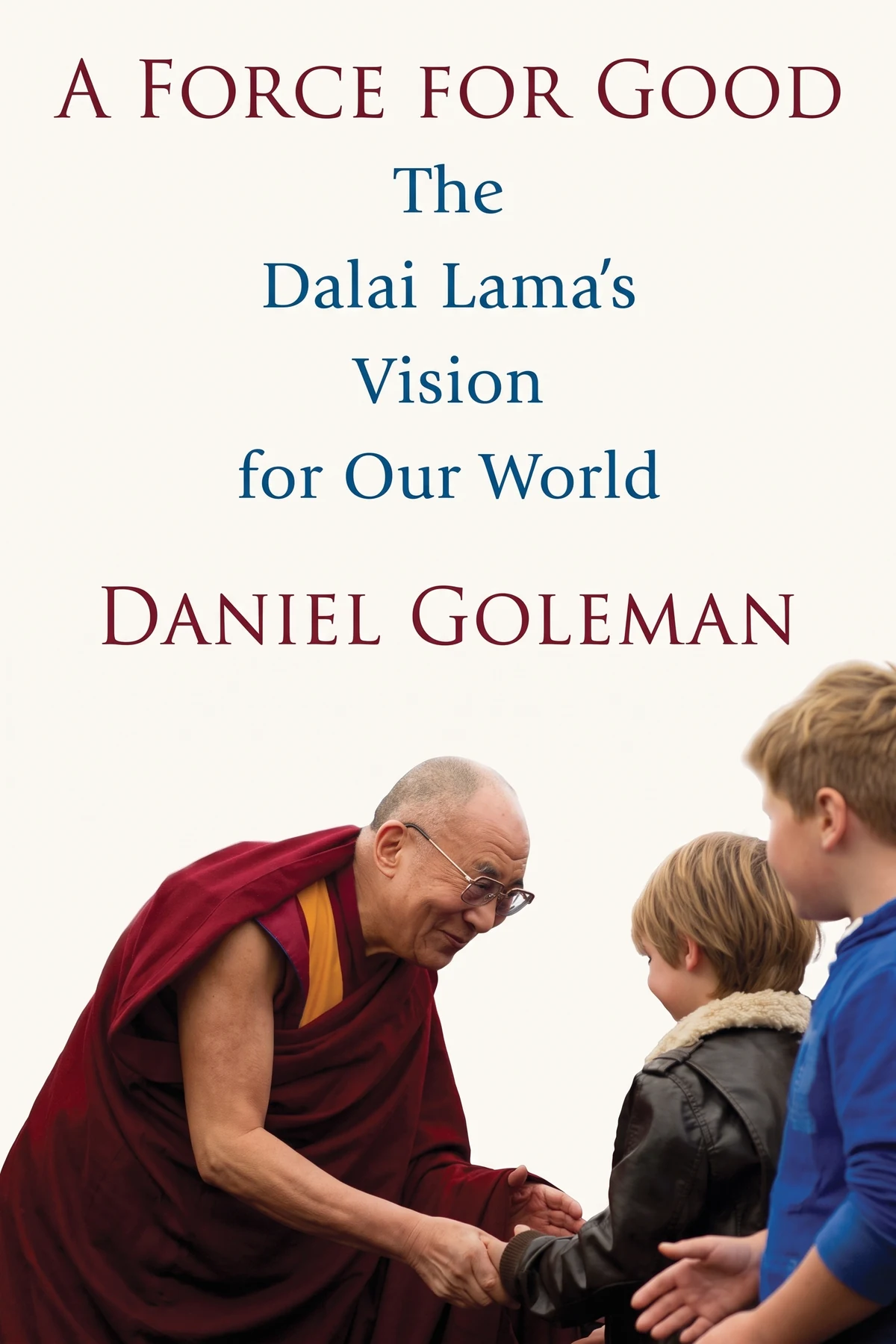
A Force for Good: The Dalai Lama's Vision for Our World
Daniel Goleman
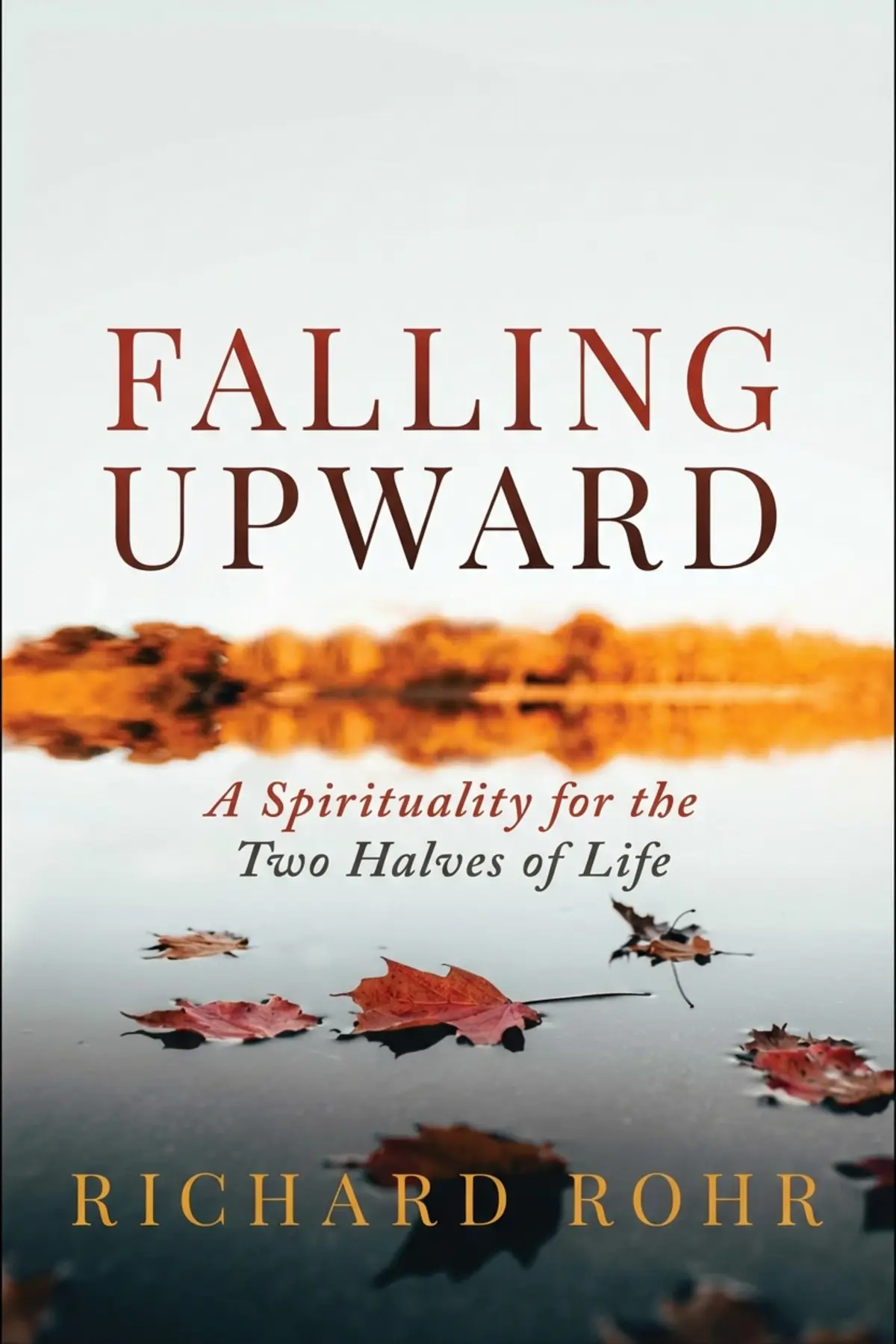
Falling Upward explores the transformative transition from building a self-identity to discovering a deeper spiritual purpose. It provides a roadmap for navigating life’s two halves through the necessary experience of failure and growth.
2 min 02 sec
Have you ever felt like you followed all the rules, checked every box, and built a successful life, yet still felt like something fundamental was missing? Many of us spend decades constructing a professional identity, a home, and a reputation, only to find that the foundation we worked so hard to lay doesn’t quite satisfy the soul’s deeper hunger. This is because, according to Franciscan priest Richard Rohr, life is not a single, continuous climb toward success. Instead, it is a journey divided into two distinct halves, each with its own unique tasks and its own specific set of requirements.
In this exploration of Falling Upward, we are invited to look at our lives through a different lens. The first half of our journey is about building the vessel—what Rohr calls the container. It’s about boundaries, rules, and identity. But the second half is about what we put inside that container. It is about meaning, spiritual depth, and the realization that our greatest growth often comes from our most significant falls.
We often view aging or failure as something to be avoided at all costs. We fear the loss of our youthful vigor or our professional status. But what if those losses were actually the very things that allowed us to finally see the truth of who we are? What if the path ‘down’ was actually the only way to truly go ‘up’? In the pages that follow, we will walk through the architecture of these two halves. We will look at why we need the structure of the first half, why we must eventually leave it behind, and how the ‘falling’ we so often fear is actually a grace-filled transition into a much larger world. This isn’t just about getting older; it’s about getting deeper. It’s a journey toward a spirituality that can hold both our successes and our sorrows in a way that leads to genuine, lasting joy. So, let’s begin by understanding the two primary tasks that define our time on this earth.
2 min 27 sec
Life consists of two fundamental phases, each demanding a completely different approach to how we see ourselves and the world around us.
2 min 33 sec
Across cultures and history, a universal story mirrors our personal evolution from youthful certainty to mature wisdom.
2 min 29 sec
Building a solid foundation is a necessary part of growth, but it is never the final destination of a spiritual life.
2 min 18 sec
The transition to spiritual maturity almost always requires a failure that we cannot fix through sheer willpower.
2 min 40 sec
The internal psychological guard that protected you in your youth must eventually be thanked and dismissed for you to grow.
2 min 36 sec
Beyond the roles we play and the masks we wear lies an original identity that is deeply connected to the divine.
2 min 45 sec
Mature spirituality moves beyond simple right-and-wrong categories into a broader, ‘both-and’ understanding of reality.
2 min 05 sec
As we conclude our look at Falling Upward, it’s important to reflect on the overarching journey we’ve described. We began by recognizing that life is not a single, linear path toward an ever-increasing peak. Instead, it is a journey of two halves, separated by a necessary fall. The first half is about the container—the identity, the rules, and the structure that give us a place in the world. The second half is about the contents—the meaning, the spiritual depth, and the true self that exists beyond our roles and reputations.
If you find yourself in a period of struggle, failure, or loss, remember the metaphor of ‘falling upward.’ These moments are not signs that you have failed at life; they are signs that your first half is ending and you are being invited into something much larger. The pain you feel is often the breaking of the container so that something new can be poured in. This transition requires us to thank our ‘loyal soldiers’ for their service and then bravely step into a world of vulnerability and nondualistic thinking.
In the second half of life, you don’t need to be the loudest voice in the room to have the most influence. True elders change the world simply by their presence—by their ability to hold the ‘bright sadness’ of life with peace and grace. They have moved from a life of ‘doing’ to a life of ‘being.’ They understand that they are part of a vast, interconnected reality, and they find joy in the commonalities they share with others rather than the things that set them apart.
The takeaway is clear: do not fear the second half of life, and do not fear the stumbles that take you there. Embrace the complexity, let go of the need for control, and allow yourself to fall into the deeper life that has been waiting for you all along. By moving beyond the container, you find the life you were always meant to live—a life of purpose, connection, and enduring joy.
Falling Upward addresses the profound shift that occurs as we move through the distinct phases of our existence. In the first portion of our lives, we are primarily concerned with establishing our place in the world, creating a secure identity, and building the metaphorical container of our lives. This involves following rules, achieving success, and defining who we are in relation to others. However, Richard Rohr argues that this first-half focus is merely the preparation for a much deeper second act. To transition into this second half, one must often experience a significant setback or a fall. This book promises to show that these moments of failure are not endings, but essential doorways into a more expansive, spiritual, and joyful way of being. By embracing a non-dualistic perspective, we can move beyond black-and-white thinking to find a sense of peace that incorporates life’s complexities and contradictions.
Richard Rohr is a member of the Franciscan order and a well-known spiritual teacher. He has authored over twenty books and is a frequent international speaker on topics including scripture, nature, and social justice. His work frequently appears in publications such as Sojourners, Tikkun, and Radical Grace.
Listeners find this work to be enlightening and mentally stimulating, with one listener noting it is especially appropriate for an older audience. The book is praised for its depth and exploration of classic literature, while listeners also value the author’s quality. However, the tiny font size receives criticism, and views remain divided regarding the spiritual subject matter and its suitability for various age ranges.
After hearing so many people talk about 'The Second Half of Life,' I finally dove into Rohr's work. This book is a masterclass in what it means to grow old with grace rather than just getting older. Rohr’s central metaphor of the 'container' vs. the 'contents' changed my entire perspective on midlife. In our first half, we are so preoccupied with building the structure—career, reputation, and rules—that we often forget what the structure was actually meant to hold. Frankly, it’s refreshing to read a priest who isn't obsessed with 'sin management' but instead focuses on soul transformation. The way he weaves in the Odyssey and various myths alongside the teachings of Jesus makes the spiritual journey feel universal and timeless. It’s a slow, contemplative read that I’ll likely revisit every few years as I continue to navigate my own second half.
Show morePicked this up during a particularly painful season of professional failure and it felt like a total lifeline. Rohr explains that the very things we see as 'downs' are actually the only way to get to the 'up.' It’s the 'tragic sense of life' that he describes so beautifully—the idea that growth and redemption spring from our necessary sorrows. I loved his analysis of Thomas Merton and the way he uses the heroic journey to explain our spiritual maturation. Not gonna lie, some of the concepts took a few passes to truly sink in because they are so counter-intuitive to everything we are taught in Western culture. If you are struggling with feeling like a 'failure' because your life hasn't gone according to plan, please read this. It will help you see that you might just be falling into a much larger, more beautiful life.
Show moreEver wonder why the rules that worked in your twenties feel so stifling in your fifties? This book answers that question with profound empathy and spiritual depth. Rohr suggests that we spend the first half of our lives building a 'container'—our ego, our identity, our walls—and the second half realizing that the container isn't the point. Truth is, I cried through the chapter on 'A Second Simplicity.' It gave me permission to let go of the need to be right all the time and instead focus on being present. The way he handles the concept of 'falling' as a grace is revolutionary. It’s a must-read for anyone who feels like the version of Christianity they grew up with has become too small for the reality of their lives. It’s enlightened, challenging, and deeply comforting all at once.
Show moreThis book is a profound exploration of the spiritual tasks that await us as we age. I’ve read a lot of self-help and spiritual growth books, but Rohr offers something different here—a roadmap for the soul that doesn't rely on toxic positivity. He acknowledges that the 'fall' is inevitable and even necessary. His analysis of timeless classics and mythology adds a layer of intellectual depth that you don't often find in contemporary religious writing. It’s particularly suitable for older readers who are trying to make sense of their legacy and their impending mortality. The idea that we 'fall upward' into a deeper union with God is a beautiful, hopeful message. I’ve already bought three copies to give to friends who are going through difficult transitions. It is a true gift.
Show moreWow. Just wow. Rohr has a way of putting words to things I’ve felt in my bones for years but didn't know how to articulate. The distinction between 'rules' for the first half of life and 'meaning' for the second half is life-altering. For so long, I felt guilty for not being as 'on fire' for the specific doctrines of my youth, but this book helped me see that I was simply growing into a more capacious faith. He teaches us that we learn how to recover from falling by actually falling. It’s a paradox that makes total sense once you’ve lived through some real-world disappointment. This isn't just a book; it's a companion for the journey into the unknown. If you're tired of simplistic answers, this is the deep dive you've been looking for.
Show moreThe chapter on the 'container' versus the 'contents' really hit home for me as I navigate my fifties. Rohr has a gift for taking complex Jungian concepts and making them accessible for the average person seeking spiritual depth. To be fair, he does lean heavily on the same few sources—expect to hear a lot about Carl Jung and Julian of Norwich—which can feel a bit repetitive if you’ve read his other work. I also found the physical print in the paperback edition to be annoyingly small, making it hard to read for long periods without eye strain. However, the wisdom regarding how we handle suffering and failure is gold. He argues that falling is actually the path upward, which is a hard but necessary truth to swallow. It’s not a traditional 'religious' book, but it is deeply spiritual.
Show moreRichard Rohr writes with a rare clarity that bridges the gap between ancient mythology and modern psychology. I particularly enjoyed his deep dive into literature, referencing the Odyssey and the archetypal 'hero's journey' to explain why we often feel lost in middle age. He challenges the reader to move beyond 'correct rituals' and intellectual certainty toward a 'second simplicity' that can hold paradox and mystery. My only real gripe is that he can come across as a bit condescending toward those he labels as 'first-half' thinkers. Sometimes his tone feels like he’s lecturing down to the 'poor souls' who haven't reached his level of enlightenment. Still, the core message about transforming our pain rather than just transmitting it is an essential lesson for anyone over forty. It's a thought-provoking, albeit slightly arrogant, piece of spiritual writing.
Show moreFinally got around to reading this and it’s definitely a slow-burn kind of book. I’m a fan of Rohr’s work on the Enneagram, so I was prepared for his more 'progressive' take on faith. He really hits the nail on the head regarding the 'sin management' culture of many churches today. We are so focused on who is 'in' and who is 'out' that we miss the transformative power of the Gospel. I did find some of his scriptural exegesis a bit loose—he definitely bends verses to fit his specific archetypal framework—but the overall message is so needed. It’s a book about maturity, and let’s face it, our world is desperately lacking in spiritually mature elders. If you can get past the somewhat repetitive nature of the chapters, there is a lot of life-changing perspective here.
Show moreLook, I wanted to love this more than I actually did. There are definitely some 'rare gems' of wisdom buried in these pages, especially his insights on how we handle suffering. However, the writing style is quite circular. He uses the same quotes from Lady Julian and Carl Jung almost every single chapter, which made me feel like I was reading the same essay over and over again. Also, as a younger reader, I found his dismissal of 'first-half' life tasks a bit frustrating. He makes it sound like building a career or following rules is just some shallow stage to get through, but those things provide the stability many of us are still trying to find. It’s a good book for reflection, but I think it’s primarily suited for people who are already in retirement and looking back, rather than those of us still in the thick of it.
Show moreAs someone who takes orthodox Catholic theology seriously, I found Fr. Rohr’s approach deeply troubling. He claims to be writing from a Franciscan perspective, but he seems to have strayed into a sort of pluralistic 'New Age' spirituality that treats Scripture more like a buffet than the Word of God. His treatment of sin is incredibly light, almost dismissive, suggesting that we 'cannot avoid it anyway' so why worry? This feels like a dangerous departure from the call to holiness. He frequently takes Bible passages out of context to support his views on universalism, ignoring the parts of the Gospel that don't fit his narrative. While I agree that many people are stuck in a legalistic 'first half' of life, I cannot agree that the solution is to abandon historical orthodoxy for a vague 'enlightenment' that looks more like Buddhism than Christianity.
Show moreDaniel Goleman
Eckhart Tolle
Marianne Williamson
Deepak Chopra
Pico Iyer
Alcoholics Anonymous World Services

Beth Moore
Paramahansa Yogananda
AUDIO SUMMARY AVAILABLE
Get the key ideas from Falling Upward by Richard Rohr, plus 5,000+ more titles in English and Thai.







