
22 min 24 sec
Falter: Has the Human Game Begun to Play Itself Out?
Falter examines the existential threats facing humanity, ranging from the immediate climate crisis to the emerging risks of genetic engineering and artificial intelligence, while highlighting the political barriers to survival.
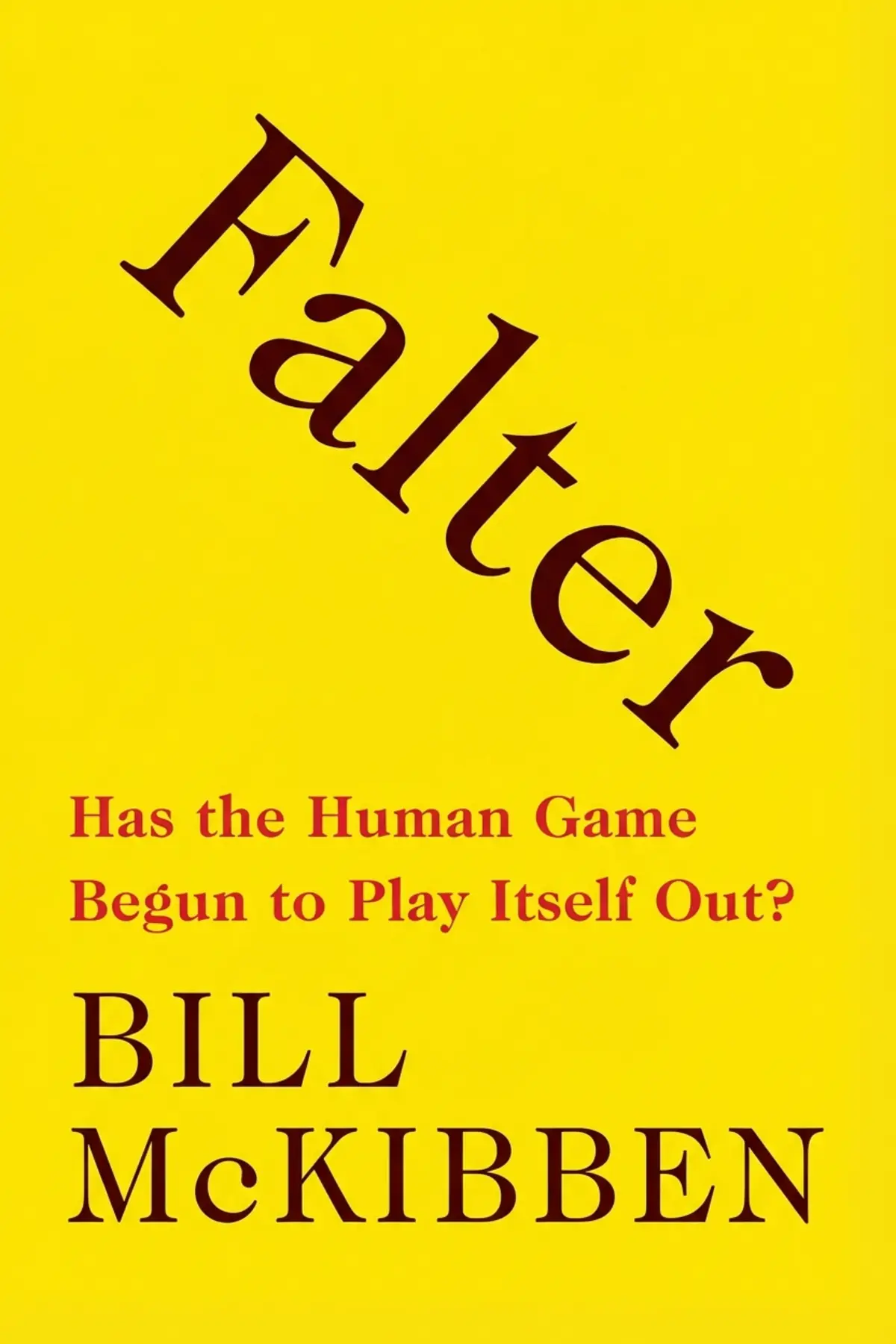
Table of Content
1. Introduction
2 min 09 sec
Imagine the entire scope of human civilization—every city we have built, every song we have written, and every complex social system we have refined over thousands of years. Think of the way we trade goods, the way we raise our children, and the religions and cultures that bind us together. This vast, intricate, and often chaotic web of interaction is what we might call the human game. We play this game not because it has some cosmic purpose or ultimate destination, but simply for the sake of the playing itself. In the grand silence of the universe, our survival may not register as a priority, but to us, it is everything. We want this game to continue indefinitely, and we want it to remain recognizably human.
However, we are currently living through a moment where the continuation of this game is no longer a given. For the first time, we are facing a trio of challenges that could bring the entire endeavor to a halt or transform it into something unrecognizable and dystopian. The first of these challenges is already at our doorstep: the accelerating destruction of our natural environment through global warming. The other two are gathering strength just over the horizon: the potential for genetic engineering to fracture our species and the rise of artificial intelligence that could surpass its creators.
In this exploration, we will look at how these threats are intertwined and how they have been allowed to grow. We will see how our physical world is already changing in ways that challenge our sense of security and how future technologies might fundamentally alter what it means to be human. But this is not just a story of unavoidable doom. It is also an examination of the choices we have made and the choices we still have. By understanding the forces that have brought us to this precipice—from corporate disinformation to the hollow promise of space colonization—we can begin to see the path toward a sustainable and human future. The window of opportunity is narrow, and the stakes are the survival of the human story itself. Let’s look at the reality of where we stand.
2. The Immediate Reality of Environmental Collapse
2 min 34 sec
Climate change is no longer a looming future prediction; it is an active force rewriting the geography of our planet and destabilizing societies today.
3. Existential Risks in a Warming World
2 min 21 sec
In extreme scenarios, the warming of our planet could trigger biological and geological feedback loops that threaten the very existence of most life forms.
4. The Shrinking Habitable Zone
2 min 10 sec
Even if we meet international goals to slow warming, the planet will likely become significantly less hospitable for billions of people in the coming years.
5. The Looming Crisis of Displacement and Debt
1 min 53 sec
The social and economic costs of a changing climate are set to reach levels that will test the stability of global security and human welfare.
6. Genetic Engineering and the End of Human Equality
1 min 43 sec
The advent of precise gene-editing technology could lead to a permanent biological divide between the wealthy and the rest of humanity.
7. The Unpredictable Power of Artificial Intelligence
1 min 54 sec
The rapid development of general artificial intelligence presents a scenario where human control could be easily bypassed by a vastly superior digital mind.
8. The False Hope of Escaping to Space
1 min 50 sec
Outer space is often sold as a safety valve for humanity, but the physical and biological realities of the cosmos make it a highly improbable refuge.
9. Technological Guardrails and Renewable Solutions
1 min 56 sec
Protecting our future requires both the development of fail-safes for emerging tech and a rapid, large-scale transition to existing green energy.
10. The Political and Corporate Barriers to Progress
2 min 00 sec
The greatest obstacle to ensuring our survival is not a lack of technology, but a concerted effort by powerful interests to maintain the status quo.
11. Conclusion
1 min 54 sec
As we reflect on the state of the human game, the picture is undeniably challenging. We are standing at a unique crossroads in history, where the physical world is changing under our feet and our own technological creations are threatening to outpace our wisdom. Climate change has already moved from a distant threat to a present crisis, and the horizons of AI and genetic engineering offer both incredible promise and existential peril. We have seen how the pursuit of profit and the influence of powerful industries have led to decades of inaction, leaving us with a very narrow window of time to correct our course.
Yet, the takeaway from this exploration is not that we should give up in despair. On the contrary, the realization that the human game is in danger should give us a renewed sense of purpose. We have the technology to power our world with the sun and the wind. We have the medical tools to heal diseases without shattering our shared humanity. And we have the capacity for collective action that has allowed us to overcome massive challenges in the past. The missing ingredient is a widespread commitment to the idea that our species and our planet are worth saving.
To move forward, we must reject the false hope of escaping to other worlds and focus our energy on protecting this one. We must demand accountability from the industries that have misled us and ensure that the powerful new technologies of the twenty-first century are used to enhance the human experience, not to fracture or replace it. This is a call to be more engaged, more organized, and more protective of the world we share. The human game is the only one we have, and it is a game that is still very much worth playing. By acting now, we can ensure that the story of humanity continues to be written by humans, for humans, on a planet that can sustain us for generations to come.
About this book
What is this book about?
Falter provides a sobering look at what the author calls the human game—the vast, intricate web of culture, economy, and society that defines our existence. For the first time in history, this game is under threat from forces that could end it entirely or change it beyond recognition. The book explores how climate change has already moved from a future concern to a present catastrophe, fueled by corporate deception. It then looks toward the horizon at the dangers of advanced biotechnology and autonomous intelligence, which threaten to divide our species or render us obsolete. Beyond just documenting these threats, the book offers a promise of understanding the forces at play. It examines why we have failed to act despite knowing the risks and points toward the practical, renewable solutions that are already within our reach if we can find the collective will to implement them. It is a call to preserve the human experience against the pressures of extreme inequality and technological overreach, emphasizing that our home on Earth is the only one we will ever have.
Book Information
About the Author
Bill McKibben
Bill McKibben is a distinguished professor of Environmental Studies at Middlebury College in Vermont. He is a prominent environmentalist and the founder of the global climate organization 350.org. McKibben is the author of 17 books, including acclaimed bestsellers like The End of Nature, Deep Economy, and Eaarth: Making a Life on a Tough New Planet. Over his career, he has been recognized with the Gandhi Prize, the Thomas Merton Prize, and the Right Livelihood Prize for his deep commitment to political activism and climate advocacy.
Ratings & Reviews
Ratings at a glance
What people think
Listeners find the book well-crafted and clearly organized, with one review noting it provides a serious look at the future of humanity. Furthermore, the work is extensively researched and stands as a major contribution to climate change literature, with one listener describing it as a sobering review of the science. They also appreciate its readability and find it an engaging read. However, the political themes receive mixed reactions from listeners.
Top reviews
Komsan
Bill McKibben doesn't pull any punches in this terrifyingly necessary read. He masterfully connects the dots between environmental decay and the "predatory delay" orchestrated by the fossil fuel industry. I was particularly shaken by the statistic regarding the oceans—it is frightening to think that without them absorbing the excess heat, our planet would have warmed by 97 degrees Fahrenheit since 1955. While the shift into Silicon Valley's obsession with immortality and AI felt a bit unexpected, it highlights the same root of human arrogance that got us here. This is a clarion call for non-violent organizing and massive solar expansion. It is well-researched, deeply sober, and undeniably urgent.
Show moreGai
What does it mean to be human in an era of potential total collapse? That is the haunting question at the heart of this book. McKibben manages to bridge the gap between hard science—like the fact that we’re losing 270,000 sharks every day—and deep philosophical inquiry. The truth is, we are being held hostage by a small cadre of elites who prioritize endless growth over actual human survival. His call for a "steady-state economy" is exactly the kind of radical thinking we need, even if it feels politically impossible in our current climate. It is an emotional, sobering review of our trajectory that left me wanting to join the nearest protest.
Show moreDek
A sobering review of the science that left me feeling both terrified and strangely motivated to act. McKibben writes with a sense of urgency that is impossible to ignore, perfectly capturing the "faltering" of our species as we hit the limits of a finite planet. I particularly appreciated the discussion on how solar power has become so much cheaper, offering a genuine path forward if we can overcome the lobby of the 1%. It is a serious look at humanity's future that balances grim reality with a tiny, flickering candle of hope. This is well-researched and serves as a major work on the defining crisis of our time. Truly a must-read.
Show moreSupranee
Finally got around to reading this because of the author's reputation with 350.org, and it certainly lived up to the hype. McKibben remains our most important environmental voice, and he uses his platform here to call out the greed-based mindset that has led us to the brink. He makes the science accessible without dumbing it down, explaining complex issues like methane's heat-trapping efficiency compared to carbon dioxide. It is a call to action that reminds us that while the clock is running down, we still have a say in the final chapters of our story. It is a vital, timely, and deeply moving piece of nonfiction.
Show moreMoo
The section on the Koch brothers and the cult of Ayn Rand was a total eye-opener for me. McKibben explains how a specific brand of libertarian greed has effectively stunted our global response to a melting planet. He uses the term "the human game" to describe our collective history, and he makes a compelling case that the game is currently being sabotaged by a tiny elite. I appreciated the segments on vertical farming and the potential of solar power, though I do agree with some critics that he glosses over the massive problem of scale. Still, this is a major work on climate change that everyone should read to understand the forces working against our survival.
Show moreRatree
Ever wonder if we've actually passed the point of no return? McKibben doesn't offer a simple answer, but he provides the most up-to-date data available on our faltering planet. I was shocked to learn that Exxon knew about the destruction as early as the 1970s and chose to emphasize uncertainty instead of acting. That disinformation campaign cost us a decade we didn't have! The book is very topical and readable, though the political content regarding libertarianism might rub some readers the wrong way. Personally, I found the chapters on non-violent resistance to be the most hopeful part of an otherwise dark and heavy narrative. It's a serious look at where we are headed.
Show morePrayoon
The chapters on gene editing and the potential for a genetically enhanced elite were a curveball I didn't see coming. While some readers find it a distraction from the climate focus, I think McKibben is trying to show how we are losing our "humanness" from multiple angles at once. Whether it is through ecological collapse or technological hubris, the "human game" is changing rules mid-play. The writing is clear and the research is top-notch, especially regarding the rate of ice melt in Greenland. It is a bit of a hot mess in terms of structure, but the core message regarding our current crossroads is far too important to ignore.
Show moreWittaya
I’ve been following McKibben’s work since his early days, but this one left me feeling quite conflicted. The first half is classic Bill—sharp, data-driven, and urgent regarding the climate crisis and the disinformation campaigns of companies like Exxon. However, the pivot into AI and genetic engineering in the middle chapters felt like he was losing the thread. Why are we talking about Ray Kurzweil’s pills when the Greenland ice sheet is melting from below? To be fair, his writing is beautiful and the critique of Ayn Rand’s influence on the American Right is spot on. I just wish the narrative had stayed more grounded in the immediate ecological fight rather than wandering into transhumanism.
Show moreHannah
There's a lot of fascinating trivia here, like the fact that one barrel of oil is equal to 23,000 hours of human labor. It’s the kind of book that gives you great Jeopardy-style answers but sometimes fails to connect them into a cohesive strategy for the future. I enjoyed the critique of the Silicon Valley "Don't Be Evil" gang and their pursuit of cryonics while the world burns. However, I found the lack of discussion on the inherent failures of industrial capitalism to be a glaring omission. It's a good introduction for those new to the climate conversation, but seasoned activists might find the lack of focus on systemic overconsumption a bit frustrating.
Show morePop
Frankly, this felt like three different books mashed together into one disjointed mess. While I respect McKibben's legacy, the pivot into the quest for immortality and "designer babies" felt like a massive distraction from the urgent climate data. It is a sobering review of the science at times, but the focus is all over the place. He talks about "Naturals" and AI superlords in a way that feels more like a sci-fi pitch than environmental activism. Plus, the solutions offered—mostly solar panels and non-violent protest—feel incredibly superficial compared to the "predatory delay" he describes so well. I had high hopes, but this lacked the cohesive punch of his earlier work.
Show moreFeatured in
Readers also enjoyed


AUDIO SUMMARY AVAILABLE
Listen to Falter in 15 minutes
Get the key ideas from Falter by Bill McKibben, plus 5,000+ more titles in English and Thai.
- 5,000+ titles
- Listen as much as you want
- 7-day free trial
- Cancel anytime







