
14 min 26 sec
Firm Feedback in a Fragile World: How to Build a Winning Culture with Critical Conversations
By Jeff Hancher
Discover how to navigate high-stakes professional conversations with clarity and compassion. This guide provides a framework for delivering firm feedback that builds trust and drives growth in sensitive modern environments.
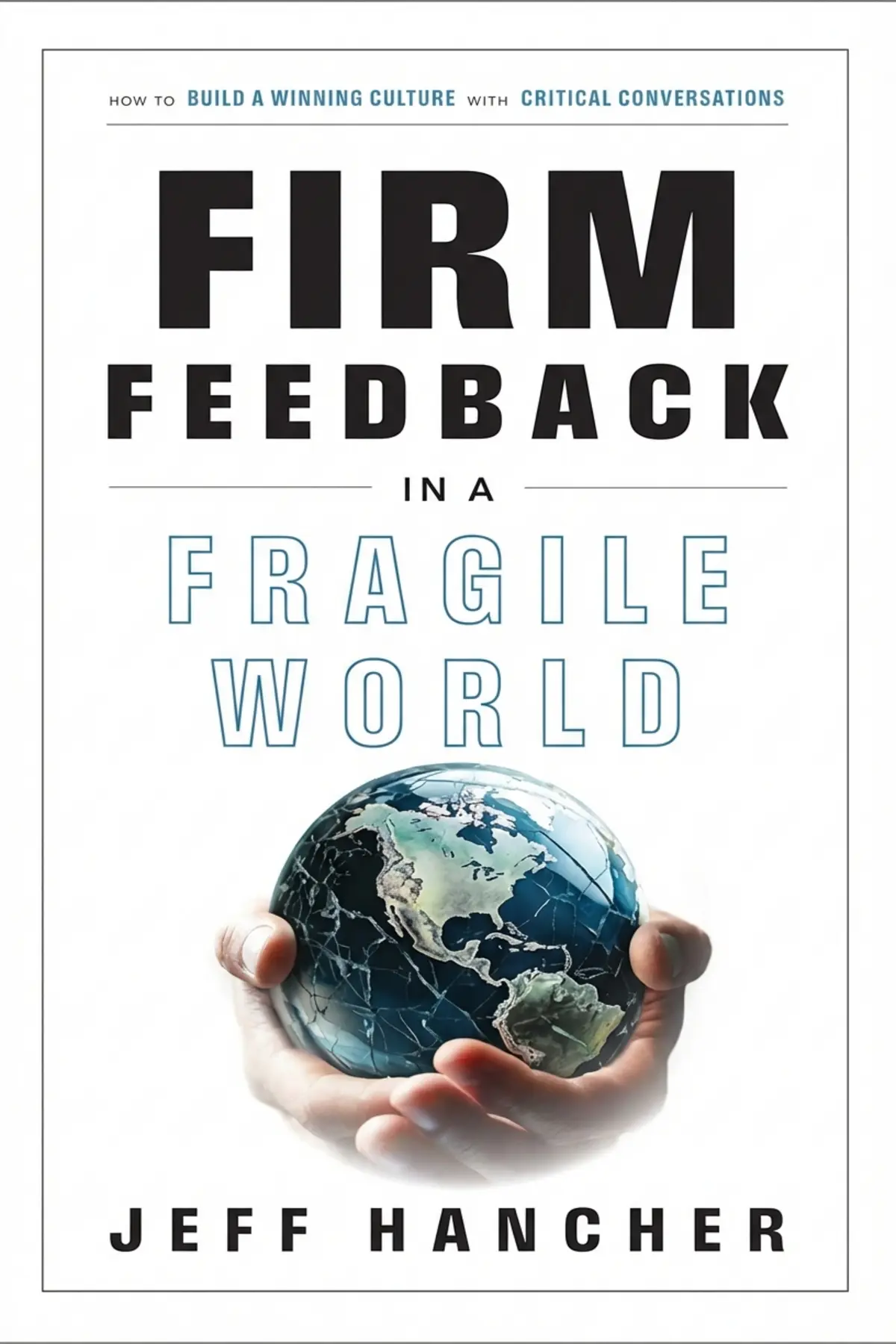
Table of Content
1. Introduction
1 min 42 sec
In the modern workplace, there is a tension that almost every leader feels. We are told that we live in a ‘fragile’ world—a landscape where people are more sensitive to criticism, where burnout is rampant, and where the fear of losing talent often keeps managers from speaking the truth. This creates a strange and damaging paradox. While roughly seventy percent of managers admit they are uncomfortable giving critical feedback, nearly three-quarters of employees say they actually want more of it. We are effectively starving our teams of the very guidance they need to succeed because we are afraid of the delivery.
Jeff Hancher’s work addresses this exact friction. The goal isn’t to become a harsh taskmaster or, conversely, a leader who avoids conflict at all costs. Instead, the throughline of this exploration is the idea that firm feedback is an act of stewardship. It is a way of honoring someone’s potential by refusing to let them settle for mediocrity. When you approach feedback correctly, it doesn’t break the relationship; it actually strengthens the foundation of trust.
Over the course of this summary, we will dismantle the myths that make feedback feel so threatening. We’ll look at why our traditional methods—like the infamous ‘feedback sandwich’—actually do more harm than good. We will explore how to build up a reservoir of trust so that when you do have to have a difficult conversation, your team knows it’s coming from a place of support, not judgment. Finally, we’ll walk through the practical modes of communication and the specific questions that turn a correction into a collaborative path forward. By the time we finish, you’ll see that being firm isn’t about being mean—it’s about being clear, and clarity is the greatest gift a leader can provide.
2. Feedback as a Tool for Personal Success
1 min 49 sec
Discover why the most effective leaders view feedback as a developmental gift rather than a management hurdle, shifting the focus from company quotas to the individual’s long-term potential.
3. The Emotional Bank Account
2 min 10 sec
Explore the foundational role of trust in communication and learn how to make consistent relational deposits that allow for necessary professional withdrawals.
4. Escaping the Feedback Sandwich
2 min 24 sec
Understand why common communication crutches like the ‘feedback sandwich’ fail and how to use neutral, data-driven language to achieve better results.
5. Choosing the Right Mode of Communication
2 min 23 sec
Learn to distinguish between Directive, Collaborative, and Supportive feedback modes to match the specific needs of your team and the situation at hand.
6. Mastering the Art of Accountability
2 min 21 sec
Unlock a powerful five-question framework that ensures clarity, prevents surprises, and places the responsibility for growth squarely in the hands of the employee.
7. Conclusion
1 min 37 sec
As we wrap up this exploration of Jeff Hancher’s approach to leadership, it’s worth reflecting on the core message: your team doesn’t need you to be perfect, and they don’t need you to be their best friend. What they need is a leader who cares enough to be clear. We live in a world that can feel fragile, but that doesn’t mean we have to walk on eggshells. In fact, clarity is the best antidote to the anxiety and uncertainty that define so many modern workplaces.
By shifting your perspective to see feedback as a tool for an individual’s personal success, you transform every critique into an investment. By diligently managing your relational bank account, you ensure that you have the trust necessary to handle the heavy lifts of professional correction. When you stop using the ‘sandwich method’ and start using neutral, data-driven language, you provide the focus your team members need to truly improve. And by mastering the different modes of communication—knowing when to direct, when to collaborate, and when to support—you show up as the leader each situation requires.
Accountability isn’t a threat; it’s a form of respect. It’s the final piece of the puzzle that ensures your feedback leads to real, lasting change. So, the next time you feel that hesitation before a difficult conversation, remember that being firm is an act of kindness. You are helping someone see their path more clearly. You are helping them become the person they are capable of being. Start today by making a deposit in someone’s emotional bank account, and watch how the culture around you begins to change. Growth is a collaborative journey, and it begins with the courage to speak the truth.
About this book
What is this book about?
In an era where workplaces often feel emotionally fragile, leaders face a daunting paradox: employees crave guidance, yet managers fear that being too direct might cause talent to flee. Firm Feedback in a Fragile World bridges this gap by offering a blueprint for assertive communication. It teaches leaders how to balance high standards with deep relational care, transforming feedback from a feared confrontation into a developmental gift. The book moves beyond simple communication tips to explore the foundational trust required for effective leadership. You will learn the 'Emotional Bank Account' model, the pitfalls of the common feedback sandwich, and how to adapt your style between directive, collaborative, and supportive modes. By the end, you will have the tools to maintain accountability through specific questioning techniques that empower employees to take ownership of their own professional evolution.
Book Information
About the Author
Jeff Hancher
Jeff Hancher is a leadership coach, keynote speaker, and founder of The Champion Forum, where he equips leaders to build high-performing, values-driven teams. Before launching his coaching business, he spent over two decades leading large sales and operations teams in a Fortune 500 environment. His career is dedicated to helping leaders deliver firm, compassionate feedback that drives growth while honoring people’s dignity.
Ratings & Reviews
Ratings at a glance
What people think
Listeners find this leadership guide to be an essential read that offers highly actionable advice. The text centers on accountability through the development of trust and honesty, while providing direct strategies for communication. Listeners value the coverage of feedback, with one listener remarking that it acts as a manual for various feedback types. They also praise the insights on performance; one points out how it aids in achieving results while remaining humane, and another notes that the book is firmly based on the author's wide-ranging experiences.
Top reviews
Nikolai
This book flips the script on how we perceive criticism, turning it into a genuine leadership gift rather than a source of anxiety. Jeff Hancher draws from a deep well of Fortune 500 experience to show that being firm isn't the same as being mean. I loved how he balances the need for elite performance with a deep sense of humanity and care for the person being coached. It's rare to find a guide that is this practical and implementable from the first chapter. Every page feels grounded in real-world application, offering a roadmap for anyone struggling with those high-stakes conversations. If you’re leading a team and find yourself sugarcoating the truth, you need this perspective to help you build a healthier, more transparent culture.
Show moreFatima
Picked this up to help with my small business, but I ended up using the principles at the dinner table with my teenagers. It’s a gamechanger because it provides a clear framework for delivering the truth without triggering defensiveness in a world that feels increasingly fragile. Truth is, we all need better outlets for communication, and the 'firm feedback' approach creates a bridge rather than a wall. The writing is passionate and raw, making it feel more like a mentorship session than a dry textbook. I’ve already seen a shift in how my team responds to expectations now that I’m using these specific tools from Hancher's arsenal.
Show moreJune
The chapter on transforming culture through courageous conversations is worth the price of the book alone. I’ve read dozens of titles on management, but few provide such a granular look at the mechanics of trust. Hancher doesn't just tell you to be honest; he gives you the actual words to use to ensure your message is received as a gift. My favorite part was the focus on those 'darkest moments' where a leader's voice matters most. It’s an inspiring read that pushed me to sharpen my own leadership style and stop settling for mediocre communication. Simply put, this is the roadmap for anyone who wants to lead with actual impact.
Show moreIvan
Finally got around to finishing this, and I’m genuinely impressed by how Hancher redefines the 'dreaded interaction.' He frames feedback as an essential component of a high-performance culture, and his stories from the Fortune 500 world provide great context. There is zero fluff here—just raw, actionable advice on how to communicate with more strength and less hesitation. I particularly appreciated the distinction between being liked and being respected, which is a hurdle for so many young leaders today. It’s a must-read if you want to elevate your team’s output while fostering deep professional bonds based on mutual trust.
Show moreTar
Most leadership guides tend to shy away from the messy reality of accountability, but this one leans right into it. I appreciated the reflection questions at the end of each section, as they forced me to look at my own communication gaps. To be fair, some of the corporate anecdotes felt a bit long, yet the core message about trust-building through honesty remains incredibly relevant. We often dread saying 'we need to talk,' but Hancher reframes these moments as opportunities for growth. It’s a solid, tactical tool for managers who want to stop coddling and start leading with more clarity and integrity.
Show moreZanya
Ever wonder why your team hits a plateau even when everyone seems to be getting along? This book suggests that a lack of honest feedback might be the culprit. Jeff Hancher argues that avoiding tough conversations is actually a disservice to your employees, which was a major 'aha' moment for me. The strategies for setting clear expectations are brilliant, though I felt a few chapters could have been condensed to get to the point faster. Regardless, the emphasis on maintaining humanity while pushing for excellence is a balance that most business books completely miss. It's a valuable addition to any manager's library.
Show moreJoshua
After hearing Jeff Hancher on a podcast, I knew I needed to grab this for my management team. It’s an analytical look at why we fail to hold people accountable and how to fix that without destroying morale. The book is packed with tangible tools that you can start using in your 1-on-1s immediately. Frankly, the middle section felt slightly repetitive, but the core principles of clarity and compassion are so vital that I didn't mind the reinforcement. It’s a great guide for anyone navigating the complexities of a modern, 'fragile' workplace where feelings and results often clash.
Show morePrinya
As someone who runs a mid-sized organization, I found the 'Firm Feedback' methodology to be exactly what we were missing. We had the compassion down, but we were lacking the clarity and accountability required to really excel. Hancher’s diverse experiences shine through in his writing, making the advice feel authentic rather than academic. My only minor gripe is that the formatting of the reflection questions could be a bit cleaner, but the content itself is top-tier. It's a powerful tool for anyone who wants to transform their communication from a source of anxiety into a source of strength.
Show moreWatchara
Not what I expected in terms of tone, as the advice here is quite blunt and doesn't pull any punches. While I value the focus on results and integrity, some of the 'firmness' might feel a little jarring for teams that aren't used to high-accountability environments. I would have liked more nuance on how to transition into this style of leadership slowly. That said, the practical exercises are useful and the author’s honesty about his own failures makes the lessons feel earned. It’s a good reality check, even if some of the strategies felt a bit intense for my specific workplace culture.
Show moreOrawan
Look, there is some great wisdom here regarding how to deliver hard news with integrity. However, if you’ve been in a leadership role for twenty years, some of these 'lived experiences' might feel like things you've already encountered in the field. It’s definitely more of a foundational text for new managers or those struggling with conflict avoidance. I did enjoy the application activities at the end of the chapters, as they move the book beyond theory into actual practice. It’s a decent resource, though I found myself skimming some of the more basic leadership concepts to get to the meat of the feedback strategies.
Show moreFeatured in
Readers also enjoyed
7 Powers: The Foundations of Business Strategy
Hamilton Helmer

A Bigger Prize: How We Can Do Better Than the Competition
Margaret Heffernan
A Year with Peter Drucker: 52 Weeks of Coaching for Leadership Effectiveness
Joseph A. Maciariello
AUDIO SUMMARY AVAILABLE
Listen to Firm Feedback in a Fragile World in 15 minutes
Get the key ideas from Firm Feedback in a Fragile World by Jeff Hancher, plus 5,000+ more titles in English and Thai.
- 5,000+ titles
- Listen as much as you want
- 7-day free trial
- Cancel anytime







