
Abundance: The Inner Path to Wealth
Deepak Chopra
Discover how to find profound meaning and connection in the modern world through secular rituals. Sasha Sagan explores how science and nature provide the perfect framework for celebrating life’s greatest milestones.
2 min 33 sec
Have you ever found yourself standing in the middle of a traditional holiday celebration or a religious ceremony, feeling a strange sense of disconnect? Perhaps you appreciate the beauty of the music or the warmth of the gathered crowd, but the underlying theology just doesn’t resonate with your worldview. You might even feel a bit like an outsider at your own family’s dinner table. This is a common experience in our increasingly secular world. We often find ourselves caught between two poles: a desire for the structure and comfort that rituals provide, and a commitment to a rational, evidence-based understanding of the universe.
But here’s the thing: ritual isn’t actually owned by religion. It is a fundamental human technology. It’s a way we process change, mark time, and bind ourselves to our communities. Whether we are celebrating a new life, mourning a loss, or simply acknowledging the change of the seasons, we have an innate need to pause and say, “This matters.” The challenge for many of us is finding a way to do that without subscribing to beliefs we don’t hold.
In this exploration, we’re going to look at how we can reclaim the power of ritual by grounding it in the very things that make our existence so extraordinary: the laws of physics, the cycles of nature, and the incredible biological journey of our species. We’ll see how the simple act of looking at the stars or understanding the tilt of our planet can provide a sense of awe that is just as profound as any ancient myth.
Sasha Sagan, our guide through this landscape, grew up in a household where the wonders of the universe were the primary source of inspiration. Her father, the astronomer Carl Sagan, and her mother, the writer and producer Ann Druyan, instilled in her a deep sense of gratitude for the unlikely fact of our existence. They showed her that you don’t need the supernatural to find the sacred.
Over the next few chapters, we will walk through the major milestones of human life. We’ll look at birth, the daily rhythms of our relationships, the turning of the seasons, the weight of our mistakes, the joy of anniversaries, the bonds of marriage, the power of sex, and the finality of death. In each instance, we’ll see how history and science intersect to give us a rich palette of options for creating our own traditions. The goal isn’t to tell you exactly what to do, but to show you that the world is already full of meaning—you just have to decide how you want to celebrate it.
3 min 25 sec
Think about the staggering odds required for you to be here right now, and how various cultures have celebrated the precarious arrival of a new life.
2 min 56 sec
Explore how small, repetitive actions and regular gatherings can ground us and build a sense of belonging without the need for traditional religious structures.
3 min 04 sec
Understand how the physical reality of our planet’s orbit creates the seasonal cycles that underpin our most famous holidays and ancient traditions.
2 min 56 sec
Learn why the act of apologizing and seeking forgiveness is a crucial social mechanism for survival, and how we can practice it in a modern way.
3 min 09 sec
Discover why our brains are hardwired to find meaning in anniversaries and how we can use light and memory to bridge the gap between the past and present.
2 min 56 sec
Examine the diverse ways cultures mark the union of two people and how you can blend tradition with personal meaning to create a unique wedding.
2 min 43 sec
Explore the complex history of how human societies have ritualized sex, from monogamous honeymoons to communal living and ancient fertility rites.
2 min 48 sec
Reflect on why death rituals are often considered the beginning of human civilization and how we can find comfort in mourning without religious dogma.
2 min 11 sec
As we come to the end of this journey through the rituals of our lives, the throughline becomes clear: meaning is not something we find; it is something we create. We live in a universe that is governed by vast, impersonal laws of physics, but within that framework, we have the incredible ability to find beauty, connection, and purpose. We don’t need ancient myths to feel a sense of awe. The reality of our existence—the fact that we are here at all, against all odds—is more than enough.
Rituals are the tools we use to navigate this reality. They provide the map and the compass for the transitions that define our human experience. By understanding the scientific and historical roots of our traditions, we can reclaim them. We can strip away the parts that don’t fit our modern understanding and keep the parts that nourish our spirits and bind us to our communities. We can celebrate the birth of a child as a biological miracle, the changing of the seasons as a celestial dance, and the memory of a loved one as a light that continues to travel through time.
The most important takeaway is that you have the permission and the power to design your own life. You don’t have to wait for an institution to tell you what is sacred. You can find the sacred in a morning cup of coffee, in a weekend song, or in a walk under the stars.
For a simple, actionable step, consider starting your own version of “Blossom Day.” This was a ritual Sasha Sagan’s mother created for her when she was a child. Every year, as winter began to fade, they would carefully watch a specific tree in their garden. The moment the first blossom appeared, they would have a small party with gifts and treats to celebrate the return of spring. It’s a tiny gesture, but it turns a seasonal shift into a cherished memory.
You can do the same. Pick a natural event or a personal milestone and create a way to acknowledge it. Invite others to join you. By doing so, you are participating in a tradition that is as old as humanity itself: the act of making sense of our unlikely world. We are small creatures, but through our rituals, we can connect to something truly vast.
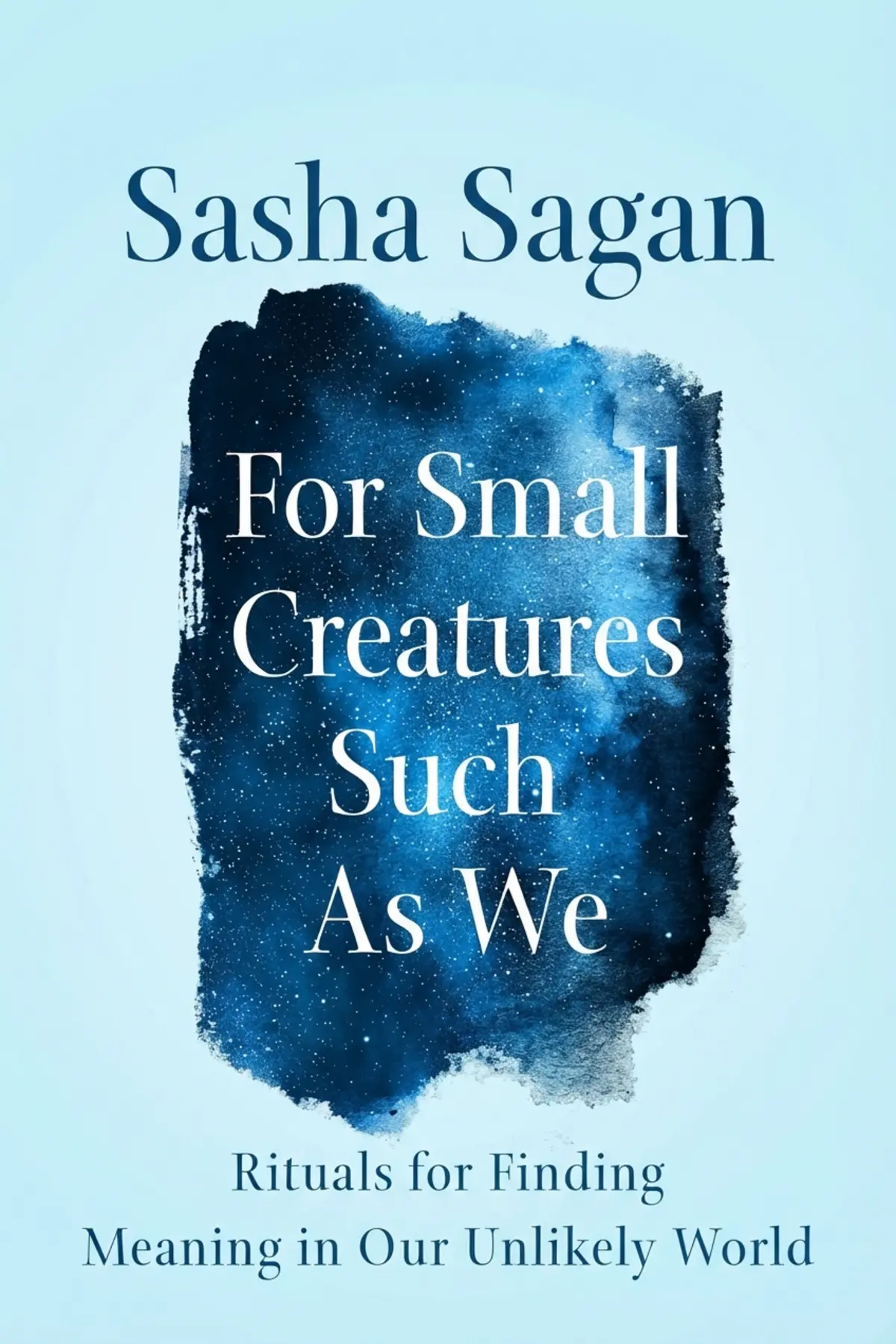
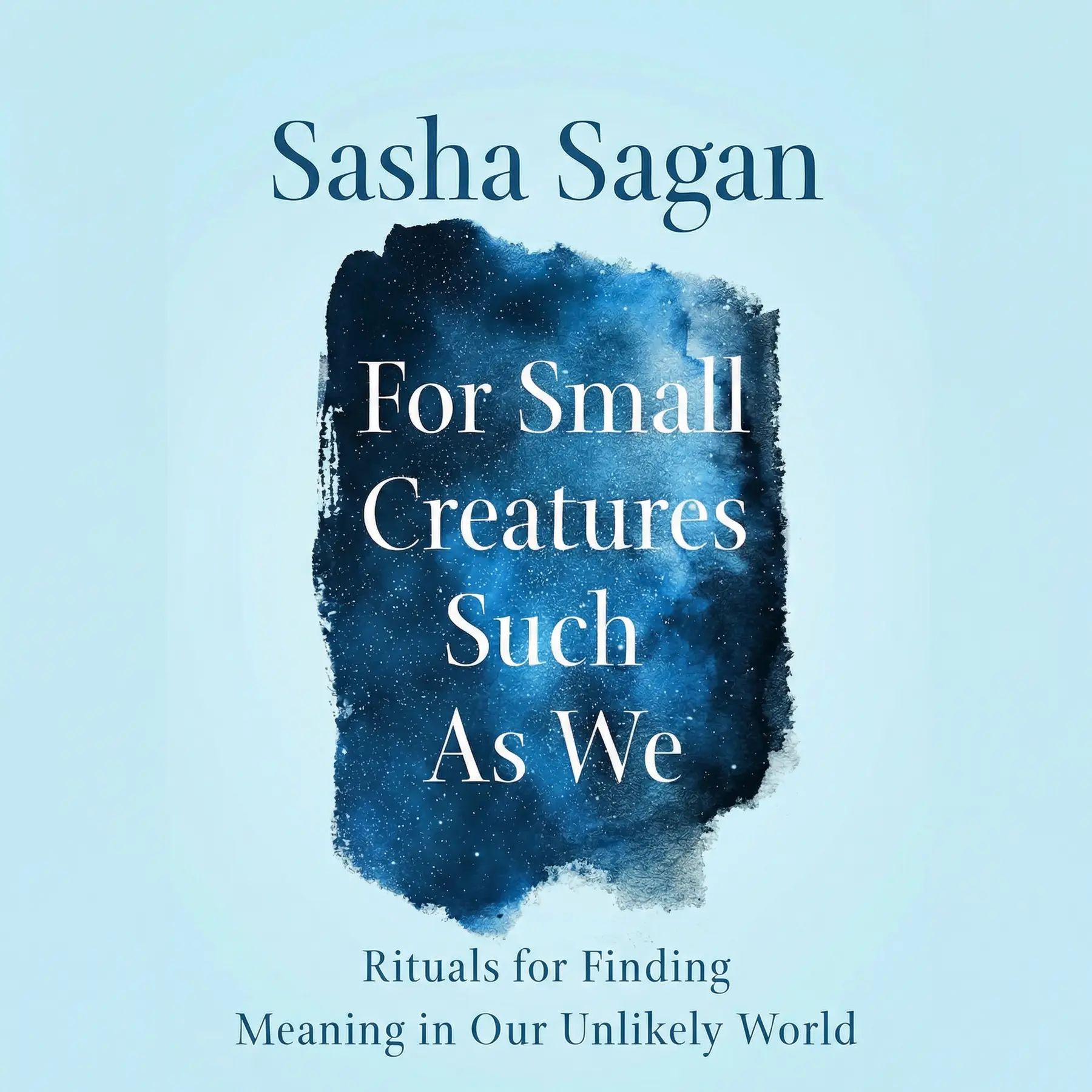
For Small Creatures Such as We is an exploration of how we can create a sense of sacredness and community without relying on religious dogma. Sasha Sagan, daughter of the legendary Carl Sagan, examines the universal human need for ritual and demonstrates how the wonders of the natural world—from the tilt of the Earth’s axis to the biological miracle of birth—can serve as the foundation for our most meaningful traditions. This summary guides you through a variety of life events, including birth, coming of age, marriage, and death, showing how different cultures have marked these moments and how you can develop your own practices. By bridging the gap between scientific understanding and the emotional power of ceremony, the book provides a roadmap for living a life filled with wonder, gratitude, and a deep connection to the cosmos.
Sasha Sagan is a writer, editor, filmmaker, and television producer who has worked in New York, Boston, and London. Known for examining cultural ritual through science, her essays have appeared in publications including New York Magazine and O, The Oprah Magazine.
Listeners consider this a wonderful book that offers meaningful perspectives on the importance and practice of rituals. Furthermore, they enjoy the positive atmosphere of the work, and one listener mentions how effectively it conveys the author’s sense of wonder regarding existence and the cosmos. The work is also praised for its spiritual nature, as one review points out its considerate treatment of both secular and faith-based viewpoints. On the other hand, opinions on the prose are divided; while some describe the writing as brilliant, others feel it is lacking in quality.
Sasha Sagan has a way of making the mundane feel miraculous. As a secular person often looking for meaning in a chaotic world, I found her exploration of rituals to be incredibly grounding and necessary. She doesn't just list historical facts; she weaves her own life as Carl Sagan’s daughter into a tapestry of human connection. The way she discusses milestones like birth and death without needing supernatural explanations is a breath of fresh air. Frankly, the chapter on how she navigates her daughter’s upbringing with a sense of wonder really moved me to tears. It’s a beautifully written testament to the idea that science and awe aren't mutually exclusive. While some might find her personal anecdotes a bit much, I felt they added a necessary human element to the philosophical heavy lifting. This book is a warm hug for the skeptical soul.
Show moreFinally got around to reading this during a particularly stressful month, and it was exactly the medicine I needed. Sasha Sagan manages to capture a sense of cosmic joy that is both infectious and deeply comforting. She approaches both religious and nonreligious perspectives with such a high level of respect that I think anyone could find value here. I’ve been looking for a way to mark the passing of time without feeling like I’m just going through the motions. This book provided a roadmap for that. The truth is, her perspective on life being a rare and precious gift is something we all need to hear more often. Her writing is luminous, turning even simple daily tasks into opportunities for gratitude and reflection. It’s one of those rare books that makes you want to go outside and just stare at the stars for hours.
Show moreAs someone who struggles with finding a sense of community outside of a church, this book felt like a revelation. Sasha Sagan provides a framework for creating meaning that is based on evidence and the natural world, which is exactly what I’ve been looking for. Her voice is welcoming and inclusive, never looking down on those with different beliefs. The chapters on the change of seasons were especially beautiful, reminding me to notice the tilt of the Earth and the blooming of flowers. It’s a book that celebrates the sheer luck of our existence. Not gonna lie, I’ve already started implementing some of the small rituals she mentions, like being more intentional with my morning coffee. It’s about finding the sacred in the secular, and she does it brilliantly. This is a must-read for anyone who feels that 'vastness' her father famously spoke about and wants to feel a little less small.
Show moreWow, what a gorgeous piece of writing. Sasha Sagan has inherited her parents' gift for making science feel like poetry. This book isn't just a list of rituals; it’s an invitation to fall in love with reality. I was deeply moved by the stories of her father’s illness and how her family used their worldview to find comfort during such a dark time. It’s rare to find a book that is so intellectually honest yet so emotionally resonant. Every chapter left me feeling a little more grateful for my own tiny place in the cosmos. I’ve already bought three copies to give to friends as gifts. If you’re looking for something that captures the sheer wonder of being a 'small creature' in this vast universe, this is the book for you. It’s brilliant, respectful, and truly life-affirming.
Show moreEver wonder why we feel the need to blow out candles or toast with a glass of wine? This book dives deep into the 'why' behind our most common traditions, stripping away the dogma to find the core human need for ceremony. Sagan’s writing is accessible and often poetic, especially when she’s describing the vastness of the cosmos in relation to our tiny lives. To be fair, there are moments where the pacing slows down as she lists various cultural practices, making it feel a bit like a textbook. However, the emotional payoff of her family stories keeps it from being too dry. I particularly enjoyed her take on how we can create our own meaningful traditions without a religious framework. It’s a thoughtful read that encourages you to slow down and appreciate the small, rhythmic beauties of life.
Show moreThe chapter on fasting really stayed with me, even if I didn't agree with every single point the author made. Sagan explores how we can use physical experiences to cultivate empathy, which is a powerful concept. I found her writing style to be quite elegant, though there were times when her 'new-age' vibes clashed with my more analytical mindset. Personally, I would have liked a bit more scientific rigor in the sections discussing biology and nature. However, the emotional core of the book—how we grieve and how we celebrate—is handled with incredible grace. It’s a great read for anyone trying to build a meaningful life outside of traditional religion. She creates a welcoming space for curiosity, even if some of her solutions feel a bit simplistic for complex global issues. It’s a solid, thought-provoking addition to the shelf for any secular seeker.
Show morePicked this up because I’ve always been a fan of Ann Druyan and Carl Sagan, and I wanted to see Sasha’s perspective. It’s a beautiful, if somewhat rambling, account of how she has navigated her life as a secular Jew. The way she describes her wedding and the birth of her daughter is truly moving and filled with a contagious sense of bravery. She tackles the big questions—life, death, and everything in between—with a refreshing lack of cynicism. My only real gripe is that the book leans heavily into being a biography rather than a guide on rituals. Look, if you’re looking for a hard science book, this isn’t it, but it’s a wonderful meditation on what it means to be alive. The writing is vivid and warm, making it an easy and enjoyable read for a weekend. I came away feeling more connected to the world around me.
Show moreThis book is essentially an ode to the human spirit and our innate desire to connect with something larger than ourselves. Sagan does a fantastic job of glossing through hundreds of rituals from various cultures, showing the common threads that bind us all. While I found the encyclopedic sections a bit brief, the overarching message of finding joy in the universe is powerful. The writing quality is generally high, though a few sections felt a bit sappy for my taste. In my experience, books like this can often fall into 'new-age' traps, but Sagan stays grounded in her scientific upbringing. She manages to be both a skeptic and a dreamer, which is a difficult balance to strike. It’s a great read for a book club because there are so many themes to unpack regarding culture and tradition. Overall, it’s an uplifting and insightful piece of nonfiction.
Show moreNot exactly what I expected based on the marketing, but it had its moments of genuine beauty. I went into this looking for a deep dive into the history of secular ritual, but it felt much more like a memoir of Sasha Sagan’s personal journey and her relationship with her parents. While her love for Carl Sagan is touching, the narrative often feels a bit self-absorbed. At times, the tone shifts into something that feels a little preachy, like she’s trying too hard to convince the reader of her worldview. The repetition of the word 'ritual' also became a bit grating after the tenth chapter. That said, her insights on the changing seasons and the ways humans mark time are quite lovely. If you enjoy memoirs with a philosophical bent, you'll probably like this more than I did. It’s decent, just not the scientific exploration I was hoping for.
Show moreI honestly found this quite boring and a bit pretentious. While I admire the legacy of her father, Sasha Sagan’s own writing feels like it’s trying way too hard to be profound without actually saying much that is new. The constant use of the word 'ritual' became almost comical by the end of the book. I also found the chapter where she discusses her sex life to be incredibly awkward and unnecessary; it felt out of place in a book about cosmic wonder. Truth is, it felt more like a lecture on how she thinks we should live rather than an exploration of human history. For someone who claims to value scientific inquiry, there were several sections that felt more like 'care-bear' fluff than actual analysis. I really wanted to like this because of the subject matter, but the execution just felt flat and repetitive. I'm clearly not the target audience for this one.
Show moreDeepak Chopra
Pico Iyer
Alcoholics Anonymous World Services
Daniel Goleman
Eckhart Tolle
Marianne Williamson
Beth Moore
Paramahansa Yogananda
AUDIO SUMMARY AVAILABLE
Get the key ideas from For Small Creatures Such as We by Sasha Sagan, plus 5,000+ more titles in English and Thai.







