
27 min 58 sec
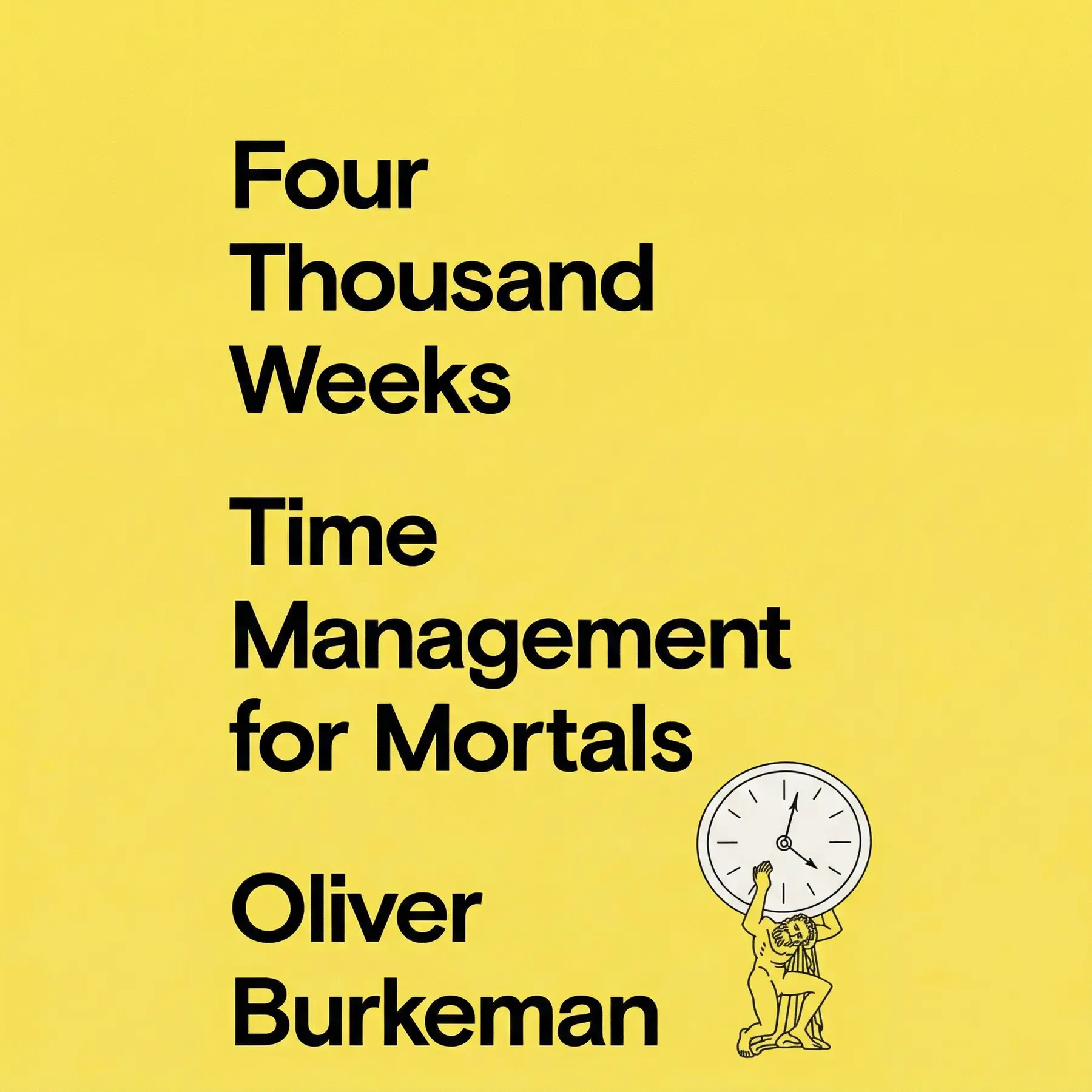
Four Thousand Weeks: Time Management for Mortals
Four Thousand Weeks explores the finite nature of human existence, offering a radical shift in perspective from traditional time management to a meaningful acceptance of our limited time on Earth.
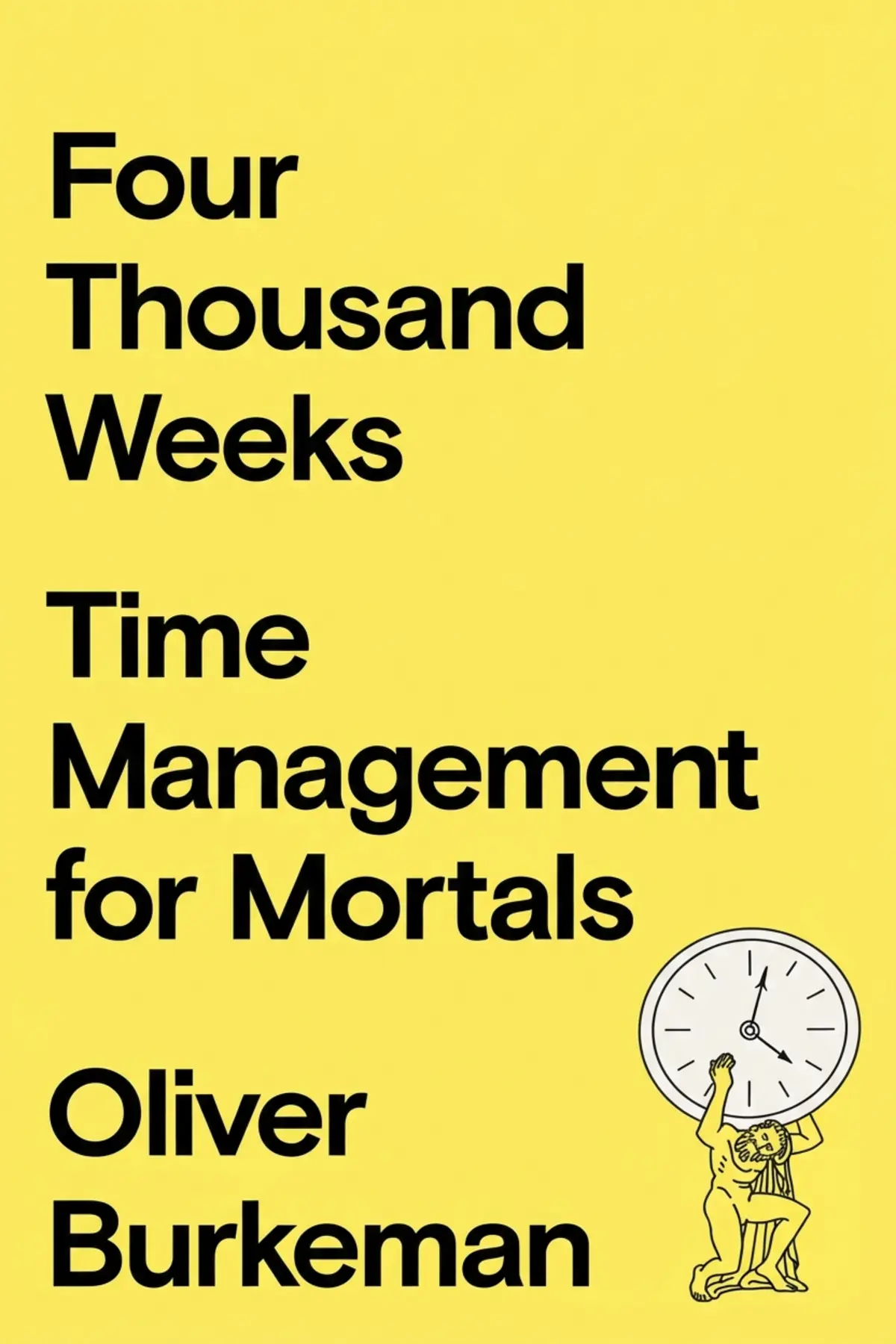
Table of Content
1. Introduction
2 min 18 sec
Stop for a moment and consider a single number: four thousand. If you are lucky enough to live until your eightieth birthday, that is approximately how many weeks you will have spent on this planet. When you hear it framed that way, life doesn’t just seem short—it feels remarkably, almost impossibly brief. Most of us spend those weeks in a state of constant mental friction, feeling as though we are perpetually falling behind, struggling to keep our heads above an ocean of emails, obligations, and ambitions.
We have been sold a lie that the right app, the right morning routine, or the perfect color-coded calendar will finally grant us a sense of total control. We believe that if we just work a little harder or get a little more efficient, we will reach a state of ‘inbox zero’ for our entire lives. But the truth is, the more we optimize, the more anxious we become. The faster we run, the further the finish line moves. This is the paradox of modern time management, and it’s a trap that keeps us from actually living.
In this summary, we aren’t going to look for better ways to squeeze more tasks into your day. Instead, we are going to explore the radical idea that our finitude—the fact that our time is limited—is actually our greatest asset. We will look at how our ancestors viewed time, why the Industrial Revolution changed our relationship with the clock, and how we can stop living for a future that never quite arrives.
This isn’t just about being more productive; it’s about a throughline of acceptance. By facing the reality of our four thousand weeks, we can finally stop fighting against time and start living within it. We’ll explore why procrastination is actually an essential skill, why your ‘to-do list’ is a deceptive enemy, and why the most important thing you can do today might be something entirely ‘unproductive.’ Let’s dive in and recalibrate the way you see your life.
2. The Illusion of Time Mastery
2 min 38 sec
What if your search for the perfect productivity system is actually making you more miserable? Discover why efficiency often leads to more stress.
3. A History of Time as a Resource
2 min 58 sec
Time hasn’t always been something we ‘spend’ or ‘waste.’ Travel back to a world where time was simply the medium of life.
4. The Power of Facing Finitude
2 min 52 sec
Avoiding the reality of our limits only makes us more anxious. Learn why embracing the ‘end’ can lead to a more authentic way of living.
5. Mastering the Art of Procrastination
3 min 11 sec
Since you can’t do everything, you must choose what to fail at. Explore a new strategy for prioritizing what truly matters.
6. The Hidden Psychology of Distraction
3 min 04 sec
Why is it so hard to focus on the things we love? Discover why distraction is often a shield against the pain of our own limitations.
7. Escaping the 'When-I-Finally' Mindset
2 min 43 sec
Are you living for the future or the present? Explore the danger of treating your life as a rehearsal for a destination that doesn’t exist.
8. Reclaiming the Joy of Leisure
2 min 46 sec
Why does doing nothing feel so productive? Discover how to protect your free time from the demands of the ‘side-hustle’ culture.
9. Cosmic Insignificance Therapy
2 min 51 sec
Stop worrying about your ‘legacy’ and start living your life. Learn why being ‘insignificant’ is the ultimate path to freedom.
10. Conclusion
2 min 37 sec
As we reach the end of this journey through our four thousand weeks, the throughline becomes clear: the path to a meaningful life isn’t found in getting more done, but in letting go of the impossible dream of total control. We have spent our time looking at how the modern world has commodified our minutes and how our own psychology tries to shield us from the reality of our finitude. We have explored the power of choosing what to fail at and the deep, quiet joy of being ‘insignificant’ in the eyes of the universe.
The most important takeaway is a shift from ‘doing’ to ‘being.’ You are not a productivity machine; you are a finite human being. Your time is not a resource to be maximized; it is the very fabric of your existence. When you stop trying to squeeze every drop of value out of every moment, you finally give yourself permission to inhabit those moments fully.
As you move back into your daily life, try to carry this sense of ‘cosmic insignificance’ with you. When you feel the familiar panic of an overflowing inbox or a missed deadline, remind yourself of the four thousand weeks. Ask yourself if the stress you are feeling is a reaction to a real problem or just a reaction to the fact that you are a limited person in an unlimited world.
One actionable way to start today is to simplify your relationship with technology. Consider removing social media from your phone or using devices that only do one thing, like a physical book or a dedicated e-reader. This removes the ‘escape hatch’ and forces you to stay with the reality of your current moment. But more importantly, give yourself permission to be mediocre. Pick up a hobby you aren’t good at. Say ‘no’ to a second-tier priority. Spend an hour doing absolutely nothing ‘useful.’ In a world obsessed with making the most of every second, the most radical and fulfilling thing you can do is to simply enjoy the time you have, exactly as it is. Your four thousand weeks are ticking away—not as a countdown to a deadline, but as a series of precious opportunities to truly be here.
About this book
What is this book about?
If you live to be eighty, you have roughly four thousand weeks. This startling realization serves as the foundation for Oliver Burkeman’s exploration into why our modern obsession with productivity feels so hollow. Instead of offering more tips on how to fit more into your day, this summary examines why we should stop trying to conquer our schedules and start embracing our limitations. By weaving together philosophy, history, and psychology, the book challenges the 'hustle' culture that defines much of the modern world. It promises a path toward a more fulfilling life by accepting that we will never get through everything. You will learn to prioritize what truly matters, find peace in the present moment, and rediscover the joy of leisure for its own sake. It is less about managing time and more about managing our relationship with mortality.
Book Information
About the Author
Oliver Burkeman
Oliver Burkeman is a renowned feature writer for the Guardian. Throughout his career, he has earned prestigious accolades, including the Foreign Press Association’s Young Journalist Award and a shortlisting for the Orwell Prize. He is widely known for his insightful and popular weekly psychology column, This Column Will Change Your Life.
Ratings & Reviews
Ratings at a glance
What people think
Listeners find this work captivating and skillfully composed, valuing how it gathers various viewpoints and philosophies to offer a new outlook on existence. Furthermore, the title functions as a timeless self-improvement masterpiece, providing actionable strategies for better living, and listeners appreciate its innovative approach to productivity. Also, they characterize it as an inspiring experience that aids in reaching a calmer state of being.
Top reviews
Benjamin
Picked this up during a particularly frantic month at work, and it acted as a total cognitive reset. Burkeman doesn't just give you superficial tips; he dismantles the entire pathological framework of modern productivity that tells us we can eventually get everything done. The truth is, we are finite beings with roughly 4,000 weeks to live, and no amount of inbox zero will change that fundamental limitation. I found his analysis of the efficiency trap particularly piercing because it explains why doing more only leads to more demands. It’s a beautifully written compilation of philosophical insights that manages to be both sobering and strangely uplifting at the same time. If you’re tired of the generic self-help style, this is the intellectual antidote you need. It’s easily an all-time classic for anyone looking to reclaim their sanity from the cult of optimization.
Show moreLincoln
Finally got around to reading Burkeman after years of hearing about his anti-productivity stance, and I’m genuinely moved. I have spent my entire adult life addicted to the feeling of checking boxes, always waiting for that future moment when I’d finally be settled. In my experience, most books in this genre just give you better ways to run the race, but Burkeman suggests the race itself is a delusion. This book helped me realize that the perfect future is a fantasy and that life is just more of the same choices and limits. It’s a deeply peaceful read that encourages you to be present in the messiness of life rather than trying to hack your way out of it. The way he discusses the joy of missing out was a revelation. It’s not just a time management book; it’s a manual for how to be a human being.
Show moreGai
The chapter on the efficiency trap completely changed how I view my daily to-do list. Burkeman explains that becoming more efficient is like trying to clear a snowy path while the blizzard is still raging; you just create more space for more snow to fall. This realization was both terrifying and incredibly liberating for me. I’ve spent so much energy trying to win at time, and this book gave me permission to just stop trying. His writing style is incredibly engaging, blending high-level philosophy with relatable anecdotes about his own struggles with productivity. It provides a fresh perspective that challenges the very foundation of how we value ourselves based on our output. This is a must-read for anyone who feels like they are constantly racing toward a finish line that doesn’t actually exist.
Show moreHom
After hearing Burkeman talk on a podcast, I wasn't sure if the book would offer anything more, but I was pleasantly surprised by the depth of the research. He weaves together history, philosophy, and psychology to create a compelling argument against the industrial-capitalist view of time. The book feels like a conversation with a very smart friend who wants you to stop being so hard on yourself. I especially liked the discussion on keeping your options open and how that actually prevents us from experiencing the richness of life. It’s a compilation of philosophies that feels incredibly timely in our digital age of constant distraction. I finished it feeling much more intentional about how I choose to spend my remaining weeks. It’s a refreshing take on productivity that prioritizes being over doing.
Show moreHannah
Ever wonder why the more efficient you become, the more stressed and behind you feel? This book provides the answer, and it’s not what you think. Burkeman argues that our obsession with getting through tasks actually prevents us from living our lives. We treat time as a resource to be mastered rather than the very medium of our existence. Truth is, this shift in perspective is subtle but life-altering. The prose is sharp, the insights are profound, and the advice is actually applicable to real life. It’s an all-time classic of self-help precisely because it refuses to offer easy hacks. Instead, it offers the truth: you can't do it all, and that's okay. It’s an essential guide for anyone living in the modern world.
Show moreNiramai
This book is basically an invitation to stop sprinting on a treadmill that isn't going anywhere. Burkeman argues that we should embrace our finitude instead of fighting it, which sounds depressing but actually feels like a massive weight being lifted off your shoulders. I loved the section on settling in relationships and how keeping your options open is just a way to avoid the reality of making a choice. Look, my only minor gripe is that some of the middle chapters felt a bit like a collection of articles stitched together. However, the core message—that you will never get on top of everything—is a perspective shift I desperately needed. It’s a refreshing take that moves beyond the usual hustle culture nonsense we see everywhere. Definitely worth a read if you feel like you’re constantly drowning in tasks.
Show moreSai
As someone who has spent far too much money on planners and life-hacking apps, this felt like a much-needed intervention. Burkeman doesn't offer a new system; frankly, he offers a philosophy of acceptance that is far more practical than any calendar app. I particularly liked his advice on procrastinating on the right things and accepting that some balls will simply have to be dropped. He draws heavily on thinkers like Heidegger and St. Augustine, which adds a layer of depth you don't usually find in the self-help aisle. The writing is witty and self-deprecating, making the heavy philosophical pills easier to swallow. I did think his critique of Richard Branson’s hobbies felt a little cynical and unnecessary, but that’s a small nitpick. Overall, it’s a solid guide for anyone trying to navigate the insane demands of modernity without losing their soul.
Show moreLiam
To be fair, many of these ideas are rooted in ancient Stoicism and Buddhist thought, but Burkeman synthesizes them for a modern audience beautifully. He doesn't shy away from the existential dread of having limited time, yet somehow makes it feel like an opportunity rather than a tragedy. I appreciated the practical tips buried within the philosophy, like the idea of having a 'done' list instead of a 'to-do' list. It’s not a perfect book—his analysis of marriage and relationships felt a bit dated and lacked nuance regarding gender socialization—but the core message is vital. It’s an uplifting read that helped me achieve a more peaceful outlook on my busy schedule. If you can get past a few dry spots in the middle, there are some real nuggets of wisdom here.
Show moreChanikarn
Look, the central premise—that we only have about 4,000 weeks if we hit age 80—is definitely a wake-up call, but the book feels padded. While I appreciate the nod to Stoic philosophy and the rejection of toxic productivity, I found myself checking my watch more than once. The author spends a lot of time setting up straw men to knock down, particularly regarding how people view time as a resource. He mentions a story about the Northern Lights feeling like a screensaver, which was poignant, but then wanders into repetitive territory for the next fifty pages. It has one excellent point: acknowledge you can’t do everything and find peace in that limitation. It could have been a very impactful long-form article rather than a full-length book. Still, the prose is elegant enough to keep you engaged if you don’t mind the circular arguments.
Show moreSaranya
Not what I expected given the hype, and I found the tone a bit repetitive after the first few chapters. The 'we are all going to die' refrain is repeated so often that it loses its punch and starts to feel like a generic nihilistic trope. While I agree that we shouldn't be slaves to our to-do lists, the author’s stance on planning felt almost like gate-keeping. He acts as if any attempt to organize your future is a total delusion of control, which seems like a bit of an exaggeration. To be fair, some of us just want to know how to manage a Tuesday without a mid-life crisis. It’s well-written, but it felt like a lecture for people who have the luxury of being bored. I think reading Marcus Aurelius would provide the same insights with less fluff.
Show more
Readers also enjoyed
AUDIO SUMMARY AVAILABLE
Listen to Four Thousand Weeks in 15 minutes
Get the key ideas from Four Thousand Weeks by Oliver Burkeman, plus 5,000+ more titles in English and Thai.
- 5,000+ titles
- Listen as much as you want
- 7-day free trial
- Cancel anytime







