
28 min 09 sec
Freedom: Memories 1954 – 2021
Freedom provides a rare, firsthand look into the life of Angela Merkel, tracing her journey from East German scientist to long-serving Chancellor and exploring her philosophy on leadership and liberty.
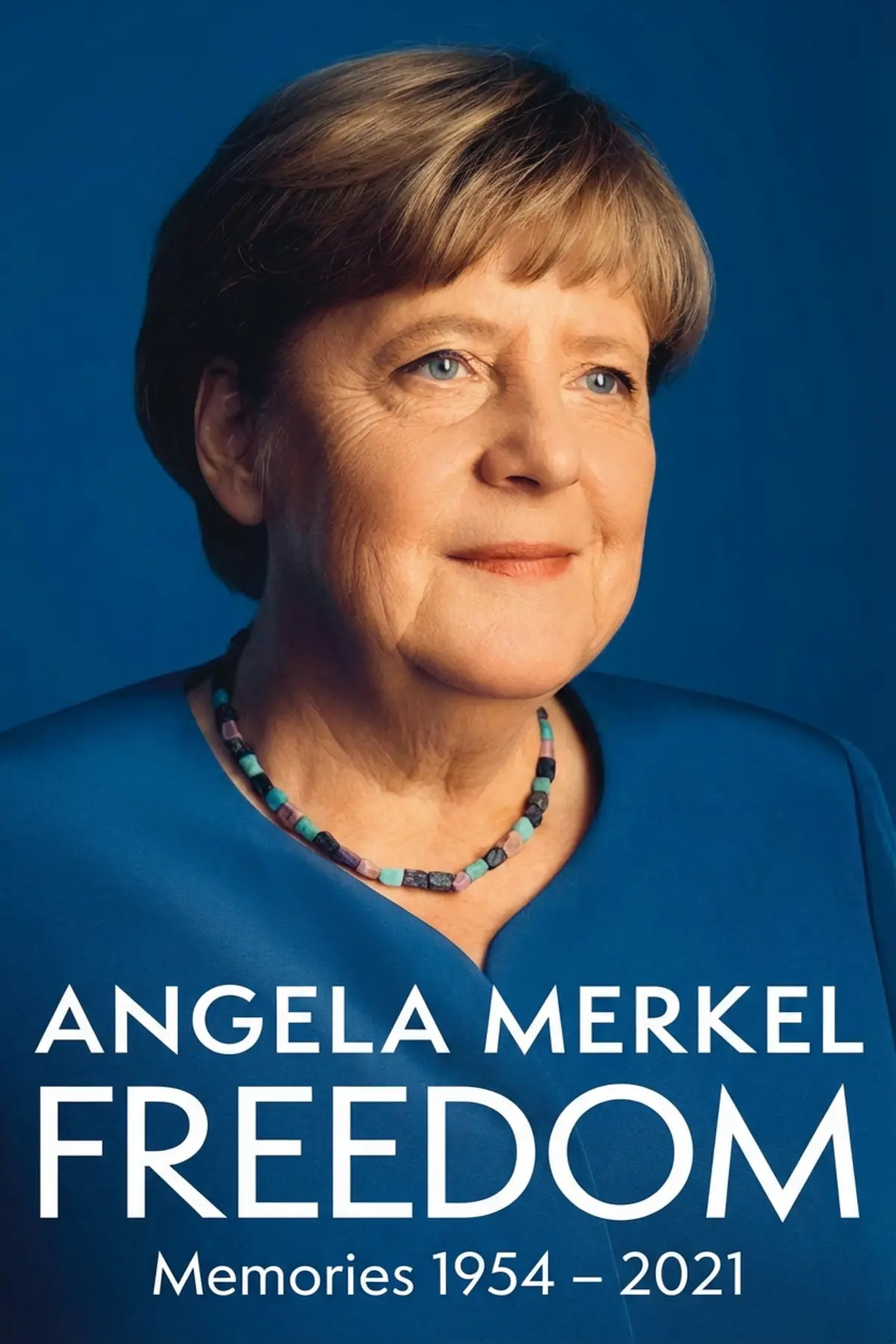
Table of Content
1. Introduction
2 min 19 sec
In the history of global leadership, few figures have occupied the center of the world stage with as much quiet, steadfast determination as Angela Merkel. For sixteen years, she served as the Chancellor of Germany, a tenure that saw her navigate the shifting tectonic plates of international relations, economic collapse, and social upheaval. But before she was the most influential woman in the world, she was someone else entirely: a physicist living in a country where every word was measured and every movement was monitored. Her story is one of two halves, perfectly bisected by the fall of the Berlin Wall. By the time she reached the age of seventy, her life was split almost exactly in two: thirty-five years lived under the constraints of the German Democratic Republic, and thirty-five years lived in the expansive, often messy reality of a democratic, reunified Germany.
To understand her politics, one must first understand that foundational experience of living in a world where freedom was a distant concept, written on paper but absent from the streets. This journey from the periphery of a socialist state to the very heart of European power is the throughline of her memoir. It is a story about the transition from a state-mandated silence to a position where one’s voice can change the course of history. As we explore the milestones of her life, we are not just looking at a political resume; we are looking at the evolution of a perspective on what it means to be free.
Merkel’s path was never a straight line. It was a series of pivots, often driven by a combination of scientific discipline and political chance. Whether she was navigating the halls of the Kremlin or the backrooms of the European Union, she brought with her the lessons of a childhood spent as an outsider. This exploration will take us through the quiet corners of her early life, the rapid-fire changes of the 1990s, and the heavy responsibilities of the chancellorship, offering a glimpse into the mind of a leader who prioritized stability over spectacle. It is a narrative about resilience, the necessity of compromise, and the profound weight of responsibility that comes when a person finally steps into the light of liberty.
2. A Life Formed in the Shadows of Dictatorship
2 min 34 sec
Imagine a world where your private thoughts are your only sanctuary. Discover how growing up in a pastor’s home within a socialist state shaped Merkel’s early understanding of truth.
3. The Search for Meaning in a Restricted Reality
2 min 27 sec
Scientific pursuit offered more than just knowledge—it provided a way to navigate a system designed to control every aspect of life. Learn how a young physicist found joy amidst the gray.
4. The Whirlwind of Political Awakening
2 min 30 sec
When the Wall finally fell, a new world of possibility opened up overnight. Explore the chance encounters and rapid choices that propelled a scientist into the heart of government.
5. Learning the Mechanics of Power as a Minister
2 min 21 sec
From the ‘Ministry for Women’ to the complexities of nuclear safety, Merkel’s early cabinet roles were a masterclass in compromise and political survival.
6. The Chancellor's Temperament and the Burden of Choice
2 min 21 sec
In 2005, a historic election night changed Germany forever. See how a calm, factual style became a powerful tool for governing in an era of constant noise.
7. The Black Hole of Global Financial Instability
2 min 22 sec
When the world economy teetered on the edge of collapse in 2008, the Chancellor faced an impossible choice. Discover the logic behind the ‘no alternative’ approach.
8. The Moral and Political Weight of Human Migration
2 min 16 sec
A single sentence in 2015 defined an era. Go behind the scenes of the decision to open borders and the complex reality of ‘We can do it.’
9. The Psychology of Diplomacy with World Leaders
2 min 19 sec
Negotiating with the most powerful people on earth requires more than just policy knowledge—it requires an understanding of the human ego. Witness the games played at the highest level.
10. A Scientist's Response to a Global Pandemic
2 min 11 sec
In her final years of office, the COVID-19 pandemic turned Germany into ‘uncharted territory.’ See how the Chancellor balanced scientific urgency with the sacred right of freedom.
11. The Quiet Transition and the Meaning of Liberty
2 min 10 sec
Leaving office after sixteen years is more than just a political exit—it is a physical and emotional release. Reflect on the final moments of a historic chancellorship.
12. Conclusion
2 min 19 sec
The life and career of Angela Merkel serve as a profound study in the evolution of power and the endurance of principle. From the quiet laboratories of East Berlin to the highest office in the Federal Republic, her path was defined by a commitment to the ‘factual and the steady.’ We have seen how her childhood in a pastor’s home taught her the value of the private truth, and how her scientific training gave her the tools to navigate a world that often prioritizes emotion over evidence. Her tenure as Chancellor was not a series of easy victories, but a long, difficult exercise in the art of the possible. She steered Germany and Europe through the shoals of financial ruin, the moral complexities of mass migration, and the existential threat of a global pandemic, always seeking the consensus that would keep the system intact.
What remains most striking is her perspective on the nature of the freedom she eventually came to lead. Her memoir is a reminder that the liberty we often take for granted in democratic societies is both precious and fragile. It is a state that requires constant maintenance and a willingness to accept the responsibilities that come with it. She showed that a leader does not need to be the loudest person in the room to be the most effective; instead, strength can be found in patience, in the mastery of detail, and in the unwavering belief that democracy is a collective project.
As we look back on her sixteen years of service, the takeaway is clear: leadership is not about personal glory, but about the stewardship of institutions and the protection of the vulnerable. Merkel’s journey suggests that while we may be formed by the constraints of our past, we are defined by the choices we make when we are finally given the chance to act. She leaves behind a legacy of stability and a challenge to all citizens: to see freedom not just as a gift to be enjoyed, but as a duty to be performed. In an increasingly volatile world, her example of calm, reasoned governance remains a vital touchstone for what it means to lead with integrity. We are left with the image of a woman who, having lived through the darkness of a divided nation, worked tirelessly to ensure that the light of freedom remains bright for the generations to follow.
About this book
What is this book about?
Freedom is a comprehensive memoir that details the extraordinary arc of Angela Merkel’s life, spanning the starkly different worlds of the German Democratic Republic and the reunified Federal Republic. It serves as an exploration of how a childhood spent under the watchful eye of a socialist dictatorship shaped a leader who would eventually guide Europe through some of its most turbulent modern crises. The book provides a deep look into the mechanics of power, from the chaotic days following the fall of the Berlin Wall to the high-stakes diplomacy of the G7 and the European Council. Merkel reflects on the core values that informed her sixteen-year tenure as Chancellor, including her commitment to pragmatism, her reliance on scientific reasoning, and her unwavering belief in the European project. Through personal anecdotes and reflections on global events like the 2008 financial crash, the 2015 migration crisis, and the COVID-19 pandemic, the book offers a promise of understanding the woman behind the office. It is a meditation on the nature of freedom—not just as an absence of restriction, but as a proactive responsibility to one's fellow citizens and the democratic institutions that protect them.
Book Information
About the Author
Angela Merkel
Angela Merkel, who holds a PhD in physics, transitioned into politics after the fall of the Berlin Wall. Merkel became Germany’s first female chancellor in 2005, serving for 16 years as a pragmatic and steadfast leader who shaped Europe through crises such as the Eurozone debt turmoil, the migration crisis, and the COVID-19 pandemic. Her memoir was co-authored with her long-time political advisor, Beate Baumann.
Ratings & Reviews
Ratings at a glance
What people think
Listeners find the memoir to be an absorbing and skillfully composed work that offers remarkable perspectives on global statesmen and political personalities. They also value the book’s factual precision and the caliber of its information, with one listener highlighting that it contains significant depth regarding specific meetings. Additionally, the work earns praise for the author’s stature, as one review characterizes it as an excellent memoir of a most important leader. Nevertheless, listeners express varied views regarding the personal element, with one individual pointing out the lack of private life specifics.
Top reviews
Kavya
The chapters detailing her interactions with world leaders are worth the price of admission alone. Merkel provides a fascinating, almost clinical deconstruction of men like Putin and Trump, highlighting the psychological games they played. Look, seeing the 'infantile behavior' of global alpha males through the eyes of a physicist-turned-chancellor is incredibly refreshing. Her partnership with Beate Baumann is another highlight, showing that even the 'most powerful woman in the world' relied on a trusted circle. This book is a masterclass in diplomacy and patience, written with a clarity that reflects her scientific background. I didn’t find it tedious at all; rather, the detail felt necessary to understand the sheer complexity of her sixteen-year tenure. This is a primary source for the history books, and she doesn't pull her punches when describing the friction within her own party.
Show moreEye
Ever wonder how a scientist navigates the messy world of international politics? This memoir answers that through 700+ pages of meticulous record-keeping. Merkel’s perspective is unique because she approaches crises—whether the Euro, COVID-19, or Ukraine—with the logic of a physicist. Not gonna lie, the level of detail is staggering, but that’s exactly what makes it so valuable for understanding the last two decades of European history. Her descriptions of the Berlin Wall's fall and her early life in the East are particularly poignant and well-written. You get the sense of a woman who was always 'the outsider,' whether as an East German in the West or a woman in the CDU. It’s a towering achievement that captures the essence of a leader who preferred results over rhetoric. Truly a must-read for anyone interested in the mechanics of global power.
Show moreNora
After hearing so much about the 'Merkel system,' it was great to finally read her own words on the matter. This is an exceptional memoir that provides an insider's look at some of the most pivotal moments of the 21st century. The bond between Merkel and Beate Baumann is a central theme that I found surprisingly touching—it shows the necessity of loyalty in the brutal world of Berlin politics. I particularly enjoyed her analysis of Vladimir Putin; she saw through his tactics long before others did, even if her policy responses are now being questioned. The book is lengthy, yes, but every page feels earned. She writes with a quiet authority and a commitment to truth that is rare today. This isn't just a book about a chancellor; it’s a book about the nature of freedom and what it takes to protect it.
Show moreSofia
Finally got around to finishing this massive tome by Angela Merkel. To be fair, her account of growing up in East Germany is absolutely gripping and offers a rare window into a world most of us only know from textbooks. However, once she enters the chancellery, the narrative shifts into a dense thicket of administrative detail and endless acronyms. While the historical accuracy is impressive, I occasionally felt like I was reading a very long appointment calendar rather than a strategic analysis. She describes every meeting with such precision that you lose the forest for the trees. I wanted more of her inner monologue on the tough calls, especially regarding Russia, and fewer lists of who sat where. Still, it’s an essential record of a leader who defined an era with her trademark pragmatism.
Show moreLincoln
As someone who followed the 2015 refugee crisis closely, I found her retrospective on the 'Wir schaffen das' era incredibly illuminating. Merkel doesn't back down from her decisions, framing them as a matter of moral and legal necessity rather than just political strategy. She argues that Europe’s principles would have been meaningless if she had turned those people away at the border. Personally, her conviction is striking in an age of politicians who blow whichever way the wind is trending. The writing style is very much like her public persona: sober, measured, and devoid of unnecessary drama. I appreciated the shout-outs to her staff, from the cook to her secretary, which added a rare touch of humanity to the text. It’s a solid 4 stars, only losing one because some of the legislative talk is quite dry.
Show moreWatcharee
Not what I expected from a woman who famously avoided the 'feminist' label for decades. The chapter where she finally discusses her gender in politics is one of the most compelling parts of the book. She describes the subtle and not-so-subtle sexism she faced within her own party and how she had to navigate a male-dominated world with extreme caution. In my experience, her accounts of working with Wolfgang Schäuble and Helmut Kohl are very revealing about the internal culture of the CDU. While the book is definitely a 'tome' and can be a bit of a marathon to read, the insights into her strategic mind are fascinating. She wasn't just a leader; she was a survivor. It’s a dense read, but the historical information quality is second to none if you can push through the slower chapters.
Show moreHom
The section on the start of the Ukraine war and her dealings with Russia provided a much-needed history refresher. Merkel is very careful in how she defends her stance on NATO and the Minsk agreements. While she doesn't exactly express regret, she provides the context needed to understand why those choices were made at the time. The truth is, her writing isn't flashy, but it is incredibly thorough. I was struck by her descriptions of the physical toll that political stress took on her, which was a rare moment of personal transparency. The book is a bit heavy on the 'meetings and conferences' aspect, which can make it feel like a textbook. But for anyone wanting to understand how Germany became the powerhouse of Europe, this is the definitive account. It’s a dense, thoughtful, and ultimately rewarding read.
Show moreNarong
Why does a memoir need to be this long? Frankly, while I admire Merkel's legacy, this book desperately needed a more aggressive editor. The first section about the GDR is fantastic and deeply personal, but the rest of the book gets buried under the sheer weight of bureaucratic process. She spends pages explaining the mechanics of summits without ever really admitting to any major missteps, particularly on the energy front or the Nord Stream situation. The truth is, it feels less like a confession and more like a carefully curated defense of her record. If you’re looking for warmth or deep personal revelations, you won't find them here—she keeps her private life strictly off-limits. It’s an informative read for political junkies, but for the casual reader, the endless descriptions of German government agencies will be a tough slog.
Show moreFatou
Listening to the Audible version narrated by Juliet Stevenson definitely made the experience more tolerable. Even with a great narrator, twenty-seven hours of political minutiae is a lot to ask of any listener. I found the sections on her childhood and the transition from the GDR to a reunified Germany to be the strongest parts. Once it gets into the weeds of the financial crisis and the various European treaties, my mind started to wander. To be fair, Merkel is honest about her desire to find compromises, which is a trait I wish more current leaders possessed. However, the lack of personal vulnerability makes it hard to truly connect with her as a protagonist. It’s an important book for the historical record, but it often feels more like a white paper than a life story.
Show moreNim
Picked this up because I wanted to understand the woman behind the 'Mutti' nickname, but I ended up feeling exhausted. For 42 euros, I expected more than a glorified list of meetings and conferences. It’s frustratingly clinical; she recounts world-shaking events with the same emotional temperature as a grocery list. Where is the deep self-reflection that one expects from a world leader's final memoir? Where is the admission that maybe some of her policies led to the current political polarization in Germany? Instead, we get endless pages of initials for government departments and descriptions of the seating charts at various G20 summits. I appreciate the historical accuracy, but the prose is so dry it’s almost unreadable in places. It feels like it was written by a committee rather than a person. If you aren't a scholar of German domestic policy, you might want to skip this one.
Show moreReaders also enjoyed
Age of Anger: A History of the Present
Pankaj Mishra
A Promised Land
Barack Obama
Age of Propaganda: The Everyday Use and Abuse of Persuasion
Anthony Pratkanis
A River in Darkness: One Man’s Escape from North Korea
Masaji Ishikawa

A Spy Among Friends: Philby and the Great Betrayal
Ben Macintyre
21 Lessons for the 21st Century
Yuval Noah Harari
AUDIO SUMMARY AVAILABLE
Listen to Freedom in 15 minutes
Get the key ideas from Freedom by Angela Merkel, plus 5,000+ more titles in English and Thai.
- 5,000+ titles
- Listen as much as you want
- 7-day free trial
- Cancel anytime







