

14 min 04 sec
From Conflict to Courage: How to Stop Avoiding and Start Leading
Transform workplace tension into professional growth by learning to face disagreements with confidence. This guide explores the psychological traps of avoidance and provides a roadmap for developing leadership courage and clarity.
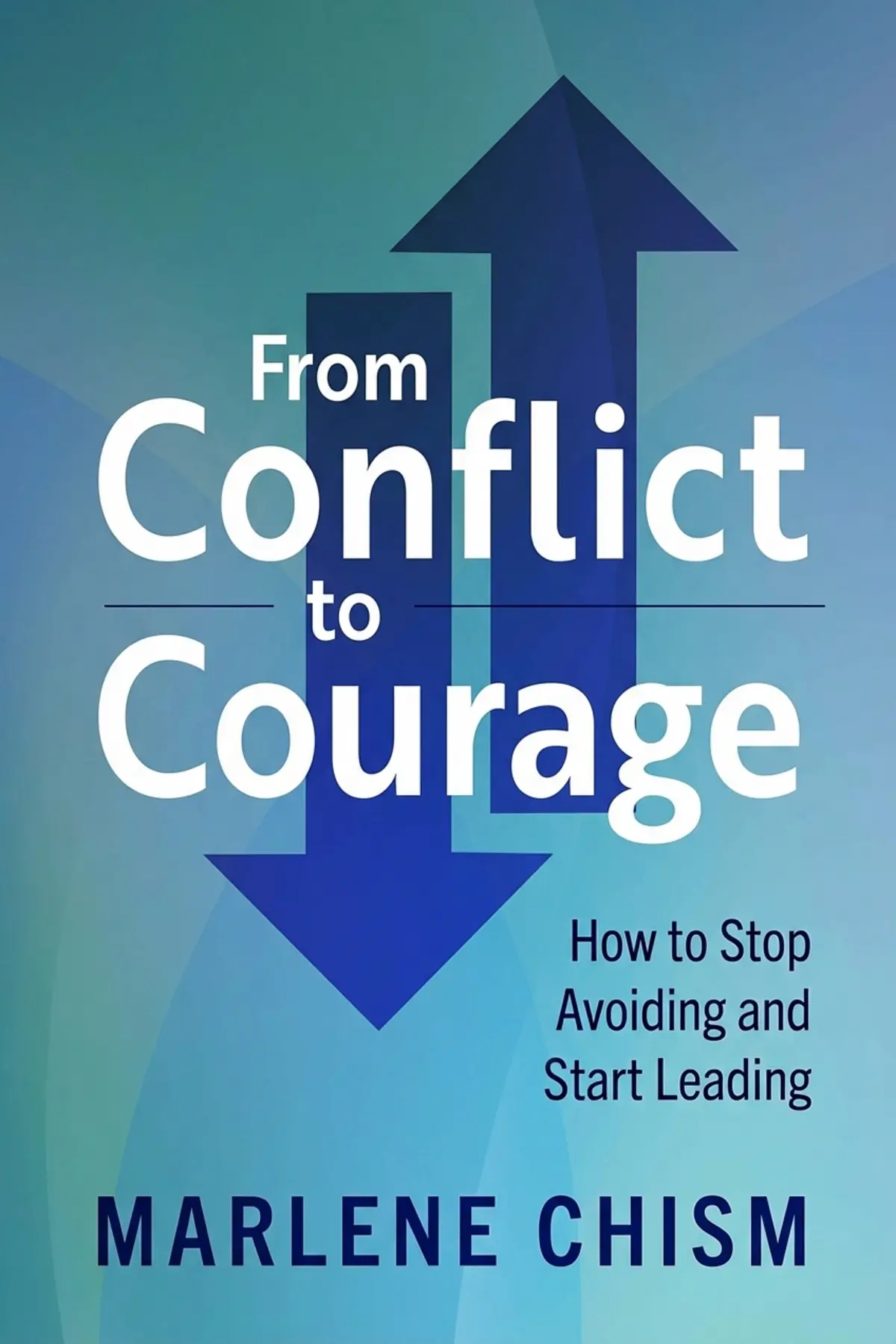
Table of Content
1. Introduction
1 min 40 sec
Have you ever wondered why some workplaces feel like a constant battlefield of passive-aggressive emails and whispered grievances, while others seem to hum with productive energy? Most of us like to think we are pretty good at handling disagreements. In fact, if you ask a group of new supervisors, they usually rate themselves very highly in conflict management. But as any seasoned executive will tell you, the more experience you gain, the more you realize how complex and taxing human friction can actually be.
The stakes couldn’t be higher. Research indicates that the average American employee spends nearly three hours every single week caught up in some form of dispute or argument. When you multiply that across an entire workforce, you aren’t just looking at a few hurt feelings; you’re looking at a staggering three-hundred-and-fifty-nine billion dollars in lost productivity every year. That is a massive amount of time and resources that could be spent on innovation, customer service, or strategic growth.
In this summary of From Conflict to Courage by Marlene Chism, we are going to explore why so many of our standard responses to conflict actually make things worse. We will look at how to move past the fear of confrontation and develop what Chism calls ‘conflict capacity.’ We’ll see how conflict, when handled with the right mindset, isn’t something to be feared or suppressed. Instead, it’s a powerful signal—a catalyst that can drive personal development and organizational evolution. By the end of this journey, you’ll have a clear framework for transforming difficult conversations into opportunities for genuine connection and leadership excellence. Let’s dive into how we can stop avoiding the hard stuff and start leading with true courage.
2. The Traps of Misalignment
2 min 40 sec
Conflict isn’t a battle between enemies, but a misalignment of goals. Discover how the three common responses of avoidance, appeasement, and aggression prevent true resolution.
3. Mastering the Three Games
2 min 17 sec
Developing ‘conflict capacity’ requires more than just communication tips. It involves balancing your internal reactions, your external skills, and the surrounding culture.
4. The Power of Leadership Clarity
1 min 53 sec
Clarity is the ultimate source of peace. Learn how to align your decisions with core values to navigate even the most disruptive workplace behavior.
5. Mastering the Art of the Conversation
1 min 58 sec
Forget the ‘compliment sandwich.’ Learn why precision, specific observations, and a focus on business impact are the keys to effective dialogue.
6. Listening to Discover
2 min 12 sec
Peel back the ‘pseudobarriers’ by shifting from listening to respond to listening to discover the hidden stories behind performance issues.
7. Conclusion
1 min 24 sec
The journey from conflict to courage is not about becoming a person who never has disagreements. It is about becoming a person who is no longer afraid of them. As we have seen, workplace friction is often just a signal that something is misaligned—and that signal is an invitation to grow. By moving away from the dysfunctional patterns of avoidance, appeasement, and aggression, you can begin to build a leadership presence rooted in clarity and integrity.
Remember that mastering conflict is a continuous process of balancing the inner work of self-awareness with the outer work of practical communication. It requires the courage to be specific, the wisdom to focus on business impact rather than personal slights, and the patience to listen for the deeper stories behind every problem. When you approach disputes with a clear understanding of your values and a genuine curiosity about others, you stop seeing conflict as a threat to your productivity and start seeing it as the very engine that drives your team forward.
As you move back into your daily work, challenge yourself to identify one area where you’ve been avoiding a necessary conversation. Use the tools we’ve discussed: check in with your physical triggers, clarify your desired outcome, and enter the room ready to discover the truth. By taking these small, courageous steps, you won’t just resolve individual issues—you will transform your entire leadership style and help create a culture where everyone has the clarity and confidence to do their best work.
About this book
What is this book about?
Many leaders believe they are naturally adept at handling disagreements, but the reality is that workplace conflict often remains one of the most significant drains on organizational productivity and morale. From Conflict to Courage addresses this gap by reframing conflict not as a battle to be won, but as a simple misalignment of goals and desires that requires a specific set of leadership capacities to resolve. The book promises a shift from a culture of drama and avoidance to one of courage and accountability. It breaks down the common dysfunctional responses—avoidance, appeasement, and aggression—and replaces them with a three-tiered approach focusing on self-awareness, practical communication skills, and cultural alignment. By following this framework, leaders can stop fearing difficult conversations and start using them as catalysts for innovation and stronger team dynamics. It is a guide for anyone looking to bridge the gap between their current workplace reality and the productive, high-performing environment they desire.
Book Information
About the Author
Marlene Chism
Marlene Chism is an expert consultant and LinkedIn Learning instructor specializing in the development of drama-free workplace environments. She has authored several notable works, including Stop Workplace Drama, No-Drama Leadership, and 7 Ways to Stop Workplace Drama in Your Healthcare Practice. Additionally, she is a recognized advanced practitioner in narrative coaching.
Ratings & Reviews
Ratings at a glance

What people think
Listeners appreciate the book's strategy for resolving disputes, with one listener characterizing it as a concrete blueprint for handling difficult conversations with confidence and integrity. The presentation of information earns praise, as one listener points out how the stories and examples help make the key points clearer.
Top reviews
Taweesak
This book hits the nail on the head regarding why we avoid difficult conversations in the workplace. Marlene Chism doesn't just offer fluff; she provides a concrete blueprint for navigating those cringeworthy moments with actual integrity. I particularly connected with the concept of building 'conflict muscle' to handle the inner struggle that precedes any tough talk. The way she breaks down 'Radical Listening'—reminding us to literally put our tongues to the roof of our mouths—is a game changer for chronic interrupters. While some of the corporate stories felt a bit specific to high-level consulting, the core message is universal. Truth is, we all have a 'shark' we are staring at when we should be looking at the 'island' of our desired vision. I’ve already started using the 'Would you be willing...' phrasing in my weekly one-on-ones, and the shift in energy is palpable.
Show moreKofi
Marlene Chism offers a refreshing perspective on the inner monologue we all struggle with when things get heated. As someone who has historically been 'too nice' and prone to appeasing, identifying my own inner conflict was an eye-opening experience. The book teaches you how to stop focus on what you don’t want and pivot toward what you do want. It’s a simple linguistic trick, but it shifts your entire mental state from defensive to proactive. I appreciated the cross-referencing throughout the text, which made it easy to jump back to Chapter 3 when Chapter 5 expanded on a previous point. This isn't just for managers; it’s for anyone who wants to stop being a victim of their own circumstances. It takes a lot of self-discipline to implement these changes, but the roadmap provided is as clear as it gets.
Show moreTaw
Looking for a concrete blueprint to navigate office politics without losing your soul? This is it. Chism’s approach to 'Emotional Integrity' challenged me to look at how my own avoidance was actually fueling the fires I was trying to put out. The stories and examples used to clarify key points were relatable and didn't feel manufactured or overly simplified. I especially liked the 'Shark vs. Island' analogy because it’s such a visual way to remember where to keep your focus during a crisis. In my experience, most business books are 200 pages of fluff around one good idea, but this one is dense with actionable steps. You'll find yourself reaching for it frequently when a difficult conversation looms on your calendar. It really helps you build that much-needed courage.
Show moreViolet
After hearing a colleague rave about Chism's 'shark and island' analogy, I had to see what the fuss was about. I’m glad I did because this book is a masterclass in direct communication. The distinction between 'trying' and 'willingness' is something I will be using in every coaching session from here on out. It’s a subtle clue that reveals so much about an employee's commitment level without being accusatory or playing 'gotcha.' The book is refreshing because it doesn't just tell you to be brave; it shows you the mechanics of courage. It’s about the self-discipline to stay objective when every bone in your body wants to defend your position. If you manage groups, you need to have this on your shelf for constant reinforcement.
Show moreAria
Would you be willing to change your entire approach to leadership after reading just one chapter? That’s how I felt after finishing the section on 'Speaking to the Vision.' We spend so much time complaining about what we don't want that we forget to define what we actually do want. Marlene Chism has written a book that is loaded with great information that is applicable to both work and home life. The presentation is succinct and the exercises actually help you understand where you currently stand in your conflict resolution journey. I found the stories about her consulting work to be the perfect way to ground the more abstract concepts in reality. This book has real meat in it and I plan on reading it again to let it all sink in properly.
Show moreElena
Finally, a conflict management resource that doesn't feel like a dry HR manual from the nineties. Chism writes with a clarity that makes complex psychological resistance feel manageable and even expected. I found the 'Business Case' section incredibly helpful because it moves the needle from personal nitpicking to professional impact. To be fair, some of the exercises in the earlier chapters felt a little repetitive if you’ve done leadership training before. However, the unique focus on 'speaking to the vision' rather than the obstacle justifies the price of admission alone. It’s a slim volume, but it’s loaded with real meat that you’ll want to revisit. My copy is already full of highlights and dog-eared pages, especially in Chapter 7 where the actual conversational blueprints live.
Show moreChanikarn
As a middle manager, I found the section on making a 'Business Case' for conflict resolution to be the most practical takeaway. We often forget that unaddressed behavior affects the bottom line, and Chism provides the vocabulary to bridge that gap. The writing style is very accessible and the chapters are succinct enough to read during a lunch break. Frankly, I think some of the 'curiosity' techniques are harder to implement in a fast-paced environment than the author suggests. You really have to slow down and be intentional, which is a struggle when you're put on the spot. Still, the advice on 'Radical Listening' is something every professional needs to hear, even if it’s uncomfortable. It’s a solid addition to any leadership library, providing tools that work just as well at home as they do in the boardroom.
Show moreClara
I’m not usually one for self-help style business books, but the concept of 'Radical Listening' really shifted my mindset this week. The idea that objections die on agreement is counterintuitive, but it works surprisingly well in high-tension meetings. Gotta say, the 'blueprint' for conversations in Chapter 7 is worth the price of the book by itself. It gives you a script without making you sound like a robot, which is a difficult balance to strike. My only minor gripe is that some of the 'inner conflict' sections felt a little bit like therapy-lite, which might not be for everyone. Regardless, the practical application of these skills to everyday life and relationships is undeniable. It’s a helpful guide for taming the negative inner monologue we all carry.
Show moreTod
The advice here is solid, though I'll admit some of the 'inner monologue' exercises felt a bit redundant by the middle of the book. Chism is clearly an expert, but the tone can occasionally feel a little like a sales pitch for her consulting services. That said, the 'Speak to the Vision' framework is a powerful tool for anyone stuck in a cycle of blame. I liked the focus on 'magic phrases' like testing for willingness, as it removes the push-pull dynamic of typical arguments. If you are brand new to leadership, this will be a five-star read for you. For those of us who have been in the trenches for a decade, it’s a good refresher with a few standout gems. It didn't totally reinvent the wheel, but it certainly polished it up for the modern workplace.
Show moreSau
Not what I expected, as it felt a bit too geared toward the 'aggressor' manager perspective for my taste. While there is some decent advice on listening, the overall framework seems to favor the person in power rather than fostering a truly collaborative environment. I was looking for something more evidence-based, but this felt more like a collection of personal anecdotes and consulting observations. To be fair, the writing is clear and the chapters are short, which makes it an easy read. However, if you're an employee trying to manage up, you might find some of the 'Business Case' logic a bit frustrating to apply. It didn't resonate with my specific needs at this stage of my career. It's not a bad book, but it wasn't the right fit for me.
Show moreFeatured in
Readers also enjoyed
7 Powers: The Foundations of Business Strategy
Hamilton Helmer

A Bigger Prize: How We Can Do Better Than the Competition
Margaret Heffernan

A Year with Peter Drucker: 52 Weeks of Coaching for Leadership Effectiveness
Joseph A. Maciariello
AUDIO SUMMARY AVAILABLE
Listen to From Conflict to Courage in 15 minutes
Get the key ideas from From Conflict to Courage by Marlene Chism, plus 5,000+ more titles in English and Thai.
- 5,000+ titles
- Listen as much as you want
- 7-day free trial
- Cancel anytime







